The system works — but policing is broken. The trial in Manny Ellis’ death proves it | Opinion
I walked outside Thursday afternoon. It was just after 2 p.m. We’d just received word that a verdict was imminent.
As I stepped into the late December air, warmed slightly by the rare winter sun, I was surprised by what I saw, not that I should have been.
There was a woman crossing the street. A delivery truck driver idled. People went about their day, bundled up, hurrying from Point A to Point B.
In the distance there was a siren, but I couldn’t tell what direction it came from or where it was going.
Tacoma was calm, by all indications. It was jarring.
Just below the surface, I knew the city was anxious and bubbling, just like me. Just like everyone else.
After 10 long weeks — and the months of unrest and uncertainty that preceded it — on Thursday we finally learned the legal fate of three Tacoma police officers charged in the March 3, 2020 death of Manuel Ellis.
Ellis, best known as Manny, was 33 when he died, a Black man in police custody, his last words a desperate plea for air.
His death was eerily similar to George Floyd’s months later.
Unlike in Minneapolis, where four officers involved in Floyd’s death were quickly fired and later convicted, the Tacoma officers charged in Ellis’s death were placed on paid leave.
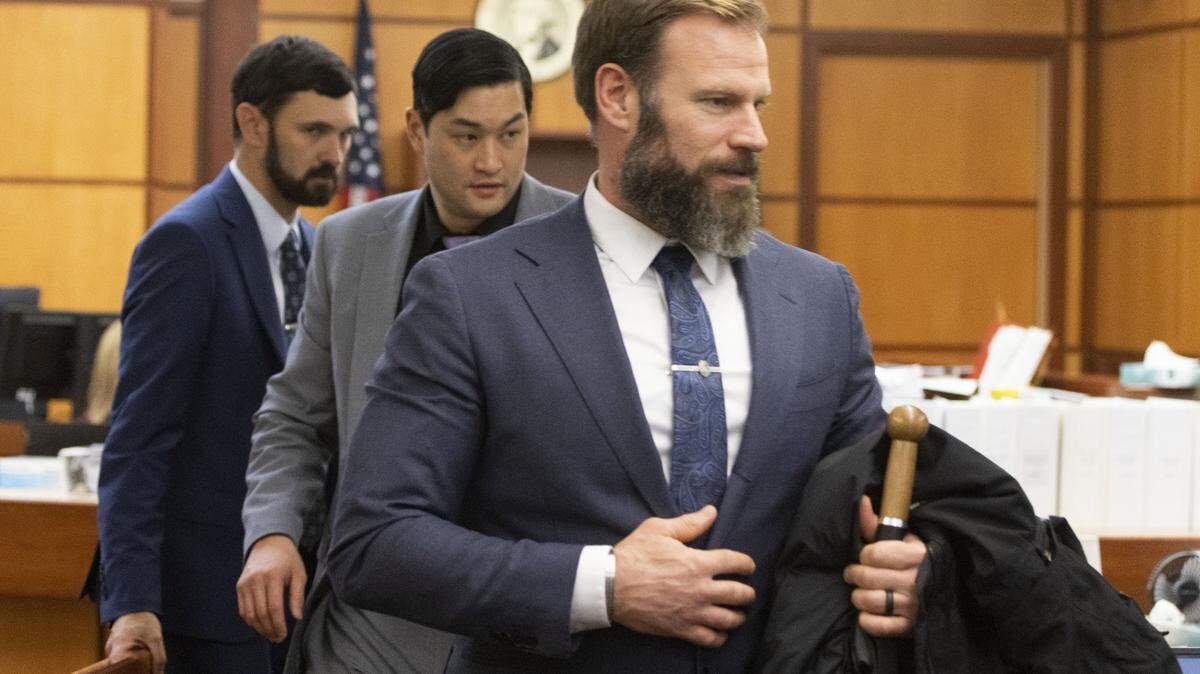
On Thursday, all three of them — Matthew Collins, Christopher Burbank and Timothy Rankine — were acquitted in Ellis’ death, found not guilty on every count.
After the verdicts were read Thursday afternoon, Ellis’ family left the courtroom quickly, the Seattle Times reported.
Later, when Collins’ defense team asked Pierce County Superior Court judge Brian Chushcoff if they could depart, the judge responded with a warning that could have extended beyond the courthouse.
“I would just be careful,” the judge said
“A lot of emotions are running high right now.”
Verdicts delivered
For almost three months, the moment that arrived in Pierce County Superior Court Thursday was one I’ve been dreading, like a lot of people.
For more than three years, Ellis’ death and the circumstances surrounding it — including the video evidence, the cries for accountability from a Black community repeatedly traumatized and the continued politicization of law enforcement reform efforts — have hung heavy in Tacoma, a place so many of us love and are proud to call home.
In some people’s minds, the trial of Collins, Burbank and Rankine became a contentious litmus test in a much larger and more fraught debate. The grossly oversimplified and faulty premise: Are you for police — or against them?
It was never that simple.
The outcome, meanwhile — no matter what the jury concluded — was set up to serve as a referendum on the U.S. justice system, local trust in law enforcement and how far the pendulum of racial justice has actually swung.
It was never going to deliver that, either. It couldn’t. Even if it’s easy to understand why it’s something people need and crave.
Being a police officer is harder and more demanding than most can understand, particularly if they’ve never sworn an oath to protect and serve.
To do the job, cops need to be able to respond quickly and appropriately to volatile, unpredictable and dangerous situations.
They also need the ability to protect the community, their colleagues and themselves, making life-or-death decisions in an instant.
In a perfect world, police officers deserve the legal safeguards and the benefit of the doubt that ruled the day in Chushcoff’s courtroom.
The glaring problem?
That’s not the world we live in — and the suggestion that what happened to Ellis that night after church, on his way home from the store, was right or just or fair insults intelligence and basic human decency.
You can suggest Attorney General Bob Ferguson swung too big, filing a case he didn’t have the evidence to win. Hindsight and plenty of legal observers would agree.
You can argue it got too political, and Ferguson — who’s running for governor, by the way — got out over his skis.
Here’s one case that will never hold up — at least in good faith:
The idea it all went down like it should have, like it had to, as if there’s no other way.
It doesn’t take a judge or a jury to conclude Ellis should still be alive.
You don’t need a guilty verdict to tell you what happened was wrong.
Police culture
I stepped outside again on Thursday, this time just after dusk, as darkness fell on Tacoma and a thick blanket of marine fog settled downtown.
I couldn’t help but think of a conversation I’ve had so many times over the last three years, about good policing, what it takes, our political and ideological divides, and why so many local cops don’t feel appreciated or respected.
I thought about Dom Calata, the 35-year-old Pierce County Sheriff’s deputy, shot and killed during a 2022 SWAT team operation — and the ultimate sacrifice he made.
I thought about Ellis’ family, the years of torment and frustration they’ve endured and the painful void in their hearts that will never go away.
Then, I tried to make sense of it all.
Ultimately, whether the evidence surrounding Ellis’ death, as weighed by a jury, warranted a conviction under state law is something for lawyers, pundits and academics to debate. Either way, the jury has now decided.
For the rest of us? It’s not nearly as complicated.
If the police force we have is content with the way Ellis died — and feels unfairly attacked by suggestions to the contrary, like they deserve respect and trust without having to earn it or acknowledge their failures — that’s the source of the issue, and where the problem lies. It’s the culture.
If that’s the case, we need a new kind of policing — and a new breed of cops — above and beyond what the statues says about holding law enforcement accountable or the training we mandate.
Until then, nothing changes.
The challenge, anger and agony remain the same.
This story was originally published December 22, 2023 at 5:00 AM.