A son took his own life. His grieving parents believe hip-hop can stop the next suicide
The first time I met Kevan Carter Sr. and his wife Bedez, the devastation was raw.
It had been two weeks since their son, 29-year-old Kevan Carter Jr., took his own life, stepping in front of a speeding train near Titlow Beach. They were still planning the funeral.
We were in a large room in the old News Tribune building. Only a conference table and a grief I could never understand sat between us.
Kevan Carter Jr. had been looking for help — practically begging for it, his parents told me.
That’s what made it so hard.
In the days that preceded their son’s suicide, the Tacoma high school grad and up-and-coming local rapper had been repeatedly turned away from services, including at Tacoma’s new psychiatric hospital, Wellfound.
Now he was gone.
“It appeared to be intentional,” a Tacoma police spokesperson told me shortly after Carter Jr.’s death. “He saw the train and jumped in front of it.”
His parents had different words for it.
They wanted the tragedy to make sense, even if they innately realized it was impossible.
“My heart just stopped,” Kevan Carter Sr. said of the moment he saw the flashing lights near the Titlow tracks that morning in late-July. “Because I knew what happened at that point.”
“I am absolutely blown away that my son did this. There’s a spiritual side to us, too, and that’s what’s confusing,” Bedez later told me.
“I guess I just thought he would get better.”
.jpg "2024-HS-no logo stills-11 (1).jpg")
Hip-Hop Therapy
When I met with Bedez and Kevan Carter Sr. again this week, the circumstances were markedly different.
A parent’s grief never goes away, their faces made clear, but over time — at least for them — the pain has been tempered by a fresh sense of purpose and a newfound resiliency, discovered by necessity, they explained.
While it’s easy to think about their son’s death in terms of what-ifs, they told me — What if the hospital admitted him? What if they’d looked harder for help? What if they’d picked him up instead of letting him drive home? — they’ve chosen to focus on the things they know for certain.
Kevan Carter Jr. wanted help, and he needed it, badly.
He also connected with music like few other things in life. It gave him a voice, grew his self-confidence, helped him face his challenges head-on and provided him with an outlet to express the things he was feeling, they said.
Countless young people fit the same description — or they could if given the space and opportunity, Kevin Sr. and Bedez have come to believe.
It’s why they helped to create what’s known as Hip-Hop Therapy at Keithley Middle School in Parkland.
Combining the music he loved — hip-hop — with mental health support he searched for might make the difference for some other family, they told me.
Through a partnership with HopeSparks Family Services, which provides behavioral health services to children and families in Pierce County, they’re now working to transform the vision into a larger reality.
Music therapy in schools isn’t a new idea, but it is relatively unique to the area, according to HopeSparks staff.
At Keithley, according to OSPI data, roughly 77% of students are non-white, 73% are low income and more than 10 percent report learning English as a second language. The challenges are profound.
So are the opportunities, the Carters maintain.
“This is about fulfilling Kevan’s legacy. Even though Kevan struggled, he had this fierce desire to help people — especially younger kids. And it was music or nothing for him. He loved it,” Bedez Carter told me on Tuesday.
“I met with people who had foundations … and it didn’t seem like what we wanted to do — just raise money to give out a scholarship. Everybody does that,” she added.
“We’re helping middle school students, which is such a tender age, and putting music and therapy together.”
Expression and innovation
Working with HopeSparks and the Franklin Pierce School District, the Carters helped to launch the Hip-Hop Therapy program at Keithley last year.
The initiative was more recently awarded roughly $170,000 in the 2024-2025 Pierce County budget. It’s set to receive funds collected through the county’s behavioral health sales tax.
Together with outside grant dollars and private donations, in January Hip-Hop Therapy embarked on a fully funded two-year run at the middle school, according to HopeSparks CEO Joe LeRoy.
The idea is to reach as many kids as possible through the unique delivery of services and mental health support, he explained, while also collecting data to assess the program’s overall effectiveness at Keithley.
There’s already reason for optimism, LeRoy said.
He’s a believer in the Carters and the program they’ve helped create.
“What really resonated with the Carters was the work we do around prevention. I can’t speak for them, but I think they felt like if their son had access to better services, maybe they could have prevented what happened,” Leroy said.
“Kevan was a hip-hop artist, so there was a natural connection around music and expression and creating innovative ways to reach kids,” he added.
Dee Taylan, a school counselor at Keithley, agrees.
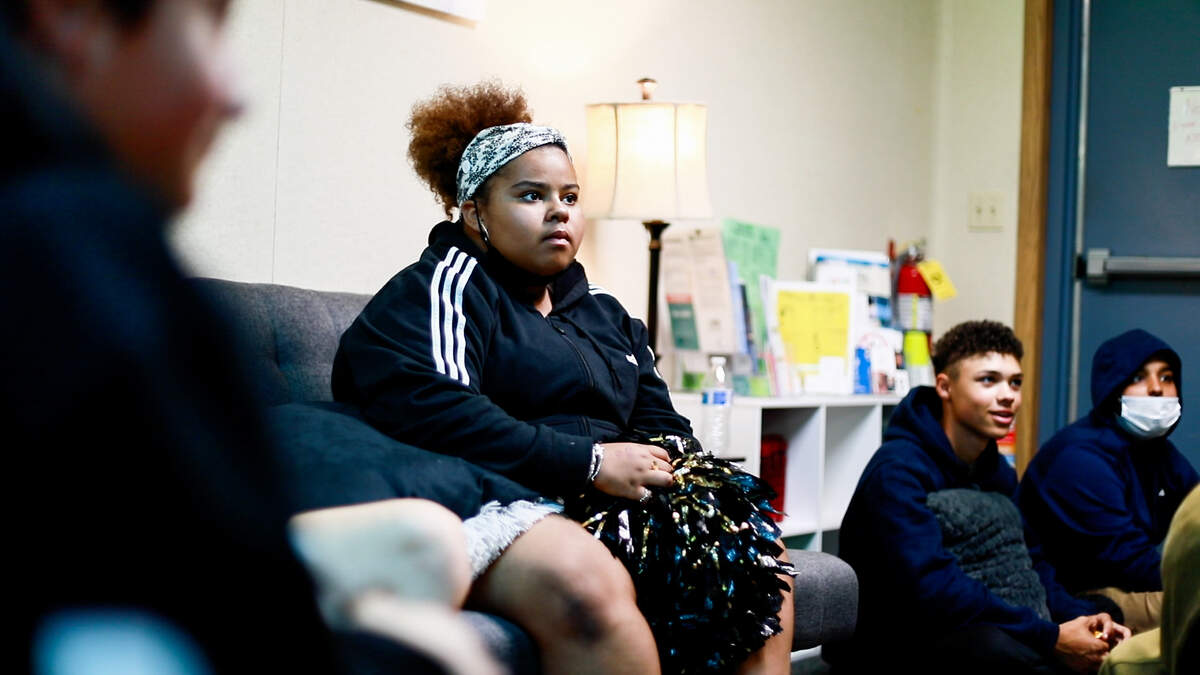
So far, introducing Hip-Hop Therapy at the middle school has struck a chord with students, she said.
“When kids hear the word ‘emotion,’ they want to run away. Same with therapy, it can be really uncomfortable to express your emotions, especially in a group setting,” Taylan said.
“What just blew me away and made me fall in love with this program was seeing that these kids were not afraid to be vulnerable with each other,” Taylan added.
“They’re able to share some of the heavier experiences that they’ve been through. Not only share, but be there for each other, too.”
Kids ‘worth fighting for’
Paul Maestry-Williams has a background in local hip-hop. He’s a rapper.
Maestry-Williams is also a licensed mental health therapist with a masters in education. He works for the HopeSparks behavioral health program.
Since last year, he’s been tasked with running Hip-Hop Therapy at Keithley.
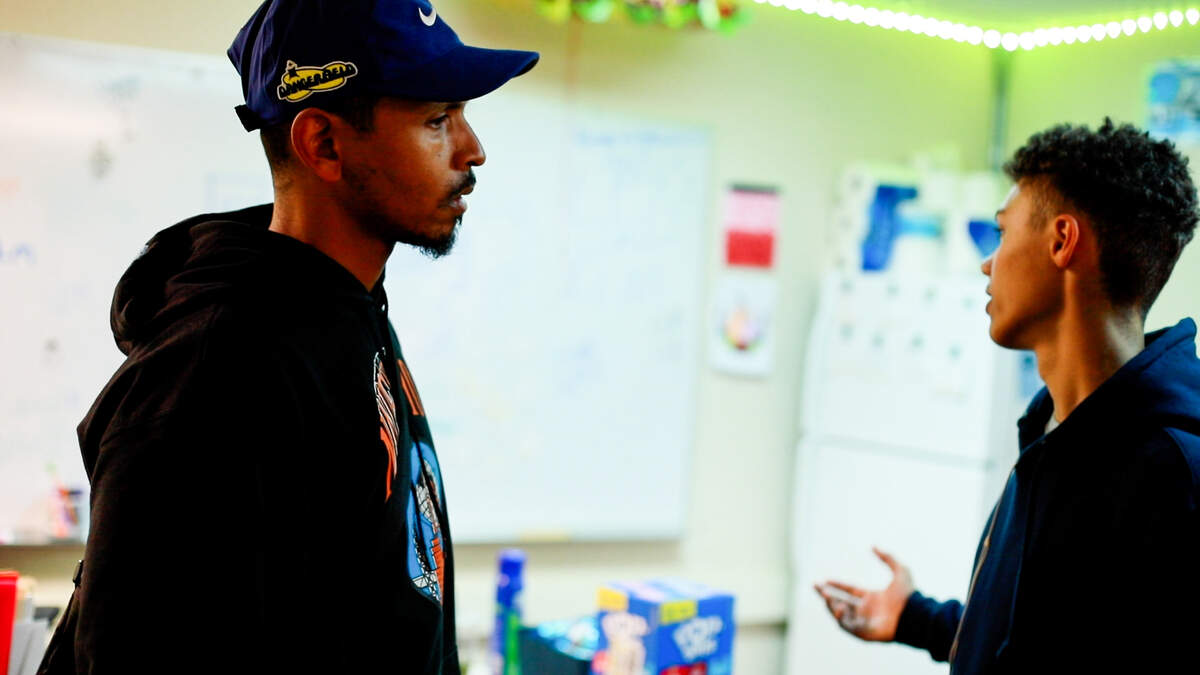
Speaking to The News Tribune, Maestry-Williams said his job involves working directly with students, often in a group setting. He helps young people navigate everything from adolescent angst and love to bullying, violence and gangs, he explained. He often uses lyrics and verses from the hip-hop artists he knows best as a starting point. More often, he draws on material created by the performers Keithley students have in their earbuds, he said.
Some kids just show up. Most have been referred to Hip Hop Therapy by teachers, staff and the school counselor, often in response to attendance issues, behavior concerns or struggling academic performance, Maestry-Williams told me
Monica Byrd, the director of outpatient behavioral health at HopeSparks, works alongside Maestry-Williams, developing the Hip-Hop Therapy’s curriculum.
While the program’s approach to therapy might be novel, the lessons it focuses on — like coping with peer pressure, developing nonviolent communication skills and successfully resolving conflicts — are timeless elements of the childhood experience, she said.
“We’re being innovative and creative to reach students who probably wouldn’t be connected to services in any other way. There are so many barriers for the brown and Black population, which make up the majority of the students being served at Keithley,” Byrd said.
“These kids are worth fighting for,” she added.
On Tuesday, Maestry-Williams broke it down like this:
Combining therapy with hip-hop allows him to connect with young people in ways that might be impossible otherwise, particularly in a traditional behavioral health setting. It creates a shared language capable of breaking down barriers.
During advisory periods in the morning — and once a week after school — Maestry-Williams now works with between 30 and 40 Keithley students, usually in a group setting, he said.
In some cases, the difference the program has already made has been remarkable, he told me.
That’s the idea.
“I had a student, even this morning, who just started a couple weeks back. He has a history of being made fun of. He has a history of not connecting with his peers. At first, he wasn’t even sitting at the table, wasn’t participating with us. He told me, ‘I hate it here.’ He actually verbalized it,” Maestry-Williams said.
“Today, there was a smile on his face. He was engaging with his peers and with myself,” he added.
“Sometimes, the kids don’t realize how much progress that they’re making.”
Resources are available for people who are in crisis or those worried about someone else.
National Suicide Prevention Lifeline: Available 24 hours a day by dialing 988 and at suicidepreventionlifeline.org
Lifeline Crisis Chat: suicidepreventionlifeline.org/talk-to-someone-now/
Washington Recovery Help Line: 1-866-789-1511
How to identify and help someone who might be at risk.
This story was originally published February 15, 2024 at 5:00 AM.