
WA kills too many cougars and bears. Hunting rules should follow facts, not rhetoric | Opinion
In the past year, the national trend toward incivility has invaded discussions over Washington’s fish and wildlife management. Rather than a respectful debate about facts, science, and policy objectives, this discourse is often overwhelmed by inflammatory attacks, divisive rhetoric and accusations based on “alternative facts.”
An example is the op-ed published in The News Tribune by Ryan Garrett, calling me and my colleagues at several wildlife advocacy groups “liars.”
The meager facts Garrett offers to support this allegation bear little resemblance to reality.
The source of Garrett’s ire is a rulemaking petition the Washington Fish and Wildlife Commission approved on Dec. 15 by a vote of 7 to 2, agreeing to consider changes to state bear and hunting rules. The petitioners included eight wildlife advocacy groups led by Washington Wildlife First, a grassroots, state-based organization dedicated to shifting state fish and wildlife management from a model centered around consumptive use to an approach that values science, respects nature and prioritizes the preservation of the ecosystems on which we all depend.
Contrary to Garrett’s claim, Washington Wildlife First supports ethical and sustainable hunting and fishing, but we believe that to protect wildlife for future generations the state must prioritize long-term conservation over short-term demand.
Our rulemaking petition sought to reverse recent changes the commission made to bear and cougar hunting rules in response to hunter pressure and without regard for science.
In 2019, the commission liberalized bear hunting rules in many parts of the state by extending the season to Aug. 1 to Nov. 15 statewide and allowing each hunter to kill two bears a year. Hunter kills increased by 40-50% in the years following this change, reaching a record high of 2,211 bears in 2022. Biologists with the Washington Department of Fish and Wildlife (WDFW) are unable to say how this sudden spike in mortality impacted the state bear population, but in the past, they have repeatedly warned that bears are sensitive to over-exploitation and that the population could be in serious trouble by the time they detect a downward trend.
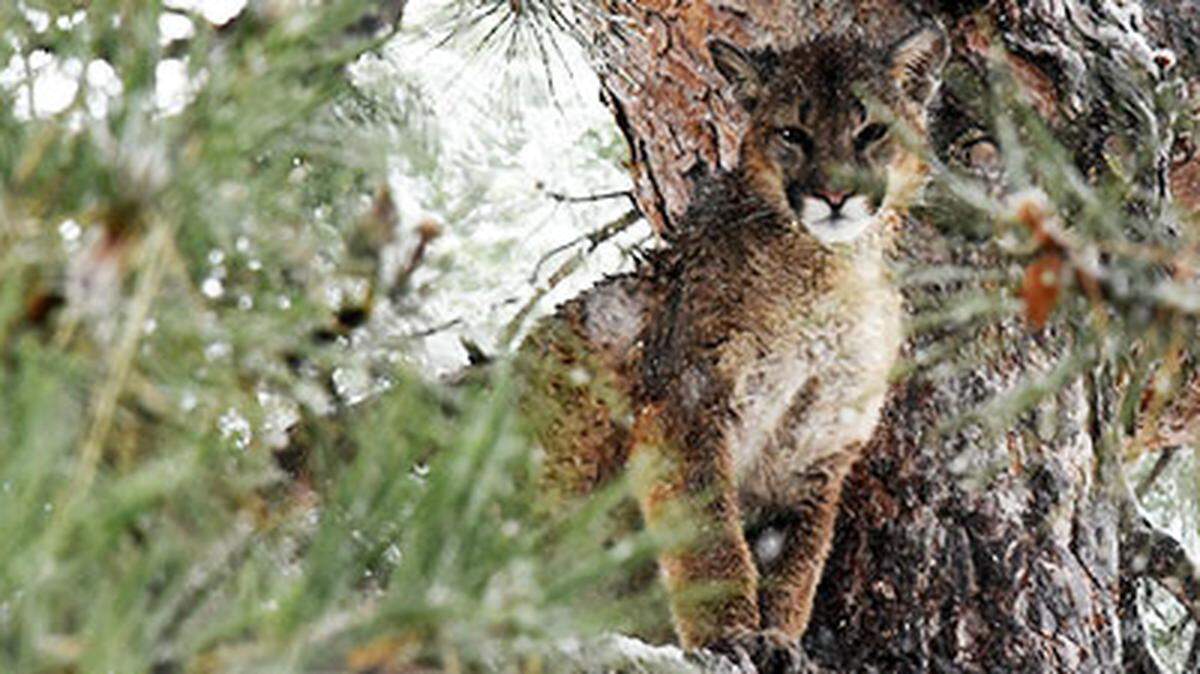
In 2020, the Commission expanded cougar hunting limits, increasing the number of cougars that hunters could kill each year to roughly 370 out of an estimated state population of around 2,000. These changes discarded the management framework designed to maintain population health and stability, which WDFW scientists had built based on 16 years of research. That framework seeks to keep cougar mortality below 12-16% of the estimated population in each hunting unit. However, lax rules have allowed hunters to exceed those levels for several years in many regions of the state — in 2022, total human-caused cougar mortality in some units exceeded 40% of the estimated population.
Our rulemaking petition did not seek to end bear and cougar hunting, but to limit it to levels that science has shown are sustainable and most likely to limit disruptions that can lead to conflict. The petition was 73 pages long and cited 178 sources, including more than 100 scientific studies and over 50 WDFW reports and presentations.
Garrett, meanwhile, voiced vague complaints about just one of these studies, which was among 15 sources cited to show the scientific consensus that killing more cougars does not solve problems such as livestock predation. To the contrary, evidence suggests that higher cougar mortality rates may increase the likelihood of cougar-human conflicts by orphaning kittens and destabilizing cougars’ social structure.
Not only did 50 scientists from around the country submit a letter confirming the key contentions in our petition, WDFW management also indicated agreement with most of its assertions.
Game Division Manager Anis Aoude told the Commission: “I don’t disagree with much of what we heard in the petition or from the scientists who signed on to this petition. In fact, many of the references in the petition were written by our staff, and reviewed by me, so for me to disagree with the petition is really not appropriate.”
This is the context in which Garrett asserts that by accepting the petition, the commission has made a “mockery” of science and “given credibility to its lies and the liars behind it.” The opposite is true.
By accepting the petition, the Commission showed its commitment to science, and its willingness to stand behind science-based wildlife management even under pressure from interest groups that insult them and question their integrity.
In the end, the concerns Garrett articulates convey little but visceral animosity, which obscures the facts, clouds the issues and renders meaningful discussion all but impossible.
Washington’s fish and wildlife deserve better.
Claire Loebs Davis is a lawyer and wildlife advocate living in rural King County. She is the board president of Washington Wildlife First and the managing partner of Animal & Earth Advocates law firm.
This story was originally published February 22, 2024 at 5:00 AM.