
Democrat or Republican? WA voters hate it, but they’ll be asked — again. Here’s why | Opinion
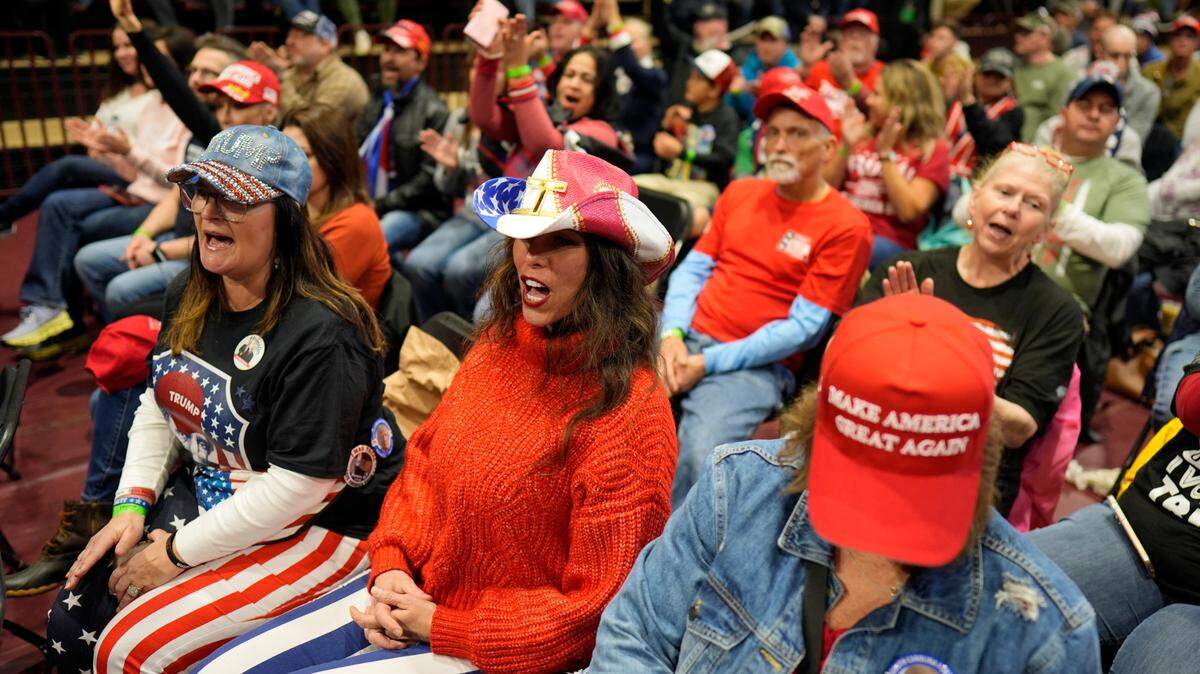
Washington voters are now, or soon will be, perusing their presidential primary ballot.
Once again many voters will undoubtedly be irritated that to participate in this year’s primary you’re required to identify yourself as either a Republican or Democrat.
Most voters hate this, but political parties have rights, and one of the most important is the ability to choose candidates.
Political parties and the government have struggled over this tension for decades, and in Washington that struggle has resulted in a bizarre primary system that invites further court challenges.
Once upon a time, before I became a politically homeless Reagnite independent, I was the Chairman of the Washington State Republican Party, which put me right in the middle of primary disputes.
The two major parties are sovereign at the presidential level. The parties, not the federal or state governments, decide who their nominees for president will be. Technically, the delegates sitting on the floor of the two national conventions choose the nominees, but most state parties have chosen to require delegates to vote for the winner of their primary on the first ballot.
In every presidential election, state parties adopt rules for caucuses and conventions. The process the Washington GOP now relies on is typical: delegates to the national election are chosen by a process that begins with precinct caucuses, then county conventions, and finally the state convention. But those delegates are required to vote for the winner of the primary now underway in our state.
Not long ago, both major parties in Washington chose to ignore the government-run primary and instead relied on the caucus and convention process. This was their right.
When it comes to all other elections, the lines aren’t as clear. State governments have the authority to make the laws governing elections, but courts have ruled that those laws must respect the parties’ First Amendment right of association. Ideally, state governments and state parties would compromise and work together to devise a system both can live with.
In our state, the history is one of more conflict than of compromise — and the resulting system may be headed for new challenges.
In the beginning, Washington law allowed the parties to choose their candidates, first via the convention process and then through primary elections during which voters had to choose a party ballot.
Washington has a rich and deep good-government, progressive tradition, and historically progressive advocates have opposed granting political parties any power. In 1935, the state Legislature adopted a citizens initiative, sponsored by the Washington State Grange, creating a “blanket primary.” Under the blanket primary, all candidates appeared on one ballot and voters could vote for their preferred candidate for each office, with the Republican and Democrat who received the most votes moving on to the general election.
Of course, the political parties hated the blanket primary because it allowed voters who did not belong to their party to help choose their candidates for November.
Still, it was the law of the land for 68 years.
Then, in June of 2000, the U.S. Supreme Court ruled that the parties were right all along and concluded that the California blanket primary was unconstitutional because it violated political parties’ freedom of association rights. Both parties in Washington quickly sued, and what followed was 12 years of negotiations, litigation, legislation and ballot measures.
The result was the complete defeat of the parties and the enactment of our current system, the top-two primary.
Voters can now vote for anyone, and candidates can only list what party, if any, they prefer. This system has survived court challenges because it technically does not nominate either party’s candidates. But parties are left with whichever candidate makes it through, just like the blanket primary.
Party activists hate this system, too.
Now, Washington Republicans have taken the next step.
Starting this year, the WA GOP will endorse candidates at the party’s state convention. Only endorsed candidates will receive party support.
I have no idea if the Republican party will go this far — Republicans don’t talk to me much these days! — but the next step seems obvious:
Go back to court and argue the party has the right to control the use of its name and avoid voter confusion, so only party-endorsed candidates should be allowed to use the word “Republican” when they file for office.
If such a maneuver is successful there will be more chaos. Even if it were to fail, or avoid going to court, how long would it be until voters start asking why some candidates are listed on the primary ballot who aren’t endorsed by their party?
Could candidates who are not endorsed — and therefore denied millions in party support — take action against the parties?
In the aftermath of the 2000 U.S. Supreme Court ruling that declared the blanket primary unconstitutional — at least before we all lawyered up — Secretary of State Sam Reed held a few meetings with State Democratic Party Chairman Paul Berendt and myself to see if a compromise could be reached. My objective in these discussions was to see if we could agree on some sort of hybrid system that would allow the parties to nominate candidates for that November while creating an alternative path for others to make it on the ballot.
We made no progress, in large part because (I believe) Reed and other state officials knew that compromising with political parties would not be popular with the voters.
People love to hate political parties, but they exist, and they have rights that must be respected.
I could be wrong, but I suspect similar negotiations might be necessary in Washington in the not-too-distant future.
Chris Vance is a former Republican state legislator, King County Council member and State Party Chairman. He left the GOP in 2017. Vance writes a monthly opinion column for The News Tribune.