Inslee signs Strippers’ Bill of Rights today. When booze will hit WA clubs is uncertain
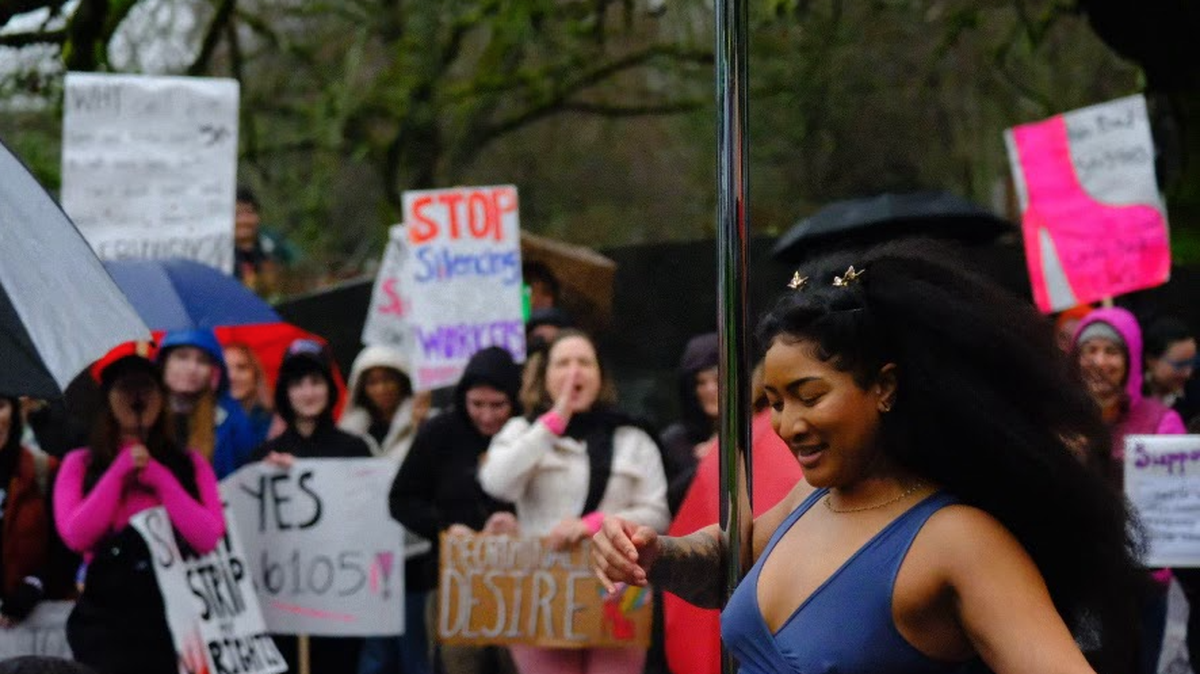
Madison Zack-Wu was almost to her car when the phone buzzed.
It was cold, wet and late. After a long day of politicking, the high-alert text message came as a pleasant but inconvenient surprise.
The legislative effort Zack-Wu spent years of her life bringing to fruition would have its moment, after hours, which was probably fitting.
Zack-Wu, 25, championed Washington’s Strippers’ Bill of Rights, groundbreaking legislation designed to improve safety and workplace conditions for adult dancers across the state.
On the last Tuesday of February, with just over a week left in the 2024 session, she received the news she’d been waiting for.
The state House — where similar legislation had stalled the year prior — would bring the Strippers’ Bill of Rights to a vote. It had been approved in the Senate a few weeks prior.
The victory Zack-Wu had long sought for strippers like herself was within grasp.
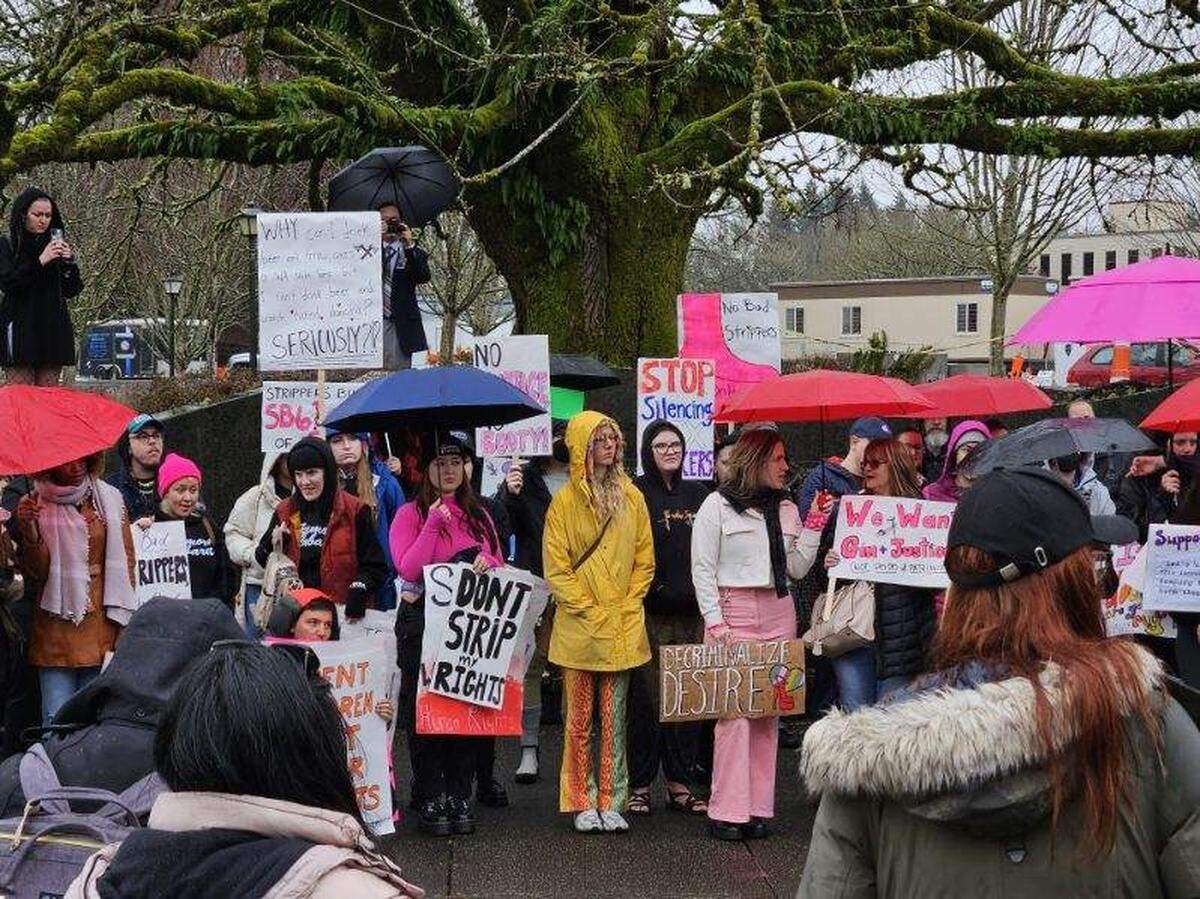
“Me and a colleague …walked through the rain and wind all the way to the car. I sat my (expletive) down and immediately got a text, ‘We’re gonna vote!’” Zack-Wu recalled last week, still energized by the history she witnessed — a 58 to 36 vote in the state House sending the bill to Jay Inslee’s desk.
Washington’s governor is scheduled to add his signature to the legislation on Monday, March 25, according to Inslee spokesperson Mike Faulk.
“When the count came in, I was surprised by how many votes we got. I was still thinking it would come down to the wire,” said Zack-Wu, who grew up in Tacoma and signed on to the Strippers are Workers campaign in 2020.
“It was very emotional.”
Understandably. After falling short last legislative session, this year Zack-Wu’s confidence has waxed and waned.
The bill — SB 6105, sponsored by state Sen. Rebecca Saldaña, D-Seattle — is straightforward enough: it extends common sense protections to dancers and requires safety training for employees of Washington’s strip clubs. Among other things, the legislation mandates de-escalation and sexual harassment training for club staff and limits the fees owners can charge a dancer to perform.
It’s also complicated and contentious, opening the door for the sale of alcohol inside clubs where it’s long been prohibited.
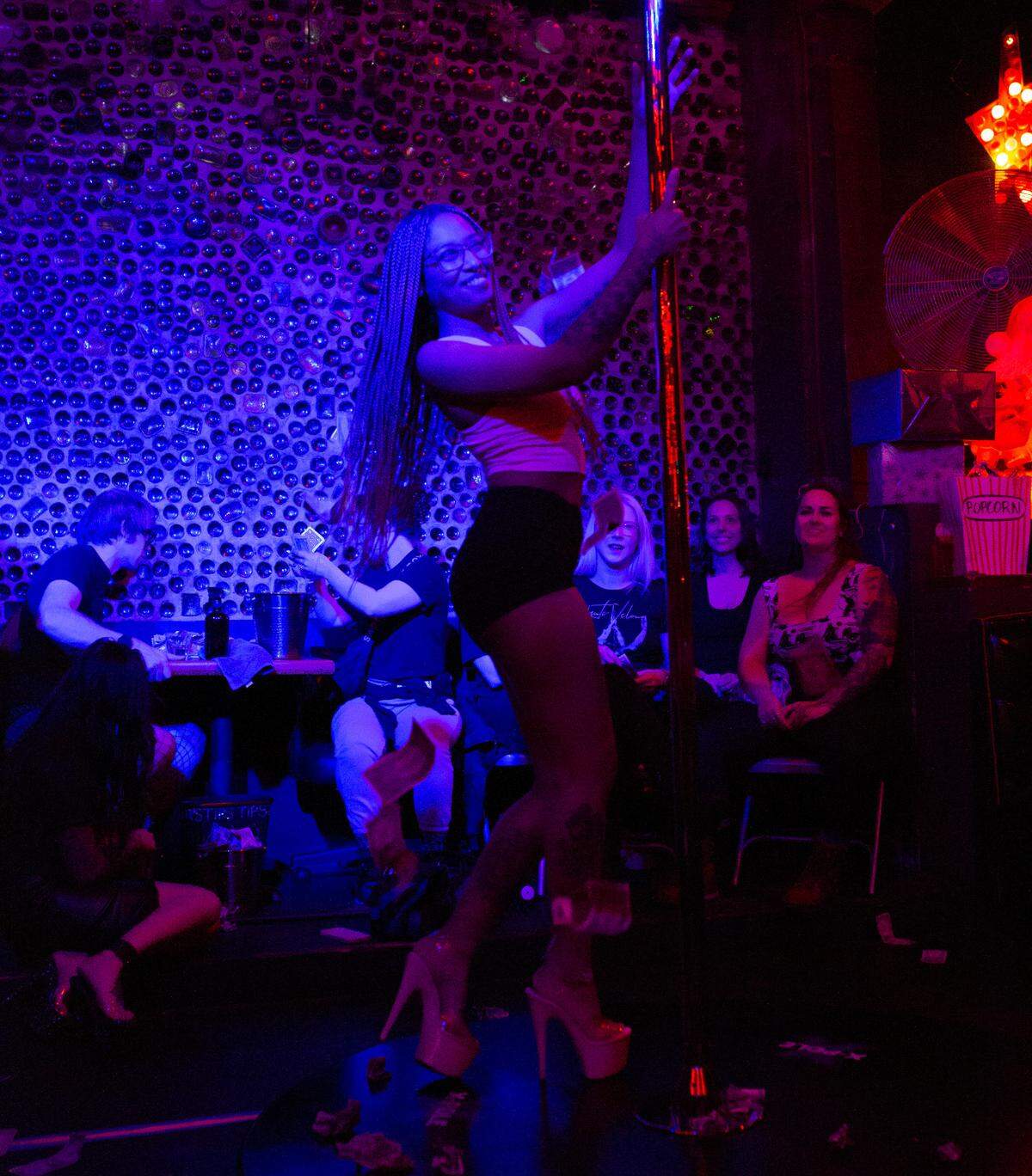
There are currently 11 strip clubs in Washington, including two in Pierce County.
‘Pathway to liquor’
So what happens from here?
If the passage of the bill last month was cause for celebration, what followed was a sobering realization, Zack-Wu realized: The work is just beginning.
While the final version of the bill included what’s been described as “a pathway to liquor sales” in Washington strip clubs, the route left to clear by state regulators is largely uncharted and ill-defined.
By removing lewd conduct rules, the state Liquor and Cannabis Board has the leeway it needs to grant liquor licenses to strip clubs, according to agency spokesperson Brian Smith. He acknowledged that it could take more than a year before that process ramps up.
The state Department of Labor and Industries will be tasked with drafting rules and guidelines for making the changes to workplace safety standards included in the legislation, Smith said. The Legislature gave the agency a deadline of early 2025.
Once the updated rules are established, the state LCB will work with L&I to issue liquor licenses while ensuring that applicant clubs are meeting the new standards, according to Smith and L&I spokesperson Matt Ross.
“SB 6105 gave us, in the end, what we needed as far as clarity to issue a liquor license,” Smith told The News Tribune via email last week.
Zack-Wu said she expects alcohol to be available in Washington clubs in “12 to 14 months or so.”
According to Strippers’ Bill of Rights co-sponsor Sen. Yasmin Trudeau, D-Tacoma, the original version of the bill she supported in the Senate was stronger and more direct, offering a more expedient end to the prohibition on alcohol sales in Washington clubs.
The legislative sausage that emerged after the bill made its way through the House still represents a massive victory for strippers and adult dancers across Washington, Trudeau believes.
A series of surprise law enforcement inspections targeting Seattle LGBTQ+ nightlife venues elicited public backlash and inspired state lawmakers to apply new scrutiny to the state’s lewd conduct laws, adding critical momentum to the cause, Trudeau said.
“There were enough questions about how we would transition to a 21-and-over alcohol-based system, and what kind of transition would need to happen, that it felt like it was getting in the way of the basic protections, which were overwhelmingly supported,” Trudeau said.
“I think it’s a rational approach,” she added.
“I know it doesn’t go as far as performers wanted, but I think it made sense, considering the anxieties that were present about what would be a significant change.”
Bill signing today
Whatever happens from here, one thing seems certain: Zack-Wu plans to keep fighting.
Since Washington lawmakers passed the Strippers’ Bill of Rights, the Washington Association of Prosecuting Attorneys, including King County Prosecuting Attorney Leesa Manion and Seattle City Attorney Ann Davison, have tried to undercut some of its important provisions. Zack-Wu has been busy defending the legislation and the dancers it’s designed to protect, which is familiar territory for her.
The stars aligned in Washington this year, delivering a high-profile victory for strippers, a profession that has faced intense stigmatization and outright scorn over the years. Many factors played a part.
Mostly, Zack-Wu credits the diverse coalition of supporters for pushing the Strippers’ Bill of Rights across the finish line, including local performers and many in the LGBTQ+ community.
“I think grassroots organizing works,” she told me.
“Not only does it work to create power and change, the best-informed regulations and policies come from the affected community.”
This story was originally published March 25, 2024 at 5:00 AM.