
After 20 years in WA prison, county jail is still a different kind of hell | Opinion
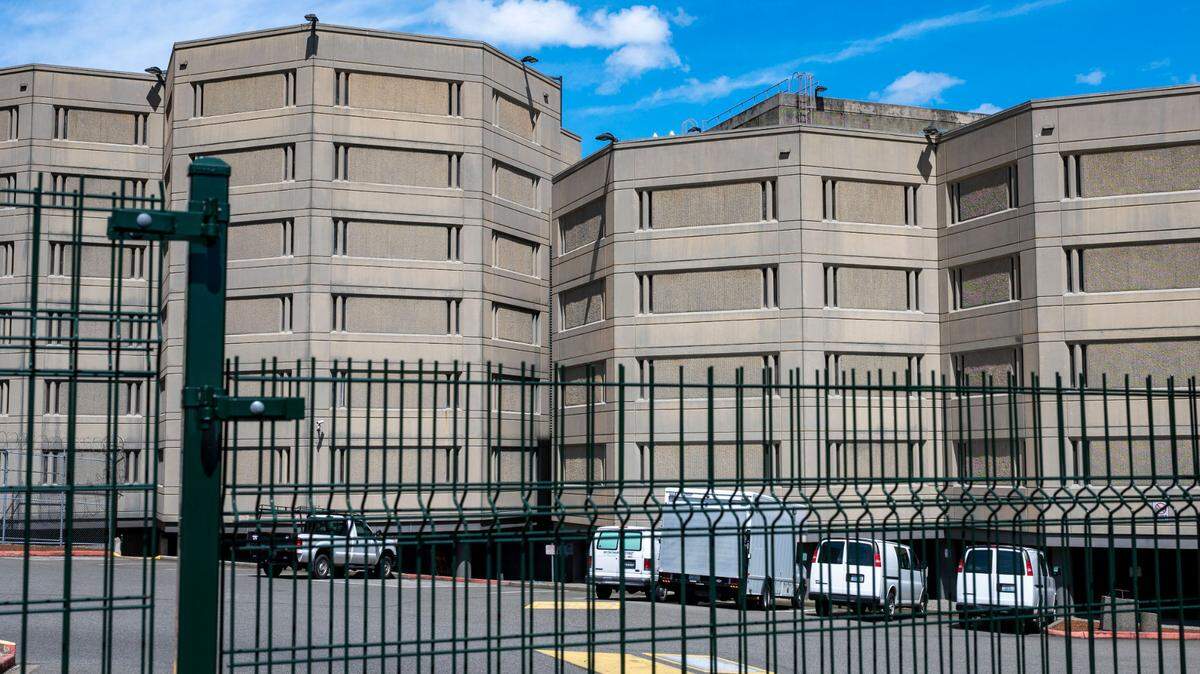
The yelling started soon after the lights went out in our small, bare jail cells. The sound of two men furiously talking vibrated off the steel and concrete that enclosed us, making it inescapable.
One man was tired of the other making fun of him. The second man didn’t care and planned to continue. Tensions rose as the duo shot profanities and threats back and forth through the doors.
It was December 2022 in the Pierce County Jail, where I was detained alongside nearly 800 other men. Most had not been convicted of the crime they were accused of, and were awaiting their day in court. Some had spent over a year at the jail, losing jobs, housing and even relationships.
It had been more than two decades since I first experienced county jail. Now I was back, temporarily transferred from prison so I could attend a resentencing hearing. Appearing at the hearing in person was supposed to increase the chances of a positive outcome. But it meant taking a trip back to hell.
Jails are filled with people experiencing the worst days of their lives. Some are forced to forgo medication for physical and mental illnesses, while others are withdrawing from drugs without proper treatment. Unable to afford price-gouged necessities, many are hungry and lacking basic hygiene items. They are cut off from their usual coping mechanisms and have no sense of when or how the nightmare will end.
Most people in jail are not violent. Some are, and considering the conditions, perhaps it’s no surprise that violence and confrontation are rampant. It’s enough to make the entire place feel like a gladiator school. When violence isn’t coming from the detained, jail staff are just as quick to dole it out.
As the two men continued their shouting match, the whole unit started to get involved, joining in on the taunting, egging on the conflict, some hoping it would erupt in violence when our cell doors opened in the morning. With nothing to do but stare at the walls, making fun of others is sometimes the only form of entertainment. The two guys went on boasting about their toughness — what I call peacocking — in hopes of proving they should not be challenged.
After more than an hour, they reached the agreement many were hoping for. They would fight in the morning. This, of course, prompted more shouting, with guys calling out bets over who would win or whether the fight would happen at all.
I laid there on my thin mattress pad listening to the madness, thinking back to the last time I was in jail. Back then, I didn’t even know the phrase “toxic masculinity,” though I certainly embodied it. I probably would have been one of the guys looking to fight, or at least one of the onlookers placing bets. But after years of working to educate myself, I was able to see this environment through a different lens.
Stripped of all comforts and community, county jails become defined by crude hierarchies of power and control. Whoever commands respect as the toughest dictates how the unit functions — until someone tougher comes along.
The next morning, the two men fought. It was practically a foregone conclusion when one called the other a derogatory name. Not defending oneself against such an accusation could result in being perceived as weak and an easy target.
The prevalence of bullying and violence is so high in jails that many detainees will intentionally get themselves placed in solitary confinement — a UN-recognized form of torture — just to avoid potential assault.
“I was scared to be in an open dorm unit,” William Starkovich, 35, who spent almost a year at Pierce County Jail awaiting trial, told me for a piece published by The New York Times in 2023. “Guys always target me because of issues related to my mental health conditions, one being my personal hygiene.”
When Starkovich told jail staff he didn’t feel safe, they asked if he was refusing to accept his placement, which would result in him being put in solitary. Unwilling to risk another assault, he said yes.
Moments later, Starkovich heard the guards’ walkie-talkie crackle to life. A “code blue” was in progress—a refusal to follow orders creating a disturbance. Before he knew it, Starkovich was on the ground. One guard’s knee was pressed into his neck. Another shot him with a taser. He was handcuffed and hauled off to solitary.
This is the decision incarcerated people face when attempting to avoid the violence of jails: An assault at the hands of other prisoners can be so bad that a beating by guards pales in comparison.
A recent report by the Washington State Attorney General’s Office found that in 2022 there were at least 1,270 assaults between detained people in state jails. That same year, there were at least 3,720 instances of use of force by jail staff against detainees. Both statistics are likely an undercount as there is limited data available, the report noted.
The high level of violence within county jails is unacceptable. People who cannot afford bail to avoid pretrial detention should not be forced to live in unsafe conditions while awaiting their day in court. The daily physical threats are part of why an overwhelming majority of cases end in plea deals — people are so desperate to get out of jail that they’ll cop to crimes they didn’t commit.
As I experienced firsthand, this environment can even deter people from advocating for themselves. I had considered attending my resentencing hearing via teleconference simply to avoid the hazards inherent to jail. But I decided it would be worth the risk.
Unfortunately, the risk didn’t pay off. I ultimately spent two weeks in county jail awaiting a resentencing hearing that never came.
The day before my scheduled date, the prosecutor postponed the hearing — a meeting that was later canceled again, before finally the resentencing was scrapped altogether.
Christopher Blackwell is an incarcerated journalist and the executive director of Look2justice.org, an organization centered on empowering incarcerated voices through civic engagement. Blackwell grew up in Tacoma and has been in prison since he was 22; he pleaded guilty and was sentenced to 45 years in prison for taking the life of another person during a 2003 drug robbery. His work has been featured in the New York Times, The Washington Post and the Boston Globe. You can find him on X at @chriswblackwell.
Blackwell writes a monthly column with The Appeal centered on aspects of the carceral system. The column also appears in The News Tribune and McClatchy’s other Washington papers.
This story was originally published May 9, 2024 at 9:59 AM.