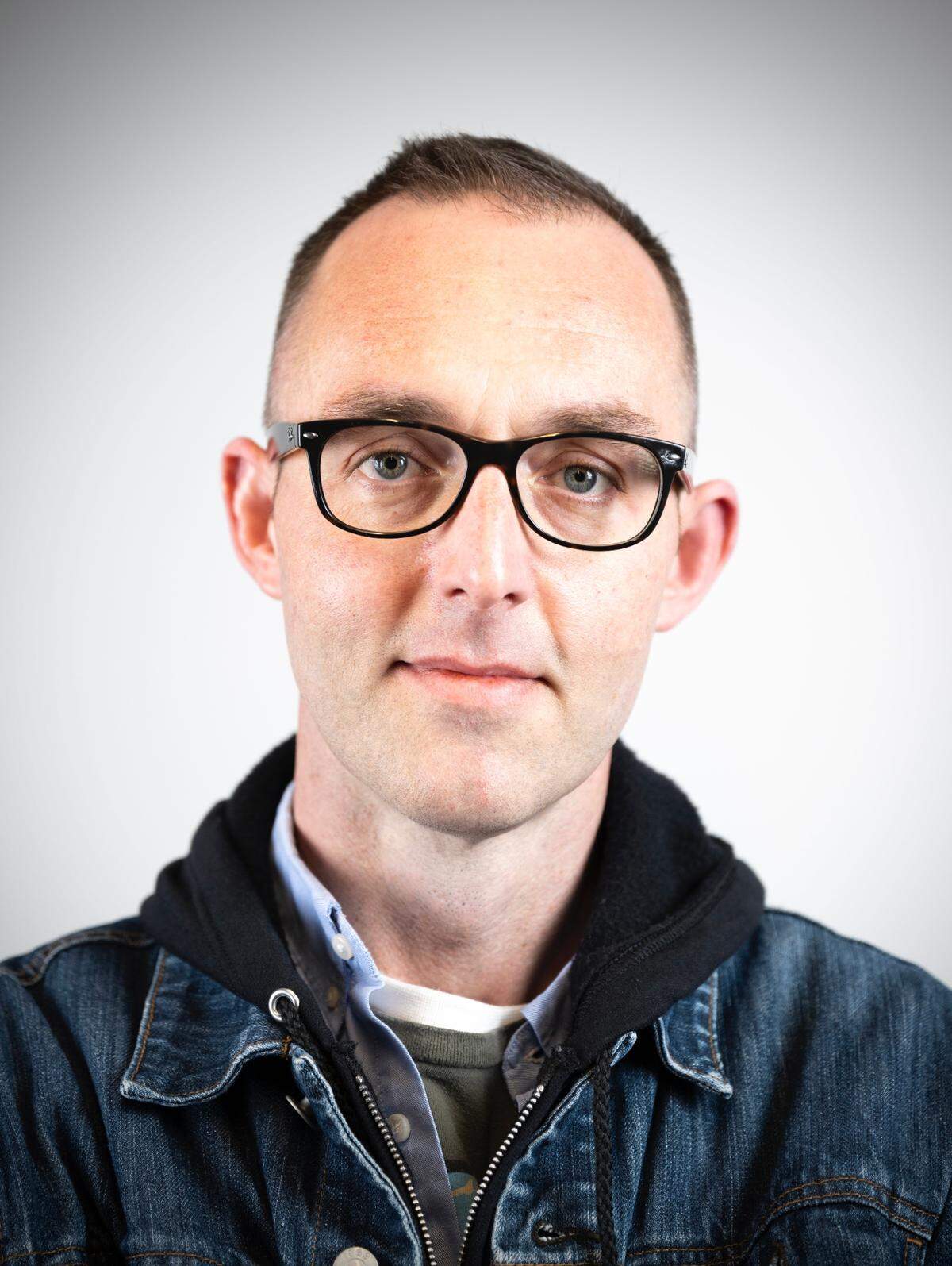
Tacoma is home to a school shooting expert. He calls U.S. debate ‘fear-based’ and skewed
Eric Madfis, a professor of criminal justice at the University of Washington Tacoma, studies one of contemporary American life’s most terrifying phenomena: mass shootings.
For roughly two decades, Madfis has immersed himself in the recurring tragedies, dissecting the ins and outs of why they happen, how they happen, and most importantly, what we can do to prevent them, particularly in our schools.
Madfis is a prominent, nationally recognized expert, oft-quoted and extensively published, based here in Tacoma.
One thing he wishes people would better recognize, even if he knows it runs contrary to instinct and convention?
How much of the conversation surrounding mass shootings in the U.S. is “fear-based” and distorted by sensationalized media coverage, Madfis told me last week.
In a nutshell, that’s what Madfis hopes people will take away from “Mass shootings in the United States: What makes us unique?” — the first public event hosted by UWT’s upstart Violence Prevention and Transformation Research Collaborative (VPTRC).
“I think a lot of the talk around (mass shootings) is not particularly evidence-based,” said Madfis, who was recently named director of the new VPTRC, an effort created within the last year at the institution largely to further his academic work.
“It’s not inevitable that the United States has so many more mass shootings than everywhere else,” Madfis said.
“There are things we can do about that.”
Scheduled for Thursday from 5-8:30 p.m. at UWT’s Milgard Hall, Madfis will be joined at the free VPTRC event by two of his academic contemporaries, Daniel Gascón, an assistant professor of sociology at the University of Massachusetts Boston, and Adam Lankford, a criminology and criminal justice professor at the University of Alabama. Both scholars have worked with Madfis in the past.
Kristina Anderson Froling, the founder of the Koshka Foundation for Safe Schools, also will be in Tacoma to discuss her experience as a survivor of the 2007 Virginia Tech mass shooting and her more recent work as an active shooter response advocate.
Lankford and Anderson Froling are credited as VPTRC affiliate members.
Madfis said he plans to provide opening remarks Thursday and participate in a panel discussion to conclude “Mass shootings in the United States: What makes us unique?”
He told The News Tribune he expects topics to range from the way that U.S. culture, policy and access to firearms impact the nation’s rates of gun violence to the effect that media coverage and toxic masculinity have on the problems we face.
“Mass shootings and school shootings have been increasing over the last few decades. That’s true. But I also think it’s important to emphasize they’re still pretty rare. We’re talking about like 1% of all homicides,” Madfis explained when asked about the broader public understanding he hopes to help achieve and why it matters.
“Obviously, they’re terrible and devastating when they do occur, but you don’t want an overreaction — or to be guided by fear that it’s happening everywhere, Madfis said.
“Because that impacts what you do about policy.”
Columbine and ‘zero-tolerance’
Madfis arrived in Tacoma 12 years ago, eager to make a mark in his field and a difference in his new home.
The creation of the Violence Prevention and Transformation Research Collaborative at UWT shows how far he’s come and what he’s already accomplished during his time in the City of Destiny.
Like a generation now easing into middle age — many of them parents — Madfis graduated high school in the aftermath of the 1999 Columbine school shooting and experienced the lasting ripple effects, he said.
Growing up near Boston, Madfis recalled a friend making a vague comment during his junior year of high school that was misinterpreted as a threat by an administrator within earshot. At the time, “zero tolerance” policies — which respond to perceived threats of violence in schools quickly, often through mandatory suspensions and expulsions — were taking root.
Madfis’ classmate faced a “lengthy suspension,” he said. He never returned to school.
The experience shaped Madfis, he explained.
Since Columbine, there have been more than 400 school shootings in the United States impacting the lives of nearly 400,000 students, according to a running tally maintained by the Washington Post.
Madfis keeps both realities front and center when engaged in his work, he said
The suffering and trauma inflicted by the epidemic of gun violence and mass school shootings is profound, Madfis underscored, extending beyond quantification, death tolls and attempted contextualization.
At the same time, knee-jerk political reactions and policy decisions supported more by emotion than data and facts — from zero-tolerance policies to calls to arm teachers — inflict a different form of societal harm, he believes.
“Having my friend suspended and having that be his last day of high school, it kind of showed me that maybe that wasn’t a particularly helpful reaction. So when I went away to college, I studied that stuff,” Madfis said.
“Later, I had the good fortune of being at a school with some pretty prominent scholars around school shootings and mass shootings,” he added.
“That shaped my research trajectory.”
Last year, Madfis published his most recent book — “All-American Massacre: The Tragic Role of American Culture and Society in Mass Shootings,” a compilation of essays he edited with Lankford.
Lankford has established himself as a preeminent expert in the field over 16 years at the University of Alabama. He described the book as an attempt to explore the “different cultural factors” that drive mass shootings in the U.S., including “masculinity, racism, politics, gun culture, education (and) mental health.”
Lankford’s work has been cited by the White House, and he regularly appears as an expert on TV and in print media.
He described Madfis as an academic kindred spirit and a scholar of equal conviction.
“I’m hoping that by taking an evidence-based, research-oriented approach, we can cut through some of the politics and the polarization and try to find a reasonable middle ground,” Lankford said of his work with Madfis.
“Because there is hope.”
Evidence-based responses
Back in Tacoma, the bulk of Madfis’ recent research has focused on what’s known as the Salem-Keizer threat-assessment method, an approach developed by a school district in Oregon that relies on a proactive response to the threat of violence.
Now used to varying degrees by districts across the country, including Washington, Madfis said threat-assessment programs — or, in layman’s terms, working on a school-wide, systemic level to identify potential red flags early and intervene before violence occurs — have shown significant promise.
Touted as a smarter alternative to zero-tolerance policies, Madfis said the use of threat assessment in schools — and similar evidence-based approaches to gun violence prevention, like red flag laws and expanded background checks — is one way a nation stained by repeated school bloodshed can right itself.
The challenge is getting people and policymakers to listen.
Madfis hopes Thursday night’s event is the start of a longer and more fruitful local conversation, one that eventually leads to safer schools and less bloodshed.
That’s the point, after all.
It always has been.
“We want to engage with the community and achieve a broader awareness,” Madfis said.
“The idea is to foster important conversations, on a local and state level.”
Mass shootings in the United States: What makes us unique?
▪ University of Washington Tacoma
▪ May 9, 5-8:30 p.m.
▪ UWT’s Milgard Hall (MLG) 110
▪ RSVP at tacoma.uw.edu/swcj/violence-prevention-and-transformation-research-collaborative-events
This story was originally published May 8, 2024 at 1:21 PM.