
Pierce County botched growth management — look at Tehaleh. The next Exec has 2 jobs | Opinion
I attended elementary school in Bellevue but moved to Lake Tapps in time for high school. My wife Ann and I raised our kids in Auburn but now live in Sumner.
I have great affection for both King and Pierce counties. But when I compare how each has developed under our state’s Growth Management Act (GMA), it’s hard not to be critical of the decisions made by Pierce County over the last 30 years.
Pierce County has sidestepped or ignored the core tenets of growth management, impacting the quality of life of many residents.
Controlling growth was a red-hot political issue from roughly 1985 until 1995. I played a minor role in passing the state’s second GMA as a member of the House of Representatives.
In 1991, I was elected to the King County Council as part of a slim new Republican suburban majority. My Republican colleagues asked me to chair the Growth Management Committee, where I helped guide the creation of the first countywide planning policies and King County Comprehensive Plan under the GMA. Implementing the state’s Growth Management Act dominated my first term on the King County Council.
The GMA is based on a handful of public policy requirements and goals:
Designate urban and rural areas. Protect the rural area and stop uncontrolled suburban sprawl by maximizing growth in already urbanized areas.
Designate high-density urban centers and link them by mass transit, rail or bus rapid transit.
Require schools, roads, water and sewer to be provided alongside new development to prevent growth from overwhelming local services.
Encourage all urban areas to incorporate as new cities or annex into existing cities under the belief that county governments should focus on rural and regional services, while cities should provide urban services.
Implementation of Washington’s GMA has not been perfect in King County, but clearly the outline is being followed. Growth has been channeled into urban areas. Local bus service feeds the regional rail and bus network that links urban centers. Many, if not most, residents of urban King County can walk to a bus stop — and almost the entire urban area is now within cities.
Cross the county line and the situation is very different. Looking at the Pierce County land use map, yes, the rural areas — including farmland in the Puyallup Valley south of Sumner — have been protected. But there are large, still-growing low to mid-density urban areas, like Parkland, Spanaway, Fredrickson, Graham, and Tehaleh — the massive master-planned development south of Bonney Lake — that remain unincorporated.
Bus service is minimal in the area between Puyallup and Puget Sound, and nonexistent in east Pierce County.
Sumner, Graham, Orting, Eatonville, Bonney Lake and Buckley don’t even appear on the Pierce Transit route map.
Pierce County has permitted large amounts of traditional suburban development built outside cities, far from services, and failed to link it to the rest of the region via transit.
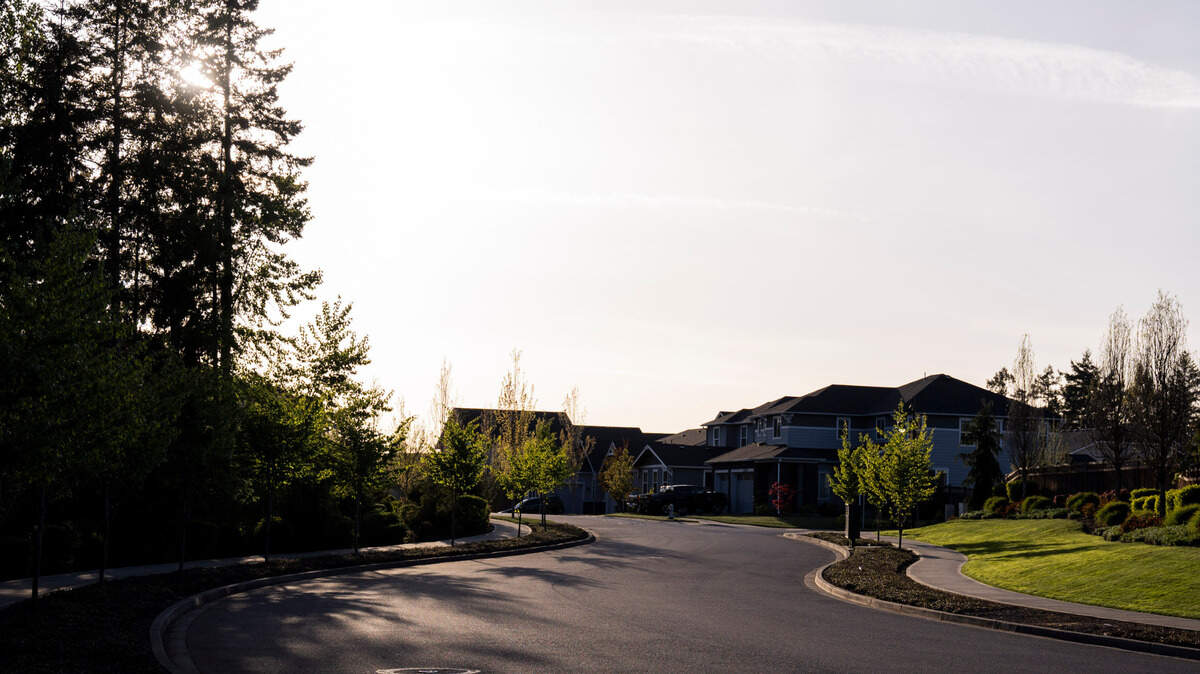
Tehaleh, for instance — thousands of new homes in the middle of the woods served by a two-lane road that now threatens to overwhelm two state highways — is blatantly out of step with the goals of growth management. One wonders how Pierce County or the state allowed it to happen.
How does this affect real people?
First, roughly 8% of Americans are transit-dependent, meaning they rely on public transit to live their lives. In Pierce County, that’s roughly 75,000 to 100,000 people suffering because of the lack of transit options.
Second, transit reduces traffic congestion — at least to some extent — and it certainly helps to reduce carbon emissions. Suburban growth without transit and other services creates traffic gridlock on many Pierce County arterials.
Finally, those living in urban areas outside cities simply don’t get the same level of local services, such as police protection, as do those living in cities. Providing urban services to rural locations adds to the strain on Pierce County government.
It is too late to undo the mistakes of the past, but Pierce County will be electing a new County Executive this year. Funding for transit and other forms of infrastructure will continue to be a major challenge, and it could require help from the state.
Pierce County’s next Executive needs to prioritize growth management by tackling two big public policy issues: The need to dramatically increase transit service and convince residents to annex into existing cities — or form new ones
Pierce County is expected to add roughly 300,000 more residents and 150,000 jobs over the next 20 years. Allowing more unincorporated urban growth without transit service will overwhelm our roads and the county government’s ability to provide services.
Pierce County must embrace the path of responsible growth management — while it still can.
Chris Vance is a former Republican state legislator, King County Council member and State Party Chairman. He left the GOP in 2017. Vance writes a monthly opinion column for The News Tribune.