Forests by Mount Rainier no longer slated for sale. That’s not good enough | Opinion
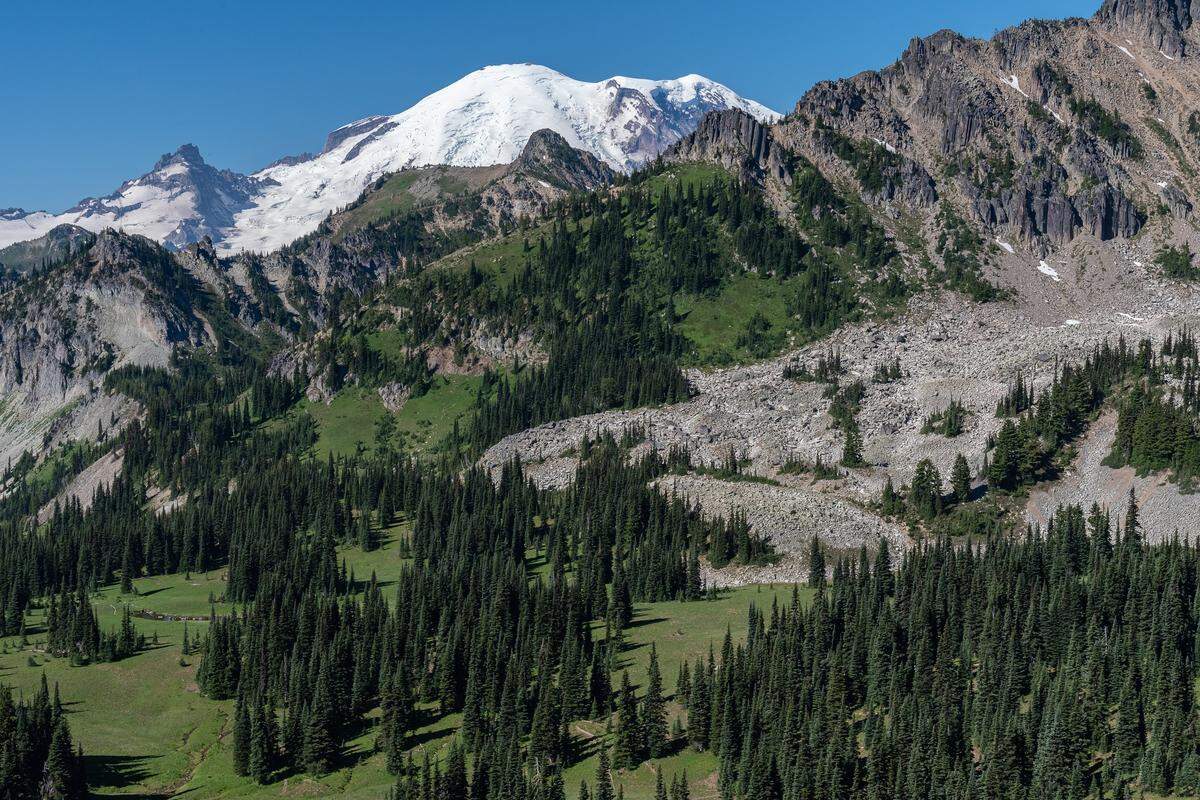
There are a lot of big and beautiful things in this country, and one of my favorites is Mount Rainier.
Until recently, it looked like thousands of acres of forest surrounding the 14,410-foot peak could be put up for sale in a budget plan before the U.S. Senate as part of the budget reconciliation process. Mike Lee, the Republican Senator from Utah who hatched this plan, said on June 23 that National Forest lands like those near Rainier would be pulled from the deal.
Great. Most of the Cascades are safe from a hasty, short-sighted sale of the public’s natural resources. But just because I’m on the western side of the mountains, that doesn’t mean I’m going to forget the other parts of the state where we all like to boat, hike, hunt, ski and relax, and where communities make their money from outdoor tourism.
It’s a big and beautiful state, just like the other 10 states whose lands fall within Lee’s new plan, outlined in a post on X on Monday.
Bureau of Land Management lands within five miles of a population center should be sold en masse, Lee wrote. Sold under the pretext of addressing affordable housing needs. Sold whether local communities (whose economies often rely on outdoor tourism) want them to be or not.
That’s a terrible idea. Its goal of creating affordable housing is unworkable. The cost to local economies is going to make it harder, not easier, for communities to pay for housing.
Personally, my heart is in the Methow Valley, where miles of publicly accessible hiking and Nordic skiing trails support a vital tourism economy. That astounding landscape includes BLM lands near the town of Twisp, a place full of lodging for skiers, bikers and wildflower wanderers.
My favorite wildlands aren’t the only places endangered by the plan. Open spaces near Lake Chelan, including parts of Chelan Butte and the area surrounding Granite Falls Creek, are BLM lands near a population center. Those are currently home to a hang gliding takeoff point and hiking trails, respectively. I could be wrong, but hang gliding into a newly populated area seems like a bad idea.
For that matter, many of these Eastern Washington lands seem to my eye relatively useless for building houses. Many near Chelan and the Columbia River feature extreme, bare slopes and few roads. The area is so rocky, bumpy and steep that, as a kid riding by in the family car, I used to imagine the hillsides were the profiles of alligator heads, curving precipitously into the Columbia River.
It’s also worth noting the area’s population centers are small towns tucked into the available flat spaces found along the lake or the river. Mandating the sales of nearby peaks to address the country’s affordable housing market is nonsense, and Sen. Lee gains no credibility by suggesting it.
A report from Headwaters Economics, a community development and land management research firm, noted that more than half of federal lands near towns that need more housing are at high risk of wildfire. It also found the habitable federal land near towns in Washington is minuscule.
At a virtual press conference on Tuesday, Boise, Idaho Mayor Lauren McLean said the sale of BLM lands outside that city would impede access to outdoor areas that residents have voted several times over to protect. She projected that the sale of those lands would cut off access to 11% of trails that are currently available to residents. She wouldn’t expect to be able to buy it back.
“When we lose this land, it’s gone forever,” she said.
Since when do Republican lawmakers support the federal government solving affordable housing with a sweeping proposal and no details on how to work with local communities?
In a follow-up post on Tuesday, Lee said he’s going to make sure the lands go to American families. But ask any municipal policy maker and they’ll tell you affordable housing is a tough nut to crack, and simply requiring the sale of land “for affordable housing” isn’t going to get you there.
Here in Tacoma, the city council implemented the Home in Tacoma plan, which just rolled out earlier this year and still has to prove its effectiveness. It includes temporary tax incentives for developers to create affordable housing for sale and for rent, with the idea that the increased value of the land will make up for whatever tax revenue was lost during the building process.
That’s just one approach, and it was debated by a local governmental body elected by the city’s voters.
Lee hasn’t released new text that mandates these land sales, and it’s unclear from his remarks on social media if he intends to keep trying to make it part of the budget reconciliation process. We’ll see if his idea is just a post sent into the void.
One thing is clear. The scale of the land sales Lee supports may be big, but it’s our love of and reliance on these lands that’s beautiful.
This story was originally published June 26, 2025 at 9:59 AM.