
This Puget Sound forest should be saved. There are better ways to log | Opinion
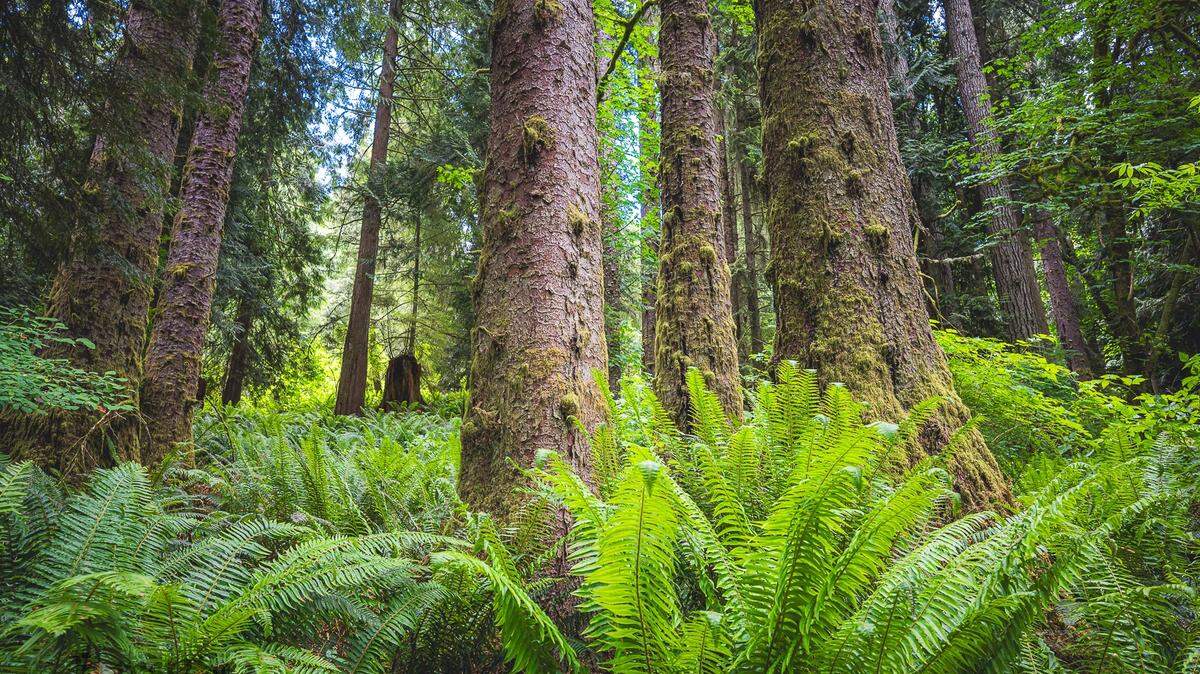
Logging trees next to an Olympic Coast campground and cutting a century-old forest above the Strait of Juan de Fuca shows why Department of Natural Resources (DNR) Commissioner Dave Upthegrove was right to pause new logging contracts. Unfortunately, his decision came too late to save six units of timber off the Strait of Juan de Fuca Scenic Byway.
But that can be fixed.
Upon being sworn in last January, Upthegrove announced a pause on harvesting certain structurally complex mature state forests.
Beyond using this pause to decide which forests we want to save, DNR should use this pause to redefine how we value mixed-species forests. Reducing forests to their timber value is tantamount to arguing a river has no value beyond her capacity to generate electricity. We no longer do that with rivers, and we shouldn’t do that with public forests.
We should also use this pause to envision a plan for safeguarding logging jobs and mill operations, and imagine a new economic relationship between local governments’ budgets and timber sales.
The six different forest units being logged or about to be cut, that I recently hiked, demonstrate the need for envisioning a new way forward.
But before moving forward, we need to fix a past mistake.
Before Upthegrove took office, DNR let a contract to log six units between Port Angeles and Neah Bay that it calls Doc Holliday (DH). DH Units 2 and 3 are already being logged. Logging hasn’t started yet on Unit 1’s two acres. Those Unit1 acres abut a campground, have a creek gurgling through them and are braided with hiking and biking trails.
After roads have been carved, trees harvested and plants trampled, the trails will be reopened, but they will no longer meander beneath a shading canopy, among waist-high sword ferns, between trees you can barely reach around with both arms. While trees larger than sixty inches in diameter will be spared, the trails will be exposed to sun, the habitat this forest provides a multitude of species will have been leveled, and people will camp alongside a tree farm. The ecological and recreational value of unit 1’s two acres exceeds their value in lumber and pulp.
Units 4, 5 and 6 rise above the Strait of Juan de Fuca’s crashing waves. Bushwacking through unit 5 felt like hiking in the Olympic National Park. Despite that, because unit 5’s trees were first cut 90-120 years ago, it’s OK to cut them again now.
In the 1960’s when I grew up on the Olympic Peninsula, and when my future father-in-law worked for a timber company in these same forests, century old trees like those in unit 5 weren’t so unusual. Today, biologically diverse stands of girthy, towering spruce, Doug fir and cedar need protecting.
They don’t deserve protection merely because they are pretty and provide recreational opportunities. Nor just because bacteria and bears, amphibians and insects, eagles, owls and deer — all which DNR acknowledges depend on these units — thrive there. We should also protect these increasingly unique forests because, at least for people like me who grew up here, they are part of us.
As Commissioner Upthegrove said, “Forests define Washington — they are vital to our habitats, to our communities, and our economy.”
Indigenous Studies Professor Anthony Fernandes, ʔéʔɬx̣ʷaʔ Nəxʷsƛ̕ay̕əm (Lower Elwha Klallam), told me: “These cedar trees are our grandmothers. They carry stories of our people. They might be second growth, but their DNA still exists in this ground and holds our beginning. I don’t want my children to know emptiness. So, for me, protecting this is the only option.”
The state received $683,734 for these six units’ timber. Of that, $467,775 goes to Clallam County and to the local fire, library, port and hospital districts that depend on timber sales to augment their budgets. Any alternative that preserves these forests needs to ensure local governments receive the compensation they are legally due. Going forward, we need a new financial relationship between local governments and our state timber lands. Now, during this pause, is the moment to imagine that relationship.
That new relationship needs to preserve and, if possible, increase logging and mill jobs in timber communities. To do that, the Department of Natural Resources should begin aggressively acquiring properties that are or would be appropriate tree farms. The money to do that exists. In 2025-27, Washington budgeted over $170 million for climate change activities. It currently plans to spend over $120 million of that on studies and hiring more state employees. Instead, those funds should be used to compensate local governments for forests we won’t cut in order to protect watersheds in an era of disappearing glaciers, and to purchase new timber trust lands that can be managed for carbon sequestration and predictably logged in perpetuity.
Loggers, local governments, tribal leaders and defenders of watersheds could probably all support such an initiative.
Bruce Webster, of the logging company holding the Doc Holliday contract, understands the sensitivities associated with cutting trees along trails and next to a campground and appreciates the cultural concerns of some tribal members. While he’s already spent money prepping some of the Doc Holliday units, he said, “It comes down to working together”, and told me he was open “to coming up with what’s fair for everybody.” If the DNR amended his contract to substitute parcels of equal value, he’d accept the alternative.
DNR should propose that alternative. As Fernandes explained, “Our existence, backwards and forwards, is this land and water, and that makes what happens here more significant.” He’s right.
DNR should amend the Doc Holliday contract to at least protect the two acres next to the campground (unit 1) and the century old forest (unit 5).
And DNR has no time to spare. Logging is underway.
Bill Bryant, who served on the Seattle Port Commission from 2008-16, ran against Jay Inslee as the Republican nominee in Washington’s 2016 governor’s race.
This story was originally published July 31, 2025 at 5:00 AM.