Freighthouse Square is open. But its businesses deserve more | Opinion
It was a snowy morning in Tacoma, and that meant people would stay home if they could. But Chayan Samalee got in his car and drove to work.
He knew there was one person who came to his little spot in Freighthouse Square every morning to buy a coffee. Samalee opened his restaurant, which sells golden crackly crusted fish and chips at a counter, and waited.
The customer never came, he recalled to me recently. Still, Samalee was glad he went to work, just in case. It’s just one of the ways he’s a bit like Freighthouse Square itself: there for the community around him, whether they know it or not.
Yes, believe it or not, Freighthouse Square is still open.
And it could stay open until at least 2027 while Sound Transit goes through an environmental review of the site as the potential home to a new Link light rail station. But a rundown feel, a lack of advertising and the specter of the construction involved in creating the light rail station are working against the vitality of the long, wooden mall, and the dozens of shops and restaurants inside.
I recently spoke with multiple business owners there, and each was eager to tell me how their business connected them with the city, despite the less-than-bustling environment and the likely destruction of the building looming in the future.
The way I see it, transit agencies, local government and the business community need to come together to help answer two questions.
First, how can we make Freighthouse Square a space for the community to enjoy for the next two or more years? And second, how can we help the high-quality businesses inside succeed once they can’t operate inside the building anymore?
And really, the answer to the second problem lies in solving the first one. What will help these small business owners weather the change more than earning more money? Money earned from increased foot traffic passing by their high-quality wares. While we all have fun at a Tacoma landmark.
Otherwise, we’re squandering the last few years of life left in this local gem. And if things don’t change, it looks like that’s what’s coming down the line.
Freighthouse Square is a local business incubator
The original building at 2501 East D Street opened in 1909 as a freighthouse for a rail line known as the Milwaukee Road. In 1985, local business owner Keith Stone purchased and remodeled the building, opening it as Freighthouse Square two years later.
In its heyday, its shops included bakeries, sit-down restaurants, a produce stand, a milk and eggs outlet, a flower shop and a train hobbyist store. Even after a major fire, the building’s units reached 100% occupancy in 1993, this newspaper reported.
.jpg "Building freighthouse square first commercial remodel (1).jpg")
Freighthouse Square has historically launched start-up entrepreneurs. That includes La Fondita, which I remember eating at on a tiny attic-level patio in the 1990s. It later opened as a comparatively larger restaurant on Proctor that served sit-down Mexican food for two decades. More recently, Celebrity Cake Studio moved from inside Freighthouse to a standalone location a couple blocks over.
Earlier this year, outgoing mayor Victoria Woodards fondly recalled to me the giant cinnamon rolls she got as a kid at Freighthouse. Peggy’s Cinnamon Rolls was so successful that owner Peggy Waldherr expanded into bread baking and opened a second location within Freighthouse Square.
Waldherr’s business closed more than 15 years ago, but her son brought the cinnamon roll recipe to Anglea’s Restaurant in Midland around 2019. Meanwhile, Waldherr’s partner at the bread baking company spun that business off into Old Milwaukee Cafe, which served Tacoma for 25 years.
Tacoma has known for more than two decades that buses and passenger rail were coming to Freighthouse Square’s vicinity. As far back as 1993, regional transit planning included talk of putting a stop for a rerouted Amtrak line and a station for a dedicated commuter rail line near the building.
Back then, these local transit plans seemed destined to boost business at Freighthouse Square — not push out tenants and potentially demolish the building.
“If that kind of daily train and bus traffic ever centers around Freighthouse Square,” Tacoma News Tribune columnist Art Popham mused in 1993, “Peggy’s Cinnamon Rolls really will need multiple market locations to handle all the people that would converge on such a transportation hub.”
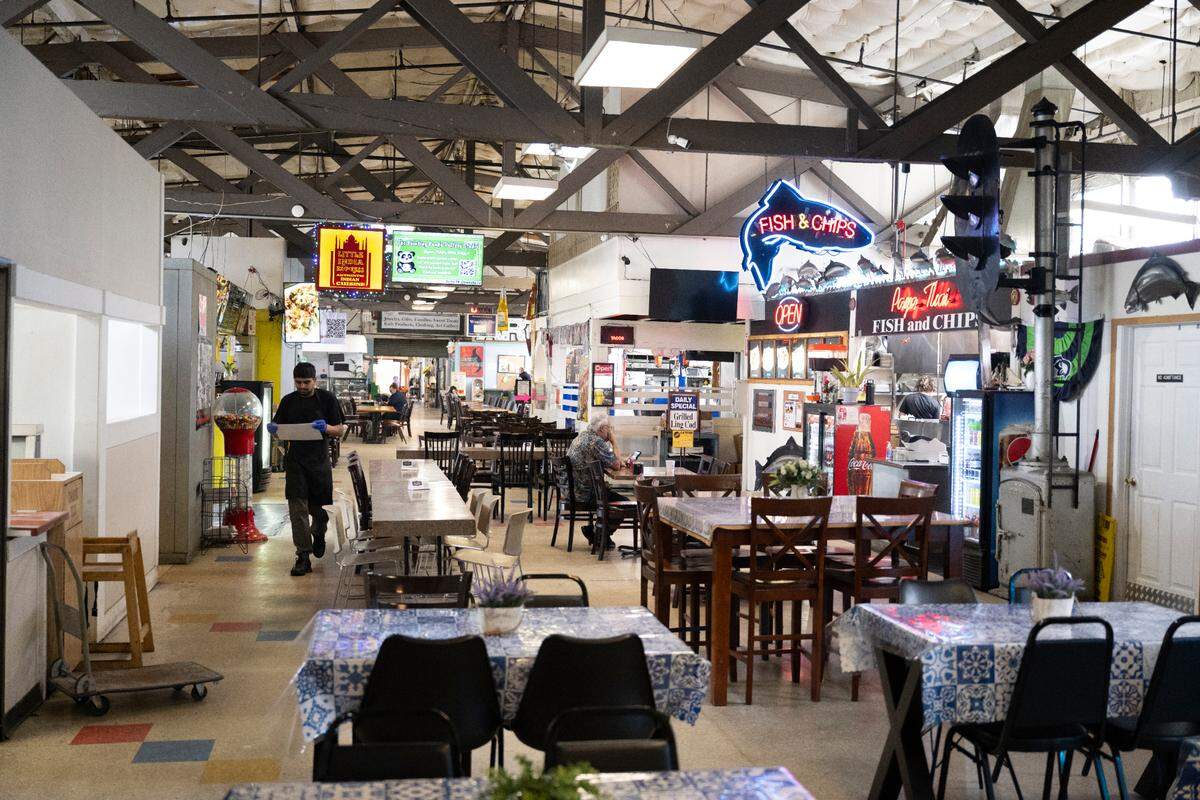
Popham was writing after Freighthouse Square survived arson in September 1992, when a serial arsonist set fire to an exterior wall of a warehouse on the eastern end of the building. The warehouse was consumed by flames, but it was separated from the rest of the building by a firewall and a steel door. As a result, only one other business was damaged.
The building and the shops inside continued to thrive after the fire, with the owner planning to expand retail space into the former site of the warehouse. Also under discussion: how to plan for the eventual arrival of Amtrak and a commuter rail station in the area. Since then, the new Amtrak station and the Tacoma stop for the Sounder train have been installed into sections of Freighthouse Square, leaving more than half of the building’s length for retail.
Freighthouse Square is open for business
Now, business owners are planning their exits. The final plan for the light rail station is still under discussion. It’s possible the retail section of the building will be demolished, or that some of it will be used for the station.
Meanwhile, merchants are considering offers from Sound Transit to reimburse moving expenses or a lump sum for closing and walking away. Business owners told me they aren’t optimistic about the new start they’d get with moving funds from Sound Transit, which they say won’t cover expenses like new licenses and remodeling at a new location.
The charm of Freighthouse Square and its proximity to commuters is what attracted former Seattle resident Josh Alday to Freighthouse. He opened e-bike shop Bike Box there in October 2024, after visiting the building during a birthday trip to Tacoma.
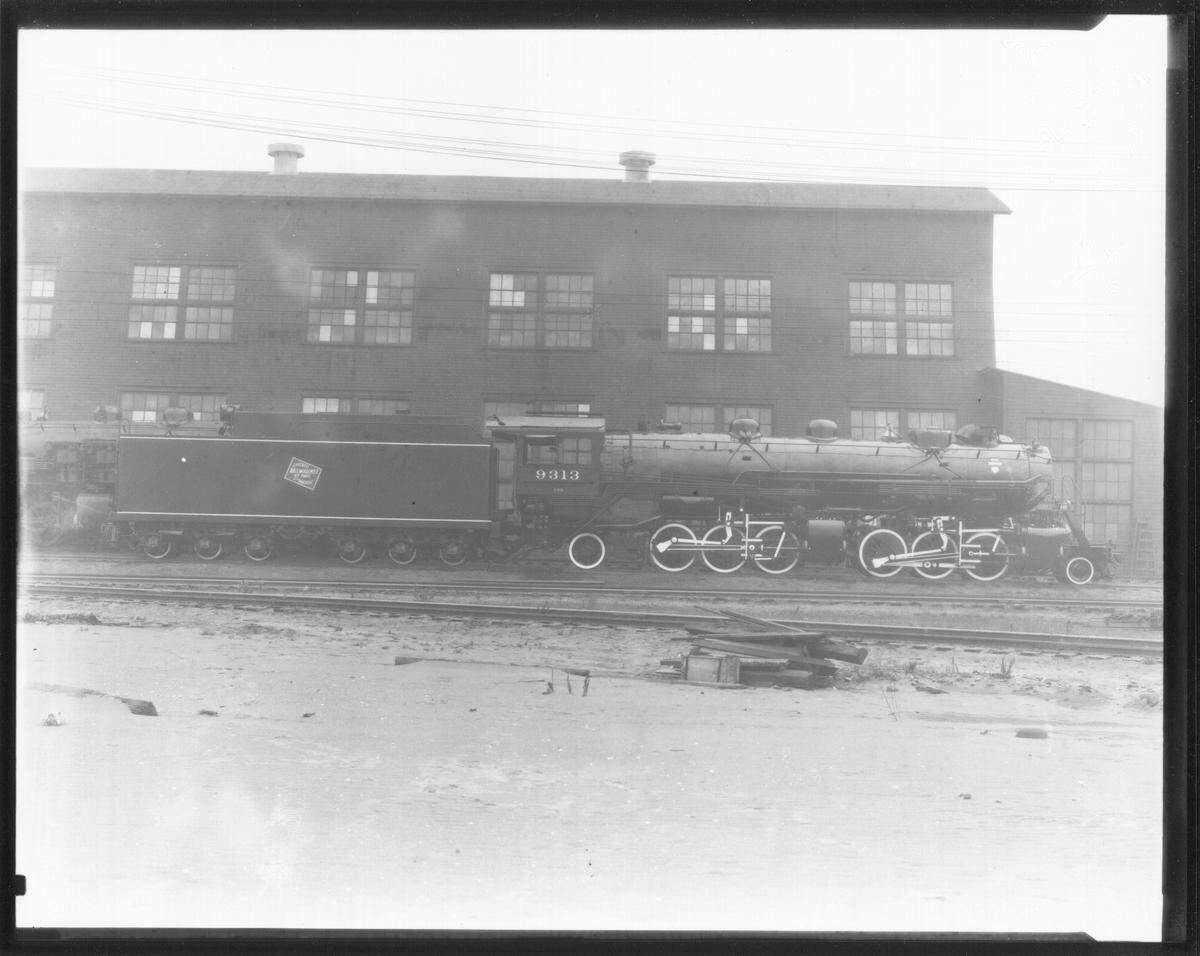
The spot reminded his wife of “Wonder Wharf,” an old-fashioned amusement park that anchors the commercial district in the quirky animated sitcom “Bob’s Burgers.” Now, he’s frustrated that Sound Transit isn’t doing more to promote the businesses in the building.
Alday, who now lives in Tacoma, would like to see signage in the train station area pointing people to the nearby shops and restaurants.
That’s a sentiment shared by Virginia Crittendon, who owns Vee’s Boutique down the hall from Bike Box. She says people frequently ask her, “When are they tearing this place down?”
Her message to Sound Transit: “You should be promoting us.” Her idea is to put advertisements for the businesses on the agency’s buses and trains.
Sound Transit spokesperson David Jackson said the organization has a program to support local businesses affected by new stations. Called Loyal to the Local, it’s typically used during construction.
Jackson said that didn’t rule out using it during the planning phase, but so far the agency hasn’t used the program to promote Freighthouse Square businesses.
Finding support for Freighthouse Square merchants
Merchants will need to earn solid revenues if they’re going to launch the way that previous businesses have. But they’re currently stuck in a chicken and egg scenario.
Shops need customers to survive the end of Freighthouse Square as we know it. In addition to publicity, the building needs improvements to attract more customers. No one can or will pay for those improvements.
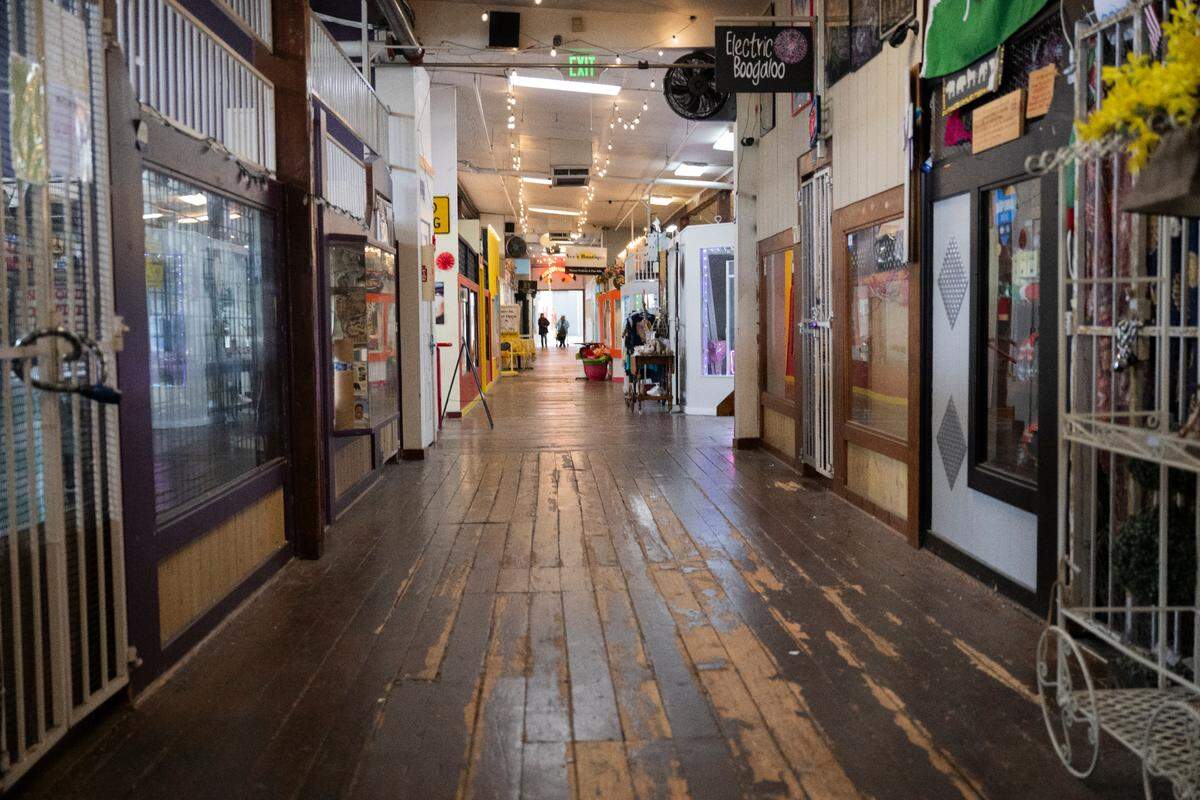
I asked Woodards about if the city could support improvements to Freighthouse Square, but the building is not listed as a historic landmark.
Alterations to the building’s original condition, including the construction of Amtrak and Sounder stops inside the western half of the building, would make that all but impossible. In fact, the building’s lack of historical landmark status is part of why Sound Transit can plan to put a light rail station inside to begin with.
The upshot is that a category of funds for upkeep are off the table. Asked if there are any other city programs that can offer support, Woodards pointed to Tacoma’s structural budget deficit. The city’s focus is on the future.
“We are working very hard with Sound Transit, making sure that not only does the station reflect the history of the building, but that we’re building a station where there will be access to retail,” Woodards said, “and that it will be a place to come back to.”
Who’s responsible for Freighthouse Square?
The building’s owner, Brian Borgelt, said it’s hard to justify fixing up the building from a business perspective, because any investment will be lost when Sound Transit ultimately takes ownership.
“When you’re almost certainly going to be torn down and probably not compensated for your time and your money? It’s awfully hard to invest,” Borgelt said.
I think that’s reasonable, and that the best thing would be for the transit agency that’s holding a figurative sledgehammer over the building to give a fair, or even generous, deal to Borgelt and the businesses it will kick out. That’s justified because Sound Transit is the reason it makes no financial sense to gussy up the building. That means it’s already cutting into the merchants’ ability to make money.
Tacoma’s policy and government is also partly to blame for the state of affairs at Freighthouse, Borgelt argued. He shared his frustrations with me over how the city has handled crime and homelessness in the area. Consider, he said, the char marks left behind when someone set a fire next to the building (the building has survived many fires).
“Do you spend a weekend and $5,000 to fix that scar,” he asked, “or do you just let it stand as a glaring example of how Tacoma could do better?”
But Borgelt also has the most direct ability to boost the merchants by doing things that would normally be considered the cost of doing business for a property owner. That might not be the result of a fair system, and it’s not my money. But that’s the state of things, and the part of me that wants Tacoma looking its best wants the building and merchants cared for.
I asked Borgelt again whether fixing cosmetic issues like worn flooring, faded paint and yes, a burn scar, would bring more business to the shopping center. He said perhaps, but the focus should be on getting the vision for transit-oriented development right, not on the last few years of Freighthouse Square in its current iteration.
“Let’s get that right,” he said, “and we’ll get out of the way.”