Tacoma ICE detainees see these faces when they win release | Opinion
The tents outside the Northwest ICE Processing Center are rustic, and there’s a well-equipped RV at the curb nearby. It’s all part of a welcome center staffed by volunteers to help released detainees get supplies and a plan.
But the detainees tend to gravitate toward the tents, said Aiden Perkinson. He’s the operations manager of Advocates for Immigrants in Detention Northwest, or AIDNW. He pointed out that many detainees have been inside with limited yard time for months.
“People want to be outside,” he said.
The volunteers are happy to oblige. One recent March afternoon, volunteer Chris Hallam warmed one of the tents with a propane space heater. Patio chairs sat out near the heater, and folding tables held snacks and hot drinks for released detainees.
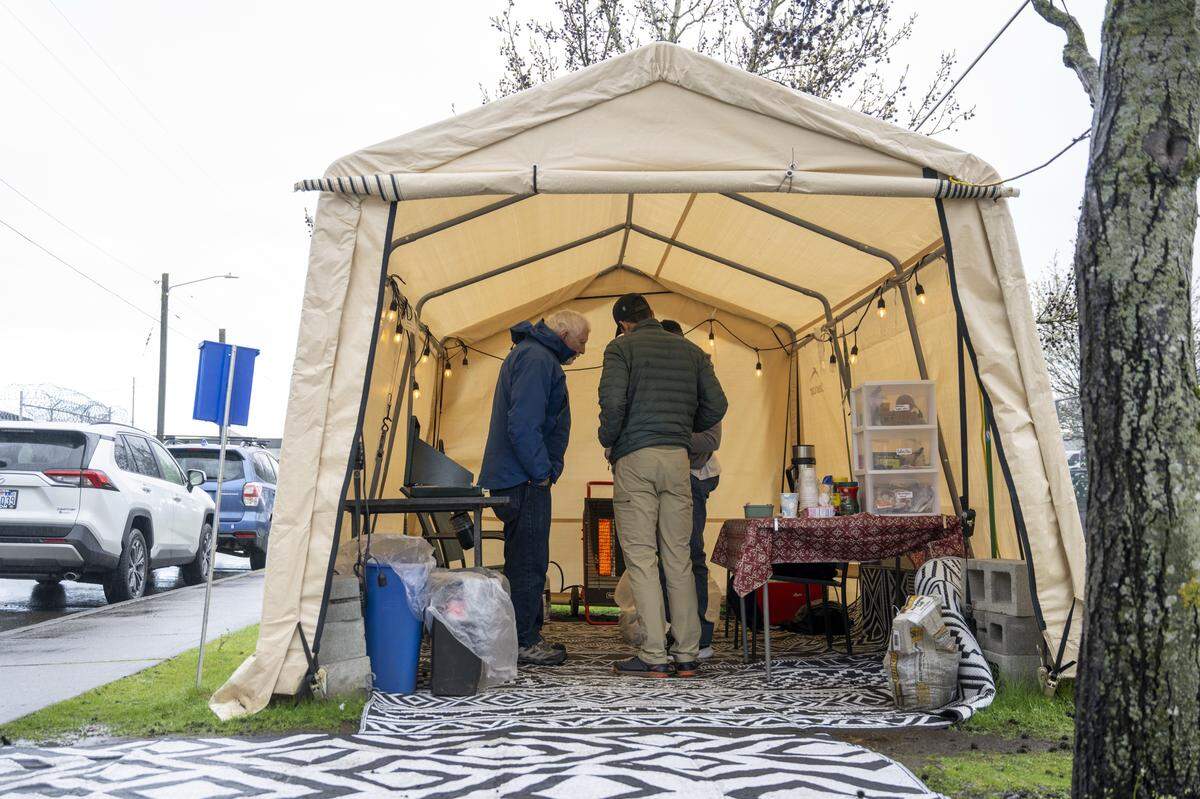
Volunteers have helped outside the facility from its early days, Perkinson said. AIDNW formed in 2009 out of meetings between concerned community members, advocates and lawmakers. By 2014, the group was coordinating the volunteers waiting outside the gates.
Late this winter, I waited with the volunteers during their shifts on two separate days to see what their work was like. What I saw was a daily ministry to people with very little to their names, at a crucial moment in their lives.
The larger conversation about ending or limiting detainment in immigration enforcement is vital. As the volunteers outside the detention center can attest, the facility that was once billed as a short-term processing center for about 500 detainees now holds roughly three times that number, and many report months-long stays in inhumane conditions.
Other Northwest communities have pushed back on efforts to build facilities or house enforcement agents where they live. Pierce County’s government put a moratorium on new detention centers in unincorporated areas.
I also think many people can address a problem at more than one level. Perhaps helping individuals with supplies and logistics deals with a problem that shouldn’t exist, at least not at this scale. But for now, the problem is there, and it affects people day after day. The volunteers are happy to help.
“What’s so rewarding is seeing how happy people are when they get out,” said Bill Lloyd, a volunteer who’s been coming to the welcome center for 10 years.
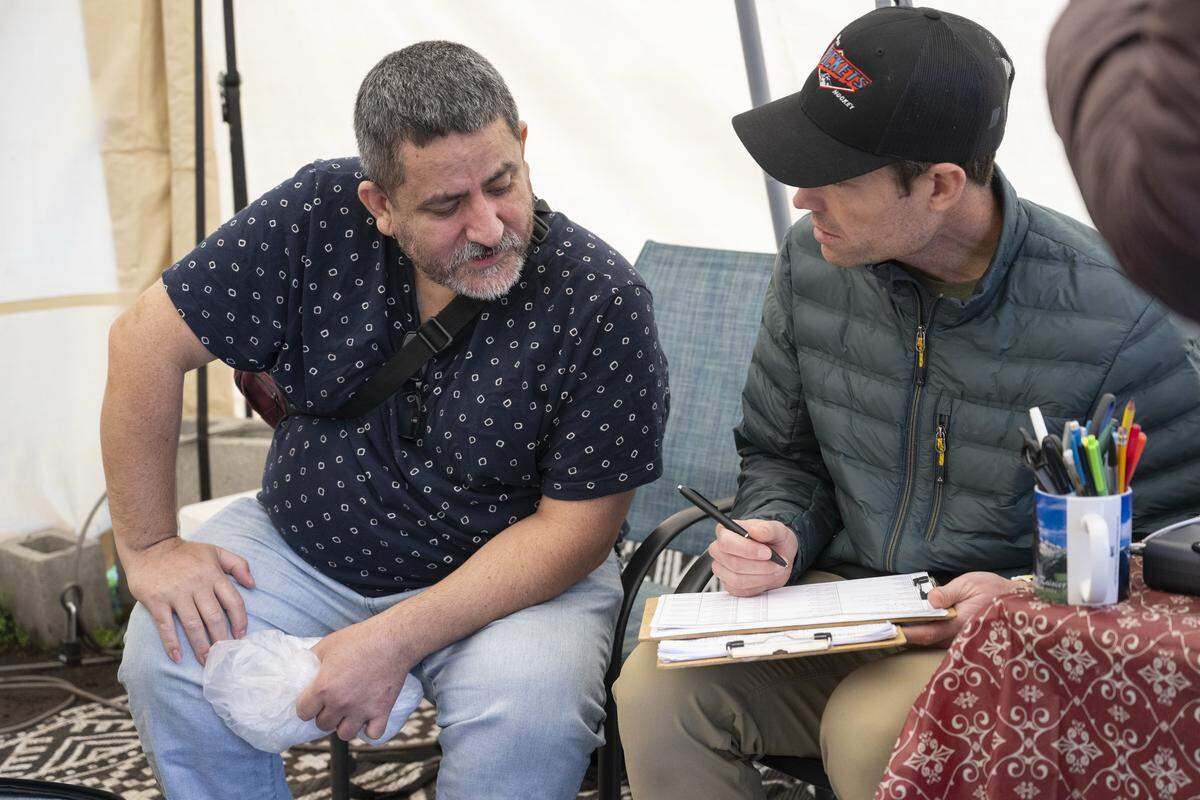
I soon saw what he meant. While released detainees expressed the whole gamut of emotions, the relief of freedom coursed through every interaction. Smiles, looks of distress or wonder, and eyes suddenly filling with tears all spoke to the experience within the center and the abrupt transition out of it.
In that overwhelming moment, volunteers guided released detainees through the process of moving forward.
Helping with the first steps out of detention
Even before it opened as the Northwest Detention Center in 2004, some community members looked at the facility’s location and wondered, what will people do right after they’re released from custody?
Officials made it clear from the beginning that released detainees wouldn’t get a ride home after they walked through the gates. They’d be in Tacoma.
Some in the community worried about people with violent criminal records wandering around town. As it does now, the center was always intended to house a certain number of immigrants with criminal histories, some violent. Others asked how detainees would even leave the Tideflats.
Looking at a map, it’s easy to see what they meant. The Tideflats are a wilderness of warehouses, manufacturing centers, port terminals and toxic sludge fields. The area is cut off from the rest of the city by multiple waterways and no obvious walking path toward the downtown rising up in the distance.
Now, volunteers typically see somewhere between one and four releases during a shift, though sometimes a large number will be released at once. After a released detainee walks through the gate, volunteers greet them and offer assistance.
They walk the immigrants over to the tents. In addition to food and drink, they offer logistical support. That often means coordinating with family to purchase a plane ticket elsewhere in the country, or getting a ride to a community nearby. The welcome center makes that possible with Wi-Fi, chargers and a phone to make a call on.
That last one is crucial, because sometimes people have been detained for so long that they’ve forgotten the screen lock code on their own phone, Lloyd told me.
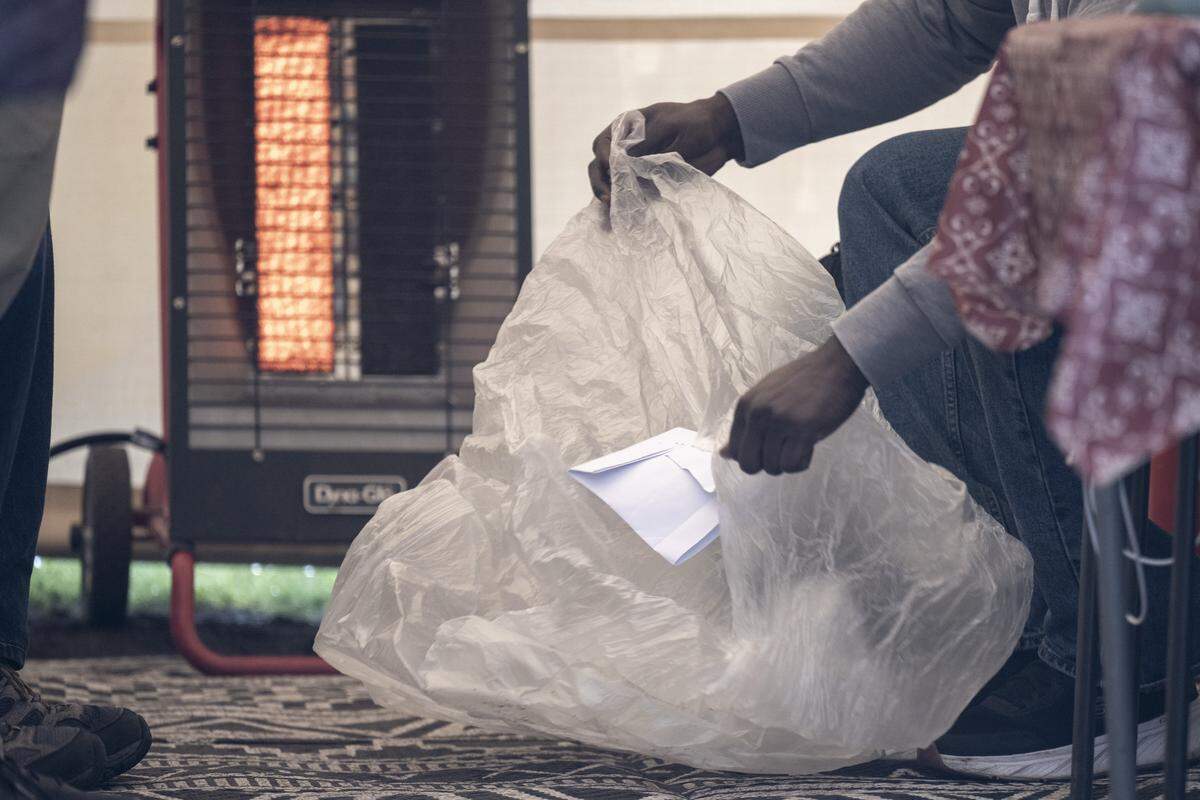
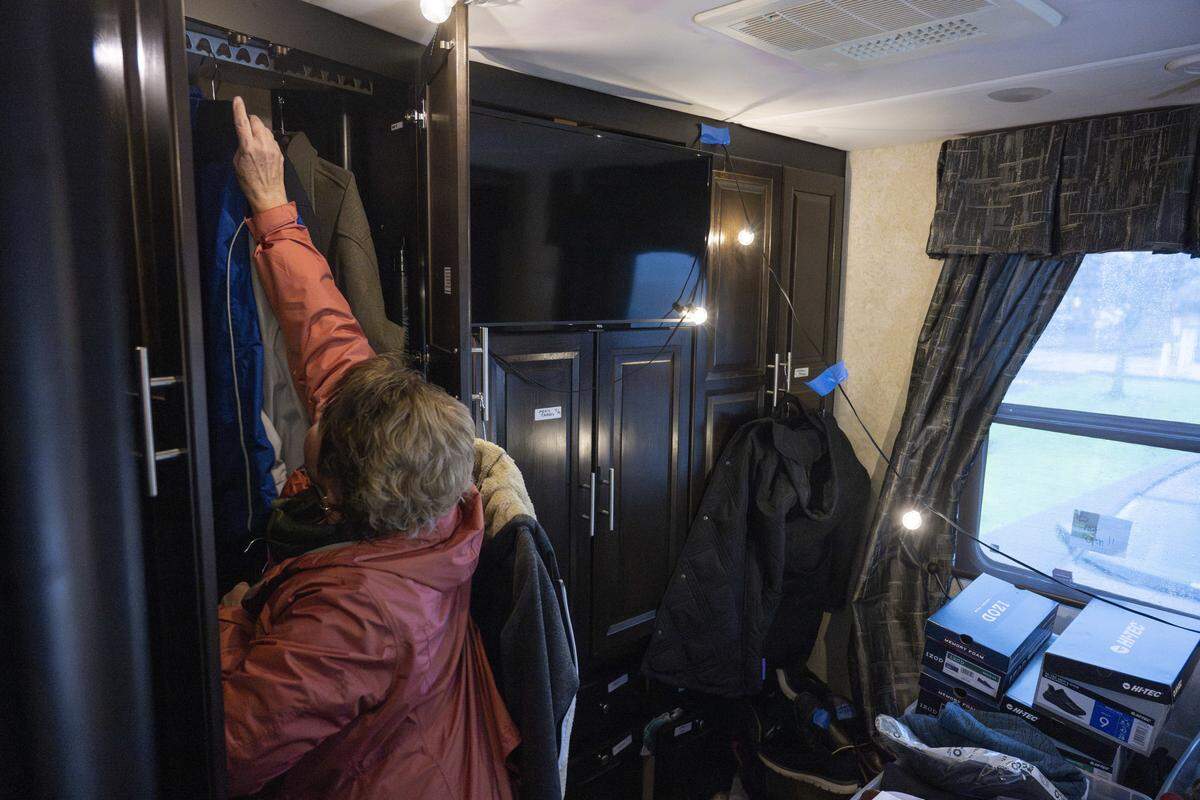
The released immigrants carry their things out in thin plastic garbage bags. They’re generally wearing the clothes they came in with, which may not fit the weather or be good for travelling in. The volunteers offer jackets, shoes and other clothes, as well as backpacks and suitcases.
“It’s also very common to see people who’ve been wearing the same set of clothing for a while,” Perkinson said, “and are just desperate to get something clean to change into.”
Sometimes family members will pick up their relatives at the welcome center. A whole family or a single sibling might approach the tents to wrap their arms around the person who just got out. Some people walk away alone. It’s up to them to decide how much help to accept.
Giving water to the thirsty
While AIDNW isn’t a religious organization, though they work in partnership with Christian organization World Relief. Many volunteers chatted about which church congregations they came from. That didn’t surprise me, given the Gospel of Matthew’s call to visit the prisoner, clothe the naked and give water to the thirsty.
Those verses ran through my mind as a released man, Alejandro Garcia, savored a simple bottled water. Garcia turned down soda and tea repeatedly. I asked him about it, and he confirmed to me what I’d heard from activists: The water inside is bad.
Inside, “everything is bad,” he added in Spanish.
With decades of reports about poor conditions inside, the Washington Department of Health has been fighting for the right to make unannounced visits at the facility. It’s one more approach to bring a measure of justice to a population of immigrants who were originally supposed to spend an average of 12 days in the facility, according early reports from the News Tribune.
For now, volunteers wait outside to give released detainees what they need to move forward.
This story was originally published March 27, 2026 at 5:00 AM.