
You can’t blame Trump alone for Washington’s inflated fuel prices | Opinion
Gov. Bob Ferguson recently remarked that if he has to hear another Republican legislator complain about gas prices, he would lose his mind.
Think about that. Gas prices here have typically been third-worst in the nation since mid-2023. Does the governor not realize many Washington residents feel like both their heads and wallets could explode each time they fill up?
Democrats in our state are remarkably consistent when concerns are raised about fuel prices. They’ve pointed to external factors like supply chains and refinery issues, basically blaming anything but decisions made in Olympia.
Their talking points now focus, falsely, on one thing: the Iran conflict.
No one disputes that global markets and federal policy matter. But let’s go back to Feb. 26, when the AAA.com website reported gas prices were rising as refineries shifted to producing summer-blend fuel.
On that day, AAA had the national average for regular gas at $2.98 per gallon. In Washington the average was $4.35 – third-worst in the nation, as usual, behind California and Hawaii.
This matters because on Feb. 26, the start of the Iran conflict was still two days away. It couldn’t possibly be the reason gas here was already $1.37 over the national average.
The honest answer is that two state policies are forcing Washingtonians to pay far more than most other Americans.
One is the cap-and-tax law officially known as the Climate Commitment Act (CCA). California is the only other state with such a law. Not coincidentally, it typically has the worst gas prices in the U.S.
The second involves the carbon intensity of gas sold in Washington. It requires a custom formulation that costs more.
These mandates function as hidden gas taxes. They were pushed through Olympia by Ferguson’s predecessor, Gov. Jay Inslee, and currently add about 55 cents to the price of each gallon.
That’s nearly equal to the state gas tax, which just climbed to 56.5 cents per gallon. But the billions of dollars already raked in through the carbon-related mandates have done nothing to maintain or improve roads, while also failing to measurably reduce carbon emissions.
I sent Ferguson a letter on May 20 asking him to pause the CCA, using his emergency powers, until economic conditions stabilize and fuel prices return to more sustainable levels.
The governor of Indiana did something similar starting in early April. Gas in his state remains the most affordable in America, averaging $3.23 per gallon as of July 13.
Ferguson hasn’t responded. Instead, a spokesperson deflected through an email to reporters that blamed Washington, D.C.
Other Republican senators recently put a new request in front of him: Call legislators into a special session so they can pause both costly mandates.
This wasn’t done to make Ferguson’s head explode. It was because we’ve heard him admit living in Washington is unaffordable. By using his power to lower – or arrange for legislators to lower – fuel costs, his admission could be turned into action.
Unfortunately, his response again stuck to the Democrat talking points: It’s the White House’s fault.
The idea that state policy plays no meaningful role at all in Washington’s consistently high fuel prices requires a level of selective accounting that would embarrass a professional auditor. That’s especially true when our residents see far lower prices in Oregon and Idaho.
At some point, leadership requires more than explanation. It takes ownership, accountability, and a willingness to acknowledge that state-level decisions have state-level consequences.
Ferguson inherited these mandates. He is under no obligation to keep supporting them. So if he believes they are worth forcing Washington residents – especially low-income and working families – to pay another 55 cents or more per gallon, let’s hear that instead of the repeated deflecting.
Either way, Republicans will continue working on behalf of the families struggling to survive Washington’s affordability crisis. That means continuing to talk about fuel prices, even if it makes the governor’s head hurt.
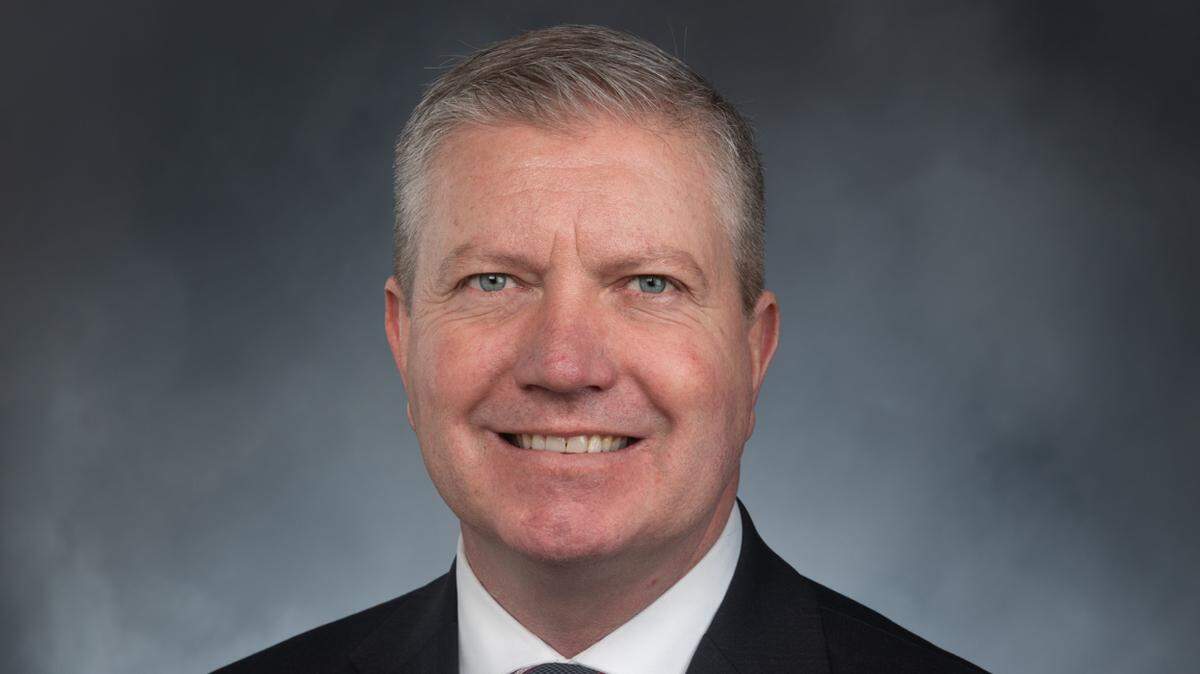
Sen. Chris Gildon, R-Puyallup, represents the 25th Legislative District.