
Scared of proposed crisis center across from school ballfield? Don’t be
Pierce County is sinking under the weight of a mental health crisis and has been for some time.
Increased substance abuse, untreated psychiatric conditions, family separation, unemployment, poverty and homelessness — all symptoms of inadequate behavioral health care — have deluged local communities.
Creating 16 new emergency psychiatric beds won’t come close to fixing the problem, but it’s one part of the solution proposed by County Executive Bruce Dammeier. He wants to put the so-called “crisis stabilization center” in the Parkland- Spanaway area, with the idea that it would be a “clone” of another facility already running in Fife.
It’s by no means the rescue we’ve been looking for — more like using a bucket to bail out a boat that’s taking on water — but it will no doubt help some county residents avoid a trip to the emergency room or even jail. It will also provide relief to first responders by way of a consistent and reliable drop-off resource for people in distress.
On Tuesday, the County Council is scheduled to make a decision on Dammeier’s plan to build the crisis center on county-owned land across from Franklin-Pierce High School. We believe they should vote yes. It could save lives, not unlike the county’s recent rapid-response mental health initiative to put vans and community liaison officers on the streets.
The county’s 2018 budget already set aside $500,000 for the project; the money went toward filling in details like location, construction and ongoing operational costs.
The recovery center would cost up to $6.1 million for land acquisition and construction. But thanks to a $3.2 million grant from the state Department of Commerce, the county is halfway there.
“No new taxes to pay for it,” assures Dammeier.
The county would not run the day-to-day operations; that job would fall to Recovery Innovations Inc. If the name sounds familiar, it’s because the outpatient provider has been running a secure, crisis facility in the county since 2010, when it began on the grounds of Western State Hospital.
In 2012, the state-funded center moved to Fife. In its eight years of operation, RI has served more than 20,000 people, each suffering from a debilitating affliction such as severe depression, psychosis or crippling anxiety.
The nondescript, one-story office building in Fife could easily be mistaken for a small, industrial-park business. But inside, it operates under a slightly unorthodox philosophy: The space is described as a “retreat-model” with “warm and friendly” staff. Individuals admitted to the recovery center are referred to as “guests,” not patients or consumers.
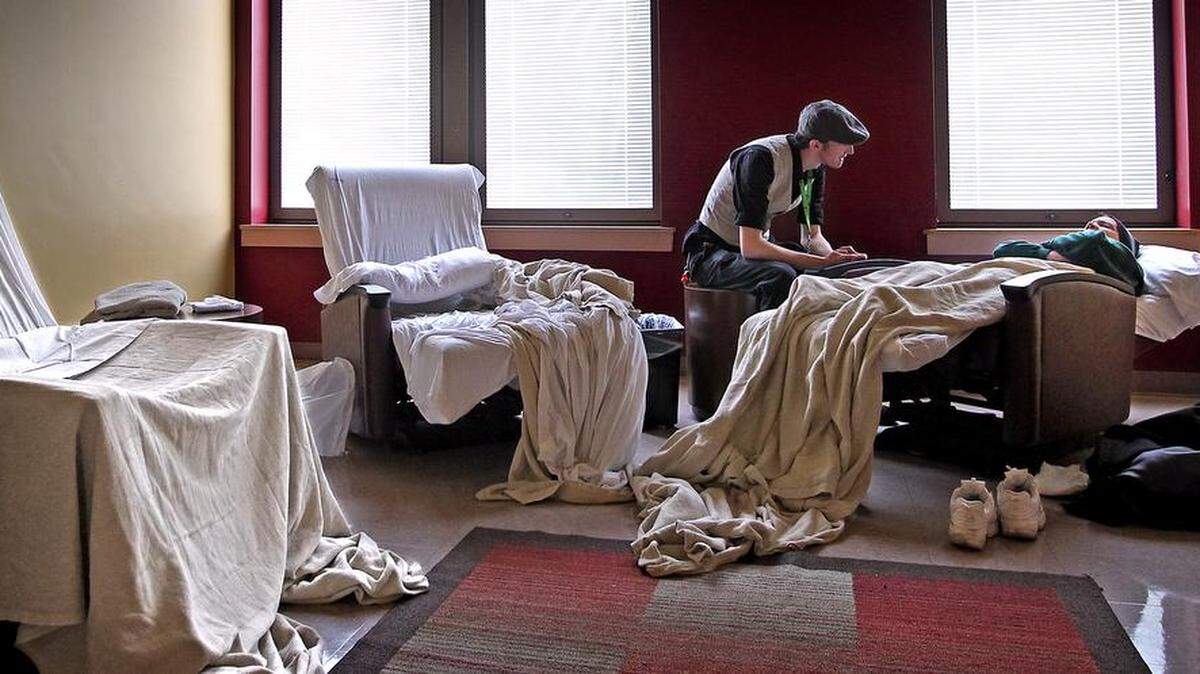
They sit in “observation recliners,” where they interact with certified peers. The average crisis stay is 48 hours, but guests can stay for up to two weeks.
The Fife center claims it’s never had complaints from neighbors, but the location is not convenient — not for potential guests, nor for first responders.
When Dammeier sought counsel on where to put another facility, he said the answer was almost unanimous: the Parkland-Spanaway area.
But the proposed site sits across the street from the Franklin Pierce High School football field.
We know what you’re thinking, because we were thinking it, too: Who puts a dual-licensed crisis center across the street from a high school?
Dammeier did his best to allay our concerns, showing us written support from Fife Police Chief Pete Fisher and Pierce County Sheriff Paul Pastor, both of whom say such centers do not pose a threat to public safety. Franklin-Pierce School District Superintendent Frank Hewins is supportive, too, Dammeier says.
District 5 County Councilman Rick Talbert, who represents this area, is also on board; he tells us he’s “very confident” the facility won’t impact students.
The centers are locked and only accessible by law enforcement or ambulance. People discharged from the centers return to their homes, or are escorted back to shelters or temporary housing. Some receive further treatment at longer-term psychiatric facilities, but no one leaves the center on foot.
Soon the South Sound’s two regional healthcare giants MultiCare and CHI Franciscan will provide relief in a big way, with a 120-bed psychiatric hospital, slated for completion early in 2019 on the Allenmore Hospital campus in Tacoma. But small satellite crisis centers will still play an important role in an integrated system.
We can foresee a time when a 16-bed facility (the most allowed under state licensing) opens on the west side of the county, too.
With a yes vote this week, the County Council can continue to acknowledge the leaking ship in front of them. They should step up and join Dammeier’s bucket brigade.