
COVID-19 shows too many Washington workers unsafe, under pressure to stay silent
Whistleblowers at Washington workplaces typically come out of the woodwork for a variety of safety concerns, from asbestos exposure to hazardous trenches on construction sites.
But the pandemic that erupted a year ago has challenged the state’s response to safety complaints in unprecedented ways. It’s been a “stress test to the system,” according to one official at the state Department of Labor & Industries.
The public health crisis has also made clear that our state must do more to shield whistleblowers from retaliation. COVID-19-related complaints comprised about 150 of the 350 total retaliation complaints filed last year with L&I, according to the department’s legislative director, Tammy Fellin.
That’s why Washington lawmakers should heed the message trumpeted by healthcare employees, farmworker advocates and others this year and move decisively to enact worker protection legislation.
The hammer of retaliation clearly knows no limits when it strikes somebody as prestigious as Dr. Ming Lin.
The emergency room doctor, who went from treating victims of the New York terrorist attacks in 2001 to the front lines of Washington’s COVID outbreak in 2020, was fired last March after openly criticizing his Bellingham hospital’s early response to the virus.
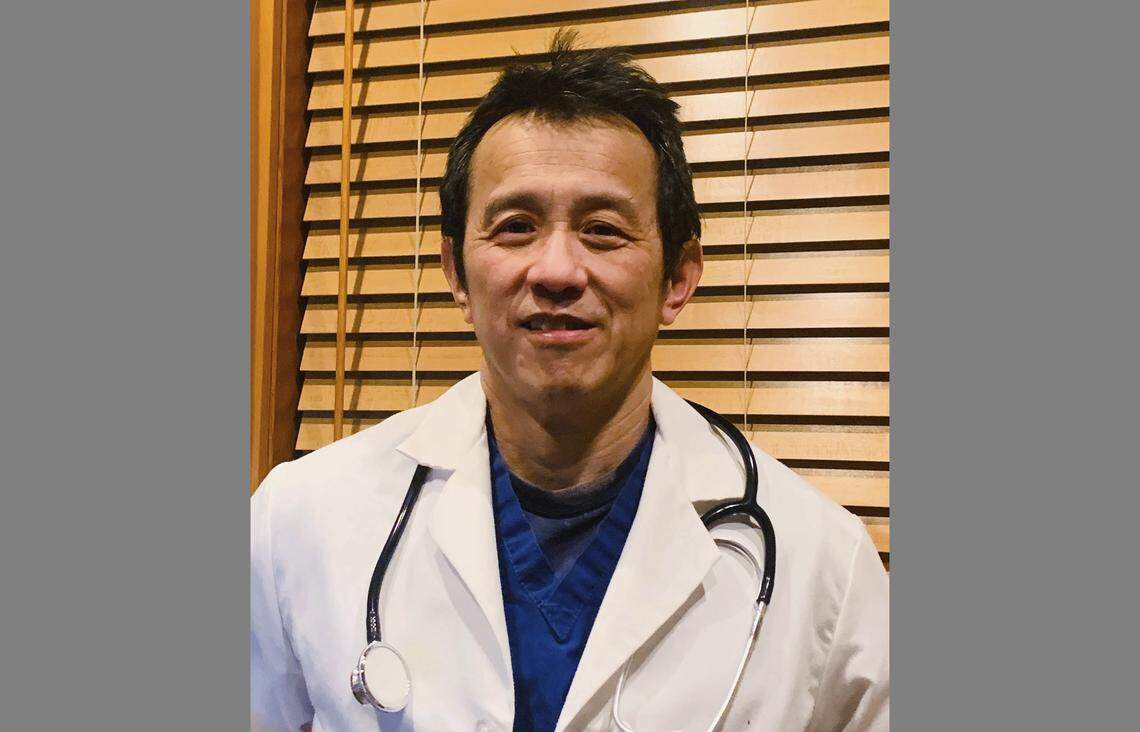
Lin sounded the alarm about health risks to hospital employees and patients, the need for more PPE supplies and canceling elective surgeries, among other concerns. He took his case to social media for several days, then lost his job at PeaceHealth St. Joseph Medical Center a day after posting a nine-minute YouTube video. “Morally, when you see something wrong, I think you have to speak out,” he said in the video.
Today Lin’s story motivates those trying to bolster worker protections in the form of House Bill 1097. It passed the House on a party line vote March 4 and advanced through a Senate committee Wednesday. The bill, requested by Gov. Jay Inslee, is sure to get his signature, assuming it makes it through the Senate intact.
Under the bill, L&I investigators would have more tools to stop unsafe work situations, including cases of intentional noncompliance that have ballooned during COVID-19. The Department could impose a daily civil penalty for stop-work-order violations, which would be more efficient and effective than pursuing criminal sanctions in court.
But most importantly, employees would have more explicit protections against retaliation, including more time to file a discrimination complaint — 90 days instead of 30. This is most crucial for some economic sectors, such as agriculture, where many of the state’s most vulnerable workers don’t speak English as a first language and need help figuring out the system.
The bill resonates with front-line workers who put their health at risk every day for months before COVID vaccines became available, and it has special meaning for those who worked with Lin.
When he was fired, “it left the rest of us feeling threatened, feeling that if we spoke up we could risk losing our jobs,” Erin Allison, a registered nurse in Bellingham, told a Senate committee last week. “If I speak up about safety concerns, even during this hearing today, I could face retaliation from my employer just like Dr. Lin did.”
HB 1097 holds strong promise for workers outside hospitals, too.
“The case of Dr. Lin really piqued my concern when it first occurred right at the very beginning of the COVID outbreak,” said Sen. Karen Keiser, D-Kent, chair of the Senate labor committee. “But when you look deeper into the issue, it is very worrisome that people feel their livelihoods and professions are threatened if they speak up in concern over safety issues.”
Republican legislators have lined up against this bill in lockstep with business interests; among their concerns is that it grants too much power to L&I, gives too much time for workers to file complaints and places too much burden of proof on employers.
But we believe the pendulum has swung too far the other way, leaving Washington workers at risk of unsafe job conditions and undue pressure to stay silent.
All it took was a pandemic to bring the problem into focus.