
Public lands are sacred trust, from one Washington to the other. To preserve them, we can’t scrimp
In February, we traditionally celebrate the birthdays of two great presidents, George Washington and Abraham Lincoln. In large measure they were great because of their insights and leadership during wartime.
They commanded our nation’s military in extraordinarily difficult times, one during the birth of our nation and the other heading off its destruction. During their presidencies, many brave soldiers gave their lives so that this nation could survive and thrive.
The places where these soldiers served and sacrificed are essential to our shared American history — places like Washington’s Crossing National Historic Landmark, where Gen. Washington crossed the Delaware River with his troops on a bitter cold Christmas night, and the Gettysburg National Military Park, where President Lincoln delivered one of America’s most enduring speeches.
Chances are, many of the historic sites where we come to say “thank you” have been supported by the Land Water Conservation Fund, a half century-old, bipartisan account created to conserve irreplaceable lands and improve outdoor recreation opportunities.
One of its most important uses has been to preserve historical battlefields and memorials to fallen soldiers.
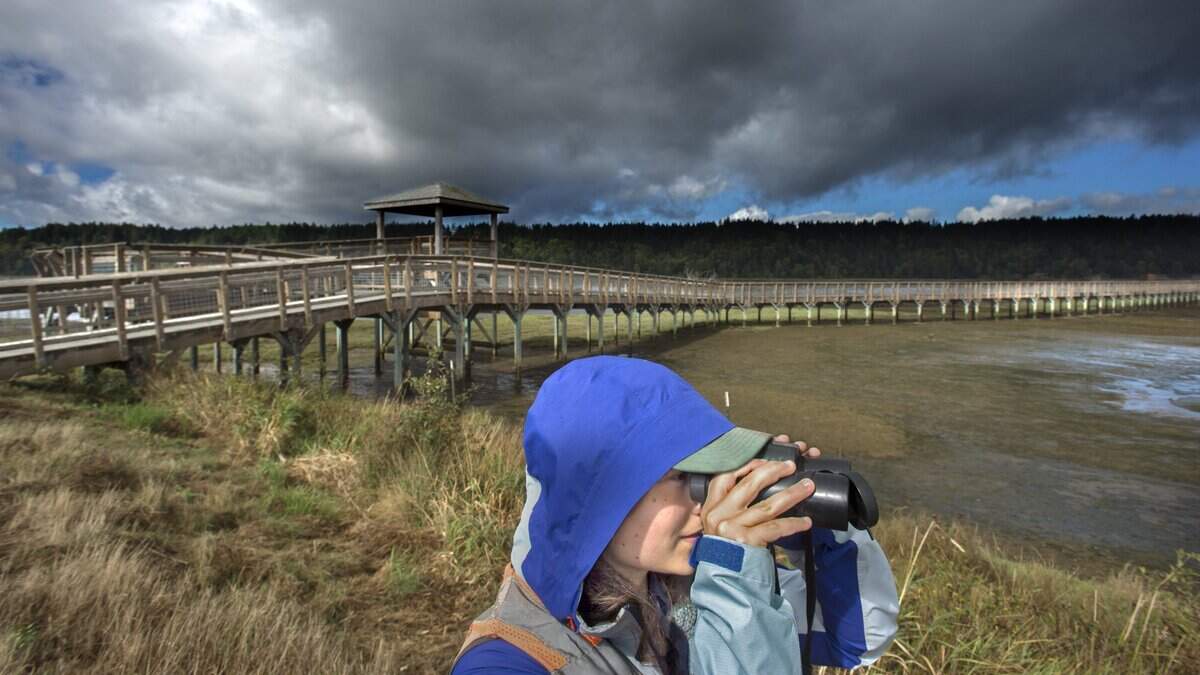
In addition, LWCF investments protect priceless landscapes for outdoor recreation enjoyment in our own backyard, such as Mount Rainier National Park, Billy Frank Jr. Nisqually National Wildlife Refuge and Tacoma Narrows Park.
All of this helps drive an $887 billion U.S. outdoor recreation economy generating critical revenue for thousands of communities.
Unfortunately, this program that helps to preserve a vital connection for all Americans is at risk from chronic underfunding. That is why I traveled to Washington, DC recently and met with members of Congress to urge them to take action to fully and permanently fund LWCF.
As a retired general and proud member of the armed forces, that mission was personal. After returning home from serving overseas, the places protected by LWCF helped me find peace and reinforced a great sense of appreciation for the beauty and unity of the nation I serve.
As that appreciation grew, it became increasingly important to me that we protect our special places and ensure that future generations can be connected to the land and people that came before them.
For too long, LWCF has been underfunded and underutilized, its money siphoned off for non-conservation projects. Just recently the US Senate included only $465 million in its FY20 funding legislation, drastically below the $900 million annually originally intended by Congress.
Considering the myriad health, economic and cultural benefits of public lands to Americans, it’s nowhere near enough.
Last year Republicans and Democrats came together to permanently reauthorize LWCF, a remarkable first step in protecting this critical fund. But they left out any mention of a permanent funding amount.
Fortunately, there is legislation to correct this under consideration in the House and Senate; it would permanently fund LWCF at the full amount, bypassing the annual whims of Congress and messy budget fights.
These bills are where we must now place our focus.
Washington and Lincoln got it right in their leadership that molded and perpetuated the best this country has to offer, precisely what LWCF seeks to protect.
In his 1796 farewell address Washington counseled new leaders and citizens to preserve their unity and avoid the divisions of political partisanship. Lincoln famously said, “A house divided against itself cannot stand.”
These values of unity are buoyed by every penny dispensed by LWCF, as it does its work to protect significant pieces of history and the lands that belong to all of us.
What could be more unifying at this time than both parties working together to protect what these great men generated. Let’s all speak up and make sure Congress enacts legislation that permanently and fully funds the Land and Water Conservation Fund.
Major General (Ret.) Paul Eaton served more than 30 years in the US Army and is now a senior advisor to the Vet Voice Foundation. He lives on Fox Island with his family.