
Why Georgia Congressman John Lewis’ life resonates for me here in Tacoma, Washington
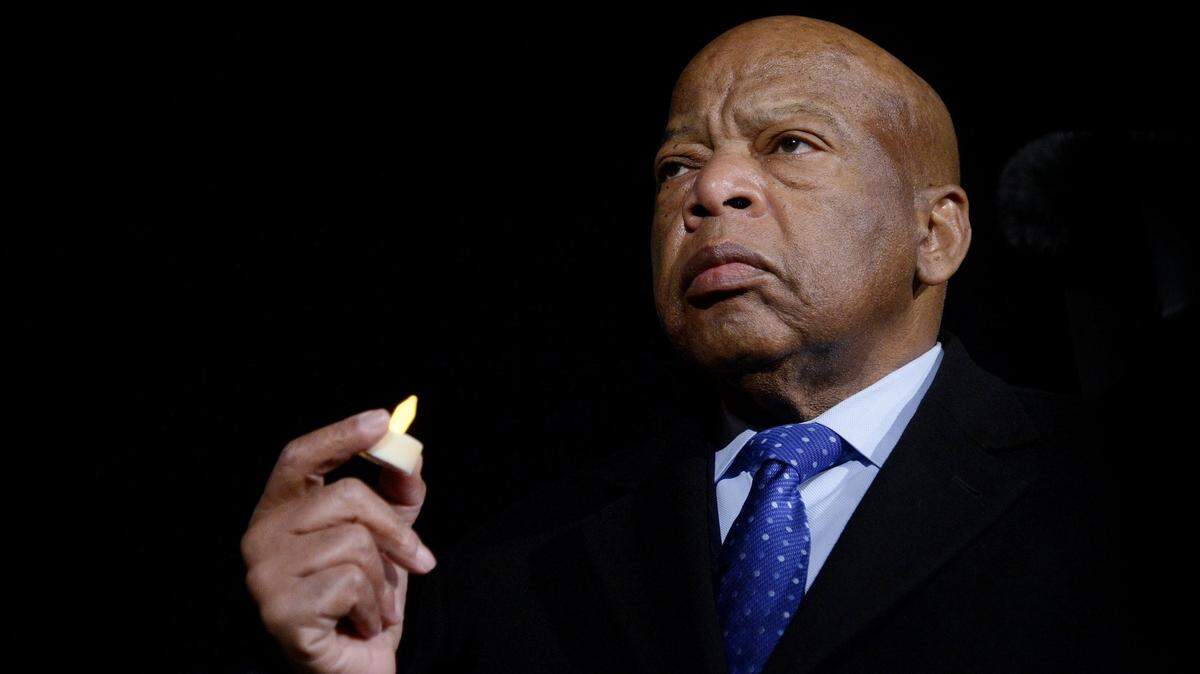
My adopted Jamaican-African-American son was born in Grady Hospital in Atlanta. That’s why I always thought of John Lewis as his first congressman.
But that’s not why I so keenly feel a loss at hearing of Lewis’ death at age 80 on July 17.
I admit, it is somewhat self-aggrandizing to claim this slight familial connection to Lewis, but I do so because he is such a powerfully appealing character.
If we could all put our politics aside for a moment, maybe we could acknowledge what a remarkable life his was. And in these rancorous times, Lewis’ life could be an inspiration, because the very best things about him transcended politics.
Taking seriously the ideas about equality and justice that flowed from his faith, Lewis seemed to be everywhere in the Civil Rights movement.
As chairman of the Student Nonviolent Coordinating Committee, which was committed to non-violent resistance and protest in pursuit of civil rights, he helped organize the March on Washington in 1963.
If for nothing else, you probably know that march as the place of the “I Have a Dream” speech, by Martin Luther King, Jr.
You’ve probably seen the famous footage of the voting rights marchers beaten after crossing the Edmund Pettus Bridge in Selma, Alabama, in 1965.
Lewis was there, too, at the front of that column marching determinedly toward the police line ahead of them. For that, he was one of the first marchers knocked over and beaten.
Maybe you’ve seen footage of the lunch counter sit-ins that started in 1960 all across the South. Lewis was beaten for his participation in the Nashville sit-in.
And perhaps you’ve seen footage of the Freedom Rides, in which Black and white bus riders tried to integrate bus station waiting rooms in the south. Lewis took a Freedom Ride, and he was beaten in Rock Hill, South Carolina, for it.
Lewis’ ubiquity is not the most noteworthy thing about him, though. No, the inspiration for these divisive times lies in something he — and one of his antagonists — did almost 50 years after these Civil Rights movement episodes.
In 2009, Elwin Wilson, who beat Lewis in that Rock Hill bus station, tracked down Lewis, so that he could apologize. To Wilson’s apology, Lewis said, “I forgive you, my friend.”
I don’t think your or my politics would matter as much, if there were a little more of that kind of humility and grace in our world.
But our society is practically devoid of both qualities. Apologies are subtly scripted so as to carefully avoid responsibility for wrongs done. “That’s not who I am” is hardly the acknowledgement that real accountability demands.
Forgiveness is not something people take seriously, either. “That’s OK” might reassure the transgressor, but it fails to make the serious contribution to the relational reckoning and rebuilding required when real wrongs have been done.
“I forgive you” is much more powerful, because the process of forgiveness is complicated and intense.
Lewis undoubtedly had to work, in his own heart, to forgive the people who had so brutally wronged him. And it took 48 years of nagging doubt and guilt for Wilson to gather up enough humility to apologize.
Wilson died in 2013 and Lewis died late last week. I didn’t know either one of them, so I don’t miss the men. But I sure long for more of what they showed us in 2009.
Andrew K. Milton of Tacoma is an eighth-grade English teacher in the Steilacoom School District, a former adjunct political science professor at local colleges and an occasional News Tribune op-ed contributor.