Monarch butterflies will arrive in WA soon, but they are in trouble. Here’s why you should care
If everything in nature goes to plan, it won’t be long before hundreds of thousands of monarch butterflies make their yearly journey north, passing over Washington and perhaps even making the Evergreen State their home for the summer.
Of course, that depends on everything in nature going to plan. And as Washington State University entomologist David James put it, “There’s always something that climate change is throwing at them.”
This isn’t necessarily a doomsday warning for the eloquent orange and black insect that’s one of America’s most beloved flying creatures. But their populations have been dwindling over the past couple of decades.
As the butterflies prepare for their journey back north and through Washington next month, here’s what to know about one of North America’s most impressive migrators.
When will monarchs arrive in Washington?
Although not genetically different, there are two distinct populations of monarch butterflies in North America, east and west of the Rocky Mountains.
The eastern population migrates in the winter as far south as fir tree forests near Mexico City, Mexico, before flying back toward the eastern and central parts of the United States for summer. It’s the western population that Washington residents are used to seeing. Those butterflies spend their summers along the southern and central California coast before flying north to as far as British Columbia, Canada.
James, considered the leading expert on U.S. monarch butterflies in the West, said in a phone interview with McClatchy News that monarchs typically arrive in Washington around early June.
Most monarch butterflies fly directly north from California into Oregon and Washington. Others may take a route eastward, passing through Arizona, Utah and Nevada before reaching Idaho. Some of the butterflies that take the latter path may even have overwintered as far south as Mexico.
“There may be some preference for river valleys, there is some indication of that,” James said about the butterflies’ route. “They come up through Northern California and quite a few definitely seem to go up the Willamette Valley In Oregon. But then again, there’s a lot that go across the other side of the Cascades in the dry part of Oregon, and come up into southern Washington around the Tri-Cities area.”
But once they arrive, they’re here for the summer.
Monarch butterflies’ whole lives revolve around milkweed — an essential food for the insect, and the plant also hosts butterfly eggs and caterpillars.
While some butterflies keep on flying toward Canada, others will decide Washington is an ideal destination to stop. They and future generations — adult monarchs live only about two to five weeks — will call the Evergreen State home before finally flying south again around September.
A dwindling population. Why?
In the 1980s, millions of western monarch butterflies would migrate semi-yearly across North America. Today, that population has fallen by 90% to as little as a couple hundred thousand.
Between 2018 and 2020, the Xerces Society tallied a record low of under 30,000 monarchs. The population has rebounded to about 347,000, according to James, but it’s still a far cry from the booming populations of the late 1900s.
Climate change and harsh weather conditions are big reasons. Yet James commended monarchs for being incredibly adaptable; they often fly over extreme desert climates for long stretches and deal with offseason snowstorms and cold spells.
But they’re not invincible. One concern for James now is the heavy rainstorms and high winds that have recently plagued coastal California.
“The outcome for our summer is dependent upon what is happening in California at the moment,” James said. “And unfortunately, it is much cooler than normal.
“The overwintered females are very old, and they’re most vulnerable, and they need to lay their eggs, and the caterpillars develop,” he continued. “And all that is being delayed by the weather that they’re having in California. So there is a big question mark over how they’re going to cope with that.”
The destruction of milkweed plants is also a determining factor in their decrease in population, James said. A big reason is the widening and extension of roadways and other urban areas, which often destroy milkweed plants.
The North American Monarch Conservation Plan, sponsored by the U.S. Forest Service, is a multinational effort established in 2007 that aims to grow more milkweed plants to revitalize the monarch population.
“You’ll find a lot of local conservation groups are doing their part in helping, and I think it is helping,” James said, “because, in the last couple of years, monarch numbers have rebounded significantly in the West.”
How to attract and help monarchs in Washington
While some monarchs continue flying up to Canada, after the long journey over the barren landscape of eastern Oregon, Washington is a common resting place.
“Because of milkweed,” James said. “If there’s more milkweed, then more will drop out and start reproducing, and once they start laying eggs, they then stop the migration.”
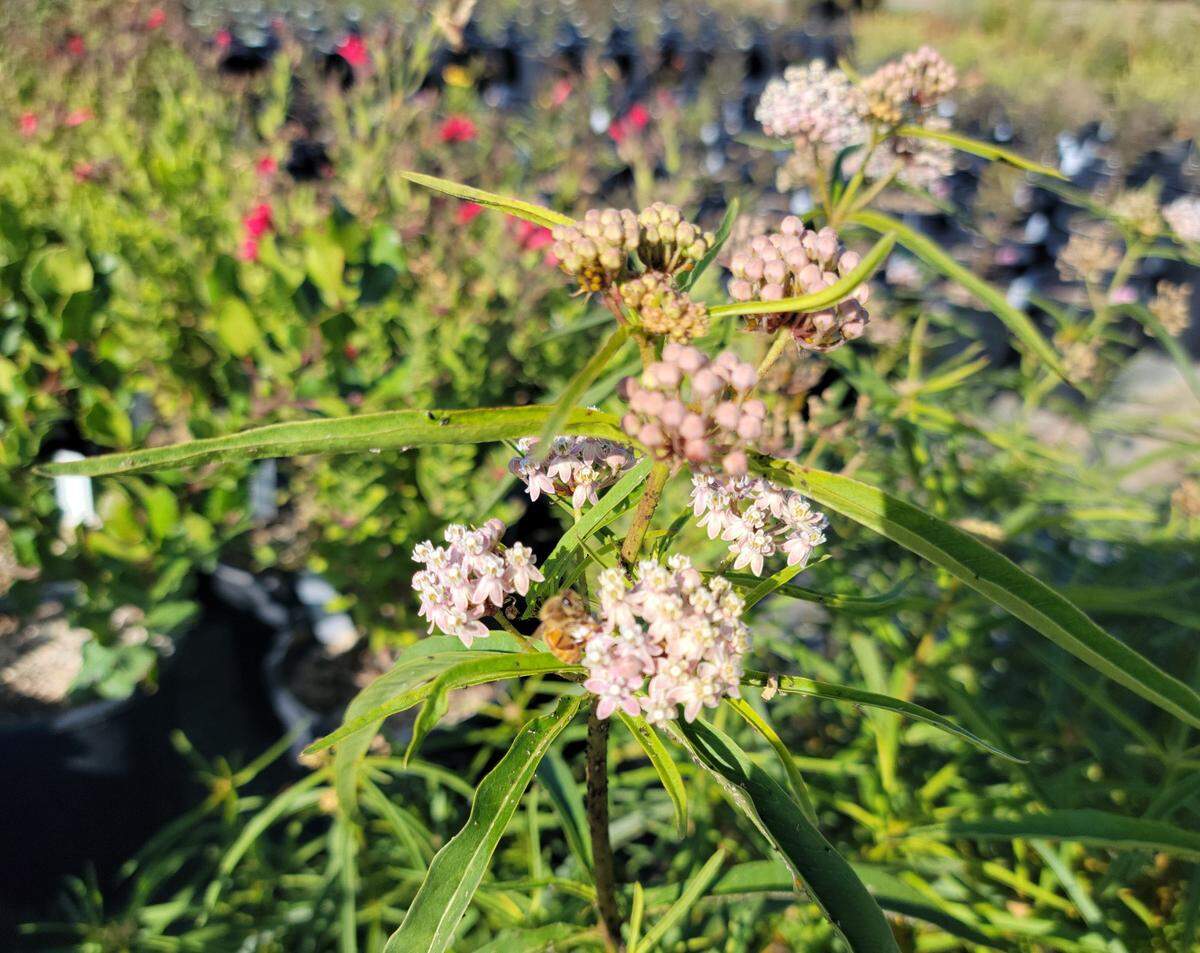
So for those wanting to assist monarch populations — and have a chance to admire them up close — the solution is simple: Plant milkweed. James recommends three types: swamp, showy and narrow-leaf.
While milkweed grows naturally in Washington, growing it in your garden will attract monarchs and other nectar-driven insects such as bees and beetles.
Milkweed seeds can be purchased on Amazon and Walmart, and you can also check your local nursery or home and garden store.
“I’m confident that they are able to cope with climate change, and if we can help them with providing more habitat for them, I think their future is assured,” James said. “Everybody loves monarch butterflies, so as long as we can do something for them, I think the outlook looks good.”
This story was originally published April 6, 2023 at 11:05 AM.