
Meet the Nisqually bullfrog man. Refuge hires pro to take out invasive amphibian
On a gray and rainy Thursday morning, I traveled south to the Billy Frank Jr. Nisqually National Wildlife Refuge. On a typical soggy March day in the Northwest, it seemed I wanted to find Washington’s soggiest place. The kind of place a bullfrog would love.
Even if the place doesn’t love bullfrogs.
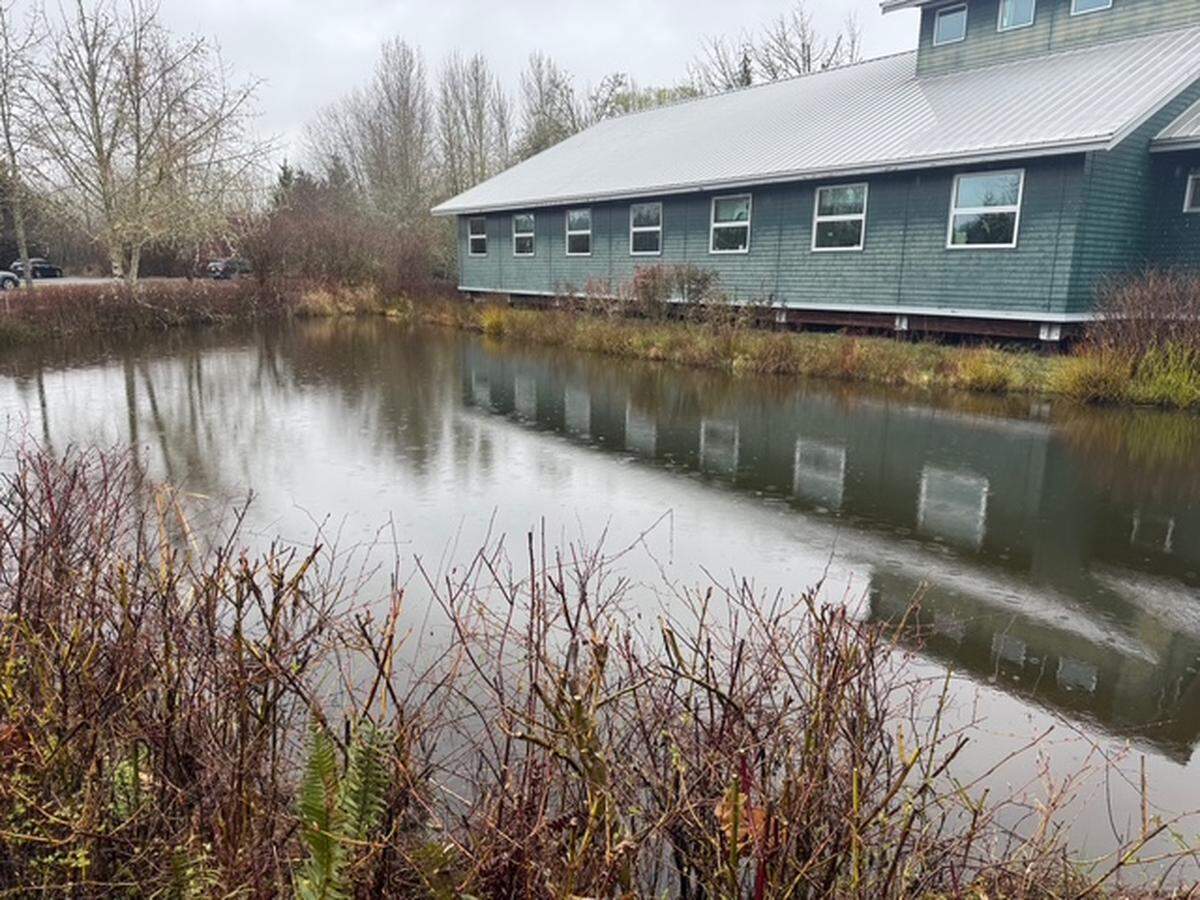
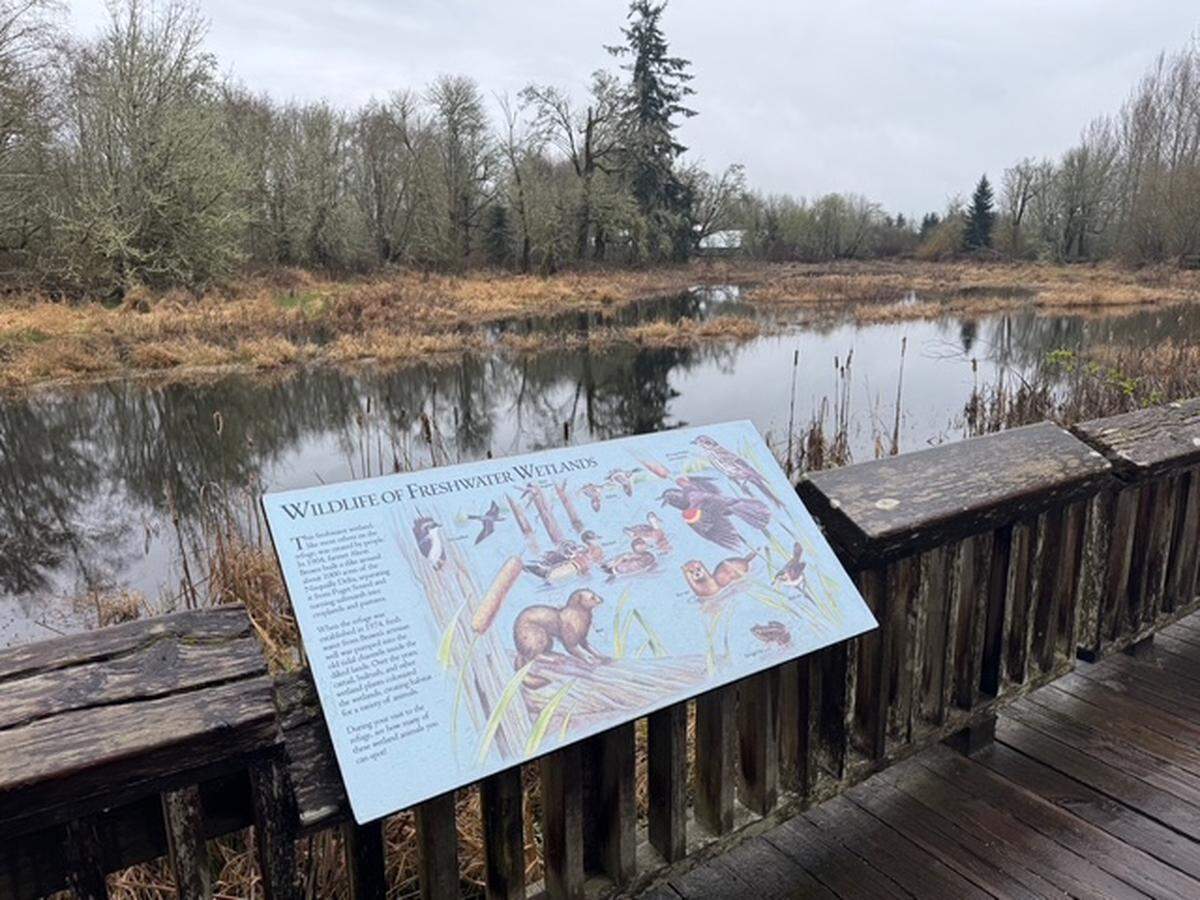
The Billy Frank Jr. Nisqually National Wildlife Refuge is over 4,500 acres of swampy bogs and grasslands on the Nisqually River delta where it meets the Puget Sound between Lacey and DuPont. The refuge was established in 1974 to help protect plants, fish, migratory birds and other wildlife.
Unfortunately, it’s been raided by American bullfrogs, an invasive species not native to the area. The Washington Department of Fish and Wildlife has been fighting the spread of American bullfrogs for years and recently brought in some reinforcements.
His name is Jamie Buchanan. And he’s a professional bullfrog hunter.
Buchanan arrived in February but was officially introduced on the Billy Frank Jr. Nisqually National Wildlife Refuge Facebook page on March 8. They used a glorious photo of Buchanan hunting at night in waders, with a headlamp on and holding six fat American bullfrogs.
.jpg "image000000(5).jpg")
The post quickly amassed over 3,000 likes and 400-plus comments (most people choosing to be “punny” with comments like “What a ribbeting career choice,” and “He’s got a leg up on the competition”).
Who is the bullfrog hunter?
Buchanan found a love for catching bullfrogs as a young boy in the creeks and ponds of Missouri. His father was in the military, so they moved around a lot. Buchanan says he was born in Bamberg, Germany before his family moved to Missouri, and then back to Bamberg again. Which is what he now considers “home.”
But “home” for a bullfrog hunter is elusive. Buchanan says he prefers the nomadic lifestyle.
After receiving a bachelor’s degree in Wildlife Management and Conservation from Humboldt State University, Buchanan, now 29, has worked with the U.S. Forest Service, New Mexico Game and Fish, and Mount Adams Resource Stewards on the Conboy National Wildlife Refuge, where he worked on a project that’s successfully working to eradicate the American bullfrog.
In February, he came to the Nisqually National Wildlife Refuge Complex on a grant funded by the American Conservation Experience through the Washington Department of Fish and Wildlife. The Nisqually National Wildlife Refuge Complex includes the Billy Frank Jr Nisqually National Wildlife Refuge, the Black River Unit and Gray’s Harbor National Wildlife Refuge.
Buchanan is on a 38-week term with the option to return. It’s a seasonal field technician role with no per-bullfrog bonus.
The American bullfrog problem
American bullfrogs are native to parts of the East Coast, but not the West. They began arriving on the West Coast in the late 1800s, with people traveling from the East. Then Washingtonians began to farm them. To eat. Eventually, that tradition stopped, and the bullfrogs were released, or they escaped.
Now they’re all over.
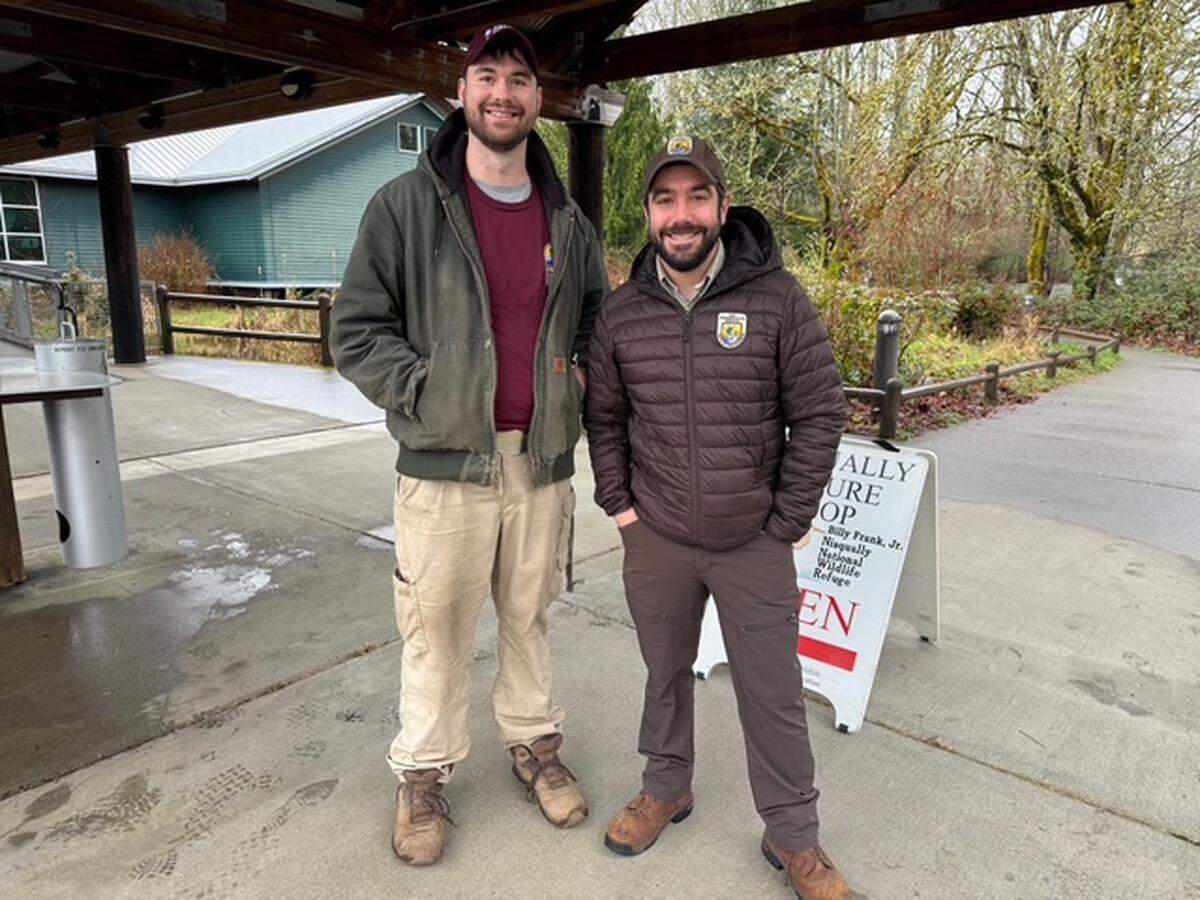
“They bring a lot of harm,” Ryan Munes, a wildlife biologist at the Nisqually National Wildlife Refuge Complex, told me. Munes and Buchanan had agreed to show me around, and l was getting a guided tour of all things froggy.
“They are a gape-limited predator,” he continued. “Meaning anything they can fit inside their mouth, they can eat. Anything from other amphibians to snakes, fish, bats, birds, ducklings, you name it. They can fit it in their mouth, they can eat it.”
Munes and Buchanan say they’re mostly concerned about the Oregon spotted frog, which is mainly found around here at The Black River Unit, just south of Olympia. The Black River Unit holds one of the largest populations of Oregon spotted frogs in the state of Washington.
Federally, the Oregon spotted frog is listed as a threatened species. In the state of Washington, it’s endangered. A large part of that is due to the American bullfrog.
American bullfrogs are highly prolific breeders; they can lay up to 25,000 eggs a season. The Oregon spotted frog lays only 500-700 eggs, in comparison.
I asked what it would look like if Munes hadn’t started the bullfrog-removal program, and if Buchanan wasn’t here to help.
“It would be all bullfrogs,” Buchanan replied.
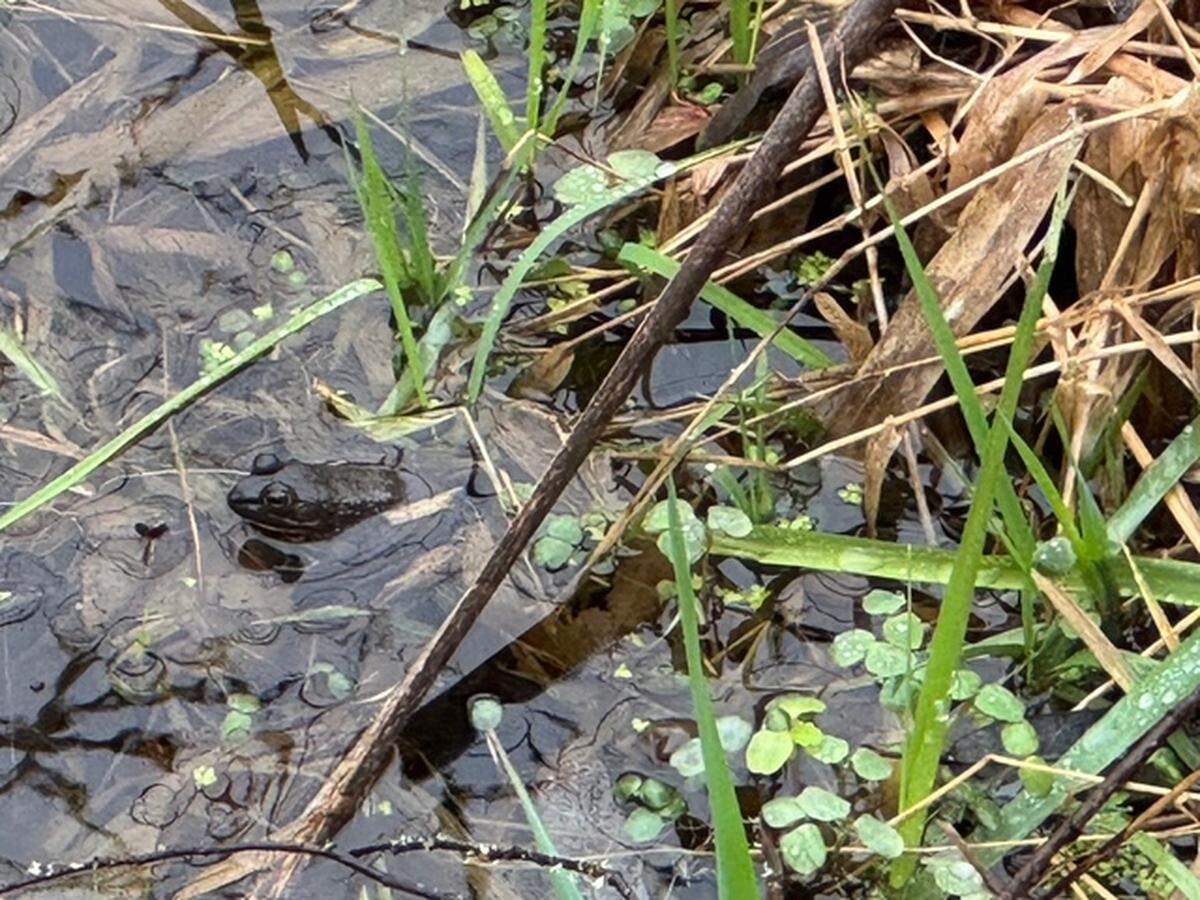
“Once a population of bullfrogs establishes in an area,” Buchanan said, “they will stay there until it’s only bullfrogs. And bullfrogs are cannibalistic. They will eat their own young as long as they keep living and breathing.”
There’s a statement to digest. They eat their own young, so they can continue breeding. American bullfrogs produce such a surplus of eggs that they can eat their own young, and the result is still more bullfrogs.
“If we didn’t manage them, you wouldn’t have any native species,” Buchanan continued. “No native salamanders, no native frogs, just one species in a pond. That’s not great for diversity, and not great for the ecological roles of the other animals within that water system. It really disrupts the food chain and the whole balance.”
Munes and Buchanan don’t have a good estimate on how many American bullfrogs might currently be at the Nisqually National Wildlife Refuge Complex, as habitat and environmental conditions greatly affect survivorship. On any given night, Munes says a two-person crew could come back with 1 bullfrog, or 150.
Frog gigging vs. the hand method
The best way to catch a bullfrog is at night, full-on war-games style. Buchanan clads himself in waders, headlamp and boots, and slinks into the water armed and ready to strike.
“Anyone can catch bullfrogs,” Buchanan says. “The extraordinary part is that I somehow convince people to pay me to do it.”
There are a bunch of different techniques to catch an American bullfrog, but Buchanan’s favorite is the simplest.
“I just grab them. On the hips,” he says.
Buchanan also sometimes goes “frog gigging,” a method in which you use a little spear with a forklike attachment on the end. Sometimes he also uses a rifle.
As for what they do with them, Munes says they study them. They measure, dissect, and note the contents of their stomachs and such.
When I asked if they ever eat them, they both replied with a resounding yes!
“Oh yeah, I eat them,” Buchanan grins. “I cook them up better than chicken.”
“But not at the refuge,” Munes adds. “Just when we get them from private ponds. The refuge bullfrogs are for research.”
Will they ever be gone?
At Nisqually National Wildlife Refuge Complex, it’s a multiyear process. Munes says they’re not working on full eradication.
“There are lots of private lakes and ponds nearby that we have no control of. The goal is to suppress the bullfrog numbers where they are minimally impacting the Oregon spotted frog, until we can find a better solution.”
I asked Munes what he does when he sees a bullfrog. Does he go get it himself, or does he call Buchanan?
“Nowadays, I call this guy,” Munes says while gesturing to Buchanan.
Buchanan travels between the three complexes and says he grabs around 15-30 bullfrogs a night.
For now, he’s the Washington Department of Fish and Wildlife’s secret weapon. Come November, he’ll be gone.
In between, in this writer’s humble opinion, the local bullfrog population is in serious, serious trouble.
This story was originally published March 24, 2026 at 5:00 AM.
.jpg)