
Tacoma climber with prosthetic ice axe makes historic frozen-waterfall ascent
The act of climbing up something is deeply rooted in the human DNA; the joy and utility of it is inside us all. Evolution tells us this. Millions of years ago, we swung from the trees. Of course, with the advent of bipedalism and Bluetooth, it’s easy to forget.
Many people still do it for sport. Just ask Alex Honnold, Janja Garnbret and Tacoma resident Kimber Cross.
On March 16, 2026, Cross became the first female disabled climber to complete the expert-level, four-pitch, 300-foot Colorado ice climb Bridal Veil Falls. In the ice-climbing world, it is graded WI6 (Water Ice level 6). It was first climbed in 1973 by Jeff Lowe and Mike Weiss, who at the time considered it the most difficult ice climb in the world.
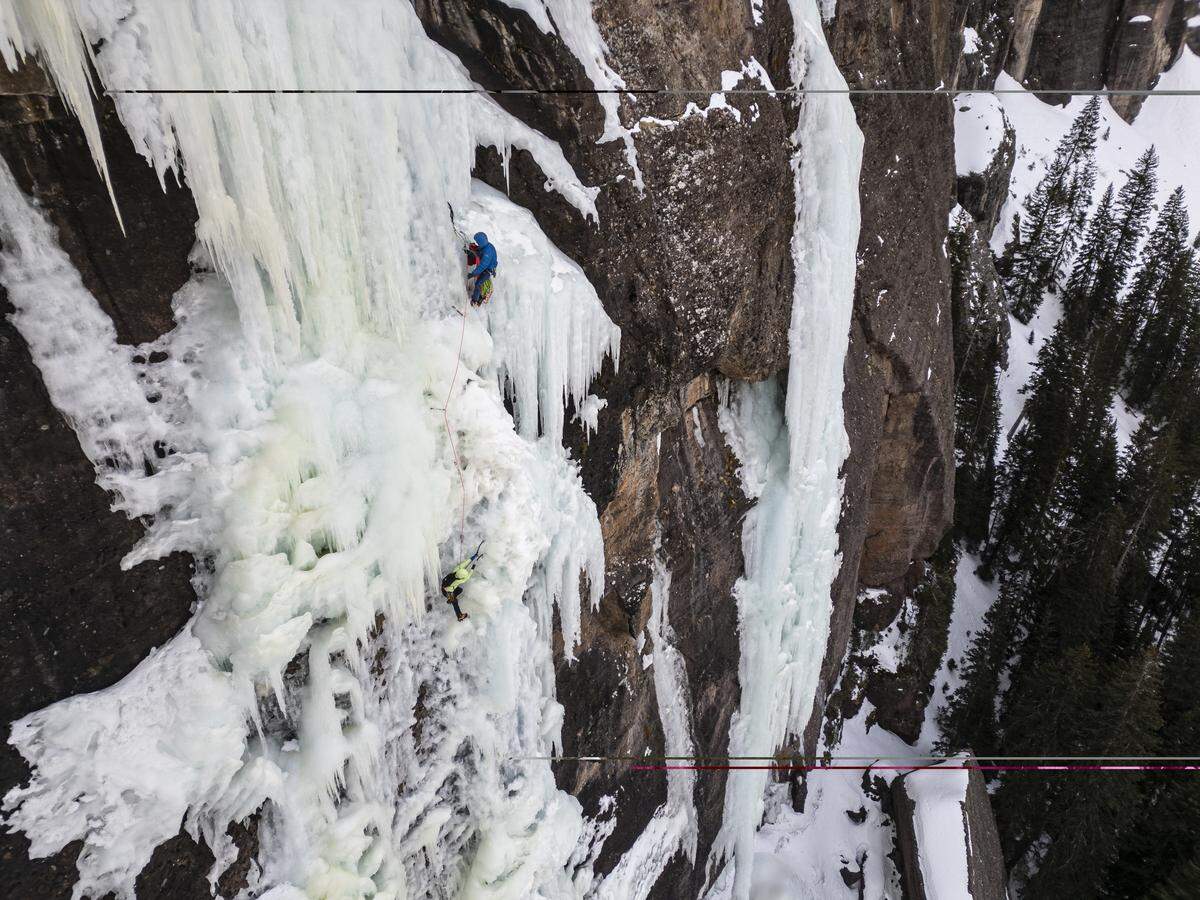
Modern ice-climbing equipment has shifted its grade a bit, but those things are always subjective. What’s not subjective is that it’s hard.
It’s hard for any human with two hands, but downright Herculean when you have one. Which is what Kimber Cross has.
Cross was born with a condition called terminal transverse limb deficiency. Which basically means her hand terminated growth in the womb, leaving her without fingers on her right hand. She calls it her “stump.”
Ice climbing is done with ice axes. You grip their handles and swing their tips into the ice, digging as deep as you can (making sure you can still remove them). Then you move your up feet, which are clad with spiked soles called crampons. Then you do it again and again, while clipping your rope into ice screws, which theoretically, protect you in case of a fall. As long as they’re screwed into a solid chunk of ice.
“The number one rule of ice climbing,” Cross told the News Tribune, “is don’t fall.”
Cross climbs with a prosthetic ice axe that straps onto her arm. It’s her first prosthetic ever, and it has a sharp, serrated axe at the end of it.
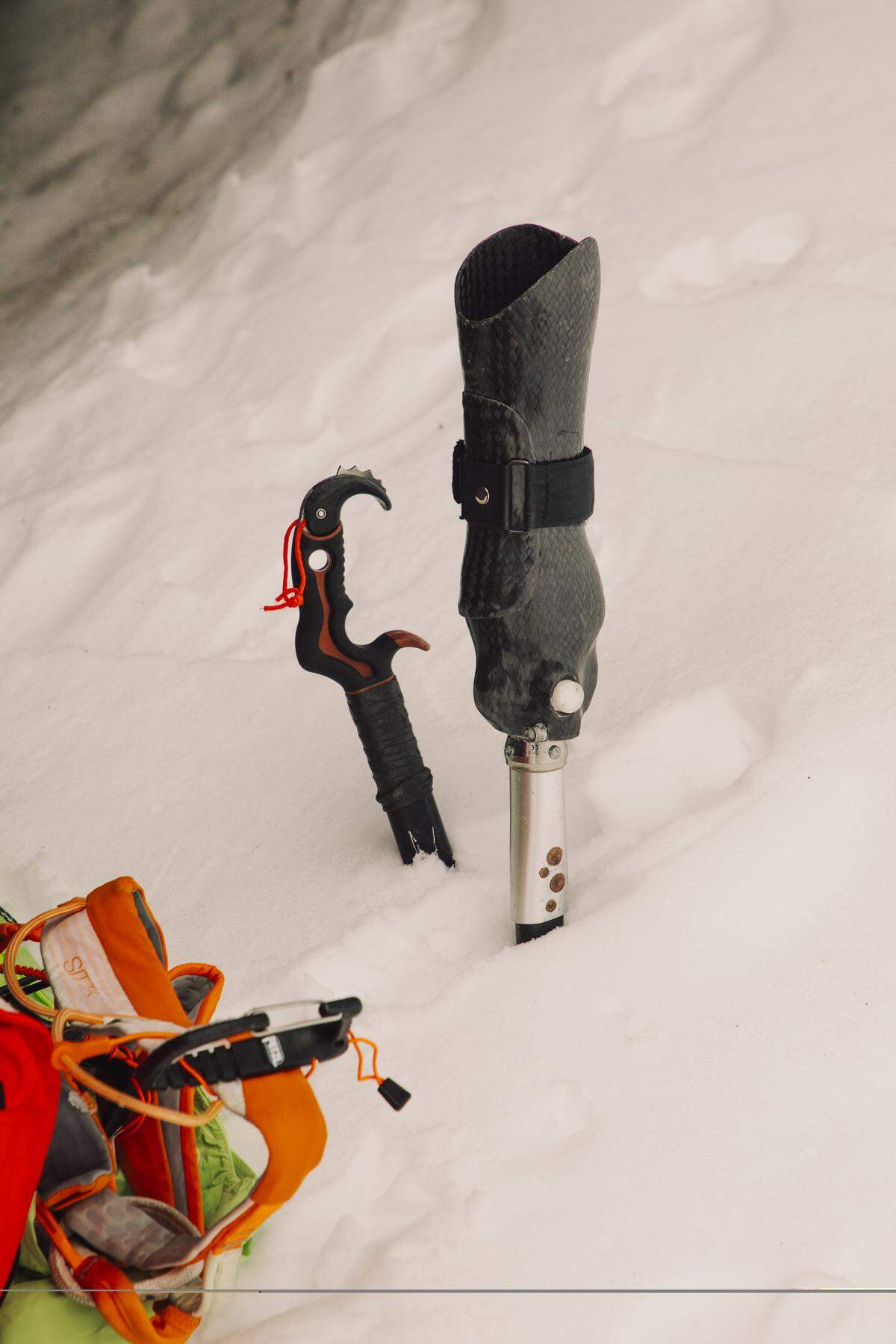
Insurance wouldn’t hear of it, so a family friend who owned a prosthetics company in Fife called Washington Prosthetics made it for her pro bono in 2018. Cross says it took over a year to develop.
“I went to his office and showed him a video of a prolific climber named Will Gad,” Cross told The News Tribune over the phone. “I said, this is ice climbing. Can you make a prosthetic ice axe I won’t fall out of? We worked on it for a year and a half, and now I can lead on ice.”
Leading is the first position in a climbing team, the one who goes up first and places protection (screws when ice climbing, and nuts and cams in traditional climbing). Colloquially, it’s known as “being on the sharp end,” due to its risky nature. If you don’t place the protection, you can fall to the ground.
In 2015, Cross and a friend found themselves newly single at the same time. Her friend asked if she wanted to climb Mount Rainier, so they both enrolled in a basic alpine climbing course at The Mountaineers in downtown Tacoma. They graduated and signed up for an intermediate course.
Now Cross has climbed Mount Rainier six times, including a first disabled ascent of the Kautz Route in 2021.
“Falling in love with climbing and mountaineering was immediate,” she said.
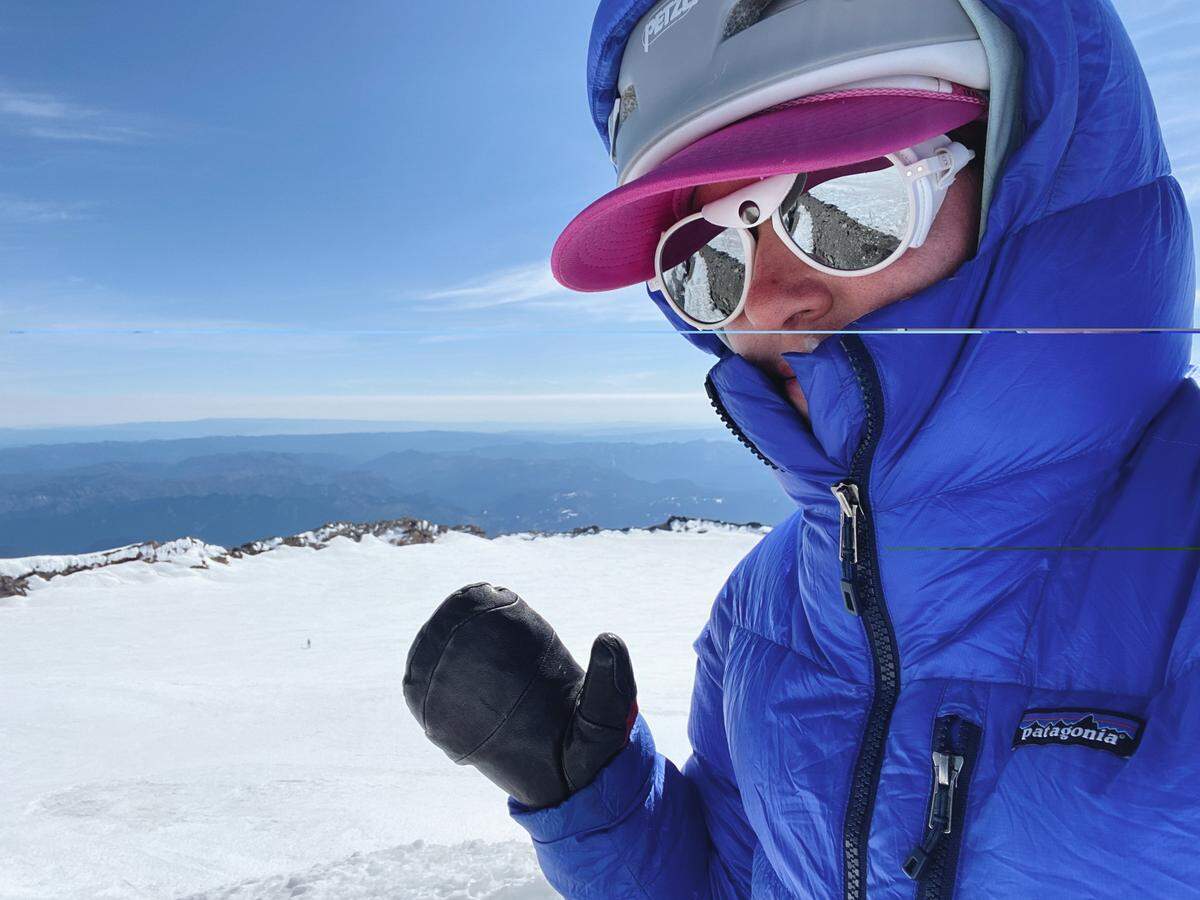
By day, Cross is a kindergarten teacher at an elementary school in University Place, and with her free time, she’s a sponsored climber.
“I just finished up a three-year contract with The North Face, and Mountain Hardwear picked me up. I took my first course a little over 10 years ago, and now I get paid to go climb. I think that’s amazing,” she said.
Cross’s philosophy in life is what she calls, “Can’t. Will. Did.” It started when she was younger and couldn’t imagine a successful sporting life with one hand. Then her parents showed her Jim Abbott, the major league pitcher without a right hand. Cross was so inspired, she tried out for a team and pitched for nine years.
When she took the Mountaineers course and got interested in ice climbing, she thought, “Well, I can’t ice climb. I have only one hand.”
Then her friend showed her a picture of professional ice climber Maureen Beck, who has a limb difference and climbs with a prosthetic ice tool.
Can’t. Will. Did.
Cross says what inspires her most these days is reaching the younger disabled generation.
“Every time I saw any kind of limb difference when I was a kid, it was always a scary witch in a movie. It wasn’t someone like me,” she said.
“I think about that boy or girl who’s interested in ice climbing, and then they see me and realize it can be done. It’s been really fun to know that it’s my turn to step into form as a role model for the next generation.”
.jpg)