
It’s chum fry season in the South Sound, and salmon and trout are biting
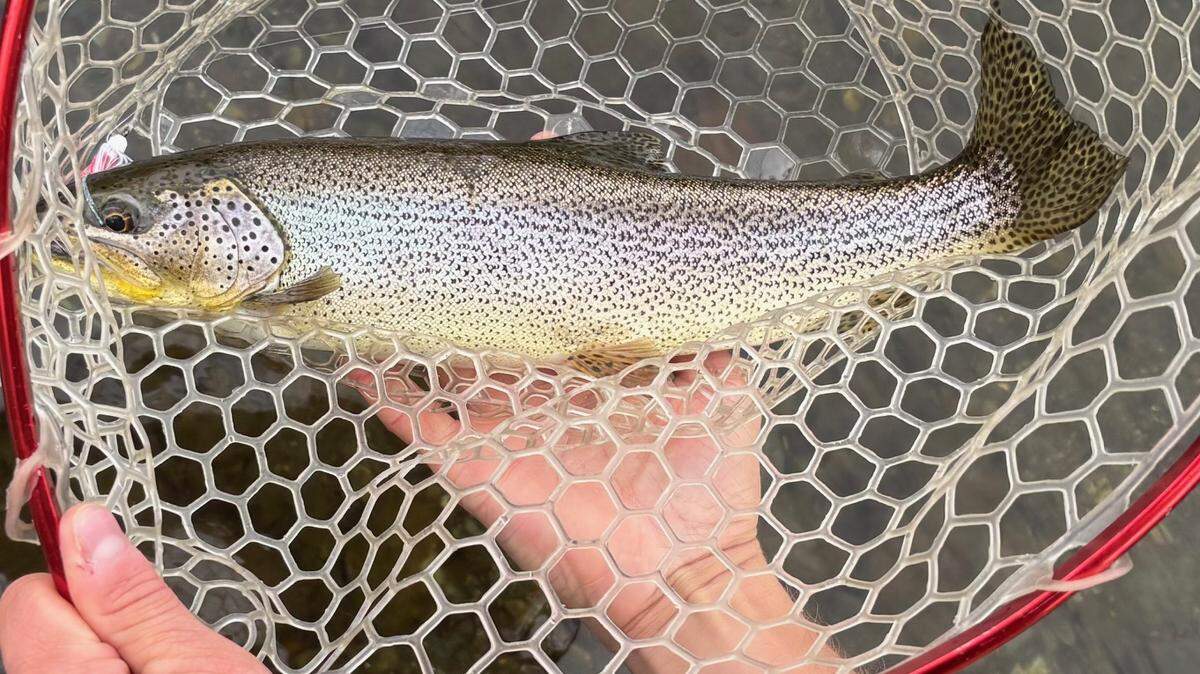
There’s a lot going on in the South Sound, over and under the waters.
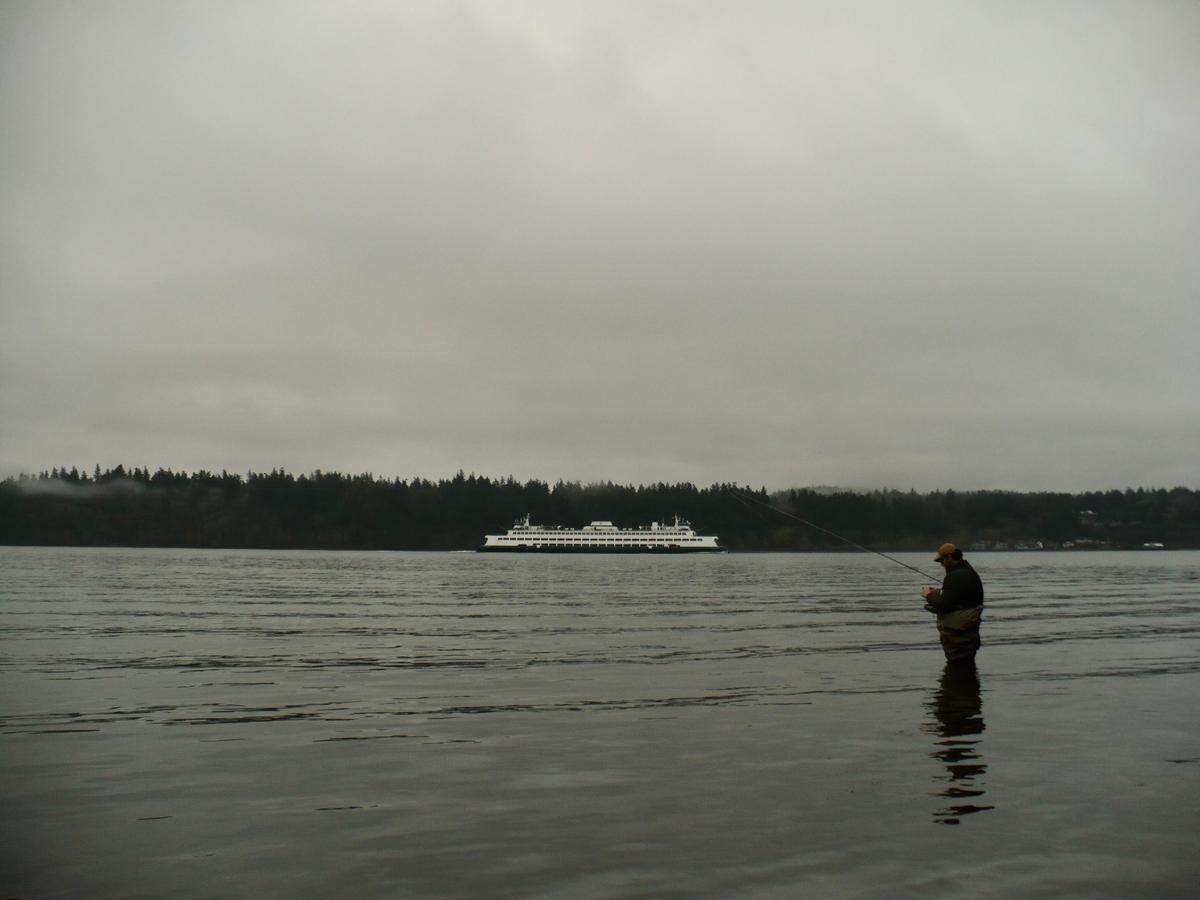
Not only has springtime arrived, bringing increased recreational boating, but the Port of Tacoma in Commencement Bay, which is continually ranked one of the top 10 busiest ports in the country, sees more traffic as Western Washington warms up.
Our local streams and rivers also are sending chum salmon fry into the mouths of resident coho salmon and sea-run cutthroat trout.
That makes for some good fly-fishing.
What is fly-fishing?
The biggest difference between spin fishing (using a spinning reel) and fly-fishing (synthetic bait and weighted line) is the weight of the line and how it is cast. With spin fishing, you cast a weighted bait or lure that drops down to the fish. When fly-fishing, you cast a tapered and weighted line that throws a nearly weightless lure, or fly, to your destination.
A fly fisherman’s bait is usually an artificial fly that’s been tied to replicate a fish’s favorite meal.
Fly-fishing flies are almost entirely hand-tied. Perhaps machine-tied ties will pick up with the advent of AI, but for the time being, it’s extraordinarily intricate work that uses feathers, hair and synthetic materials, and connects them with delicate hands.
As the saying goes, there are many ways to catch a fish. For the purposes of this article, we will concentrate on the fly-fishing technique.
‘Tis the season
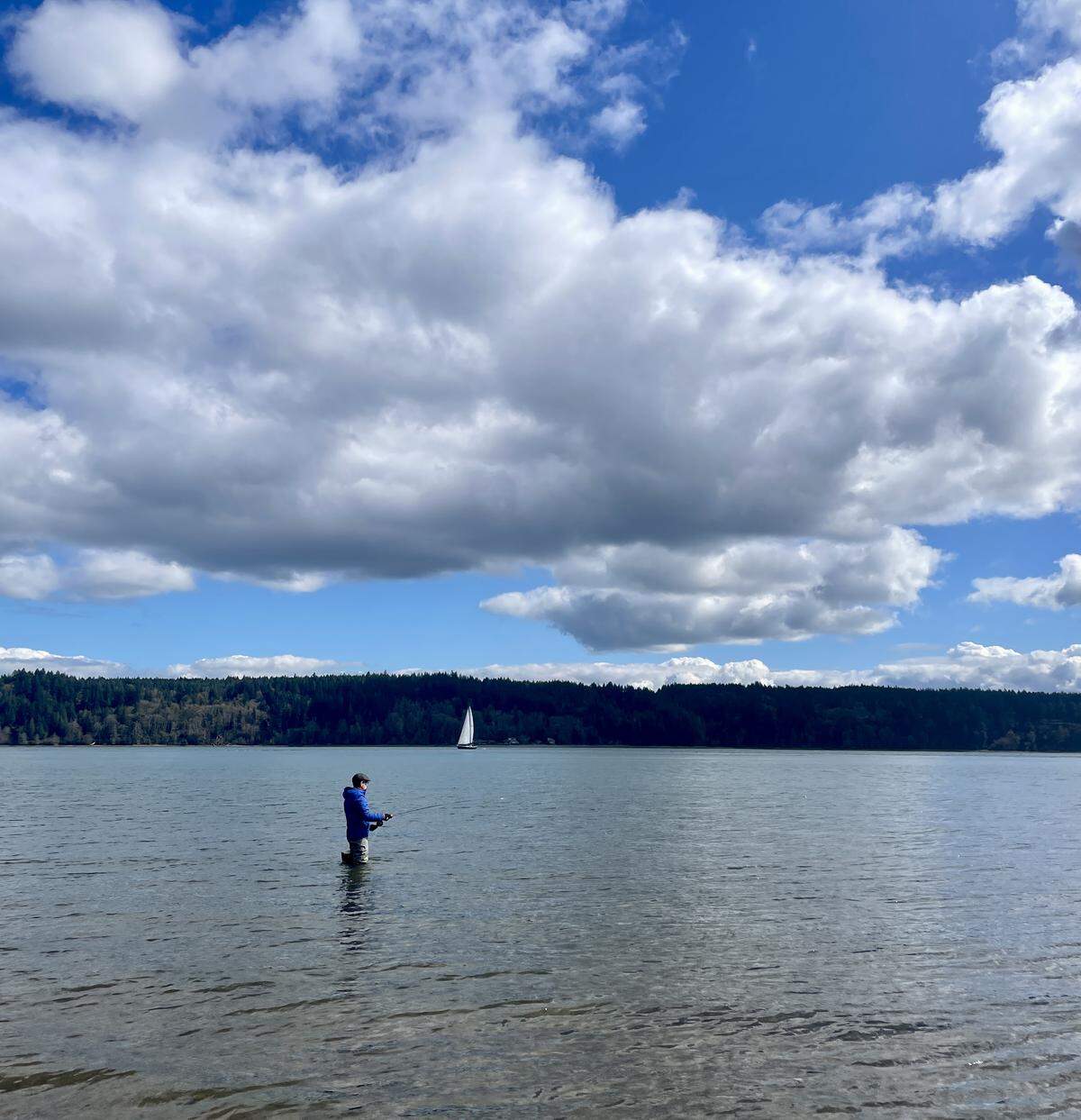
March and April in Western Washington streams and rivers are when chum fry (newly hatched juvenile chum salmon) attempt to swim their way into Puget Sound but sometimes end up in the waiting mouth of a resident coho salmon or sea-run cutthroat trout.
The South Sound, in particular, is a fantastic place to cast your line and interrupt the process.
“Right now, bait fish are coming out of the rivers and into Commencement Bay,” Cole Kennaly from Gig Harbor Fly Shop told The News Tribune. “We have some resident coho around that you can tap into, but we have sea-run cutthroats year round, and right now they’re going after all those little chum fry.”
The Puyallup River acts as an estuary where its freshwater flows into Commencement Bay. The Puyallup River’s freshwater source is Mount Rainier. The glacial meltwater brings a phenomenon called “glacial flour,” rock sediment from Mount Rainier, that turns the water cloudy where the river meets the Sound and helps camouflage juvenile salmon from predators.
The idea is simple: this time of year, match your lure to a chum fry and throw it out there. But, of course, it’s never that simple.
Beach or boat?
Whether you’re casting from a beach or boat, you’re likely to get an interested fish if you’re throwing the right lure or streamer (a type of fly-fishing lure that’s submerged and engineered to replicate bait fish).
Matt Klaiber, owner of Puget Sound Fly Shop, says fishing from a boat can get you into some great spots without beach access.
“In a boat, you get access to a lot more water,” Klaiber told The News Tribune. “On top of that, you’re going to be using faster sinking lines than you would off the beach.”
If you don’t have a boat, you can rent a pedal-driven kayak from Gig Harbor Fly Shop, which allows your hands to be free for more important matters, like casting. Kennaly says the kayaks beat most of the currents in the Sound.
“The only area you might get stuck is in the Narrows,” he said.
Speaking of the Narrows, it can be a great place to fish for salmon, usually later in the summer, but it’s a tough spot to fly fish, says Kennaly.
“Because you have to cast out really far, and get it really deep, really fast,” he said. “So, gear guys at the Narrows tend to have better luck when the salmon are running through.”
Sea-run vs. rezzies
Sea-run fish are those that begin their lives in rivers and streams, then head for the ocean, before returning to spawn. Resident, or “rezzie” fish, spend their entire life cycles near home. Around here, that means the Puget Sound.
Both rezzie coho salmon and sea-run cutthroat trout are feeding on chum fry this time of year.
“A sea-run is a really cool fish because they’re active year-round, they’re constantly moving,” Kennaly said over the phone from the shop. “They’re running up into the estuaries, and running up into the salt. You can kind of go to any of our beaches and find them; they’re not far offshore. You start casting before you even get in the water, depending on the beach. I caught one three weeks ago, almost by accident. I made a bad cast, and it landed two feet off shore to my right, and that’s where the fish took it.”
As far as fly-fishing beaches go, Kennaly says that Brown’s Point had a really good run of pink salmon last year.
“People were out at Brown’s Point hammering pinks as they came back into the Sound,” he said.
Olalla Bay and Purdy Spit are also beaches Kennaly recommends.
If you’re curious about dry fly-fishing (lures that sit on top of the water as opposed to sink below the surface), Klaiber from Puget Sound Fly Shop swears it can be done, even though most of the bigger fish are chasing bait fish this time of year.
“Just throw dry fly poppers mimicking bait fish skittering off the top being chased,” Klaiber said. “You’re just stripping that thing, pop pop pop pop!”
Rules and regulations
In the interest of protecting local fish populations, fishing regulations are highly complicated by nature and depend widely on exact area and species (often times measured by piers and distance from shore). As a result, we highly encourage anglers to check the Washington Department of Fish and Wildlife’s fishing regulations.
You can also check out WDFW’s emergency fishing rules for any current rules that differ from the permanent regulations.
And to simplify everything, people can use the WDFW’s Fish Washington mobile app.
.jpg)