
‘Tis the season to dig for WA’s monster clams. New rules limit harvest
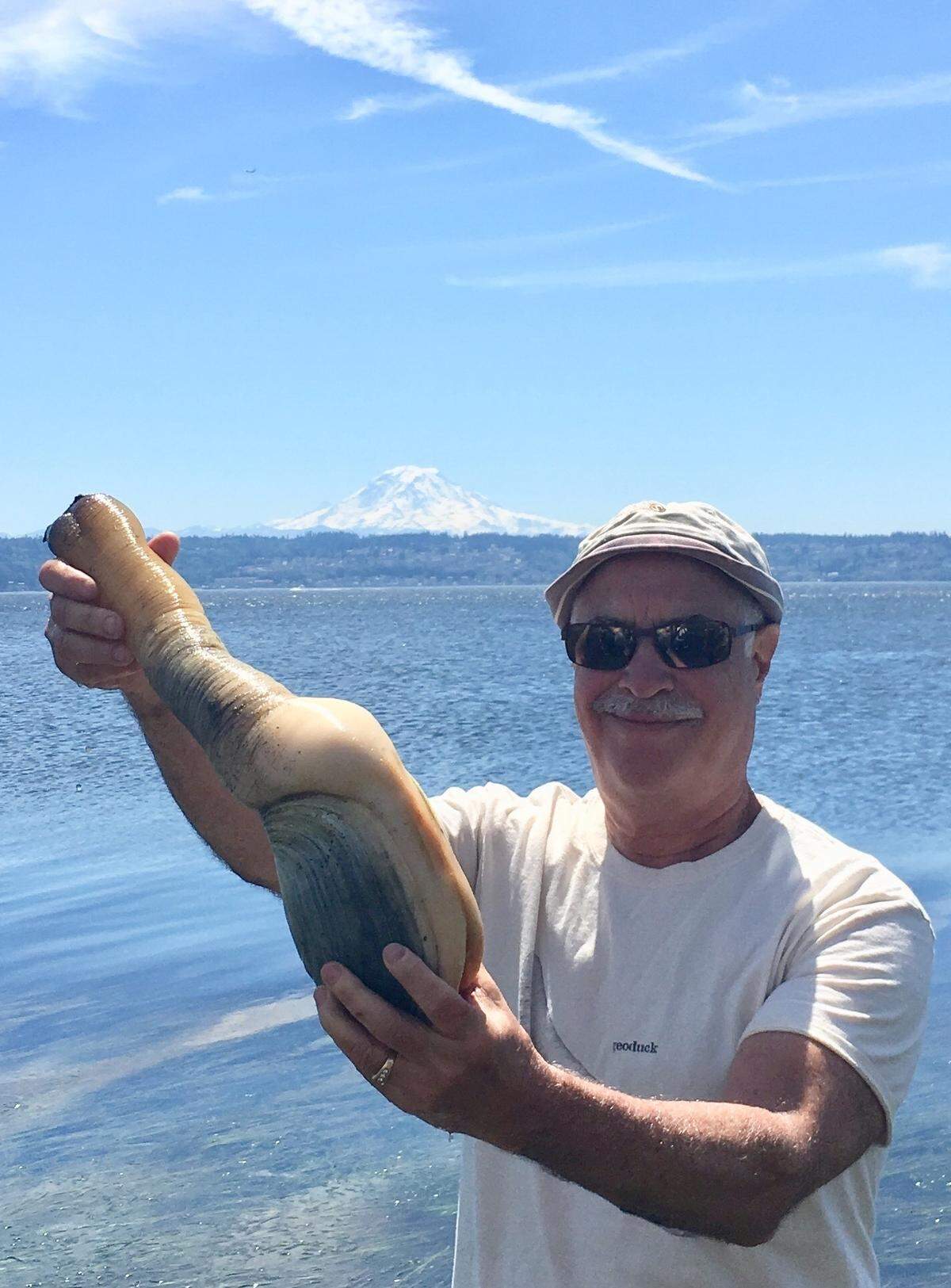
The geoduck, extraterrestrial clam god of Puget Sound, has survived for thousands of years in local waters, with individual specimens often living 140-160 years or more.
The bivalve recently received more protections.
In a phone call with the News Tribune, Bridget Mire, communications specialist with the Washington Department of Fish and Wildlife, said the daily harvesting limit for the geoduck (pronounced “gooey-duck”) officially has been decreased from three to one.
“We’re learning more about this species,” she said. “And we’re realizing that they live a really long time. Because of their long lifespan, they’re slower to develop and slower to reproduce, so their populations take longer to recover. Specifically in intertidal zones, which are especially vulnerable.”
The geoduck limit decrease took effect April 1.
In addition to decreasing the geoduck daily limit, the WDFW announced the cockle clam minimum harvest size has been increased from 1.5 to 2.5 inches, and some area beaches are now subjected to longer, shorter or shifted seasons as compared to previous years.
The changes took effect after the WDFW listened to public comments and held a virtual public hearing about the proposed rule changes in February.
.jpg "geoduck_20140829 (1).jpg")
Geoducks have long been enjoyed in Washington State and are most prevalent in the Puget Sound region, though they can be found in coastal areas from California to Alaska.
The oldest wild geoduck, as verified by the Washington Department of Fish and Wildlife, was clocked at 173 years old. A geoduck’s age is determined by counting the internal growth rings on the shell’s hinge plate.
The heaviest geoduck ever found weighed 8.16 pounds and was found in Discovery Bay, Washington, near Port Townsend.
Like other shellfish, there’s a myriad of ways to eat a geoduck, but sauteing, pan searing, slicing raw into sashimi or sushi, or boiling and tossing into a soup are the most popular methods.
If you ask around, geoducks appear to be a bit of an acquired taste. On a personal note, the author has eaten geoduck exactly once. It was at a sushi restaurant, and I ordered portions for my wife and myself. While I enjoyed it, my wife asked for a napkin and ran to the restroom with her hand over her mouth.
The geoduck’s popularity has increased over the years, contributing to the WDFW’s changes to daily limits.
“We have had some increases in harvest efforts,” Mire told The News Tribune. “We’ve had some really high turnout, and have had to close some beaches because of the high harvest pressure and poor regulatory compliance. So that’s part of these rule changes.”
Mire says the WDFW is attempting to spread out the high harvest pressure on geoducks by encouraging people to use the department’s find a beach tool and see if they can find some less-visited beaches.
“If you drive up to a beach, and it’s obviously crowded, maybe try a different beach,” she said.
Mire said the WDFW considers the rule changes a combination of conservation and the promotion of sustainable shellfish gathering.
Mire also recommends refilling holes after digging and making sure you’re properly identifying the shellfish you’re digging for.
The rule changes do not apply to private land.
If you’re planning to dig for shellfish this spring, make sure you have the proper license and are following the rules. The Washington Department of Fish and Wildlife regularly patrols popular shellfish beaches and will suspend the licenses of any noncompliant parties.
“We want to make sure that we have opportunities for people to harvest for years to come,” Mire continued. “It’s really about making sure that you can still gather shellfish, not only today but tomorrow and future generations.”
.jpg)