
Tacoma writer’s walk along the Narrows generates some strong feelings
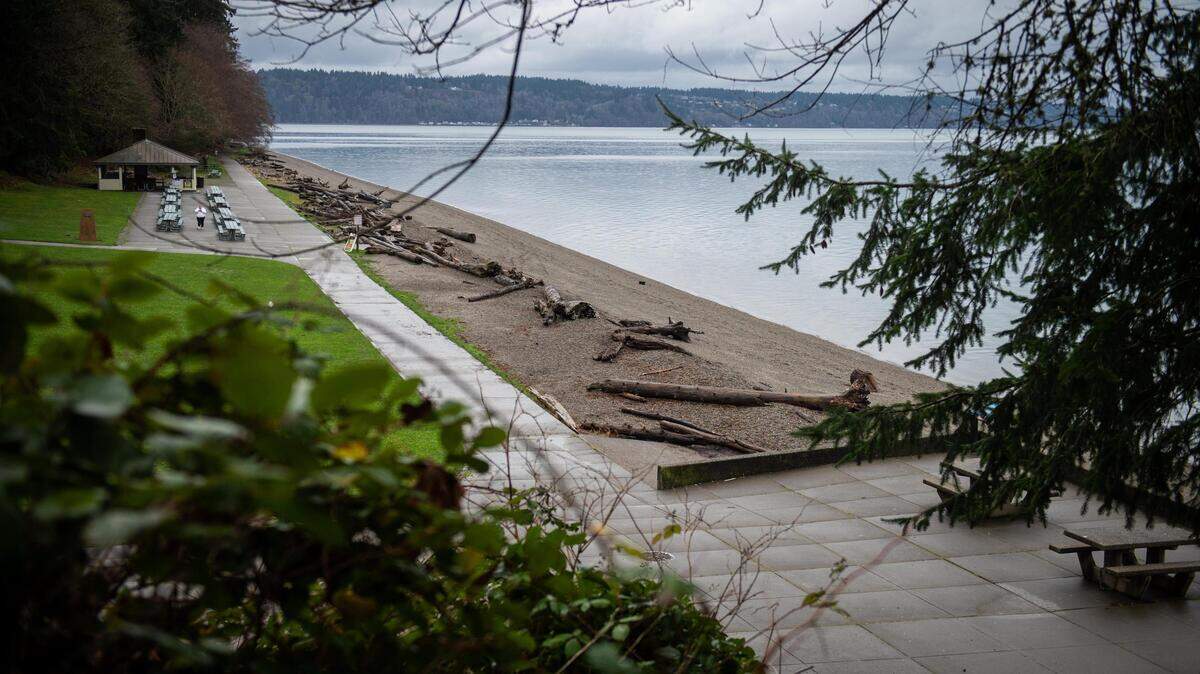
Last June, Grit City Magazine editor Sierra Hartman set out to walk from Owen Beach in Point Defiance to Titlow Beach on Tacoma’s West Side. The beach walk, or hike, depending on how one would like to designate it, was a little over six and a half miles and required precise tide planning to ensure the trek was safe and doable.
He did it. And then he photographed and wrote about it in the newest issue of Grit City Magazine. Earlier this month, Grit City Magazine posted about Hartman’s journey on its Instagram page.
That’s when the tides turned.
Commenters were concerned about Hartman posting a potentially dangerous and illegal beach walk, and he got an anonymous message suggesting he might be sued.
Should a simple walk on a beach be controversial?
The walk
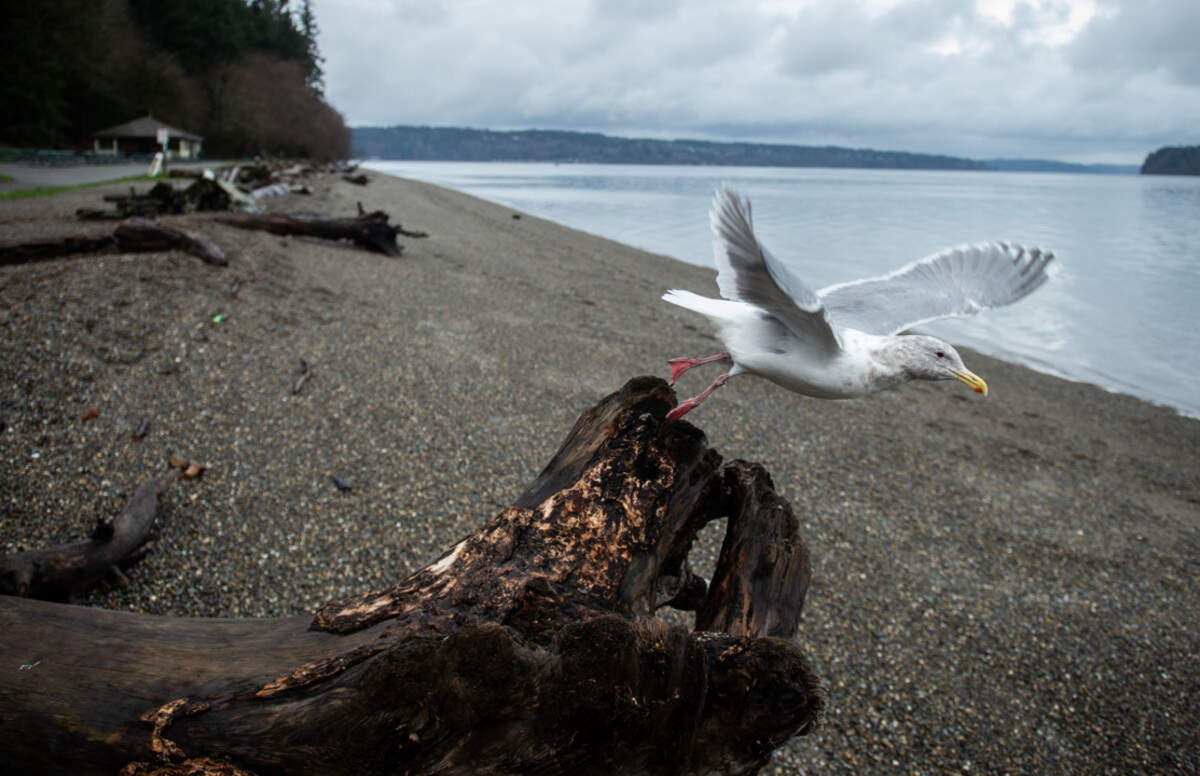
Puget Sound beaches are unique in the way their nooks and crannies reach deep into inlets, fingers and bays, and also in the way that its waters retreat, leaving long mudflats and swamplands. Low tide is a bullseye for Northwest beachcombers, and Hartman is no stranger to wayward landscapes.
He was pretty sure the walk could be done. He spent some time going over satellite imagery and watching tide charts.
Hartman picked a day in early June, not long after the summer solstice, where he could start at Point Defiance with the tide at the 0-foot mark and pass Salmon Beach — about a third of the way to Titlow Beach — at a -3 feet tide, hopefully ensuring for enough beach to pass.
“Once you get past Salmon Beach, the railroad fills in a lot of the beach,” Hartman told the News Tribune. “If you wanted to, you could scramble along the boulders, but there are like three or four beaches between Salmon Beach and the Narrows Bridge that are only exposed at low tide. But then there are trees and blackberries, and sharp boulders between each of those.”
Hartman says it isn’t a pleasant walk.
“It’s cool because no one ever does it, but it’s not beautiful or attractive. Every rock on the beach is covered in barnacles. I stubbed my toe and cut it,” Hartman said.
Why?
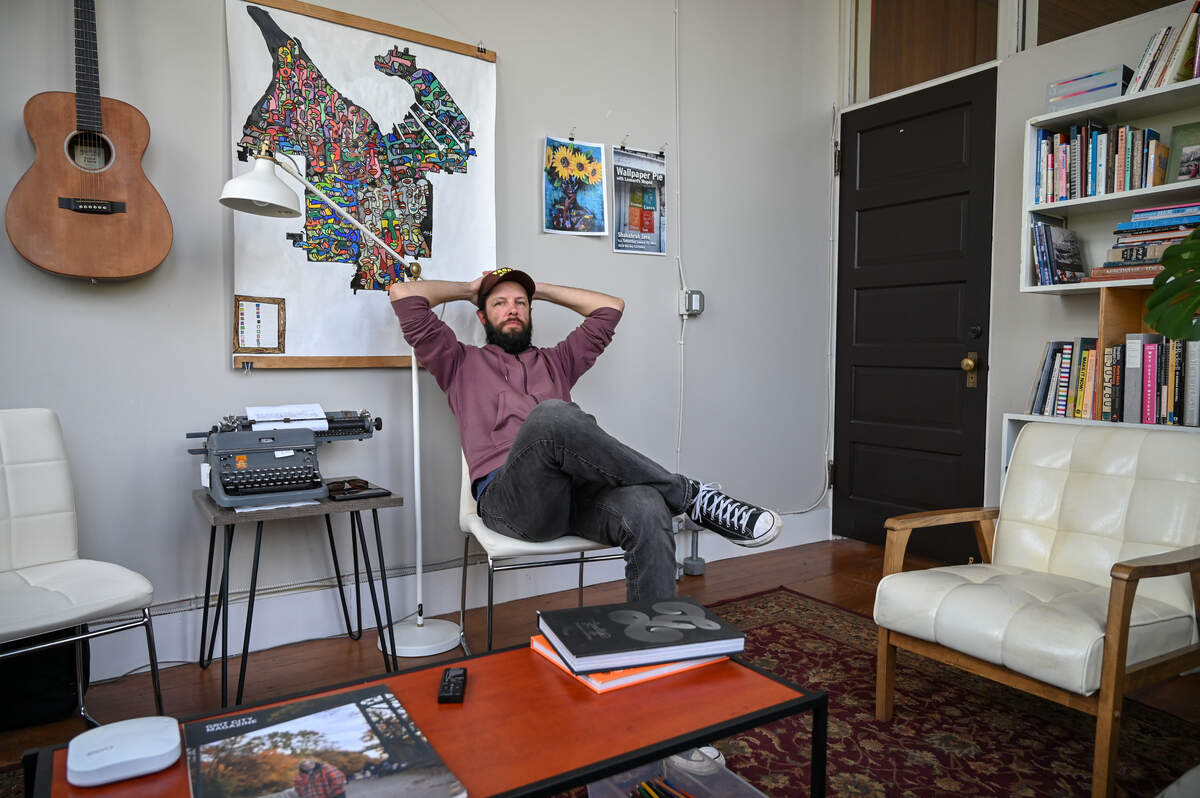
Hartman says he’s always been attracted to the underground and wandering side of life. He grew up in Southern California but has lived in Tacoma for 11 years. He also lived in San Francisco for a while and would spend time photographing abandoned tunnels, buildings and infrastructure there.
You might consider it his art.
He’s done something like his Tacoma beach walk before. When he was 19, Hartman worked at a camp up in the hills above Malibu. His favorite beach to visit was Leo Carrillo State Beach.
One day, he got some friends together and walked nearly 8 miles under the shaky bluffs of Malibu from Leo Carrillo to Zuma Beach.
“I like exploring stuff that maybe you’re not supposed to explore,” he said.
The controversy
Salmon Beach is a private community of 80ish fishing cabins turned homes on the beach directly south of Point Defiance. It is what Hartman considers “the closest thing to Pirates of the Caribbean you will likely find outside of Disneyland.”
Hartman loves it there. He wrote about it for Grit City Magazine in 2018.
“I know a couple of people down there. But it’s a neighborhood, everybody knows each other there. It’s a very open, very safe place,” he told The News Tribune.
Salmon Beach is indeed a private community. It owns its boardwalks, parking lot, gates, trails, bluff access and stairs. It’s all maintained by residents.
Understandably, when you live in a private community a bit far away from the rest of society, it can ring a few alarm bells when you notice folks walking around who don’t live there.
At Salmon Beach, houses are built up on pilings over the sand and rocks, with seawater flowing beneath them at high tide. Some houses have trapdoors on their decks with ladders that descend to waiting kayaks and dinghies.
Of course, Hartman waited for low tide to be able to pass Salmon Beach on the shore, but that’s where it also gets a bit tricky. Unlike California, Washington state doesn’t consider every beach below the high tide line public. Beaches in Washington can be private as far as the low tidelands go.
Does that mean you can walk by in the water? According to the public trust doctrine, adopted into Washington State Law in 1889 when Washington gained statehood, which suggests that the public has a right to all navigable waters, yes.
Usually, it doesn’t come to that. As long as you show respect, maybe wave, and don’t approach a homeowner’s home or lawn, most people just smile as Puget Sound beach walkers pass by.
The next hurdle is the railroad. It’s not all beach, and for at least one section, Hartman had to scamper up some rocks near the train tracks. He liked the view, so he published a few pictures. Some Instagram commenters were concerned he was promoting trespassing.

“I was surprised by how many people griped about me posting a photo walking somewhat near railroad tracks on social media,” Hartman said.
BNSF owns those tracks, and arguably 10-20 feet on either side of them. Anyone with a childhood (or who has seen the movie “Stand by Me”) remembers walking along railroad tracks at one point or another. But Hartman says he wasn’t on BNSF property. He was just taking a few photos nearby.
Of course, the biggest concern Instagram commenters had about Hartman’s hike is the tide. Rescues along the shoreline between Point Defiance and Titlow Beach are frequent, as rising Puget Sound waters in those sections can be swift.
But should it be considered reckless for Hartman to simply write about and photograph his wanderings for Grit City Magazine?

A Goldilocks city
“People do get hit by trains,” Hartman says. “And they do get swept away by tides. I’m not telling people to do this.”
It’s true. There’s no element in Hartman’s story where he tells the public to follow in his footsteps. He also did not log the hike onto WTA, AllTrails or Strava. He simply went for a walk and wrote about it.
Hartman did concede, “I understand that when you tell someone, ‘Hey, look at this cool thing,’ people are going to want to see it.”
When an anonymous message arrived in Hartman’s inbox stating that he needed to delete his Instagram post and remove the latest hard copies of Grit City Magazine from newsstands or potentially face a lawsuit, he chalked it up to Tacoma.
“It’s an interesting lesson in Tacoma,” he said. “It’s a Goldilocks of a city. Right between a small town and a big city. It attracts a lot of different kinds of people, lots of diversity.
“So, we hear from everyone.”
.jpg)