
‘I’m going to die.’ Dramatic rescue after climbers injured in fall on WA peak
On Saturday morning, Rochelle Garcia, a UW physician with three adult children, stepped onto the snow, high up on Mount Deception in Olympic National Park. She considered her path ahead and decided snow was better than the loose rock she’d been managing.
The Olympic Range is famous for its loose and unstable rock and is traditionally difficult to scramble on. But the snow was loose and slushy and not particularly firm.
Garcia had started off earlier that morning with three friends she’d met with The Mountaineers, a local organization that teaches alpinism and climbing.
Two of the women in her party were above her and not far from the summit ridge. Loose rocks tumbled down from above and into Garcia’s path.
She had crampons with her and had been wearing them earlier that morning, where appropriate, but had taken them off for the upper section. Her ice axe hit a rock that was thinly covered with snow. She took note of the rock and avoided it.
“Then, the next thing I know, I was falling,” Garcia told The News Tribune on Wednesday.
Garcia’s fall was the first in a series of events that left three members of her party injured and led to a dramatic helicopter rescue that ended with one member of her party being airlifted to Harborview Medical Center in Seattle.
Peak baggers
Garcia got the call from her friend “Pav” (last name withheld for privacy reasons) four weeks earlier. Pav was assembling a team to climb Mount Deception and wondered if Garcia wanted in.
Garcia, who is prominent in many peak-bagging clubs, including PNW Peak Baggers on Facebook and peakbagger.com, thought it would be fun.
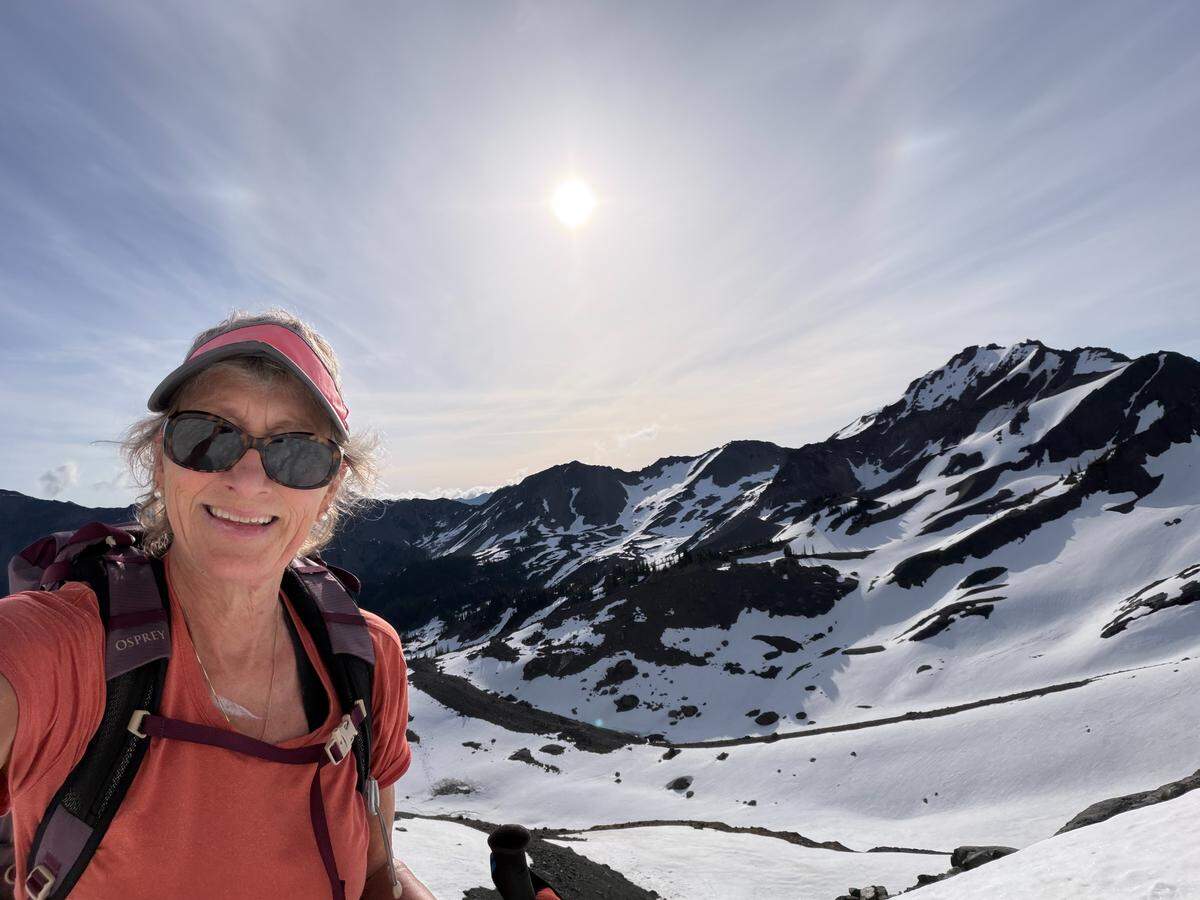
In the past seven to eight years, Garcia has summited many mountains, from Mount Rainier to Mount Whitney, and was a “Scramble Leader” on an expedition with The Mountaineers last year.
Of the four women assembled for the Mount Deception climb, Garcia had climbed before with Pav and another named Andrea Ferrenberg. But she had not climbed with the fourth member, a Mountaineers member named Rizka Budiati-Szkutnik, though she knew her.
Budiati-Szkutnik began hiking more during COVID and became more involved with The Mountaineers in 2025, when she participated in and instructed courses. Many of her summits can be found on peakbagger.com.
The four mountaineers decided they would climb Mount Deception via the Standard Route over Memorial Day weekend. Garcia, Ferrenberg, and Pav were going to meet at the trailhead on Friday and hike to Royal Basin, where they would camp for the evening. Royal Basin, a natural staging area centrally located between multiple peaks, is about seven miles from the Deception trailhead.
Budiati-Szkutnik, a single mother of two young children, couldn’t get away early on Friday, so she drove out late and stayed the night at the trailhead.
Mount Deception is the second-highest peak in the Olympic Range, just behind Mount Olympus, at 7,788 feet. The plan was to depart Royal Basin at 6 a.m. and begin their ascent of the mountain.
But Budiati-Szkutnik wasn’t there yet.
They waited until 7 a.m., and then agreed to start without her, hoping she would catch up on the mountain.
“Looking back, I think that was a mistake,” Garcia said over the phone. “We should have started at three or four in the morning. By seven, it was already so late.”
The ascent
Garcia, Ferrenberg, and Pav started up the Standard Route just after 7 a.m. on Saturday morning. It was icy down low, so they wore crampons, which are traction devices with spikes that are strapped on to the bottom of shoes or boots.
Once they passed the initial icy section, the snow softened. The route transitioned between rock and snow until the trio finally decided to remove their crampons.
Ferrenberg and Pav took the lead, with Garcia behind. When they were about halfway up, the trio caught sight of Budiati-Szkutnik a few hundred yards below them, making her way up.
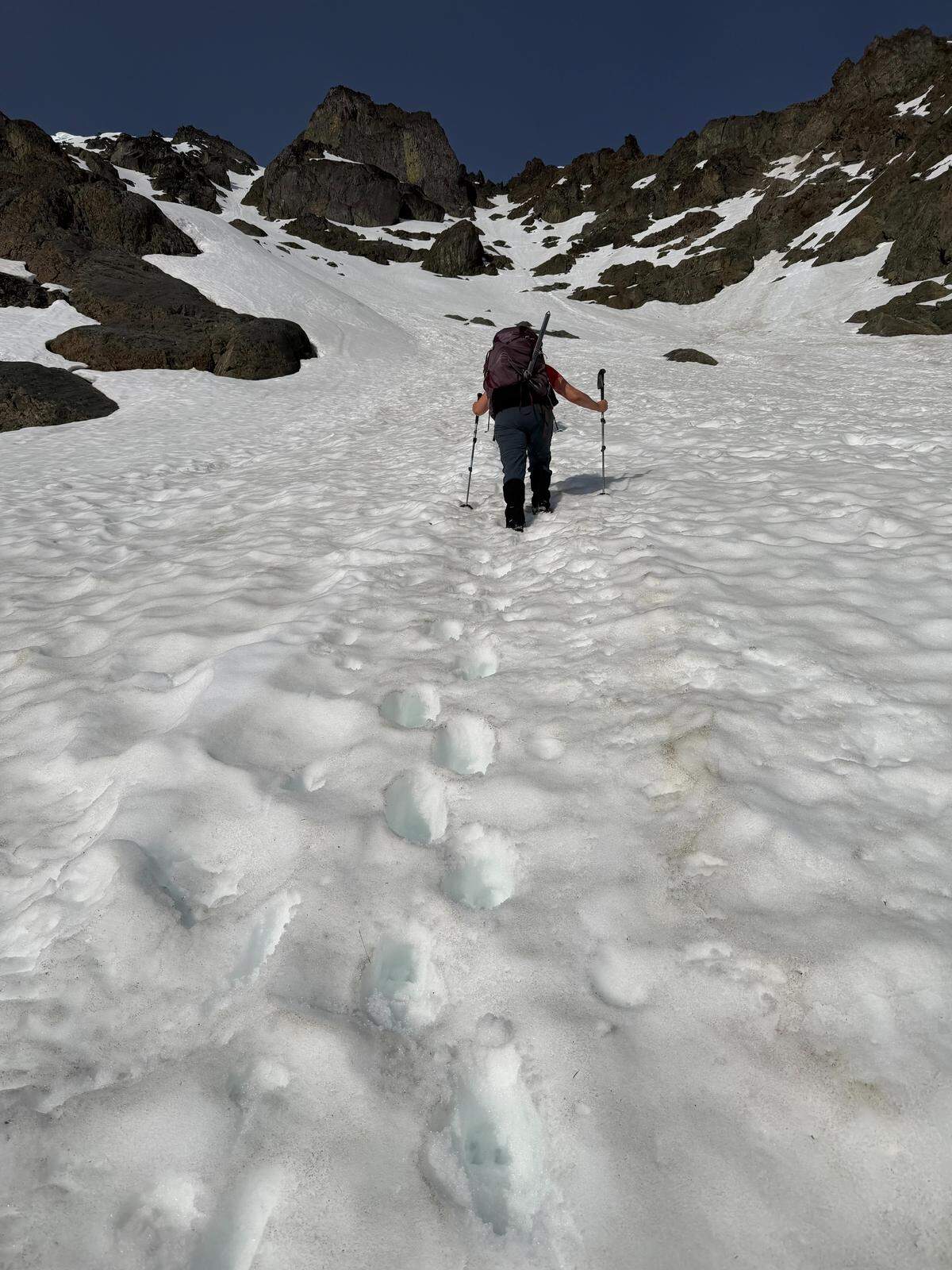
They were making good time and impressed a duo of peak baggers they’d met in camp the night before. Hans Hughes from Gold Bar and his friend Tristan Osborne had also hiked to Royal Basin and camped on Friday night. They’d planned to climb Mount Mystery on Saturday morning but changed their plans at the last minute to the closer and much lower elevation Snifter Spire.
“It’s early season, and we were tired,” Hughes told The News Tribune. “We decided we needed some time to get back into shape before doing Mount Mystery.”
Hughes and Osborne met the trio of women at Royal Basin on Friday night and heard of their plans to summit Mount Deception the next morning.
“Then we saw the ladies once as we were hiking up to Snifter Spire on Saturday morning,” Hughes said over the phone. “They were making their way up the chute. We thought, ‘Nice, they’re getting after it. Good for them.’”
Hughes and Osborne didn’t see them again until an hour later, around 9:45 a.m., when they were on the summit of Snifter Spire, but they had a perfect view and saw that they were getting close to the top of the summit ridge at the top of the chute.
“We were just sitting there chatting when we heard the first scream,” Hughes recalled. “We looked over and saw an individual sliding very fast down the snow chute. At first, we thought she was glissading and having fun, and we were like, ‘Whoa, that’s a very risky glissade.’ Then she started going faster, and we thought, ‘Oh no.’”
Three completely separate accidents
Garcia slipped and started sliding down Mount Deception, fast. She tried to arrest her slide, over and over again, with her ice axe, but the snow was too soft. She used her arms, knees, and legs to dig in, but her speed was too fast.
“I’m going to die,” Garcia remembered thinking. “What about my kids?”
Garcia slid 240 feet, according to her Garmin GPS watch, struck a large boulder, and fell into its moat.
“She ended up dropping into a moat directly below a rock band she went off of,” Hughes said. “Another 300 feet or so below her, there was a massive cliff band. We’d be having a very different discussion if she went off that.”
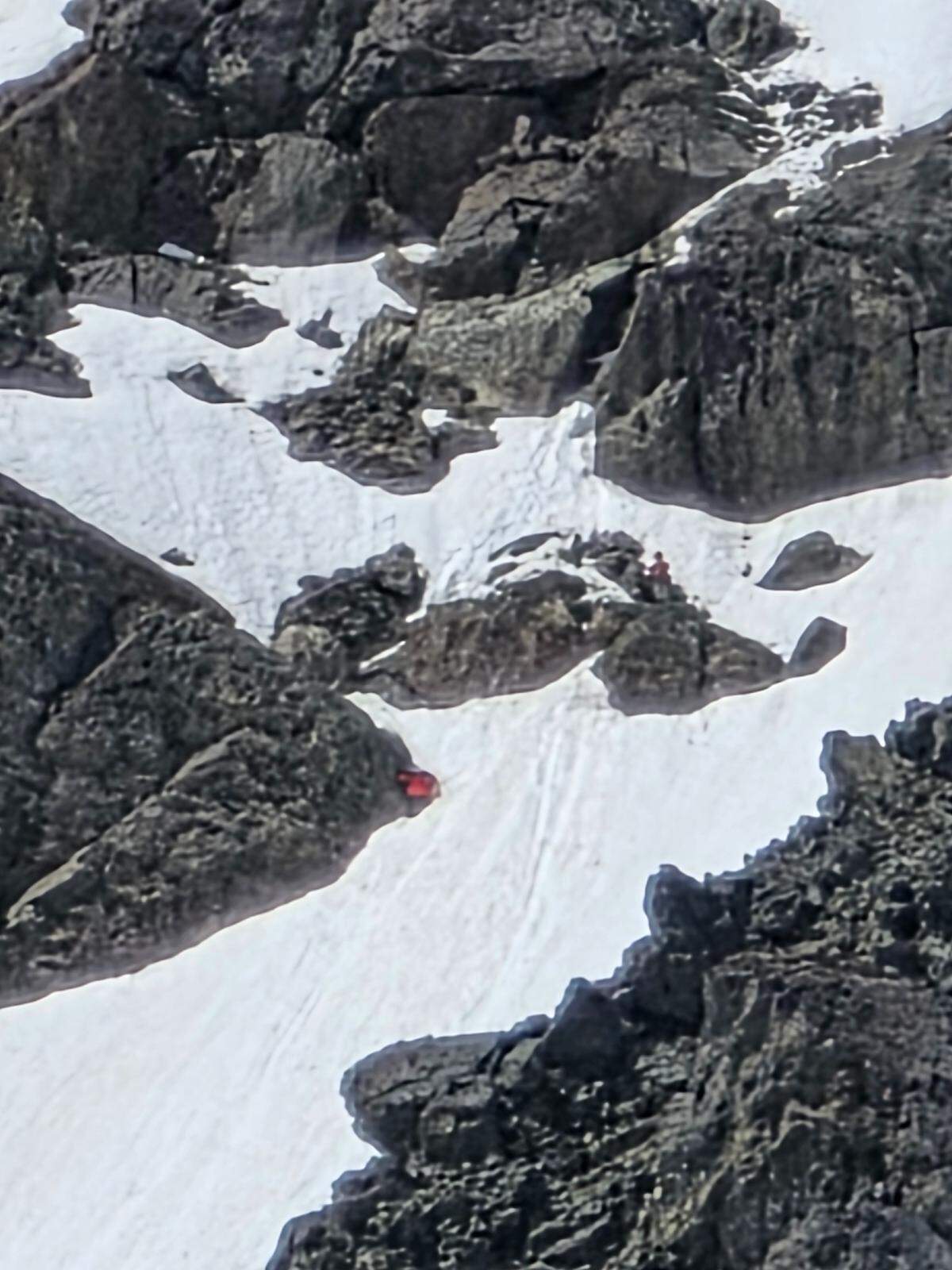
After watching Garcia slide into the moat, Hughes pulled out his phone and was shocked to see that he had one bar of reception. He called 911 and was connected to National Park Service dispatch.
“I was able to describe what had happened to them and where,” Hughes said. “I wasn’t sure if she had lived.”
Garcia had lived. Somehow, she’d managed to survive the slide with only a few scrapes, bruises and a hurt knee.
Hughes watched Garcia climb out of the moat and onto the boulder above it. “My first thought was, ‘Holy shit, she lived?’”
At 10:06 a.m., Garcia texted her friends above that she was , then called 911 after realizing she could barely bend her knee and would not be able to get herself down.
By this time, Budiati-Szkutnik had nearly caught up to Ferrenberg and Pav, who were waiting near where Garcia fell.
Then, Budiati-Szkutnik fell.
“I was sitting there and noticed a whole bunch of rocks and snow suddenly come down, with a trekking pole,” Garcia recalled. “My first thought was that the members of my party had somehow triggered an avalanche.”
After the debris stopped, Garcia heard moaning and thought it was an animal. After a little while, the moaning stopped.
“About a half hour after the first woman slipped, her friend slipped, too,” Hughes said. “She looked like she was maybe looking out to see where the first woman was, but she slipped and went into the same slide track on the same chute.”
Hughes watched Budiati-Szkutnik fall into Garcia’s slide track, which caused her to go much faster than Garcia had.
Hughes watched Budiati-Szkutnik crash into the same boulder as Garcia but with much more force. She didn’t stop where Garcia had. Budiati-Szkutnik slid down another 20 feet, back onto the steep snow.
“When she hit, she hit with such a loud thud that we could hear it echoing across the basin,” Hughes recalled. “She let out a death scream. The first woman looked bad, but the second one looked way worse.”
Hughes called 911 again and reported the second victim.
“I was able to give them GPS coordinates, elevation and what aspect of the mountain they were on, so it was about as dialed in as could be for where the incident took place. They said they’d assembled a helicopter and would be there soon.”
Just after 11 a.m., Garcia spotted Budiati-Szkutnik about 20 feet below her. She was confused, bloody, and her helmet had broken in two. Garcia realized that the sounds she’d been hearing were from Budiati-Szkutnik, who had been slipping in and out of consciousness.
Garcia, an MD, instructed Budiati-Szkutnik not to move. Budiati-Szkutnik kept saying she was dizzy and that her head was bleeding. Garcia told her help was coming.
Around 11:10 a.m., Garcia received a text from Pav that Ferrenberg had broken two fingers after dislodging a large rock.
.jpg "1000001403 (1).jpg")
The rescue
Olympic National Park rangers and SAR technicians arrived approximately two hours after the initial 911 calls. Hughes and Osborne had hiked down off of Snifter Spire and back into Royal Basin by noon. Shortly after, they saw a helicopter fly in from the north, directly over Mount Deception.
The helicopter buzzed the chute where Budiati-Szkutnik and Garcia were located, then landed in Royal Basin. Rangers and technicians set up a staging area and rigged the helicopter with cables, ropes and hooks.
The system the Search and Rescue (SAR) technicians used is called “short-hauling.” It’s when a technician is hanging at the end of a line from a helicopter and drops in to rescue a stranded victim. They are then “hauled” a short distance from the accident site back to the staging area.
First, a technician was lowered onto the rock where Garcia was. Garcia immediately told them not to worry about her and to go tend to Budiati-Szkutnik.
At 12:52 p.m., Budiati-Szkutnik was short-hauled back to Royal Basin.
Then they came back for Garcia. The technician placed Garcia in what he called a “screamer vest” because people tend to scream when being lifted into the air. But Garcia said all she felt was relief.
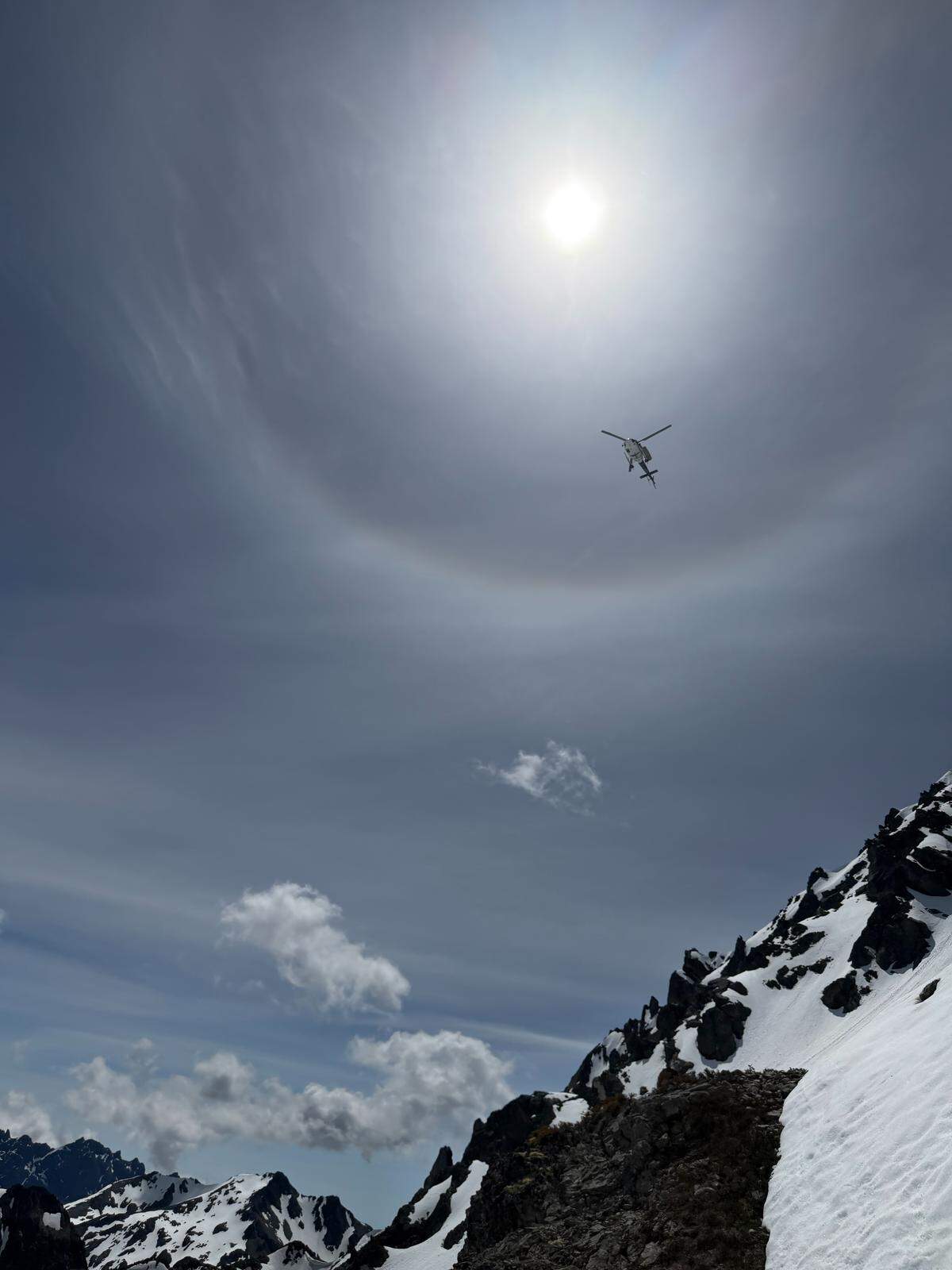
“I was so glad to be off that mountain, and that people were safe. It felt great,” she said.
Garcia estimates the ride took less than five minutes.
By 1:06 p.m., Garcia was on the ground at Royal Basin with Budiati-Szkutnik. Then the rangers went up and short-hauled Ferrenberg and Pav to the basin as well.
All four mountaineers were then flown to Port Angeles Airport, where Budiati-Szkutnik was picked up by Airlift Northwest and flown to Harborview in Seattle. The rest were taken by ambulance to a local ER, where Garcia and Ferrenberg were treated and released.
On Monday, Garcia, Ferrenberg, and Pav went to Harborview to visit Budiati-Szkutnik. Garcia says she has quite the uphill battle.
According to a GoFundMe organized by a friend, Budiati-Szkutnik arrived stable but with multiple injuries, including rib, nose and spinal fractures, an abdominal hematoma, pulmonary contusions and many head lacerations.
Budiati-Szkutnik had also suffered a stroke from the injury to her vertebral artery in her neck, which led to swelling that required a craniotomy to reduce swelling in her brain.
“At 41 and otherwise healthy, Rizka has a strong chance for good recovery,” Budiati-Szkutnik’s GoFundMe says. “The coming weeks and months will involve intensive physical and occupational therapy to regain balance, coordination, and strength. Cerebellar strokes can affect dizziness and gait, so the road ahead will take time and dedicated work.”
Budiati-Szkutnik’s children are staying with relatives until she recovers. At the time of publication, her GoFundMe needs over $10,000 to reach its goal.
As for Garcia, she’s grateful to her friends and the Olympic National Park SAR Team, and she is happy to be resting at home.
As for the mountains, she knows they’re there but is unsure of her future in them.
“I don’t want to stop climbing mountains, but this definitely makes you stop and think about things.”
.jpg)