
Ducks dumped at Nisqually refuge caused a quandary. Local birders to the rescue!
On June 5, a member of the Pacific Northwest Birding Facebook group posted some photos of a family of Indian runner ducks at the Billy Frank Jr. Nisqually National Wildlife Refuge.
“Saw the weirdest thing at Billy Frank NWR last night,” the post read.
It’s true, it’s weird. Indian runner ducks are not native to the preserve and haven’t been seen there before. In fact, Indian runner ducks are not wild at all. They’re a domesticated breed that was bred hundreds of years ago in Asia to be flightless, easy to herd, and for their large quantities of eggs.
As far as an animal species goes, they’re about as vulnerable as it gets. They have practically zero ability to protect themselves and rely heavily on human care.
Those who know Indian runner ducks knew the ones at the preserve were in trouble. Comments quickly trickled in from birders (waterfowlers?) all over Western Washington.
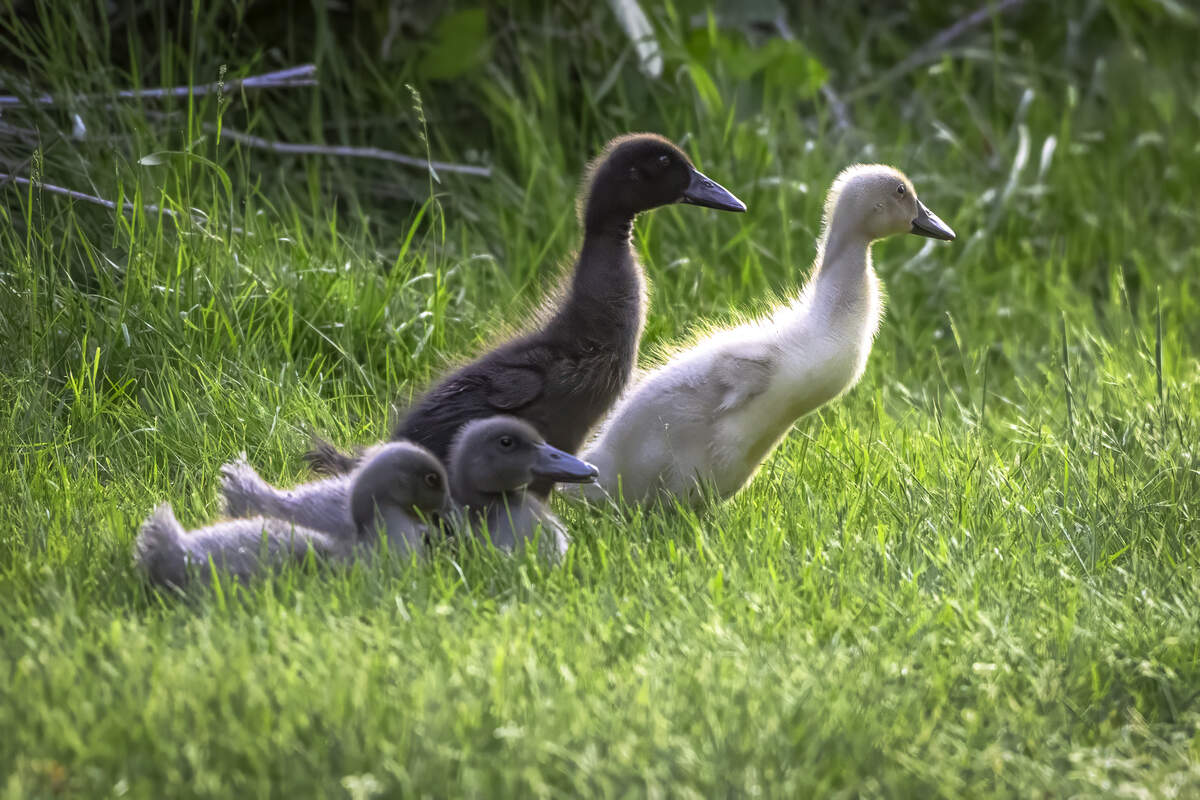
“Someone let these guys go. They aren’t wild. They can’t fly,” one comment read. “They were dumped and will not survive,” said another. “They need help,” said another.
Janet Thurnher, a bird enthusiast who owns a 21-acre bird rescue in Roy, Washington, saw the post and immediately recognized the ducks were in trouble.
“I alerted my wife, and said, ‘Hey, there are runner ducks at the refuge, and nobody has saved them,’” Thurnher told The News Tribune. “So my wife called the refuge.”
At that point, judging by the posts, Thurnher estimated the ducks had been there for two days. But when Thurnher’s wife, Jenn Welch, got a hold of the refuge, officials had no idea the ducks were there.
In an odd turn, Thurnher said, the refuge told her to go pick them up.
Which is exactly what Thurnher and Welch set out to do. It’s about an hour drive from their home in Roy, and just before they were about to hop into the car, they got a call back from the refuge. Another Good Samaritan had already stopped by and grabbed them.
A woman, who wishes to stay anonymous, saw the Facebook post and ran down to the refuge, corralled the discarded ducks into a bin, and brought them home to her apartment, where she put the family of six into her stand-up shower.
The Good Samaritan intended to keep the ducks or find a home for them, but she is relatively young and lives in a rented apartment. Neither her father nor her landlord wanted anything to do with the ducks.
The refuge connected Thurnher and Welch with the Good Samaritan, and they arranged a time to come by and grab the ducks from her.
“It was quite comical when we went to get the ducks,” Thurnher said. “There was poop everywhere, and the bathroom smelled. She was incredibly sweet but didn’t know a thing about ducks.”
Thurnher and Welch brought the ducks home to their rescue in Roy but quickly realized it wouldn’t be the best home for the feathered family of six. They have 70 birds, including 10 Indian runner ducks, and the drake (male duck) was causing problems.
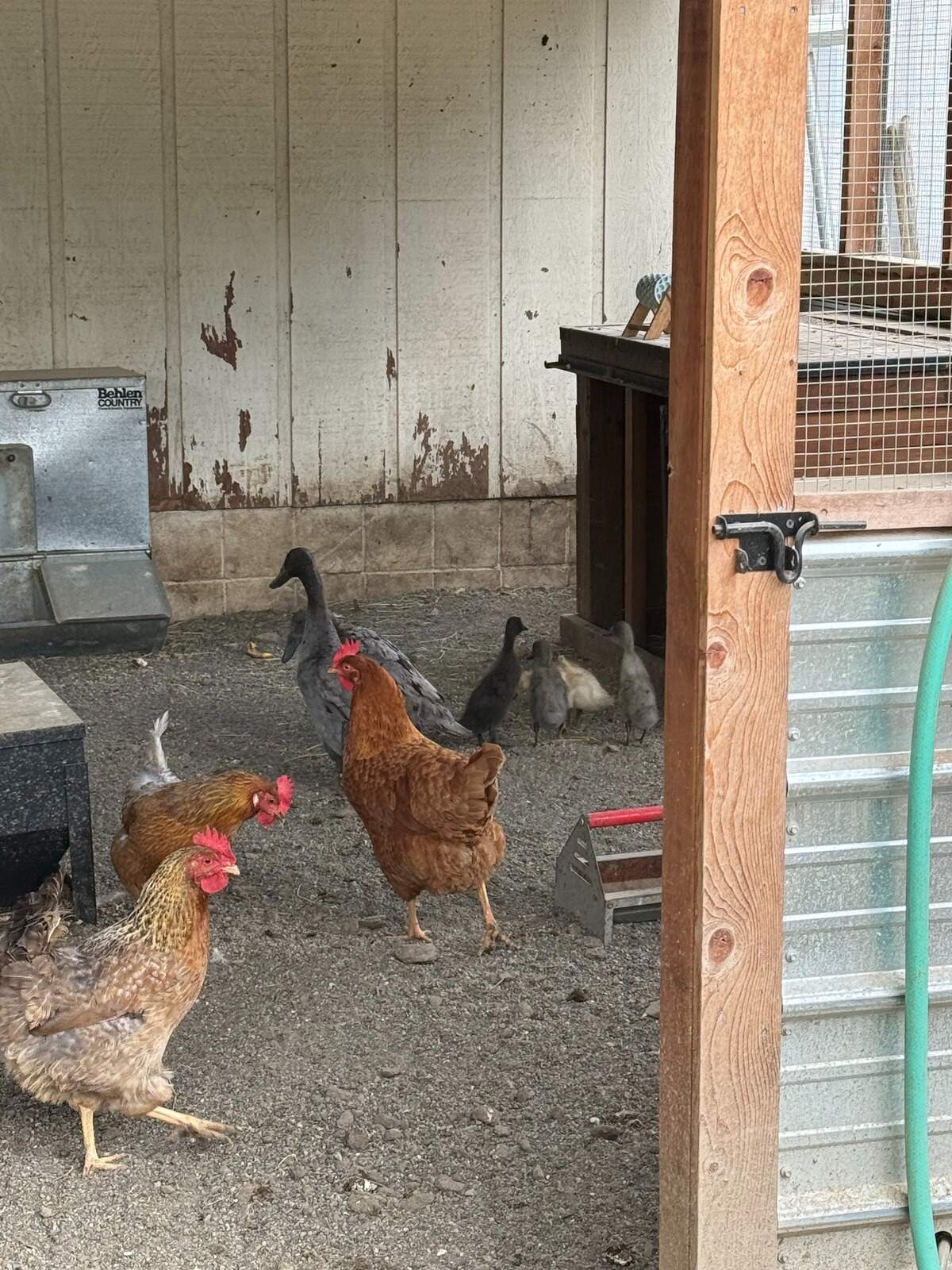
So they phoned a friend who owns a big farm in Clay City, near Orting. “He said, yeah, sure, bring them over, runner ducks are my favorite bird.”
And there they now live, flightless and happy together. With human care.
As for how they got to Billy Frank Jr. Nisqually National Wildlife Refuge, it’s anyone’s guess. They were dumped in the parking lot with three pounds of feed, and not anywhere near water.
“And ducks need water,” Thurnher said.
On June 8, three days after the Pacific Northwest Birding Facebook group post and one day after the runner ducks were rescued, the refuge posted a video of the runner ducks, stating that runner ducks had been spotted, that they were dumped, and that the ducks had been removed.
That triggered a slew of replies from people wondering if they’d been culled or euthanized. Thurnher and Welch replied to as many concerned comments as they could, telling everyone the ducks were quite fine and living on a wonderful farm now.
The refuge had no comments for The News Tribune on the matter.
The birding community, with Thurnher and Welch at the helm, rallied together to save the wayward wandering waterfowl. One might say the community was flying high if we weren’t discussing flightless birds.
This story was originally published June 16, 2026 at 12:30 PM.
.jpg)