
Let’s talk about Puget Sound water temps and when to wear a wetsuit
Summer is here, and more and more folks are hitting the waterways.
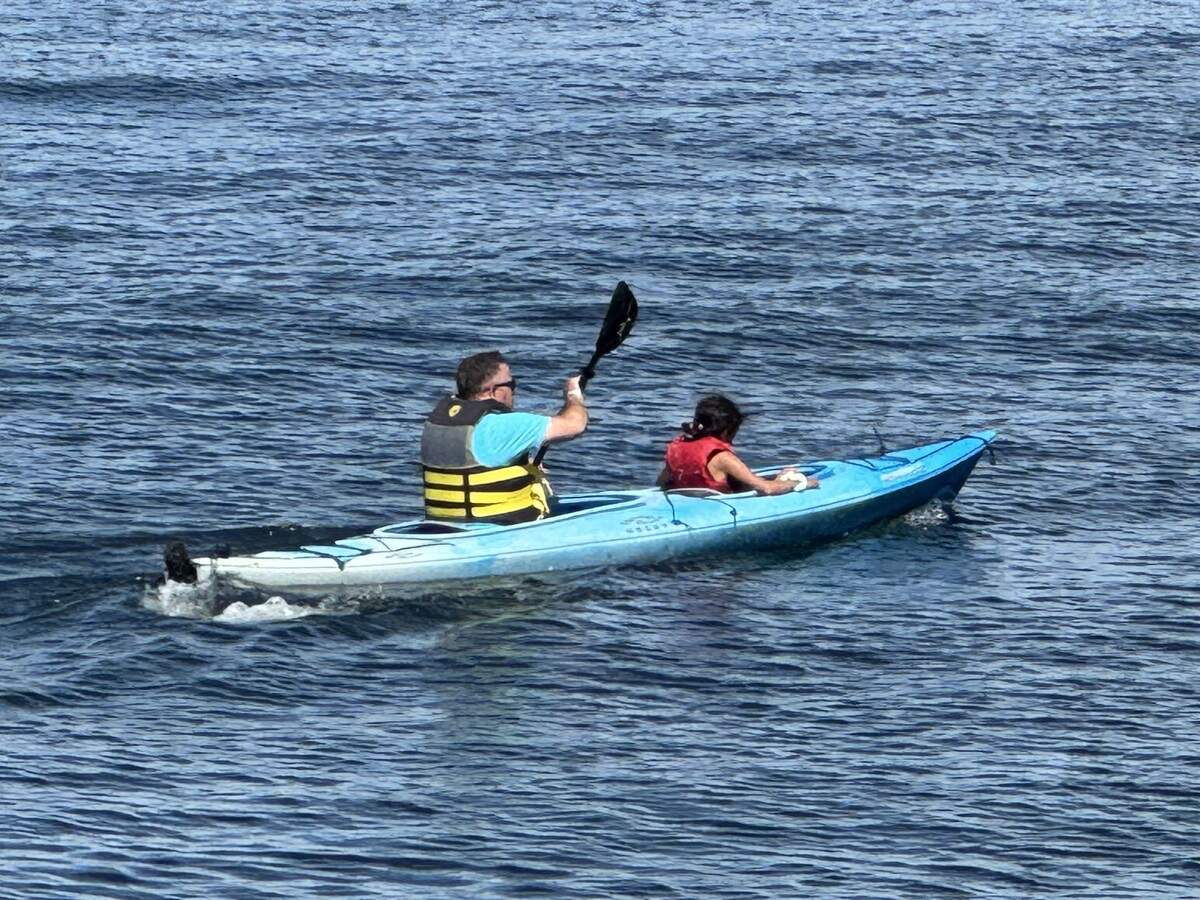
I’ve seen it myself. While dropping my daughter off at Point Defiance Marina for camp the past two weeks, I watched a dad and daughter in T-shirts kayak by the Boathouse, a full family (with dog) in wetsuits take off in a canoe, stand-up paddleboarders splash by in trunks, fishermen row out in overalls, and a team of kayakers in wetsuits launch under the pier.
What gives? I know the water is cold, by most reports 48 degrees Fahrenheit in the winter and 56 in the summer (a small margin of 8 degrees), but is there really no rhyme or reason to which Tacomans wear wetsuits and which don’t? Is it just personal preference, or is there some secret local method to the madness?
I decided to reach out to one of the South Sound’s biggest paddle proponents, Dean Burke, president and CEO of Visit Tacoma-Pierce County, founder of the legendary paddle race SEVENTY 48, and a man who once stand-up paddleboarded from Olympia to Victoria, B.C.
What’s required?
Life jackets are a must. Let’s get that out of the way right now. Not only because you’re over water, but you’re over cold water with extreme currents. Also, because you’ll get a ticket if you don’t have one. Life jackets are not only required on board motorized vessels in Washington State, but they’re required on any nonmotorized vessels as well, including rowboats, kayaks, canoes, stand-up paddle boards and foilboards.
The only way you’re going to get away without a life jacket is if you’re surfing waves at an ocean beach. You need a life jacket if you’re paddling a stand-up paddleboard from a nearby marina and commuting over to the surf. But, theoretically, once you get on a wave, you can toss the life jacket onto the beach.
Other than that, buckle up.
What should you wear?
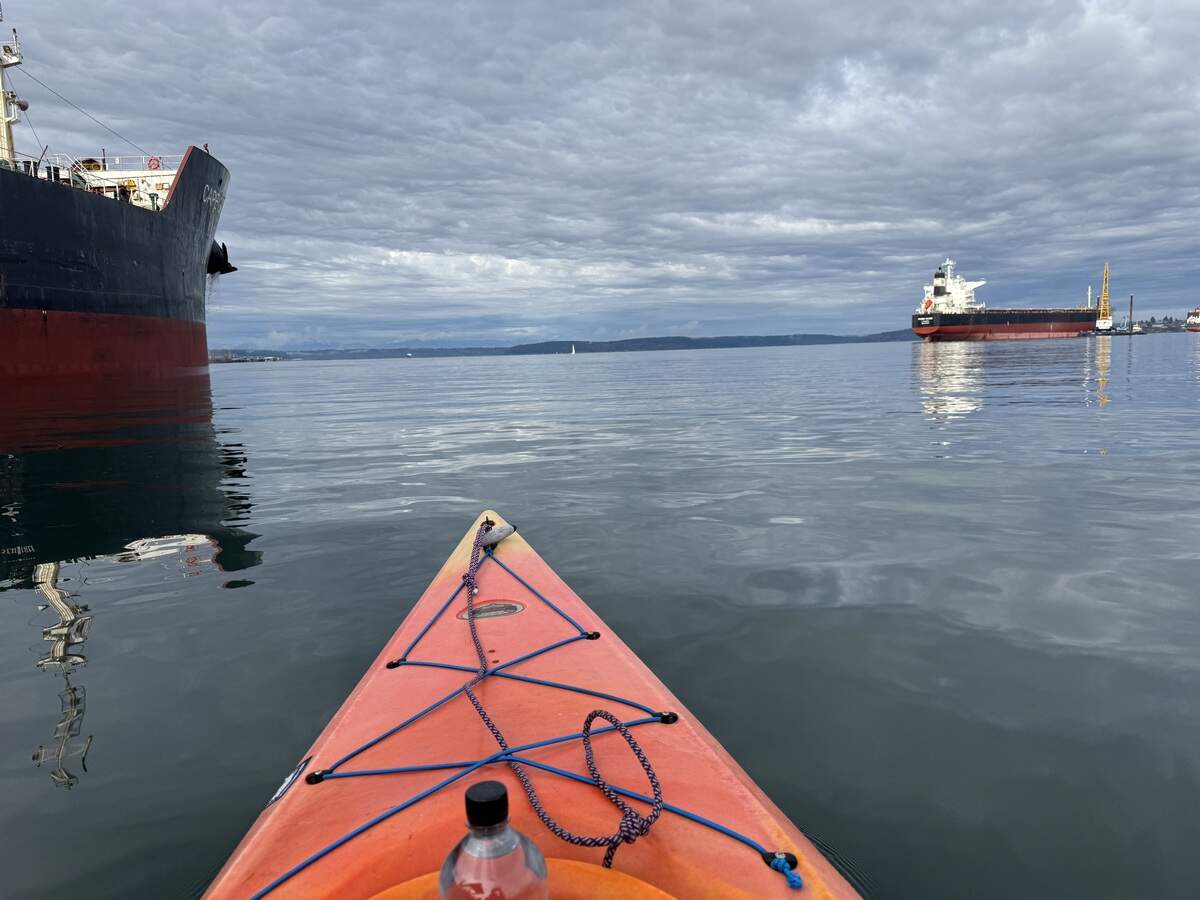
Here’s where it gets fun. As I mentioned above, you’re likely to see a myriad of different clothing options on the waters around Commencement Bay. As a dad who’s canoe shopping, do I really want to buy my young kiddos wetsuits and risk them overheating on a hot day out fishing near Jack Hyde Park?
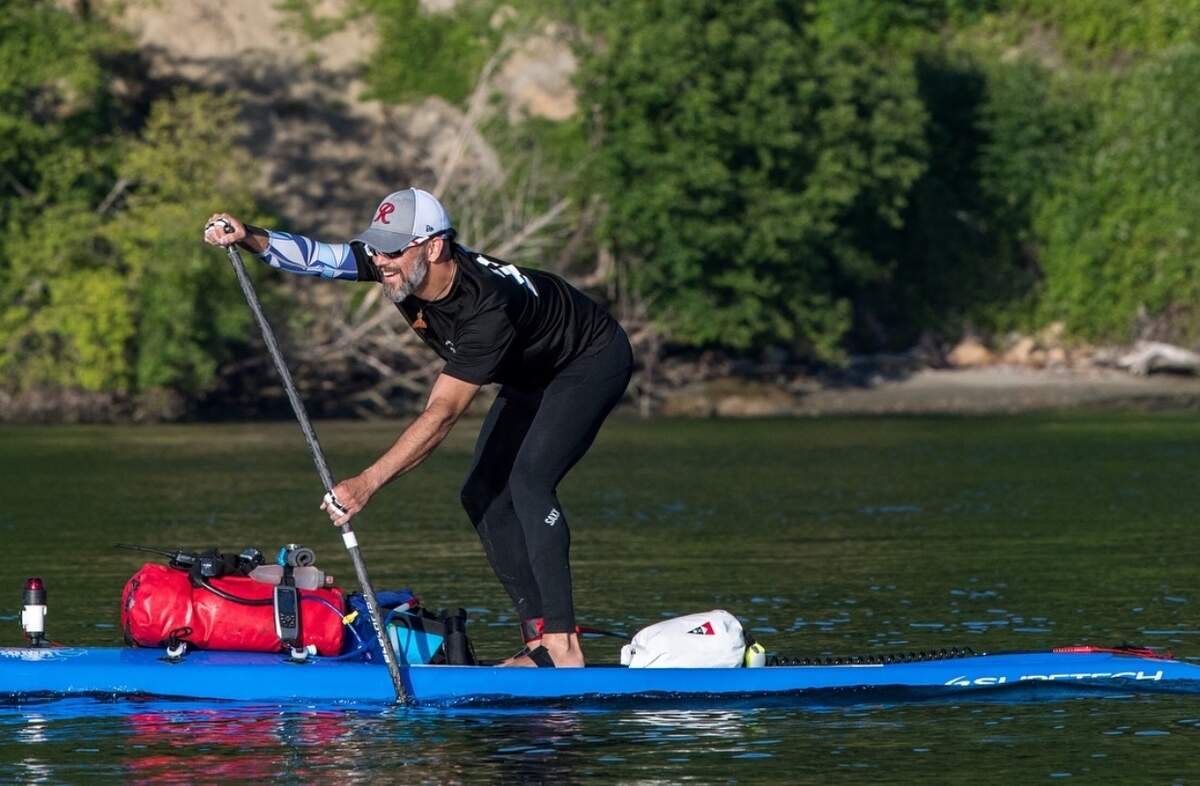
“It’s kind of a personal thing,” Burke told me over the phone last week. “But it also depends on what you’re doing. If you’re paddling a kayak, it’s one thing; if you’re paddling a SUP (stand-up paddleboard), it’s another. If you’re a SUP racer, your heat signature is that of a runner, so you’re putting off a lot of heat pretty quick. A wetsuit will cook you.”
I’ve seen people paddling in shorts and T-shirts, and Burke has, too.
“Every day,” he says. “I also see them in wetsuits every day. Sometimes the people in shorts and T-shirts are underdressed, and sometimes the people in wetsuits are overdressed.”
Burke says the activity level and profile of your craft play the biggest role in deciding whether one should be wetsuited up.
“If you’re capsizing in a kayak, it’s very different than on a SUP. Your time in the water is radically different; you’ll be in the water a lot longer if you’re trying to get back into a kayak or canoe.”
Burke didn’t wear a wetsuit on his SUP trip from Olympia to Victoria. He says he would have been way too hot.
As for whether Burke has ever capsized into Puget Sound on a paddleboard, he says he does it all the time.
“Totally. You just gotta get in and get out.”
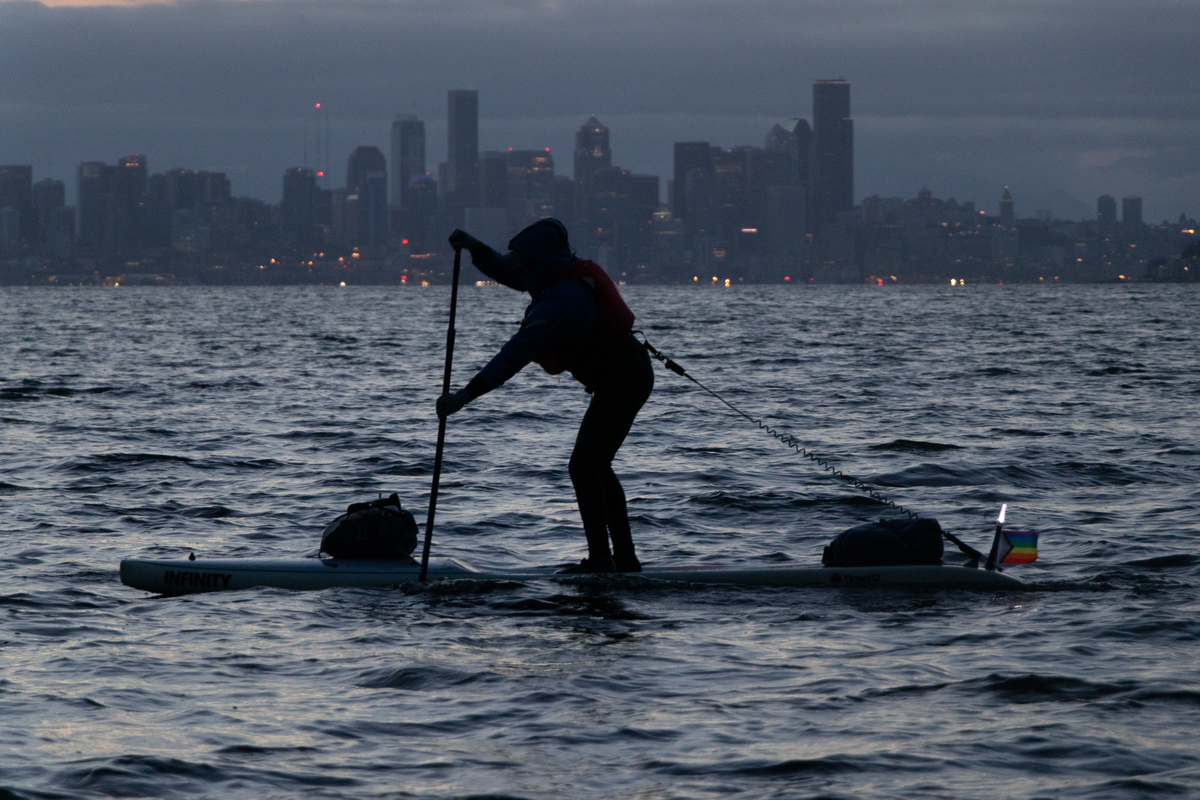
Along with stand-up paddleboarding, Burke also likes to “prone paddle” around the South Sound. Which is just what it sounds like, paddling in the prone position on a large board that resembles one of those big lifeguard boards.
“I do prone paddle in a wetsuit. On a prone board you’re wet, and you’re in the air. That’s really where you get into trouble — on a cool, cloudy day when you’re wet, and there’s a breeze. You’ll get cold really fast.”
South Sound water temps
A safe estimate of water temperature in south Puget Sound is around the mid-40s in the winter and mid-50s in the summer. That’s really cold. Dangerously cold, even. It can cause events like “cold water shock” to occur immediately and “hypothermia” to set in within 30 minutes.
It’s so cold because a rapid Puget Sound tidal exchange keeps cold North Pacific waters consistently flowing and flushing in and out of our many inlets and bays. Deep northern ocean water constantly enters the Sound and flushes out warmer surface water, preventing most of the Sound from ever warming.
I say most because there are some shallower beaches with sandy tidal shelves that allow for solar warming.
“The variable is the sun,” Burke says. “At a place like Dash Point, you’ve got a very long shallow shelf there. And at a low tide the sun will heat up all that sand. In the sun, the water might be 65 degrees. But you can step out of it. In one step, you might go from 65 to 54.”
My kids were playing at Dash Point a few weeks ago, and we saw plenty of blow-up paddle boards, kayaks, SUPs and skimboards with riders splashing headfirst into the water. But we didn’t see one wetsuit.
On the Key Peninsula, Burke says, Penrose Point is another spot that can benefit from solar warming. Also, the waters around Dead Man’s Island, where The News Tribune’s Julia Park was very recently kayaking sans wetsuit with Deadman’s Kayak and SUP proprietor Scott Goerig. Goerig has an Instagram account famous for his shirtless plunges into the waters around Gig Harbor.
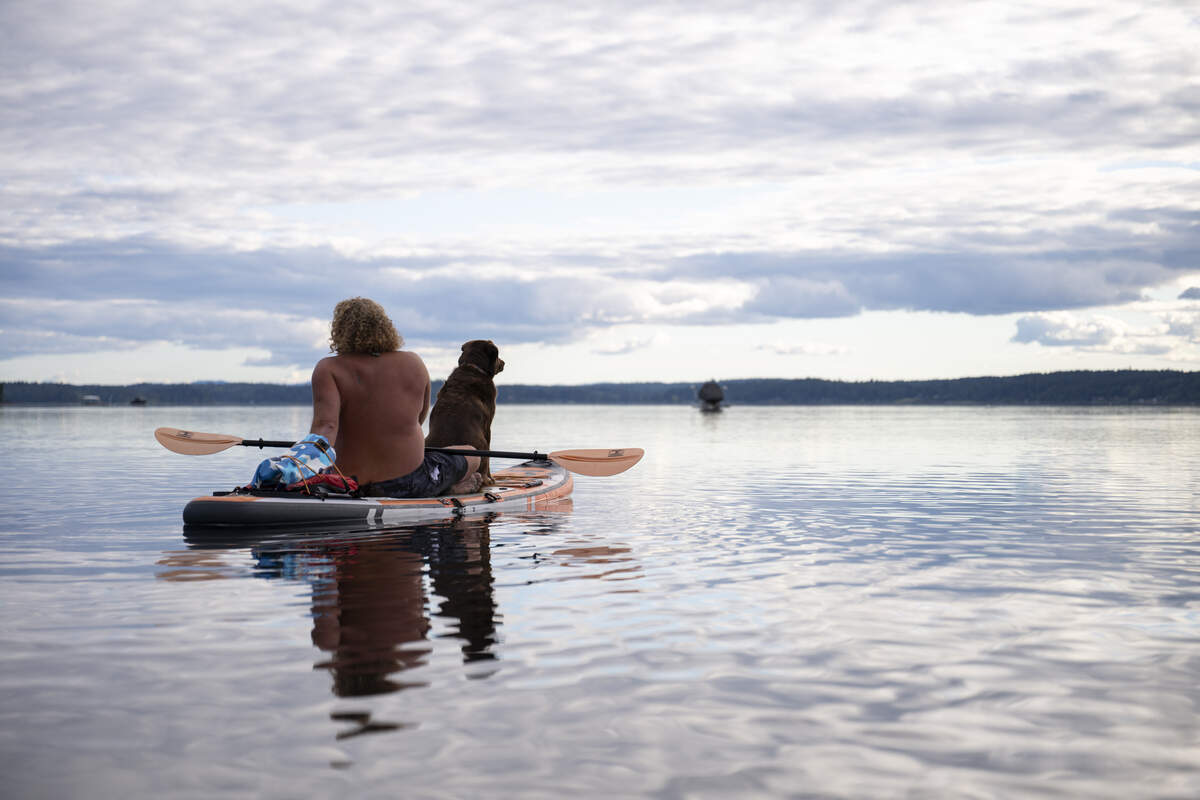
“Where Scott lives is really shallow,” Burke says. “So they get some solar thermal heating. It’s pretty pleasant to paddle around there without a wetsuit.”
If you’re up for a trip, some of the warmest ocean water north of Mexico is Pendrell Sound in British Columbia. Due to its limited tidal exchange, it traps surface water and allows intense solar heating. In the summers, Pendrell Sound regularly hits 75 to 80 degrees.
It’s truly not just about how far north we are. It’s about the currents.
Current news
All those currents that cool our waters create surface water and underwater channels that can swiftly move our crafts much faster than we can paddle.
In chatting with Burke, and the nice gentleman who recently rented me a kayak at Foss Marina, one needs to stay away from the Tacoma Narrows. That needs to be understood pretty much right away.
“Browns Point and The Narrows can get challenging with currents,” says Burke. “If you’re launching at Owen Beach – standing on the beach facing the water – every foot you go to the left, the intensity knob of the current increases until it gets worse and worse.
“It might look super mellow, but the current just rips through there.”
As an alternative, Burke suggests you go right towards the ferry dock for a mellower time.
“If you go left, you can definitely get in trouble. It’ll take you out around the point and into the channel. You won’t get back,” he says.
For less current, launch your craft instead from Jack Hyde Beach or Foss Waterway.
“Foss Waterway has come a long way,” Burke says. “It’s still an urban waterway, like Lake Union in Seattle. It still has unfiltered flow from the city, but it’s way better than it ever was.
“Just don’t get your face wet.”
.jpg)