Recruiting during pandemic forces college football programs to get creative
Zoom calls, FaceTime calls, virtual campus visits. For colleges recruiting high school football players in the class of 2021, everything was different this time around.
The coronavirus pandemic put a halt to most on-campus visit opportunities for players. Coaches were limited in their ability to fly to different parts of the country and evaluate players in-person. Everything went virtual.
“It was weird,” said Marshall Cherrington, director of recruiting strategy for the USC football program. He previously held the same position at Cal, before moving to USC, his alma mater, in January of this year. “We had to totally shift the whole recruiting cycle, really. At first, we didn’t know how long it was going to last. We thought, maybe a couple months. As it kept going and getting worse, we had to call an audible on things.”
Schools quickly looked at how they could take the entire recruiting experience virtual.
At Cal, Cherrington and the Bears’ football program contracted with a company called Skyview Interactive, which sent the school a 360-degree camera. They went around all the school’s athletic facilities, taking photos with the camera. It took about two weeks to piece all the photos together and create a virtual online tour of the campus for recruits.
“You’re able to create a total 360-degree experience online, where the recruit has great context to where things are,” Cherrington said. “We’re able to also put in videos and graphics throughout the tour to make it feel more natural.”
Cherrington’s role is to help form the narrative that his school is pitching to recruits. He keeps in contact with recruits and their families, checks with coaches and teachers to make sure recruits are in good standing academically and in their communities, and oversees the branding and marketing of the school’s football program. That includes monitoring what the program is putting out on the creative side, sending recruits graphics that they can share on Twitter and Instagram.
He said recruiting folks had to get creative this year, finding numerous channels to connect with recruits.
“At first, we were playing Xbox and Playstation with (recruits),” he said. “I was back to my high school days, on Call of Duty a couple hours a night just to connect with recruits and talk with them. I emphasized to our coaches, ‘Get your face in front on them. Get on FaceTime, get on Zoom.’ That’s what they see when they come to campus. You’re just able to connect better.”
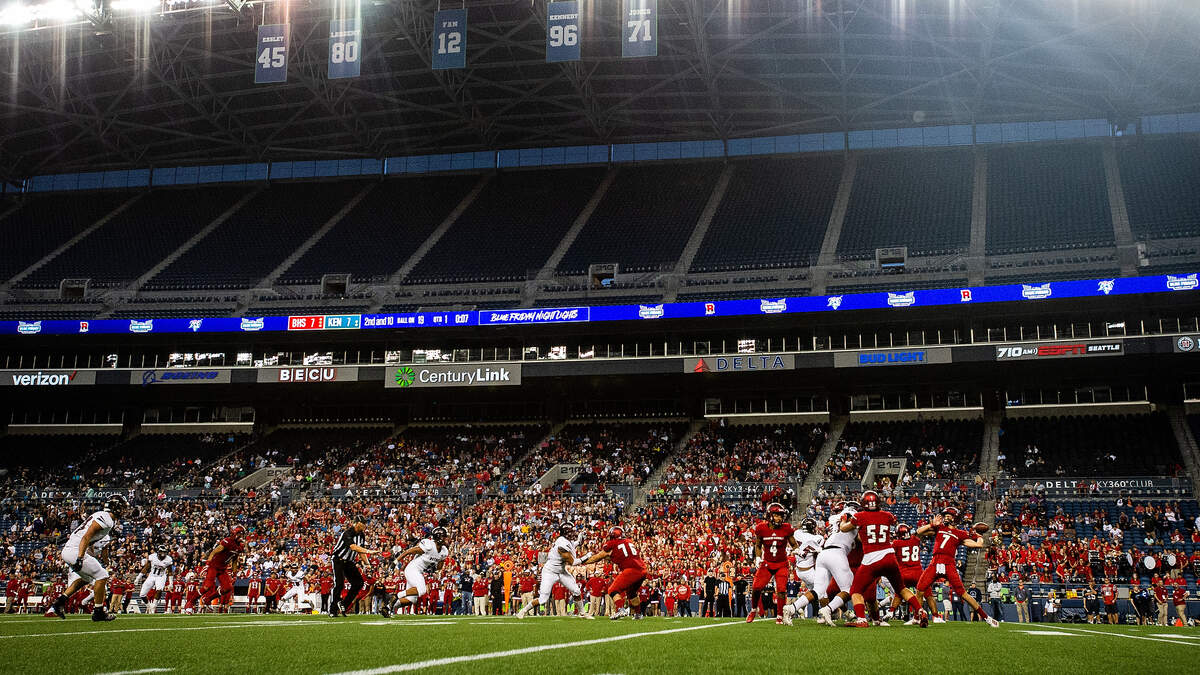
That strategy became the norm for college football programs across the Pac-12 and the country. For players on the West Coast who didn’t have the opportunity to play high school football last fall, it’s made the process even more challenging.
“It’s been hard,” said Union receiver Tobias Merriweather, one of Washington’s top recruits in the 2022 class. “A lot of schools from the Midwest, the South and the East Coast, they want me to come to the school. They want to come watch me. It’s hard for them to offer a guy from the west who they haven’t seen in-person. We do a lot of virtual visits, phone calls, a lot of Zoom. It’s been different.”
It’s also put a strain on college football coaches, who are trying to evaluate players from the west coast who were on their radars. While the region’s elite recruits have their pick of schools, it’s the next tier of players who have suffered.
“With the Northwest kids, there’s never been more reliance on your own gut instincts,” said Brandon Huffman, national recruiting director for 247sports.com. “Coaches are saying, ‘Their junior film is good. I like what I see. Let’s see what their senior year looks like.’ Some of the kids, March is the last time they saw that. You don’t know if they’ve improved, gotten better.”
Cherrington said he’s certain there were some potential late bloomers that didn’t get a chance. In the recruiting world, once one Power Five offer comes, it often snowballs, with piggy-back offers from other schools coming in immediately afterward.
“I think there’s a big group of guys who were hurt by that,” he said. “Sleepers are unveiled on the road. You’ll see a coach go into a school to see someone, and then you’ll see an offer pop up to a kid that had no offers. Then you go back and check on that kid, and he has like 10 offers. Being able to see the kids in person is critical to the process.”
It led some schools to sign smaller classes and look to the transfer market to round out their classes, rather than take a chance on an unproven high school player with no senior film. And those who would have made a late jump as seniors are left without Division I offers.
“The majority of schools have moved onto 2022 classes,” Huffman said. “There’s going to be a lot of guys who would’ve been FCS signings, maybe late Pac-12 guys, who will end up at D-II and D-III schools. Coaches were so paranoid, they’d rather go to the transfer portal than take a chance. With a college kid, at least he was good enough to sign with a school. They’ll take that route.”
This story was originally published February 2, 2021 at 5:00 AM.