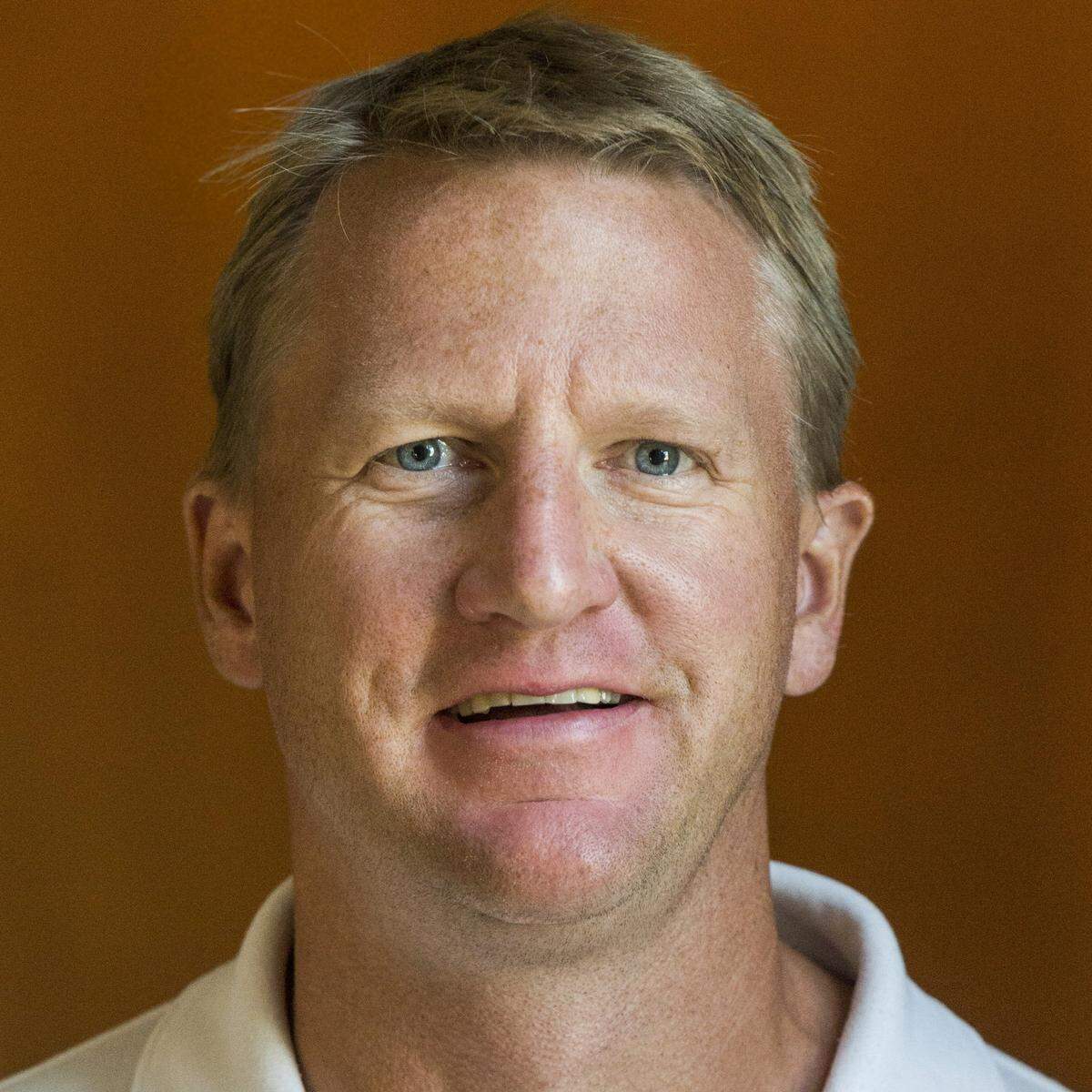
Knocked-down walls, 25 screens in GM’s home: Seahawks ready for NFL draft like no other
It’s going to be the most unusual NFL draft ever.
John Schneider has broken-down walls and two-dozen new screens inside his home to prove it.
“(I live in) not a great area in terms of wifi and cell service and everything,” the Seahawks general manager said Tuesday while on a Zoom call from his suburban Seattle house—the one that will be his draft home this week. “The guys have really done a great job of working through my house.
“I’m not going to lie to you; I’ve had a couple walls ripped up and had people in my house working on that. You know, it’s just part of the process. In the time of trying to be social distancing, it’s definitely been a challenge.
“But everybody’s done a great job of recreating my dining room into a—like right when you walk in the door, it’s the draft room.”
The 2020 NFL draft that begins Thursday is, like the coronavirus pandemic, a once-in-a-lifetime event. It will be entirely virtual. Commissioner Roger Goodell will be announcing first-round picks from his home basement outside New York City. Social-distancing requirements have coaches, GMs, scouts and assistants separated into their homes. They will be connected by home wireless feeds, cell phones video conferencing and, yes, even old-school landlines upgraded by their team’s information-technology staffs for this draft like no other.
“It’s going to be a fascinating experience,” Seahawks coach Pete Carroll said.
“We’ve had tons of drafts over our lifetime that will never be remembered like this one will be.”
Dining rooms are now draft rooms. Teenage kids are going to be helping answer phones and track other team’s picks while their dads are on another Zoom call with who knows whom. Schneider is going to have his wife Traci on a draft phone at a desk next to him. Meanwhile, the draft clock will be ticking down on all of them; 10 minutes maximum per selection in round one.
ESPN’s Dianna Russini reported at least one NFL coach said he got kicked off the league’s practice draft testing the remote communications this week. How’d that happen? His kids were on their iPads using up his wifi connection.
Who ever envisioned a draft in which the two most important words may prove to be airplane mode?
Schneider says he has redundancy and contingency systems installed in his home if his primary wifi and draft communications fail.
“I’m a very visual person, so everything’s there in case things fall apart from a technology standpoint,” Seattle’s GM said. “I think there’s like, I don’t know, feels like 25 screens.
“But I like the one-on-one interaction. I like being able to just, you know, have private conversations with Pete throughout the draft process.”
That’s not happening this year. Not face-to-face, anyway.
“So it’s going to be unique,” Schneider said.
Carroll said he has only seven screens for his house-turned-draft center. Schneider having three times more than him makes sense: at 48 the GM is 20 years, and another technological generation, younger than his coach.
“As John mentioned, we’ve had a lot of people coming in and out of the house, particularly John, to make sure we do a good job of getting set up,” Carroll said. “A lot of tech stuff.
“And I’m particularly strong in that area, so my place is pretty good.”
Carroll laughed at himself for that one.
“John is struggling a little bit on his end,” the coach said.
Carroll was joking. But he was right.
Schneider and his 31 other GMs were on a practice draft the league ran on Monday. The NFL gave teams scripts for picks and players. The intent was to test if an entirely remote draft with every person involved separated from each other, even within individual teams and staffs, will work.
“It just started off a little bit shaky,” Schneider said. “You know, there’s a channel, there’s a main channel that’s going on. I think there was a couple teams—and I’ll throw myself under the bus included, I had myself muted. So when they were doing roll call, they went right past the Seahawks. So we weren’t even involved in the draft. We just passed.”
So the Seahawks’ GM had the same issue much of America has had trying to do their jobs with also-isolated colleagues under our country’s state-at-home orders for the last month.
“So it was all about just hitting mute,” Schneider said, chuckling. “‘Hey, John, make sure you’re unmuted!’
“I unmuted.”
Schneider had Carroll on a Zoom call. He had his scouring staff on another connection, on an iPad.
“And then Pete, where Pete and I can speak individually on a different iPad,” Schneider said.
Schneider said he feels about 80 percent confident that the comms will be as he needs them to be to effectively conduct a draft. For the Seahawks GM, that means trading. Schneider has traded his original first-round choice in eight consecutive drafts. Odds are Thursday will make it nine straight years of trading down in round one. If he can get the comms right to do it.
So Wednesday, the day before the draft, Schneider was to join another practice video-conference call with four other teams. They were to practice the negotiations that go into draft-day trades. The quick calls of offers. Calls to other teams with counteroffers. Intelligence gathering around the league with teams about to pick.
All of that is complicated in any other year. In the COVID-19 one, it’s far more complicated than just having yourself unmuted.
“We’re going to get into a little bit more of the negotiation process with the draft that goes on that people don’t realize,” Schneider said. “We are just going to go off script and work with a couple teams and practice. ...
“Honestly, to say that I’m totally comfortable with it right now, I’m not. By (Wednesday) night, I will be.”
Carroll said Schneider’s interpersonal communication skills and contacts around the league he can summon instantly are what make him such a great trader while on the draft clock.
That skill is going to be put to the test beginning Thursday night.
“You don’t really get to see is the intricacies and the tight-woven communications that take place when it does come time for the trade opportunities,” Carroll said. “Those conversations, we have imagined what this is like so that we can replicate it from a distance, but it’s looking over your shoulder. You know, call in and Buffalo is on the phone and, ‘What’s your information?’ And that all happens in a flow in the draft room. That is going to be affected some.
“John said he’s 80 percent ready and we’re hoping we can close the gap on it and be really, really good at it. We’re going to be as good as anybody. That’s the part of the draft that I think is the most affected. It’s not the selection. It’s not that challenging. It’s the intricacies of the process go get to the point where you make the pick and as the time runs down.”
Another challenge of this draft that Carroll said in challenging in every possible way: no pre-draft visits. Teams usually get to have 30 players come to their facilities for interviews and more medical checks and workouts.
This year, the only pre-draft interaction the Seahawks and all other teams had with prospects between the combine in late February and Thursday are select Zoom calls.
Those have been revealed some players’ character to Carroll and Schneider in fundamental ways.
“Some dudes are ready for the interview. They are psyched up,” Schneider said. “You know, we had one guy wearing a tie. We had another guy laying in bed watching TV.
“So you know, you can learn a lot.”
The Seahawks have an inherent advantage almost every other team in the NFL. And not just technologically because they are owned by the trust of the late Paul Allen, the Microsoft co-founder.
This will be the 11th consecutive draft for Carroll and Schneider together running the Seahawks since they arrived in Seattle in January 2010. The only other longer coach/GM partnerships in the league are Sean Payton and Mickey Loomis in New Orleans since 2006 and Mike Tomlin with Kevin Colbert in Pittsburgh since 2007.
Carroll and Schneider intimately know how each other conducts drafts. Many of their scouts have been with them for most if not all the last decade of drafts in Seattle.
“One of the really positive parts about this is we do have a group from the personnel to the coaching staff and the support group and performance people, we do know each other well,” Carroll said. “So we can get a lot out of a little bit sometimes when we talk to one another and exchange stuff.
“I think there’s a lot of confidence and connection here that’s going to hopefully help and we’re going to try to kick butt in this process.
“It’s going to be different. And I can’t really tell you what it’s going to come out like.”
This story was originally published April 22, 2020 at 7:01 AM.