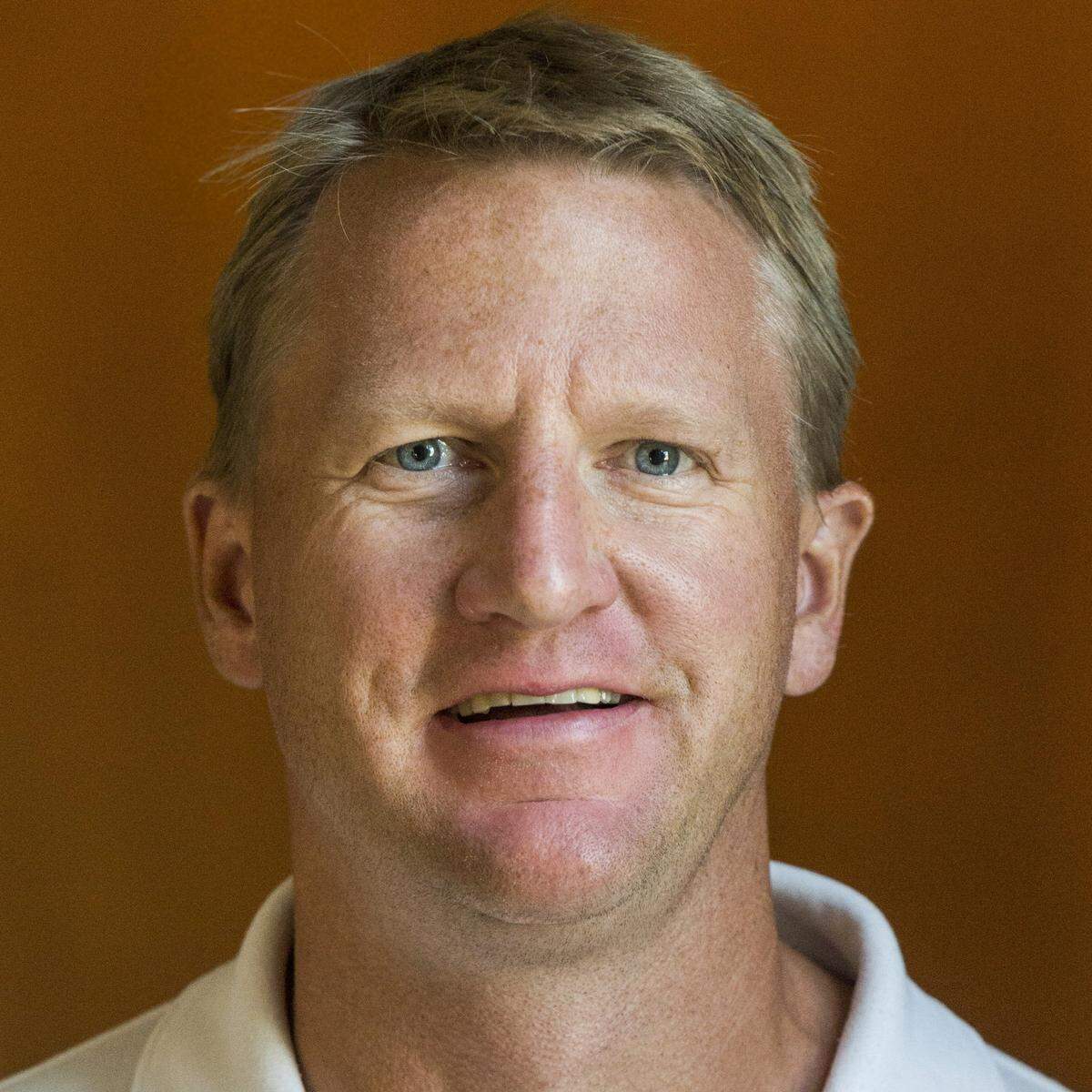
Quinton Dunbar remains at large in Florida. What’s next for him, and for the Seahawks?
Now that authorities in his native Florida have a warrant out for the arrest of Quinton Dunbar on felony charges of armed robbery, what’s next for the Seahawks’ cornerback?
The News Tribune asked that question to the public information officer for the Miramar (Fla.) Police Department that is seeking Dunbar.
“The detectives are speaking with the parties of the athletes...trying to make arrangements to turn themselves in,” Officer Tania Rues told the TNT Thursday evening on the telephone from Florida.
As of 2 p.m. Friday in Miramar, Dunbar remained at large. He and New York Giants cornerback Deandre Baker had not turned themselves into authorities stemming from robberies at a party at a house late Wednesday in Miramar, 20 minutes north of the Overtown section of Miami where Dunbar grew up.
Shaheed Samuel, the agent the NFL Players’ Association lists as Dunbar’s representative, answered a call from The News Tribune Friday afternoon. Then he said “I’m tied up right now” and was unable to talk. Asked if he knew Dunbar’s whereabouts or status, Samuel hung up.
Police are giving what the department spokesperson has termed a reasonable time for Dunbar and Baker to surrender to authorities. After that, officers will go find them.
Because police detectives have been in contact with, as Officer Rues put it, “the parties of the athletes,” the expectation as of Friday afternoon was Dunbar will turn himself in soon.
When he does, he will remain in jail indefinitely. The arrest warrant filed Thursday specifies Dunbar is being sought for a “no bond hold.” That means he would remain in custody until at least until a judge holds an arraignment, likely next week. At arraignment, the judge could set a bond amount. It’s unclear whether he would. He may not, not for the four felony charges Dunbar, 27, faces for armed robbery with a firearm.
Three victims and one other witness gave conflicting reports to police whether Dunbar had a gun during the robberies they depict Baker led of expensive watches and thousands of dollars in cash at a party Wednesday night. One witness said Dunbar had and showed a gun. Multiple others said he did not.
Chapter 812.13 of the 2019 Florida Statutes states, in part: “If in the course of committing the robbery the offender carried a firearm or other deadly weapon, then the robbery is a felony of the first degree, punishable by imprisonment for a term of years not exceeding life imprisonment or as provided in (other statutory guidelines).”
Florida has a minimum-sentencing law that requires a sentence of at least 10 years in prison for anyone convicted of a felony while using or attempting to use a firearm.
If in the course of committing a robbery the offender did not use a firearm or deadly weapon, then the same Florida statute says the robbery is a felony in the second degree.
What Seahawks, NFL may do
Far down the list of concerns for Dunbar is what his new team, the Seahawks, and the NFL may do.
The Seahawks issued a statement Thursday evening: “We are aware of the situation involving Quinton Dunbar and still gathering information. We will defer all further comment to league investigators and local authorities.”
NFL commissioner Roger Goodell has authority to suspend a player multiple games for violations of the league’s personal conduct policy. He did it last summer with Seahawks defensive tackle Jarran Reed. Reed got a six-game suspension from the NFL at the start of last season. That was two years after an alleged domestic-violence incident at the player’s residence in Bellevue.
The league could place Dunbar on the commissioner’s reserve/exempt list while the legal process of his case continues in Florida. The exempt list does not require a conviction or even a player to be charged.
The NFL Player Personnel Policy Manual states: “The Exempt List is a special player status available to clubs only in unusual circumstances. The list includes those players who have been declared by the Commissioner to be temporarily exempt from counting within the Active List limit. Only the Commissioner has the authority to place a player on the Exempt List; clubs have no such authority, and no exemption, regardless of circumstances, is automatic.
“The Commissioner also has the authority to determine in advance whether a player’s time on the Exempt List will be finite or will continue until the Commissioner deems the exemption should be lifted and the player returned to the Active List.”
A player on the commissioner’s exempt list continues to collect his salary.
Dunbar is scheduled to earn $3.25 million in non-guaranteed base salary during the 2020 season, the final one of his contract Seattle inherited in March when it acquired him in a trade with Washington. He could earn another $250,000 in per-game roster bonuses that are, like almost everything with Dunbar, in serious doubt right now.
The exempt list exists only for status on the 55-man active roster during the season. The season isn’t scheduled to begin until Sept. 10—if then, given the coronavirus pandemic.
From now until then, there is no pressing deadline or requirement for the Seahawks or the league to take discipline against Dunbar. The Seahawks, in particular, are unlikely to—unless coach Pete Carroll and general manager John Schneider wanted to for the first time send a message to players on their team and around the league they presume guilt before innocence, opposite our nation’s principles of legality and justice.
The Seahawks waited more than two years while Reed’s case dragged on. After the league suspended him, they re-signed the defensive tackle this spring for $23 million over the next two years.
Much more likely, the Seahawks will let Florida authorities set Dunbar’s course for the coming months.
No cap charge if released
If Dunbar’s case proceeds into the 2020 season, which seems a near-certainty, the Seahawks will likely defer to the league’s handling of any punishment it gives Dunbar. Should evidence or circumstances warrant, the team could release Dunbar at any time and not have any of his $3.4 million charge for 2020 count against its salary cap.
The Seahawks could use that money to sign another veteran cornerback it would then need, or to put toward Jadeveon Clowney or the veteran pass rusher it more urgently needs.
But that’s getting way ahead of the current situation.
For now, Tre Flowers returns to the job he had before Dunbar was wanted for felonies: as the starting right cornerback. But there’s not much to do in that job right now.
This week was the final one of three weeks of the Seahawks’ and the league’s virtual offseason program. No one, including Carroll, knows what’s coming next in the NFL. The league is not holding any of the usual organized team activities (OTAs) or minicamps teams typically have on the practice field in May and June. That’s because team facilities remain closed indefinitely as part of stay-at-home orders and the closing of non-essential businesses to contain the COVID-19 virus.
It’s likely the first time Seahawks will be on the field since their playoff loss at Green Bay in January will be for the start of training camp. That’s supposed to be the last week of July.
By then, or by whenever camp begins, Dunbar’s situation should have more clarity.
This story was originally published May 15, 2020 at 11:11 AM.