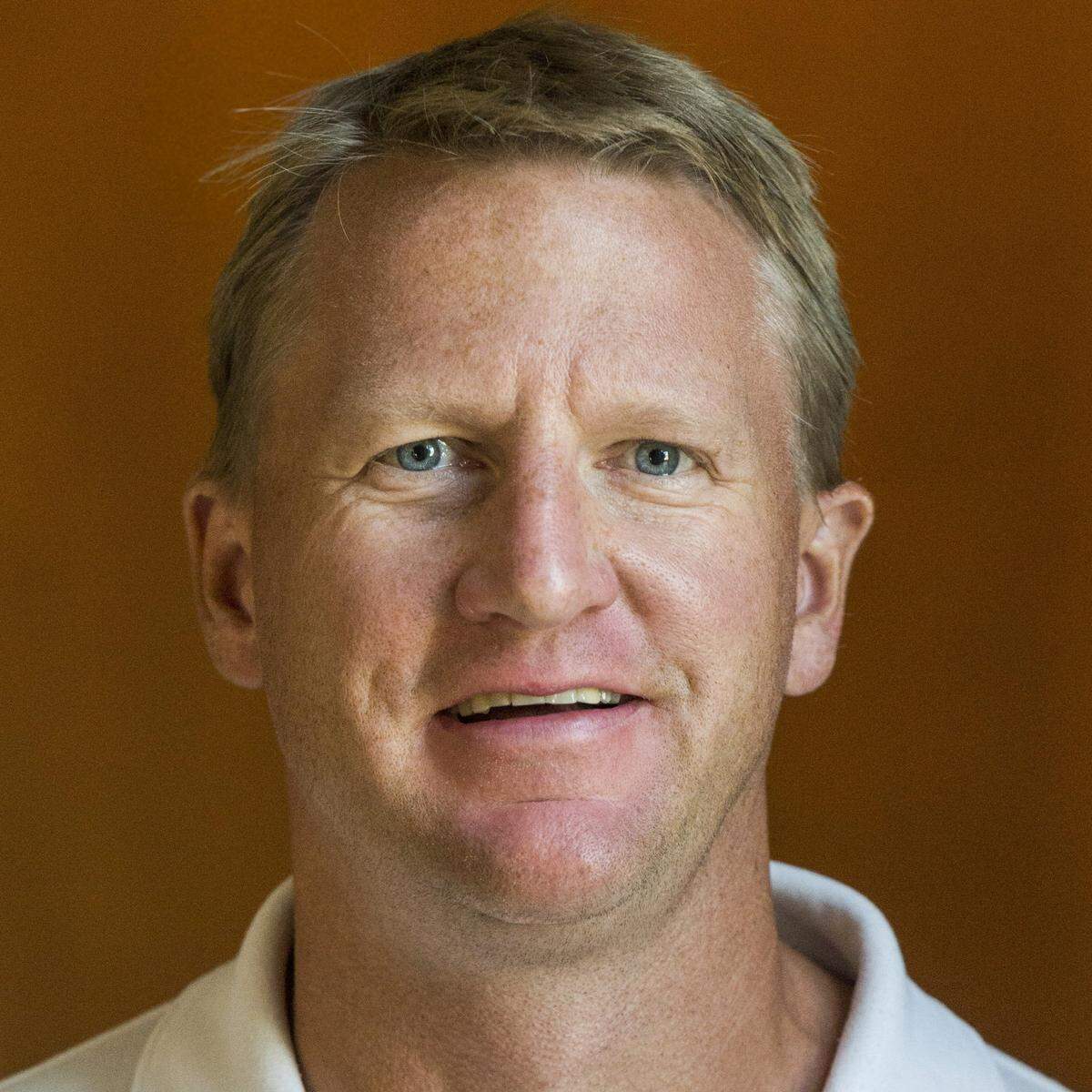
Michael Bennett retires. His Seahawks, NFL legacy: respect for his beliefs, amid critics
Michael Bennett rubbed some people the wrong way.
Which was exactly his point.
The former undrafted rookie free agent got cut by the Seahawks in 2009. He returned and became a Pro Bowl and Super Bowl-champion defensive end for Seattle from 2013-17. Tuesday, he announced his retirement from the NFL on Instagram.
His legacy in the league is complicated. Especially if you look only at the surface of his career, and of what he did and said.
He retires having played for three teams the last two seasons after leaving Seattle in the spring of 2018: the Eagles, Cowboys and Patriots. New England let his contract end after last season. He remained unsigned at the age of 34 on the eve of training camps beginning across the league within the next week.
Bennett and Cliff Avril arrived for the Seahawks’ 2013 season. They helped transform the team’s pass rush and thus an already lock-down defense. With Bennett and Avril as bookend edge rushers among the deepest talent of defensive linemen in team history, Seattle smashed Peyton Manning and the record-setting Denver Broncos 43-8 for the Seahawks’ only Super Bowl win. That was at the end of that 2013 season.
He and Avril harassed quarterbacks all the way to the next year’s Super Bowl, too; you may recall Seattle lost that at the 1-yard line to New England in the final seconds.
Bennett and Avril each became Pro Bowl stars with the Seahawks. And they became rich. Quicker off the snap than the tackles and guards trying to block him, with comically small, middle-school shoulder pads, Bennett had 34 1/2 sacks from 2012-15. He re-signed with the Seahawks for $29 million with $17.5 million guaranteed in December 2016.
Beyond sacks, he exerted a different, more important kind of pressure.
He was Black Lives Matter before many people — many white people — knew or cared to know what that movement was.
In August 2017, a man drove a car into a group of people counter-protesting a racially motivated rally by whites in Charlottesville, Virginia, killing one and injuring at least 19. That same weekend, Bennett sat alone on the Seahawks’ bench behind his standing teammates throughout the national anthem before Seattle’s preseason opener at the Los Angeles Chargers. It was 12 months after Colin Kaepernick first began sitting then kneeling during the anthem before San Francisco 49ers games to protest racial inequality and police brutality.
Bennett said that night in Carson, California — three years before the United States saw the horror of George Floyd’s death in Minneapolis — his aim was to take Americans “out of their comfort zone” about how race relations are in our country.
“The last week, with everything that’s been going on in the last couple months — especially after the last couple days seeing everything in Virginia .. .just wanted to be able to continue to use my platform to be able to speak on injustice,” Bennett, the son of a U.S. Navy enlisted man, said that 2017 night in Carson.
“First of all, I want to make sure that people understand I love the military. My father was in the military. I love hot dogs, like any other American. I love football like any other American.
“But I don’t love segregation. I don’t love riots. I don’t love oppression. I don’t love gender slander. And I just want to see people have equality that they deserve.”
Later that year, as he continued to protest during anthems at games and wearing EQUALITY shirts and hoodies after them, he said: “There is never a wrong time to do the right thing.”
Yet Bennett also did and said things that turned people off. Way off.
In Jan. 2017 Bennett inexcusably shoved and berated a reporter for the team’s flagship television station, Q-13 Fox, inside the visitor’s locker room following a season-ending playoff loss in Atlanta. I saw it all. Reporter Bill Wixey asked Bennett, “Why weren’t you able to get a lot of pressure on (Falcons quarterback) Matt Ryan?”
“Don’t tell me I didn’t do my job, (expletive). Get the (expletive) out of my face!” was part of Bennett’s answer.
It grew in rage as he talked, and we all in the room watched.
“Like I said, get out of my face! Don’t play with me! Don’t play with me! I just put my heart on the (expletive) field, don’t (expletive) play with me! Get the (expletive) out of my face, then. Try me again and see what happens. ... I played as hard as we could. We (expletive) lost the game.
“Whatch you do? Whatch you do with your life, (expletive)?”
Wixey is a cancer survivor.
Bennett later reached out to Wixey and apologized to him.
In August of that year, Bennett was in Las Vegas for a title fight. He said a Las Vegas police officer used excessive force and mistreated him while apprehending and briefly detaining him outside a casino, while officers were responding to a call of an active shooter inside a casino.
“As I was laid on the ground, complying with his commands to not move, he placed his gun near my head and warned me that if I move he would “blow my ****ing head off,” Bennett wrote in an open letter in Sept. 2017.
Bennett said he was considering a civil-rights lawsuit over the incident. The Las Vegas Metropolitan Police Department asserted its officers acted “appropriately and professionally” in detaining Bennett, whom officers at the time thought might have been involved in the incident inside the casino. Police released body-camera video to back their assertion. None of the footage released showed the actual moment of apprehension that left Bennett face-down in a street, the moment in which Bennett said he was mistreated.
The incident happened weeks after Bennett began sitting during the anthem at games to protest police brutality. Across the country people formed opinions whether Bennett was right or wrong in both his protests and his statements about the Las Vegas police department.
In 2018, Houston Police Chief Art Acevedo said Bennett had forced his way onto the NRG Stadium field after his brother’s Patriots beat the Falcons in the Super Bowl in February 2017. Acevedo said Bennett had sprained a 66-year-old paraplegic security officer’s shoulder by pushing her to get post-game access to the field. Acevedo said Bennett later told a police officer: “Y’all must not know who I am. I can own this mother (expletive). I’m going onto the field whether you like it or not.”
Bennett was indicted for felony assault 14 months after that alleged incident.
Much of America, none of whom where at the scene of the alleged incidents in Las Vegas and Houston, took sides against and for Bennett. More than one reporter called Bennett “a race-baiting liar.” Those reporters were white.
In April 2019, prosecutors in Texas dropped their assault charges against Bennett.
This was also Bennett during his 11-year NFL career playing for Tampa Bay, Seattle, Philadelphia, Dallas and New England: In 2014 he and his wife Pele founded The Bennett Foundation. Its aim is specific: “to prevent childhood obesity by providing free, accessible programming that enables kids and families to make healthier choices.”
That didn’t get nearly the attention his incidents in Las Vegas and Houston did.
In 2017 he played through a torn plantar-fascia in his foot and a swollen knee, on top of a grotesquely bent toe that’s bothered him for years.
When that Seahawks’ 2017 season ended with them not qualifying for the playoffs for the only time in the last eight years, Bennett knew he was done in Seattle. His contract and his age — not to mention the fact there were whispers inside the team facility he’d been wearing out his welcome with the Seahawks — made him expendable. He left the Seahawks without playing a game under the $29 million contract extension he had signed with them in 2016.
But he left having raised awareness in Seattle and across the country for causes that are resonating now, more than ever: inequality and police brutality.
Like him or not.
On his final day inside Seahawks headquarters before they traded him to Philadelphia that offseason, Bennett was walking out of the locker room past the equipment counter and out the back door to the players’ parking lot. I stopped him.
“I respect you and what you stand for,” I told him.
“I respect you,” Bennett said.
He extended his hand for me to shake. Then he walked out of Seattle.
This story was originally published July 21, 2020 at 11:30 AM.