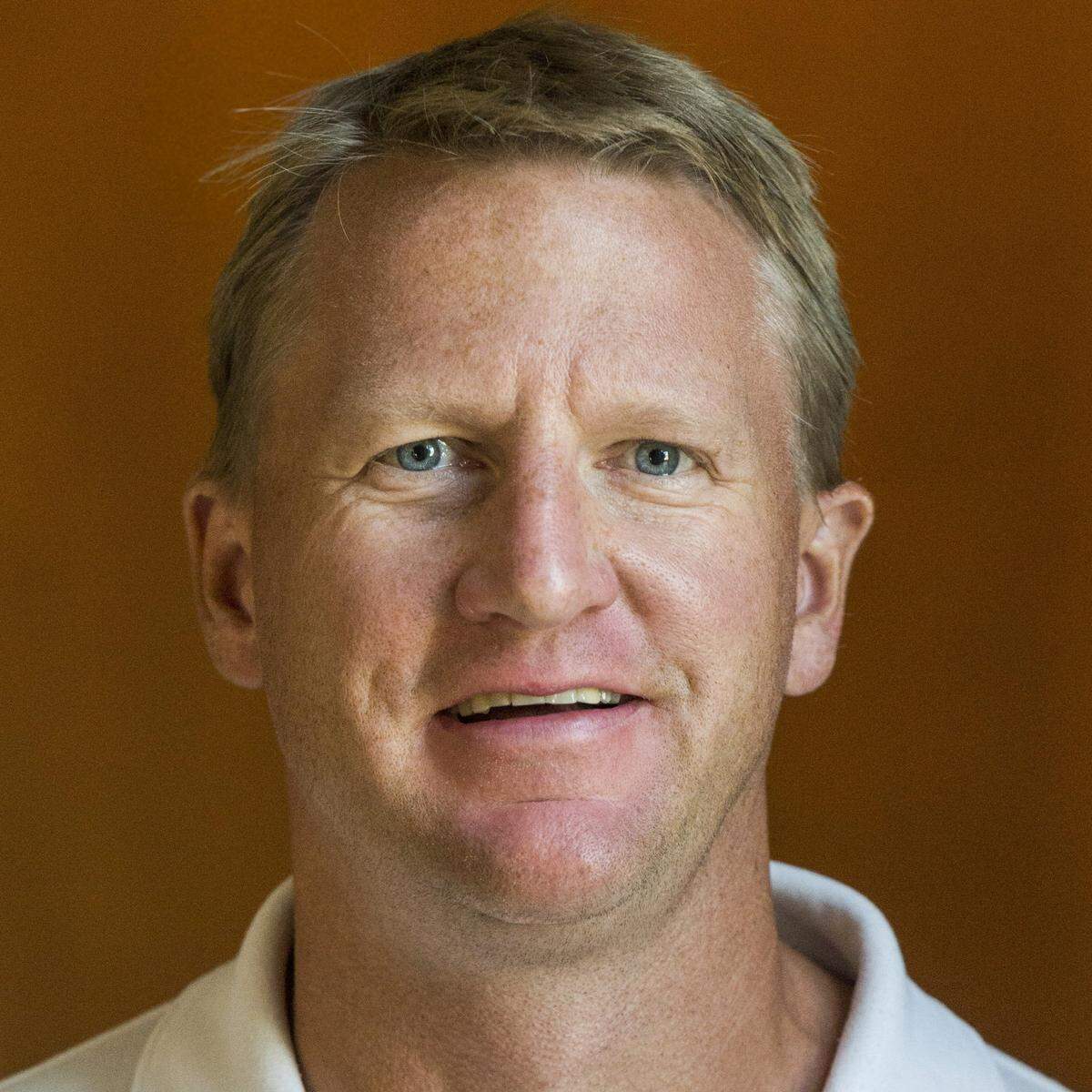
Will Dissly’s Seahawks return from another ‘crushing’ injury includes an important message
Of all Will Dissly is—relentless, cursed by bad luck, a Russell Wilson favorite—most of all he is real.
His message is real life.
The October day after the Seahawks tight end from the University of Washington sustained his second season-ending injury in as many seasons in the NFL, coach Pete Carroll marveled at Dissly’s positive attitude.
“His attitude was incredible,” Carroll said after the tight end had another season ruined by what the coach “a devastating injury,” a ruptured left Achilles tendon without being contacted during Seattle’s win at Cleveland in 2019.
Carroll shrugged, as if to say “that’s just Will Dissly.”
No, that’s not just Will Dissly.
Dissly is not a machine, as big, tough NFL players often like to portray themselves through any situation.
He’s human.
He’d had his rookie season end after just four, breakout games by a ruptured patellar tendon in his right knee. He had his 2019 season ruined after just six games by another major injury. This one was as complicated from which to return and resume being the same player as the first one.
Carroll called Dissly’s Achilles rupture “a devastating injury.”
It was. Not just to his body, but to his mind.
Dissly knew last fall, better than anyone, of his long, lonely road ahead to get back to playing. He had just lived the seemingly endless days into weeks into months of rehabilitation by himself, while his teammates played and won on without him, from late 2018 into ‘19.
He knew of the tiny, incremental goals in rehab. Of the joy in being able to do one leg extension, with no weight. Then another one with a light weight that, back when he was a defensive lineman for UW, would have made him laugh to use. Then, it was: can I two reps at that laughable weight? How about five? Then, can I get on the exercise bike? Then the treadmill? Then...?
“As prepared as I was to complete this rehab process, when you went down for the second time—I was on such a high, right? We had done such a great job with my knee and worked tremendously hard and was super prepared,” Dissly said Tuesday. “And the team was winning, we were having success.
“And then to go down again, on kind of a fluke deal, it was kind of crushing, for sure.
“And I don’t want to say that lightly. There was a good week or so that I was in a bad place mentally.”
It’s refreshing, and hugely important, that Dissly doesn’t want to say that lightly.
Our mental health issue
Though we’ve made progress in the U.S. in recent years, mental health remains a vital, dangerously overlooked issue in our society. The issue is not different in professional sports and the NFL.
This is an era in which the NFL has had to acknowledge the now-undeniable evils of concussions and the life-long debilitation the game can cause. The league has confronted the prevalence and effects of the use of performance-enhancing drugs and human growth hormone by its players among other dangerous, long-term, quality-of-life risks.
Yet mental health and illness remains one of the league’s less-talked-about issues. That’s still true almost a decade after the highly publicized suicides by Hall of Famer Junior Seau and four-time Pro Bowler Dave Duerson. Both long-time, star players were linked to mental illness caused by head trauma and CTE, the degenerative brain disease chronic traumatic encephalopathy.
It’s easy to see the stardom and the money these players make. Mental wellness issues? Those aren’t so easy to see.
Yet U.S. health statistics say players deal with mental wellness issues, far short of CTE, every day in the NFL—just as men and women do each day in our society.
How important is the paths to mental well-being Dissly discussed Tuesday?
More important than any touchdown pass he’ll catch from Wilson this year. Or in any year.
The National Institute of Mental Health (NIMH) says depression is the world’s leading cause of disability. The institute defines depression as a condition in which “most of the day, nearly every day, for at least two weeks...you may have distressing symptoms that affect how you feel, think, and handle daily activities, such as sleeping, eating, or working.
“Sadness is only one small part of depression and some people with depression may not feel sadness at all,” the NIMH says.
The institute and other mental health advocates cite statistics that show young adults age 18-25 are the least likely aged adults to seek and receive mental health care. And women are statistically more likely to seek that help than men.
The NFL, like any sports league, is not immune to society’s mental wellness issues. It’s logical to assume that because 19% of the U.S. population is estimated to have any mental illness, perhaps an equivalent proportion of NFL players do, too. For instance: in 2007, a study by the Center for the Study of Retired Athletes (CSRA) based at the University of North Carolina at Chapel Hill, found about 22% of NFL players who have had multiple, documented concussions have experienced a bout of depression, compared to only 6-7% among those with no concussions.
The NFL Players’ Association has established what it calls “The Players’ Trust,” an initiative to promote mental-health awareness and resources. Those resources include NFL Life Line, a telephone number for players, coaches, team staff members and their family members to call as a confiential resource 24 hours per day, 365 days a year. Cigna has partnered with the league to provide players and their families eight sessions of counseling visits per issue through the Player Counseling and Assistance Program.
So this absolutely is an issue in the NFL.
Getting his mind right as well as his body absolutely was an issue with Dissly after his second season-ending injury in as many seasons, 10 months ago.
Dissly is 24. He had taken steps to ensure his mental health years earlier.
More specifically, he had a renowned college coach help years ago in sharpening and preparing his mind for the challenges ahead.
Talking is key
Dissly found, the hard way—the only way, really, to find out—that talking, sharing, being real is one of the best therapies for mental health. He talked his way out of that “bad place mentally” he was in last fall, after Seahawks team doctor Edward Khalfayan and a team assistant helped drag him and his useless left foot out of that end zone in Cleveland.
“That was the beauty (of it). I was able to talk about it,” Dissly said.
“That’s one thing, if you are in a bad place, you should be able to talk about it with your friends and family and lean on those to kind of bring you up, you know?
“You are isolated a lot when you get hurt. You know, you are removed from your team, your environment that you are so used to. You are not allowed to exercise to kind of stress relieve. And it’s hard, emotionally.
“But that’s one thing, if you are able to talk about it and work through those things with those close around you it helps a ton.”
Dissly gives particular credit for his Seahawks teammates, beginning with the ultra-positive Wilson, for their support. Wilson went up to the devastated, pained Dissly in the visitors’ locker room in Cleveland the day of his injury to console, and encourage, his young tight end.
“That was tough today. Tough on Will. Tough on the team. Tough on me,” Wilson said. “I’ve developed such a great relationship with Will. I just want him to keep the faith.”
He did.
“Just the relationships I’ve built in Seattle, how much they mean to mean to me,” said Dissly, who came to UW from his hometown of Bozeman, Montana, said. “Everyone was there for me, man, giving me support, telling me I could do it, just supporting me: ‘Stay strong. Be positive.’
“It was hard to stay in the dumps when you have that much support.”
That support also came from Chris Petersen.
Dissly originally committed to Petersen in 2013, to Boise State. He turned down a scholarship from hometown Montana State—where his older brother Nick started 82 games over four years as a basketball wing in the mid-2000s—and other Big Sky programs to play for Petersen. As Dissly was deciding, Steve Sarkisian announced he was leaving UW to become USC’s new coach. Four days after Dissly committed to Boise, Washington hired Petersen. Dissly switched his commitment. He followed Petersen to Montlake as a freshman in 2014.
The books
Petersen, now retired after he said anxiety and stress got too much for him at UW by Dec. 2019, converted Dissly from a defensive end to tight end at a bowl practice when Dissly was a sophomore. Essentially, Petersen created Dissly’s NFL opportunity.
Petersen was the first coach in Dissly’s life to give him a book on mental processes and a path to positive mental health. The Slight Edge, the 2005 book by Jeff Olson, has the subtitle “Turning Simple Disciplines into Massive Success and Happiness.”
“The Slight Edge is all about compound interest,” Dissly said. “It can kind of work for our against you. The message of the book is: a burger and a milkshake’s not going to kill you today, but if you keep making that decision over and over and over again, eventually you might have a heart attack. But if you stack compound interest for you...daily, small acts, easily to do, easily not to do, your life is going to be exponentially better, if you keep stacking those days.
“...A unique mental approach to life.
Dissly says he reads such works—”The Power of Full Engagement (by Jim Loehr and Tony Schwartz), Trevor Mowad’s It Takes What It Takes (a New York Times best-seller by Wilson’s mental coach and by Andy Staples, he also includes—“10 pages a day.” He does it to keep his mind healthy. He also values the power of meditation each morning.
Carroll gave him and all Seahawks players The Coffee Bean: A Simple Lesson to Create Positive Change by Jon Gordon and Damon West.
“It’s about being purposeful,” Dissly said, “getting what you want out of life.”
So yes, Dissly has been uniquely well-equipped for years to bull through these two season-ending injuries with the Seahawks.
And as you have probably figured out, the power of his mind worked for Dissly. Again.
He astounded his trainers and physical therapists in Los Angeles by not missing a day of his nine-month rehab work on the Achilles and his entire lower leg. He wowed Carroll and the Seahawks by passing the physical examination each player took upon reporting to training camp late last month. Instead of going on an injured list and perhaps missing the start of this season, as seemed likely when he went down in October, Dissly has been full go catching passes again from Wilson in every one of Seattle’s first six practices of camp.
Dissly has 41 catches at an average of 13.5 yards per reception with six touchdowns in just 10 career games. He worked this offseason one on one with Wilson in Southern California. He has the trust of his 31-year-old quarterback like they’ve been playing together for 100 games. Dissly and Greg Olsen provide the best two tight ends the team has had in the same offense in Carroll’s decade leading the Seahawks.
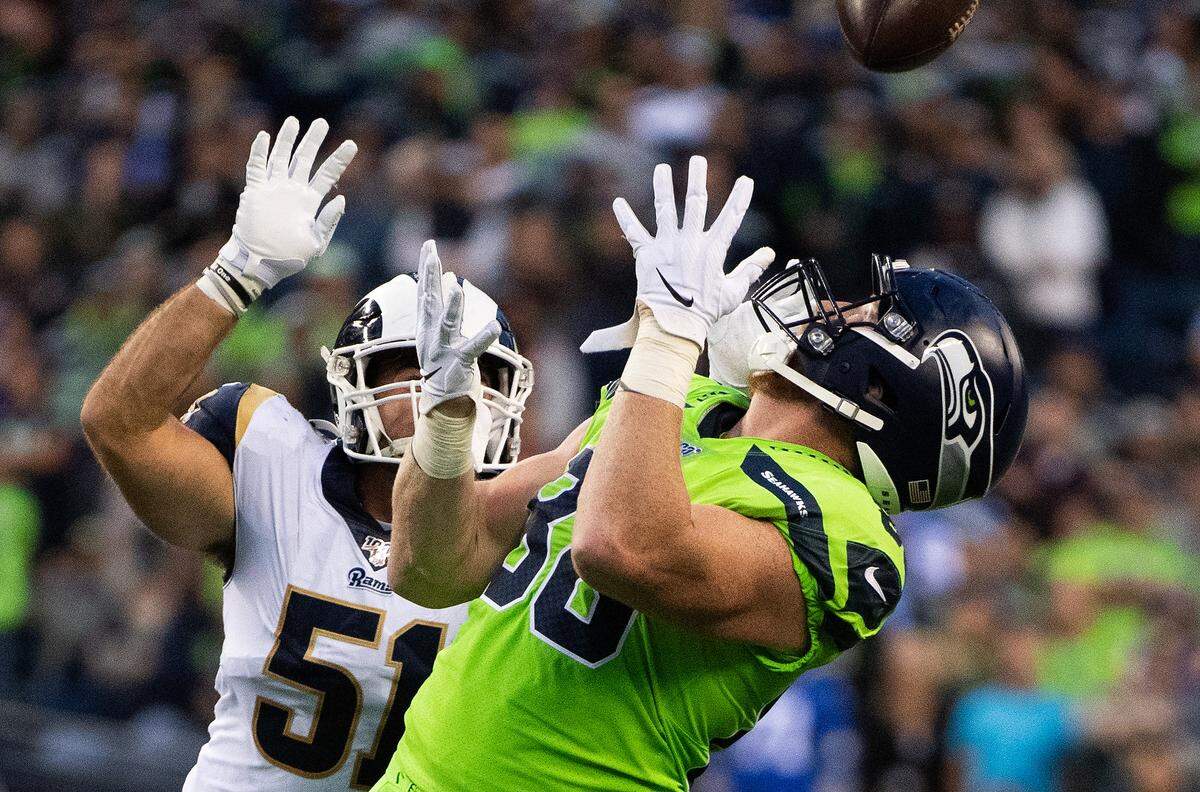
If you don’t think Dissly is going to be ready for the Seahawks’ opener Sept. 13 at Atlanta, you don’t know Dissly.
And you haven’t been paying attention for the last 1,800 words.
“Again, I wasn’t alone on this one, just like the last one,” Dissly said. “Tons of support, from the Seahawks, my friends, my family, the fans. So it was a group effort to get to this point.
“And I’m really excited to get rolling here and play some real football. ...
“It was just my job to get back—and to prove those people right that were counting on me to get back.”
This story was originally published August 19, 2020 at 7:50 AM.