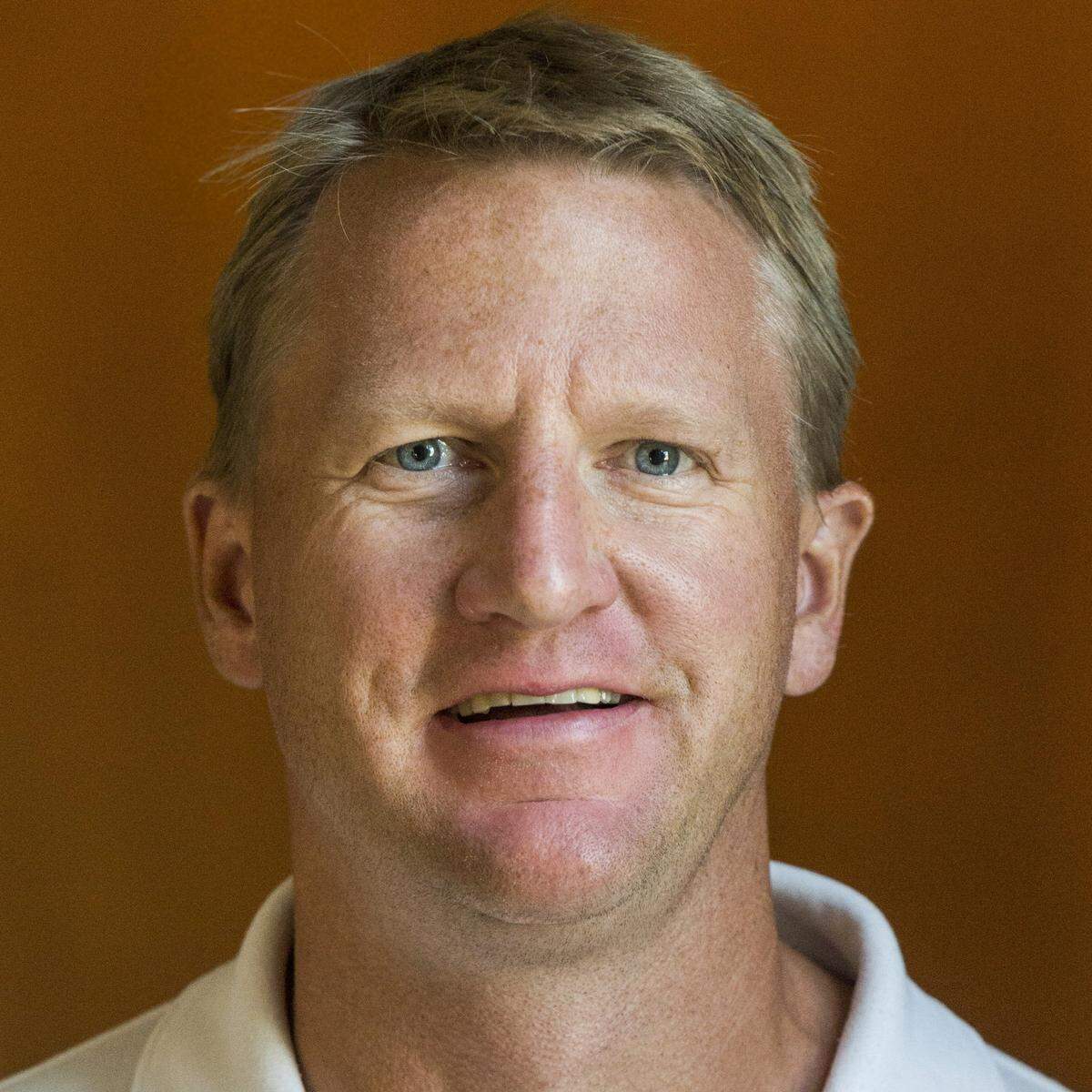
Washington’s pass rush will test Seahawk TE Will Dissly’s effort to master a new skill
Will Dissly had just scored his second touchdown since coming back from a torn Achilles tendon.
The unassuming Montanan didn’t celebrate the touchdown pass from Russell Wilson himself last weekend in the Seahawks’ rout of the New York Jets. He handed the ball to Duane Brown. Dissly wanted to reward the 35-year-old, Pro Bowl-veteran left tackle for running to the end zone to congratulate Dissly on his score.
Brown thudded the ball into the blue, end-zone turf at Lumen Field with a thunderous spike.
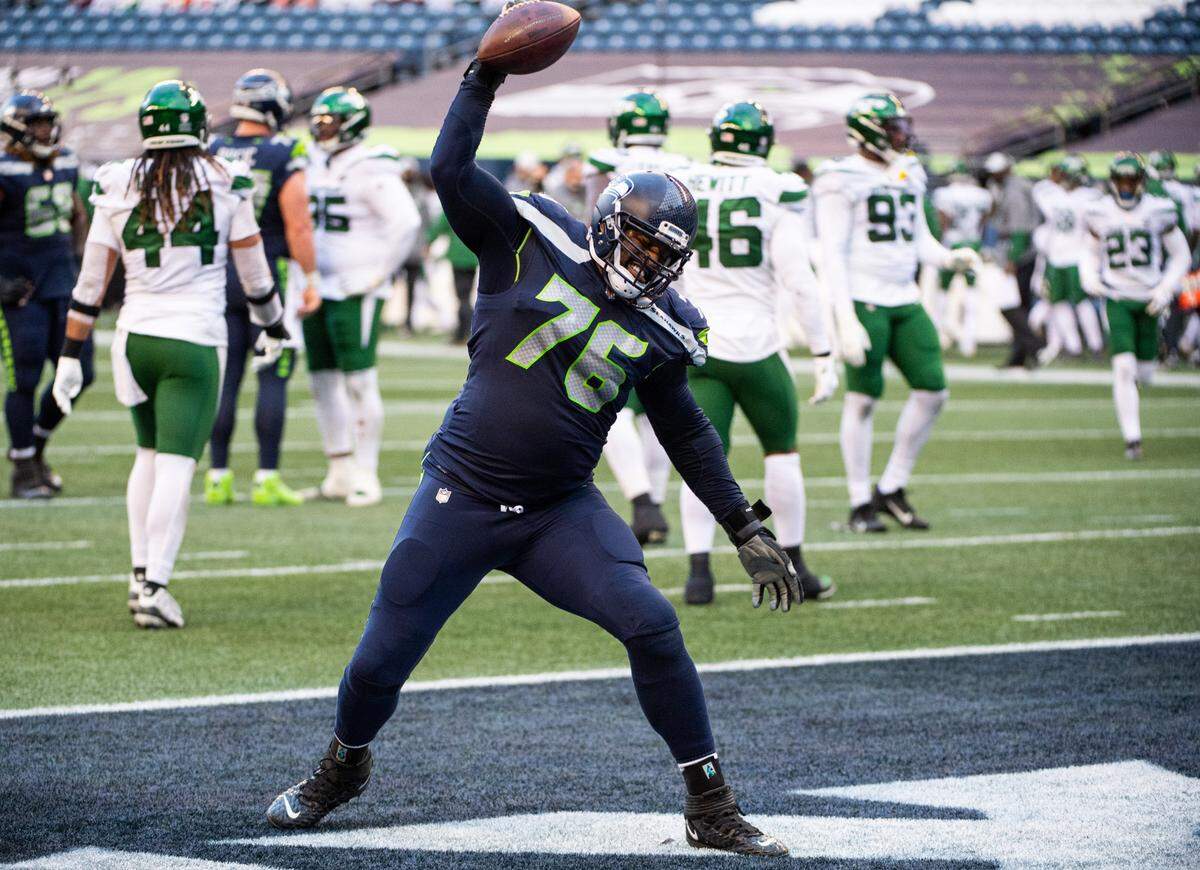
As an official retrieved the bounding ball, Dissly went about his way to the sideline and the rest of his Sunday.
Seahawks teammate Tyler Lockett knows long, grinding roads back from major injuries. The wide receiver broke his leg a few on Christmas Eve 2016 in a game against Arizona. Lockett retrieved Dissly’s touchdown ball from the official. He brought it to the sideline. He asked an equipment assistant to store it behind the bench so Dissly could keep his touchdown ball.
That’s how much teammates love Will Dissly.
Sunday morning, the universally respected Seahawk for whom teammates celebrate in two different ways for scoring a touchdown could be a key to whether Seattle (9-4) clinches its eighth playoff appearance in nine years with a victory over NFC East-leading Washington (6-7) in Landover, Maryland.
And it has nothing to do with catching passes or scoring touchdowns. It figures that it’s a task for which Dissly is overlooked—yet greatly appreciated by his Seahawks.
Brandon Shell is unlikely to play because of a sprained ankle. The starting right tackle hasn’t practiced this week after missing two games with a tricky high-ankle sprain, then lasting only 23 snaps when he tried to come back in the Jets game.
That means Seattle is likely to be starting Cedric Ogbuehi as quarterback Russell Wilson’s primary front-side pass protector—against lethal rookie Chase Young, fellow menacing pass rusher Montez Sweat and Washington’s strength, its pass rush. Ogbuehi has struggled pass blocking consistently in the two games he’s played for Shell this month.
That means DIssly is more likely to be staying in to help block those pass rushers Sunday, as an extra, blocking tight end, in addition to his duties down the field as a receiver.
“Yeah, he’s worked hard at that. And it’s important,” Seahawks coach Pete Carroll said.
“He’s got great, competitive nature, which is really (key). It comes down to that finish, last shove on guys to keep the QB clean so often. And Will’s a real battler at it.”
Dissly’s worked more than hard at it. He’s worked fiendishly to get better at pass blocking.
He’s had to make up for years of not doing it.
In fact, he used to be one of the pass rushers he now works so much to repel.
“It (pass blocking) wasn’t something he was asked to do a whole lot of coming in here, obviously: defensive end, tight end-fullback-slash-H-back,” Seahawks offensive coordinator Brian Schottenheimer said, referring to Dissly’s days at the University of Washington.
Dissly was goofing around catching passes as a big ol’ number 98 at a practice for the Heart of Dallas Bowl late in 2015 his sophomore season at Washington. Huskies coach Chris Petersen saw him catching those passes and got the idea to convert Dissly from defensive lineman to tight end.
Dissly learned tight end so quickly and so well the Seahawks drafted him to be one for them, in the fourth round in 2018. He knew the interior run blocking of tight end versus defensive end from his years doing it on defense. But he was focused on pass catching, not pass blocking, in his accelerated development at his new position.
Then DIssly was too busy trying to learn the NFL and making a huge rookie-season splash connecting with Wilson to focus a ton on pass blocking. He caught four touchdown passes in his first four NFL games in 2018. Then he ruptured the patellar tendon in his knee during a game at Arizona.
He caught six touchdown passes in his first eight career games with Wilson over two seasons. Then Dissly tore his Achilles, in a game at Cleveland 13 months after his knee injury. The day it happened, Carroll termed Dissly’s second major setback as “devastating.”
While Dissly endured not one but two season-ending injuries in consecutive seasons to begin his career, while he was grinding back on lonely rehabilitation days in training rooms with physical therapists from Seattle to Los Angeles, he worked on his pass blocking.
“He works at it all the time,” Schottenheimer said.
“He’s gotten so much better at hand usage.”
Much of pass blocking is something close to martial arts. The speed and technique one must employ to chop, parry and repel charging edge rushers with their hands would impress a black belt.
It takes a lot of hours and persistence with technique to get good at it. That’s why so many edge rushers get paid some of the NFL’s most luxurious contracts, because there aren’t a ton of people consistently and effectively blocking them.
“So much of pass protection is the ability to re-fit your hands,” Schottenheimer, who has been coaching for the last 24 years, said. “When you go to block somebody, when I go to block you, and you knock my hands off, right—they are taught to knock your hands off—it’s all about replacing that hand that gets knocked off.”
The coordinator was frantically going Karate Kid, wax-on, wax-off with his hands as he was talking.
“He’s worked—you can see him over there, pre-practice—he’s doing different drills to work on his hand placement and his replacement of hands. Then, he’s just extremely powerful through his lower body.
“He has gotten a lot better. But it is still an extremely difficult job that not many tight ends in the NFL can do.
“So it comes down to his strength, his ability to use his hands—but a lot of it comes down to flat out work ethic.”
Dissly is working on his pass blocking before and after practices every day, every week, August into January.
That doggedness may pay off handsomely for the needy Seahawks in Washington.
Schottenheimer’s formations and play calls usually rotate Dissly and fellow tight ends Jacob Hollister, rookie Colby Parkinson and soon-to-be-returning-from-injured-reserve Greg Olsen through pass-protection roles in a game. That’s so defenses can’t key on one tight end as a designated pass protector as a tip off Wilson is about to throw.
Yet something says Dissly may be pass blocking more than usual to help Ogbuehi or whoever plays right tackle at Washington.
Dissly is nothing if not prepared for the job.
“It’s easy to do it in week one, week three, week four,” Schottenheimer said. “But now you get into the latter part of the season and guys are tired: ‘Oh, maybe I want to go home a little earlier today. Maybe I won’t go out for the start of practice.’
“Not this guy. ...He doesn’t ask for a minute off. Which is cool.”
This story was originally published December 19, 2020 at 4:33 PM.