Seahawks’ better defense still has a glaring hole. They miss ‘Screen Master’ K.J. Wright
You could see this coming all the way from, well, Las Vegas.
The Seahawks sure miss “The Screen Master.”
“K.J. is ‘The Screen Master,’ so I’m trying to get there,” Jordyn Brooks said this week.
Brooks is the man who replaced K.J. Wright as Seattle’s weakside linebacker this season.
“I might give him a call this week and maybe he can give me some tips,” Brooks said.
“K.J. was ‘The Screen Master,’ for sure, in his time here. They have given us a screen cut-up tape, so I’m going to study that all week, and maybe go back and watch some of the screens that K.J. had in his time here to try to pick up on what he picked up in his time here to get better in that area of my game.”
Great idea.
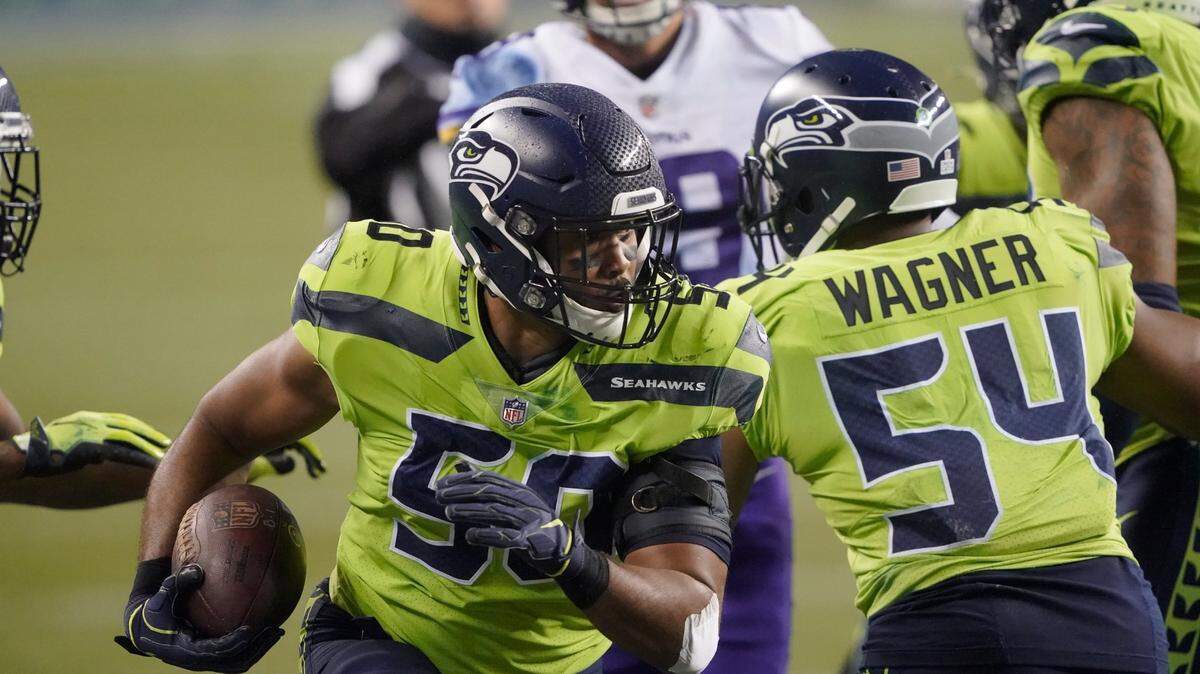
During his 10 years in Seattle’s defense and next to Bobby Wagner, Wright wasn’t just the Seahawks’ but one of the NFL’s best at recognizing and defending screen passes.
“I think somebody randomly called him ‘The Screen Master,’ and he just did it once,” Wagner said of his good friend. “And he took pride in it and tried to see how many times he could diagnose a screen.
“And once turned into like 30,000.
“Any team that tried to run a screen on K.J. was not smart.”
But now Wright is in Las Vegas. The Seahawks decided not to re-sign their longest-tenured player this offseason to clear the path for Brooks, their first-round draft choice in 2020. The 32-year-old Wright signed a one-year, $3.26 million contract with the Raiders this summer.
Predictably, without Wright the Seahawks (3-6) are having problems defending screen passes this season. Huge problems — though the defense has markedly improved in yards and points allowed in the last month.
Seattle held Aaron Rodgers and Green Bay to just 10 points through the midway point of the fourth quarter last weekend. But then Packers number-two running back A.J. Dillon romped 50 yards with a screen pass down the right flank of the Seahawks’ defense. That set up Dillon’s touchdown run that iced the win for Green Bay.
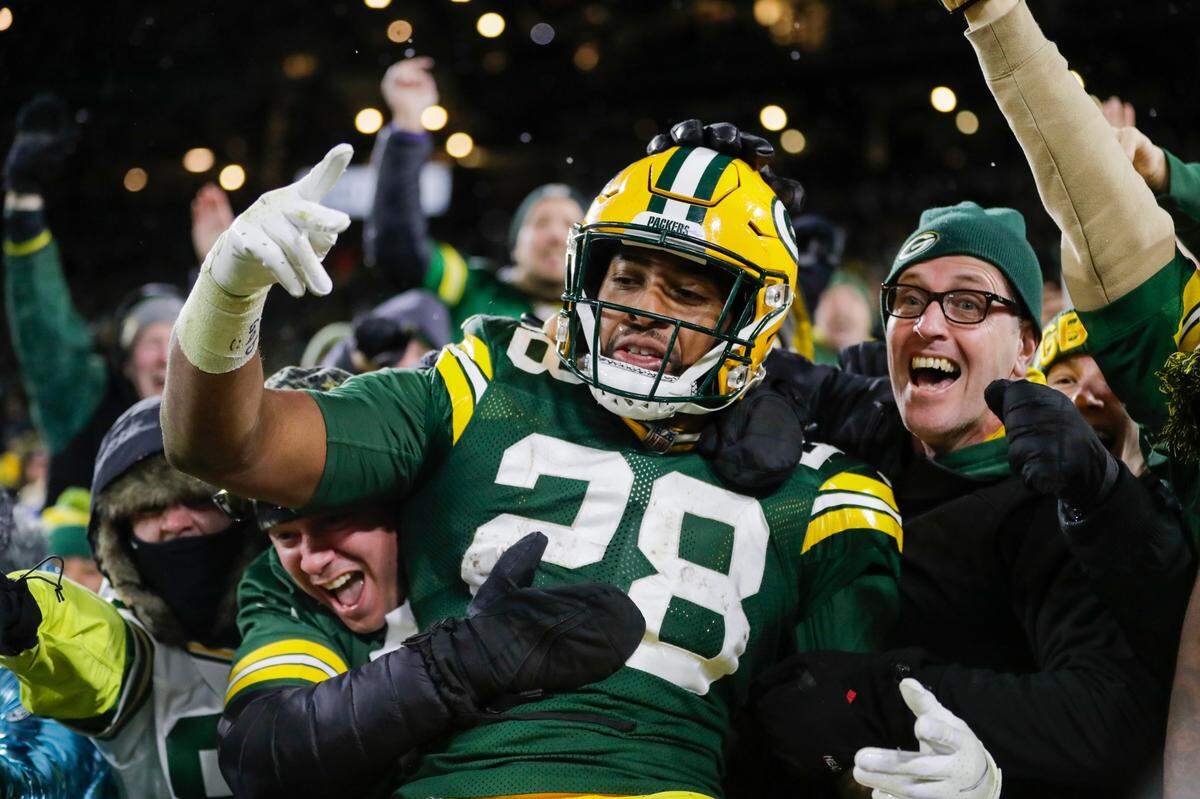
On that play, Brooks faked a middle-gap blitz before the snap, then didn’t get out to Dillon to his outside right quickly enough. Then Brooks whiffed trying to tackle or push Dillon out of bounds before the Packer took off running down the sideline.
That has been going on since September.
A screening pattern
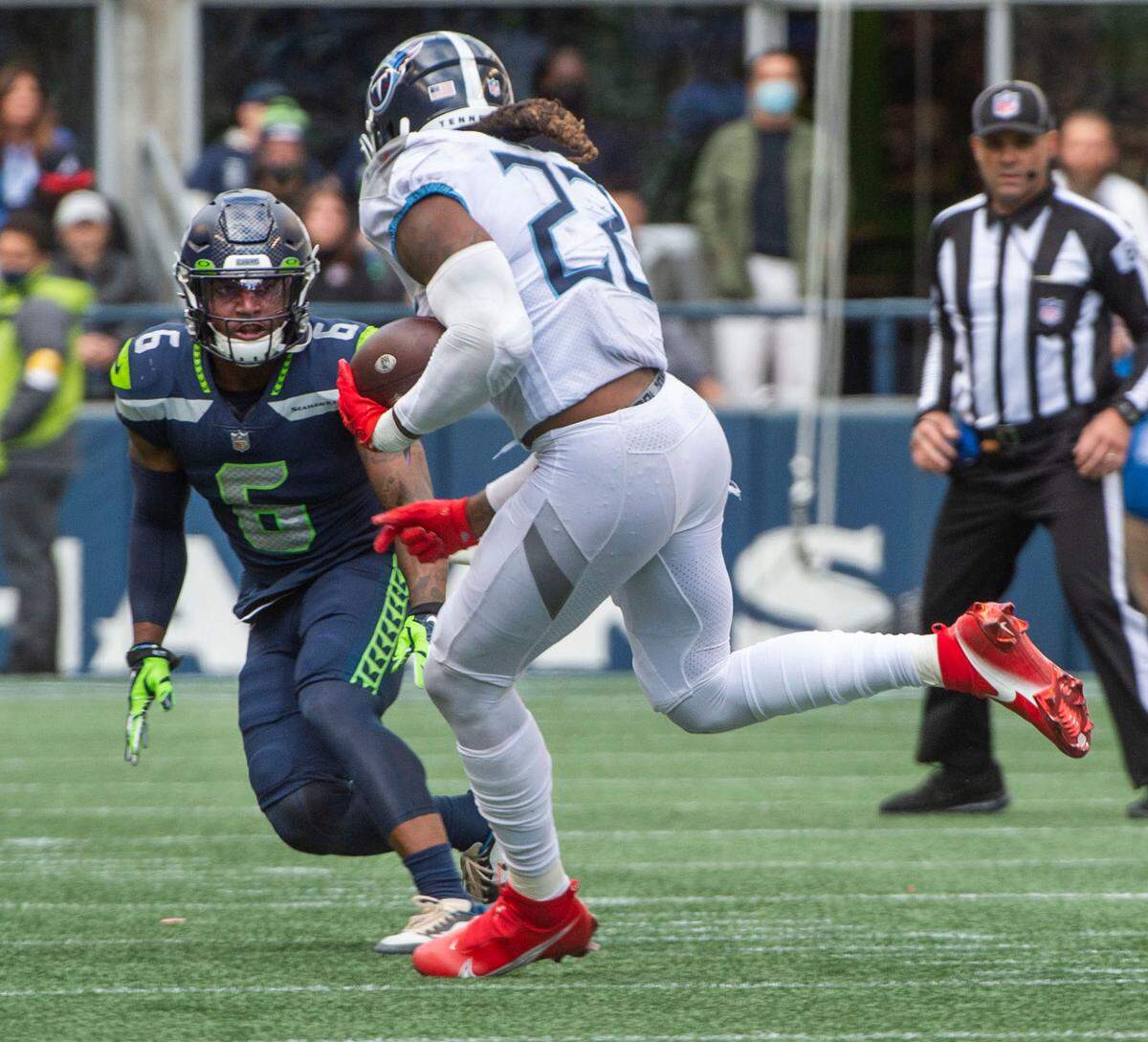
Tennessee’s Derrick Henry is known as the league’s top rusher, not as a receiver. Yet he rolled to gains of 15 and 14 yards on screen passes in week two at Seattle.
In week three, Minnesota threw a screen pass on its second play of the game. That set up a touchdown. Two more screens set up two touchdown drives. Three screen passes for a total of 49 yards, part of running back Alexander Mattison’s 59 yards receiving, led to 21 points in the Vikings’ 30-17 win over the Seahawks.
“They schemed our ass,” Seattle cornerback D.J. Reed said after that game.
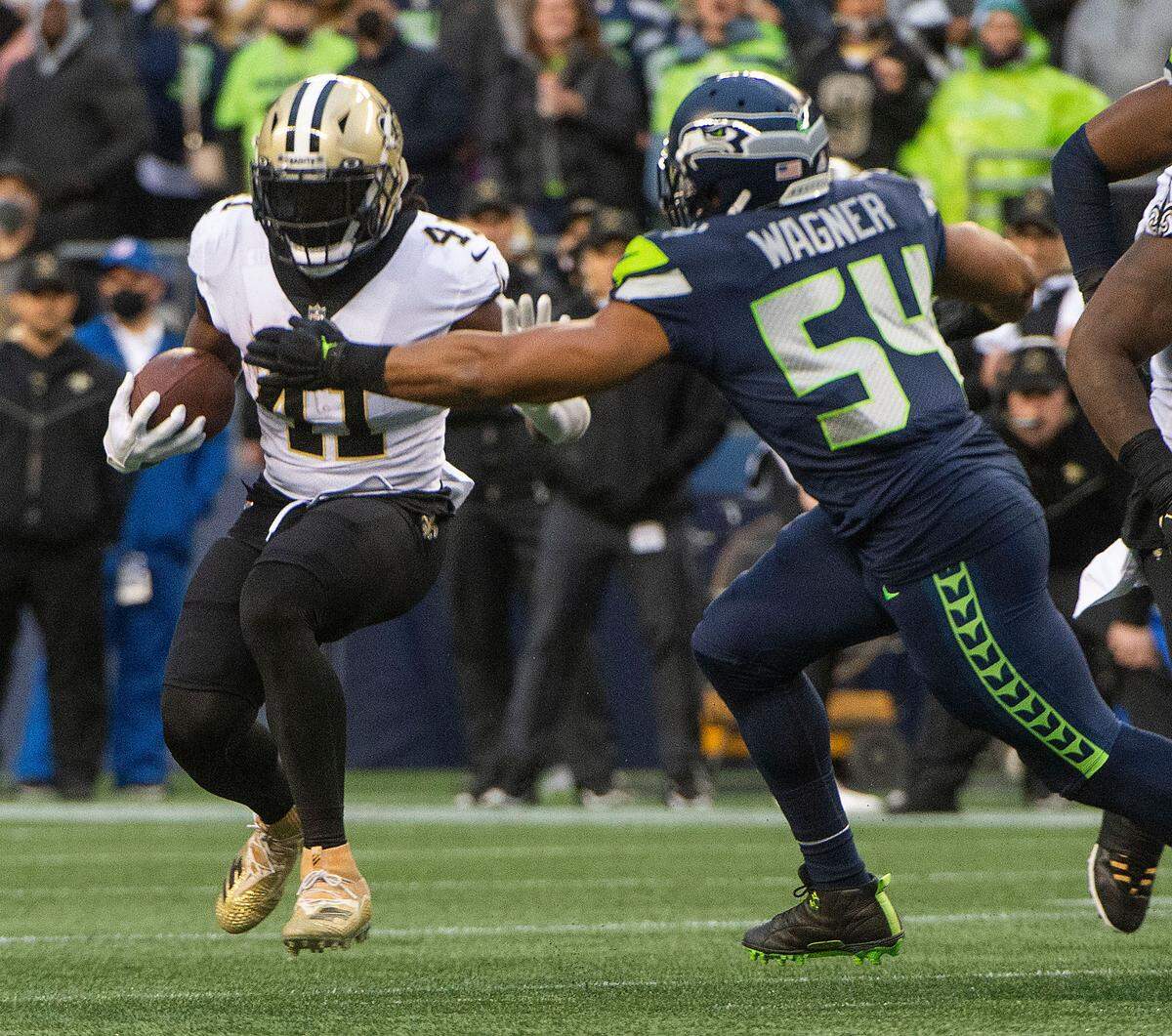
Punishing rusher Alvin Kamara had a 23-yard gain on a screen pass in the first half of the Saints’ game in Seattle last month. No Seahawks was anywhere near Kamara when he caught the pass. As on many screens against Seattle this season, the offensive linemen had no one to block in front of Kamara. That play set up a field goal for New Orleans. Kamara romped for 18 yards on another screen pass, and gained 128 yards receiving in the Saints’ 13-10 win.
The 49ers. The Steelers. The Rams. They’ve all been screening the Seahawks, often by throwing to the backside, the weakside of formations and targeting second-year man Brooks outside.
You can bet the NFC West-leading Cardinals (8-2) will be doing the same thing on Sunday at Lumen Field, no matter which quarterback plays. Kyler Murray is a game-time decision because of his sprained ankle. Colt McCoy, his 35-year-old backup, injured his pectoral muscle starting for Murray last weekend when Arizona lost at home to Carolina 34-10.
“I think teams now, we’re going to get at least seven or eight (screens) a game,” defensive coordinator Ken Norton Jr. said.
Oh, yes, the Seahawks sure miss “The Screen Master.”
“A lot of those plays come with experience, come with time and understanding that whenever you’re in a ‘trips’ formation or there’s three people to the field, often times that back side is where you’ll get your screen,” Wagner said. Whoever’s on that back side, which tends to be Jordyn sometimes, or it can be myself, it can be Jamal (Adams, the strong safety), it can be anybody depending on the coverage. It’s understanding that’s when they decide to do it because you have all your players on this side, you have everybody running up, so you kind of lose that whole side.
“Whoever’s on that side, you’ve got to see that play. I think it just comes with time and experience.
“K.J. didn’t come in as ‘The Screen Master. He developed and turned into that.”
Norton said the Seahawks’ biggest problem on screens has been knowing what they look like, seeing the offensive linemen oddly letting Seattle’s pass rushers charge in relatively free and tracking the running back getting outside behind them.
Basically, not doing what Wright did for them exquisitely for 10 years.
“It’s important to recognize,” Norton said. “It’s important to get everybody involved. It’s more than just one person. It’s the play-side defender, but everybody has to be able to see it, recognize it, get out there and make plays because it’s one of the tougher plays.
“The way football is going now, everything’s on the perimeter. Whether it’s jailbreak screens, halfback screens, all types of screens and all types of situations, we have to be more aware and a lot more effective on them.”
Where’s the help?
Norton, his boss coach Pete Carroll and the Seahawks have been concerned with stopping the deep pass plays that were burning them early in the season. So the cornerbacks and safeties have often retreated too deep to help Brooks and the linebackers defend screen passes.
Even when the defensive backs are playing tighter, offenses are sending wide receivers on deep clear-out routes to take Seattle’s back four defenders far down the field and out of screen plays.
“Sometimes they’re catching us in coverages where they’re running us off,” Wagner said.
“We have to have better eyes and react a little bit faster and understand that’s an area that they’re going to find their spots. Watching more film on it as a group and putting this fire out.”
Brooks said he didn’t see many screens in the wide-open Big 12 Conference when he was a middle linebacker at Texas Tech.
He sees them now. He knows he’s the Seahawk feeling the most heat from all these damaging screen passes.
“It’s about having eyes for it,” Brooks said. “You have to watch running backs’ mannerisms. Different teams have different running backs and they do different things. So anytime you see the running back and center go to the same side, that’s a big indicator for a screen. Hand gestures and all types of things will let you know if there is a screen coming.
“That’s what I mean by just being more alert for those type of things so I can get over there and make a play.”
This story was originally published November 19, 2021 at 1:33 PM.