Obvious now, Russell Wilson came back too soon. Can he, Seahawks keep rallying at Houston?
Hindsight having perfect vision and all, it’s now clear Russell Wilson came back too soon.
In his first three games since he returned from missing the first games of his career because of surgery on his throwing hand, the best, most-accomplished quarterback in Seahawks history has:
- returned in half the time his surgeon told him he might be out
- been shut out in a game he finished for the first time in his NFL and college careers
- lost three consecutive games for the first time in his career
- been under 54% completion rate on passes for the first time since October 2013, his second season in the league
- had his first consecutive games with zero touchdown passes since October 2016
- had the third-lowest passer rating in a game of his career
- thrown interceptions into the end zone three times over the three games; he usually doesn’t do that over entire seasons
What’s been wrong with Wilson?
He hasn’t been right.
“He sat out for a month,” coach Pete Carroll said. “And, just in of itself, you’re talking about a Maserati that’s finely tuned, ready to roll, and it has to be prepared.
“We weren’t able to do much with him when he was on IR (injured reserve).”
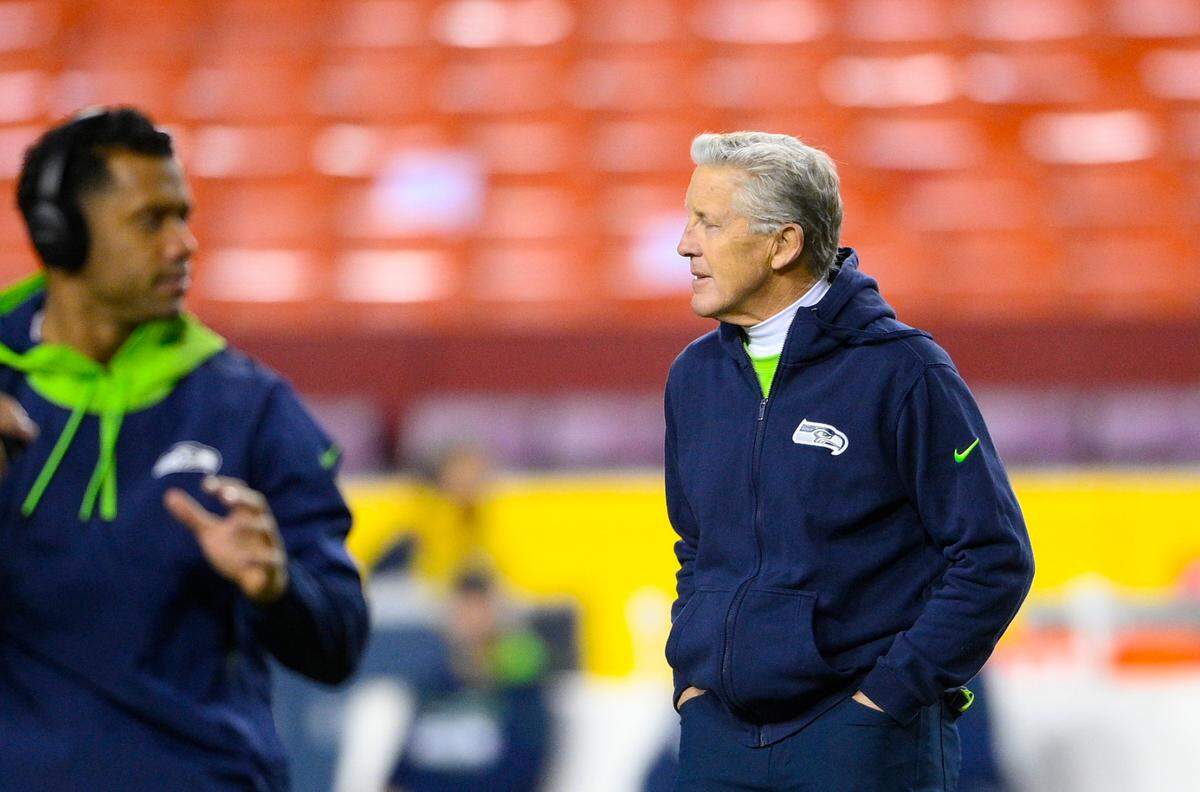
Now, Wilson is right. That is, now that he’s past the eight weeks his surgeon said he’d likely miss following surgery to repair a torn tendon and fractures in the middle finger of his right hand.
“Yeah, every day I get better,” Wilson said coming out of Seattle’s win over San Francisco last weekend, when he looked like the usual Wilson for the first time since his return.
Last week, his long passes didn’t wobble. They did not float into the wrong places and hands. They had their renowned accuracy and flight again versus the 49ers. He completed 30 of 37 passes for two touchdowns. It should have been four touchdowns, but tight end Gerald Everett dropped two scoring throws that led to turnovers.
Offensive coordinator Shane Waldron said Wilson “got into a little bit of a rhythm” by throwing quickly and accurately against San Francisco.
“Russ did a great job getting the ball out,” Waldron said.
It was the first time anyone’s said that since Wilson returned from surgery.
“I just think that it was almost the logic of it, that he’s better than he’s been each week,” Carroll said Friday.
The win over the 49ers was Wilson’s first in more than two months, since Oct. 3. After it, Wilson acknowledged the obvious point.
“This past Friday (Dec. 3) was the first day they were hoping that I could practice,” he said.
He was referring to Los Angeles surgeon Dr. Steve Shin telling him he would be out those eight weeks.
“I practiced four weeks before that,” Wilson said.
“So I feel great. I feel great. ....Glad I was able to play because also I’m going to battle, and also challenge me in a great way, mentally and physically.”
Did that personal “challenge” for Wilson do the Seahawks any favors, though?
In his first game back after returning in half the estimated time, Wilson’s passes wobbled and floated into the Wisconsin night Nov. 14 at Green Bay. He completed just 20 of 40 passes. He threw two ghastly interceptions into the end zone. The first came when Seattle was well into easy field-goal range in the second half of a three-point game.
Because of Wilson’s really poor day, the Seahawks blew a chance to beat the Packers on their home field for the first time in a dozen years while they were holding Aaron Rodgers to just three points into the fourth quarter.
The next week Wilson completed just 14 of 26 throws, again with no touchdowns. The Seahawks lost at home to Kyler Murray-less Arizona 23-13.
On the Monday night of Thanksgiving week, Wilson led Seattle on five consecutive three-and-out drives, for 25 total yards. He rebounded in a frantic final 2 minutes with the first glimpse of his usual excellence post-surgery, a 96-yard drive to a touchdown. But on the two-point conversion try to force overtime he threw late to Freddie Swain into coverage for an end-zone interception. That ensured the Seahawks’ 17-15 loss.
Wilson’s eyes were moist and red after he addressed his teammates in the locker room and took full responsibility for the losing immediately following that Washington game.
Those three losses in three starts came during the time his surgeon said he’d still be sidelined. They effectively ended realistic chances for the Seahawks to reach the playoffs next month for the ninth time in 10 seasons.
Seattle went from 3-5 to 3-8, its worst record of the Wilson and Carroll era.
The Seahawks are 4-8 entering their game Sunday at the Houston Texans (2-10). After that comes the team they’ve yet to solve and conquer, the Rams in suburban Los Angeles next weekend.
In fact, Seattle needs five straight wins to close this season, to get to 9-8 with any real hope of the postseason.
Wilson called the games to get to this point, post-eight weeks from his surgery Oct. 8, “just getting back into the groove of it all.
“I never missed a game in any sport, so you get back to the field,” he said. “And we played some really good football teams, too, so there are some challenges there. But, obviously, I think that I just stayed the course.”
The Seahawks felt obligated to allow Wilson’s return to be up to him, not them.
He did fiendish work with what he calls his “performance team” of personal trainers, physical and occupational therapists, nutritionists and more — “19, 20 hours a day,” Wilson said. That’s who he is.
For the last decade he’s also set 26 team records, won more than any quarterback in NFL history in the first nine seasons of a career, and won Seattle’s only Super Bowl title.
All that winning and commitment earned Wilson what we got: Carroll and general manager John Schneider deferring to the quarterback’s judgment on when he was ready to play again after his surgery.
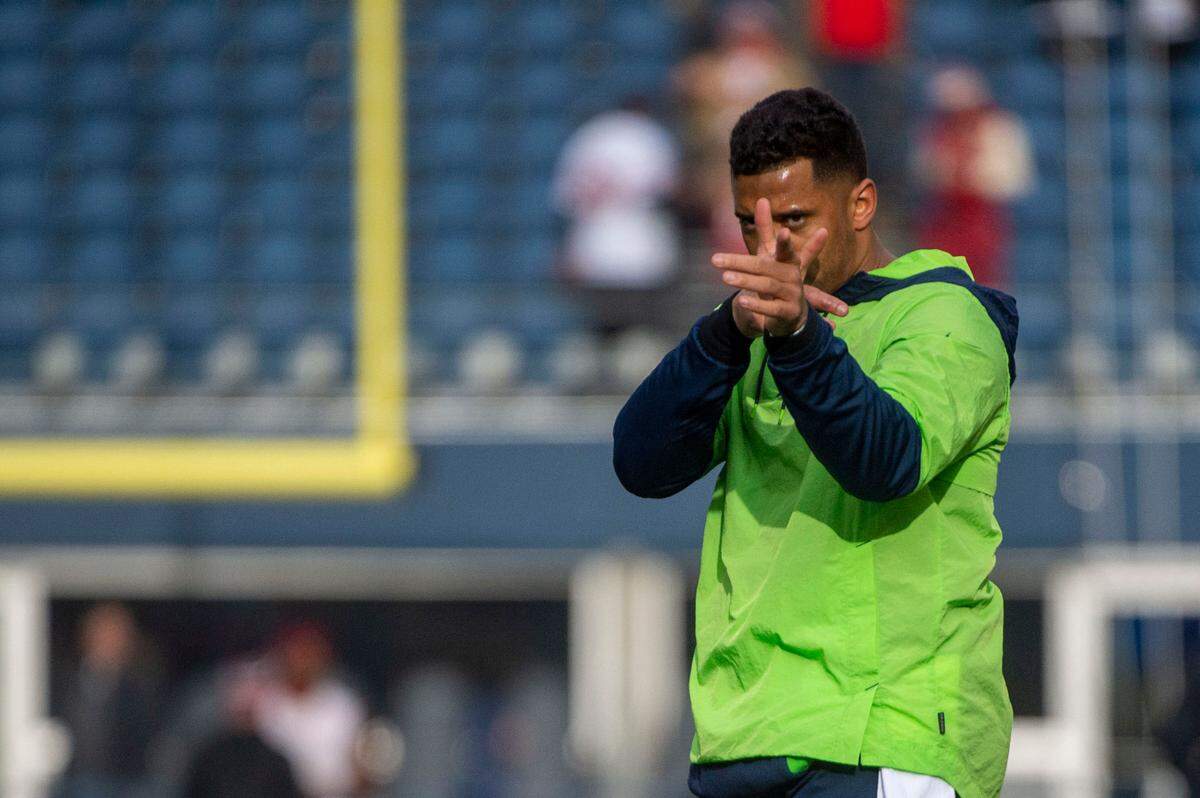
What, was Carroll going to see Wilson’s Herculean recovery videos online and throwing passes in half the expected recovery time — then keep him on the bench and keep starting Geno Smith?
When Wilson said, “I can go,” the Seahawks let him go, back into the huddle and the season.
Come what may.
What came is the hole from which they are desperately trying to emerge, continuing Sunday in Houston.
“I can’t tell you that he would report that, ‘Oh, I feel so much better this week.’ He didn’t talk like that,” Carroll said. “He would just talk about, he can go.
“It just makes sense. It’s an eight-week (recovery) for everybody in the world — except for Russell. And he made it back in four weeks. So he pulled it off and could play football and did everything he could, and he’s just the best he’s been.
“I think he’ll be better this week, and I think each week it’ll feel like that for him.
“But he’s not dwelling on it at all. He’s moved well beyond.”
This story was originally published December 11, 2021 at 11:52 AM.