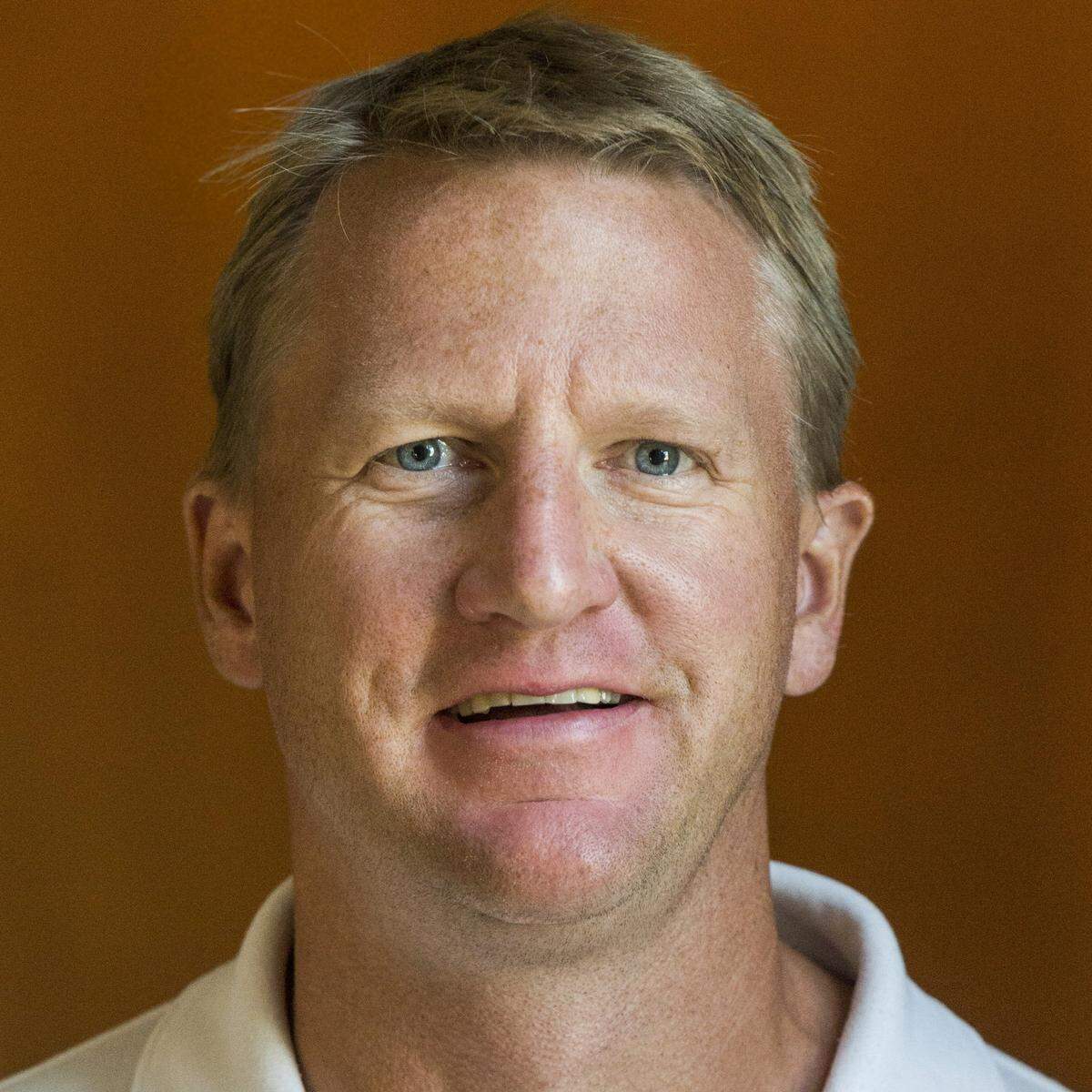
Critics of Pete Carroll calling out NFL owners on race are missing the mark. In many ways
Two summers ago, when the Black Lives Matter movement was sweeping the nation in the wake of George Floyd’s death in Minneapolis. Pete Carroll used some of that time to join Seahawks players and wives for a “Call to Action” walk.
Organized by the wives of Seahawks Super Bowl heroes Kam Chancellor and K.J. Wright, the group walked across the Lake Washington floating bridge next to Interstate 90 into Seattle. The “Bridge to the Future” march sought to maintain awareness of the need for change in society.
The Seahawks’ coach saw it as part of an unprecedented opportunity for real, lasting change.
Last week, the 70-year-old native of ultra-affluent, 85%-white Marin County just north of San Francisco took his message to the NFL. Specifically, he took it to those that need to hear it most to change the league’s record of hiring minorities in head-coaching positions.
Carroll took it to the white, billionaire owners of NFL teams.
ESPN reported Carroll spoke up during a closed meeting of all 32 team coaches and general managers. He reportedly said recent NFL rules changes such as requiring all teams to hire a minority offensive assistant coach for the 2022 season will not work unless the owners themselves change.
“He just went off,” a league source told ESPN’s Adam Schefter of Carroll at the meeting in Palm Beach, Florida, last week.
“He was saying, you can do anything but until owners get to know these candidates before the actual interviews and understand that they have to hire people who are different than them, it’s not going to really change.”
Carroll’s critics
Owners of course, “weren’t happy” with Carroll, Schefter reported.
Critics of Seattle’s coach are calling Carroll hypocritical for calling out hiring practices, given his own record of hiring...offensive coordinators.
Those critics point out offensive coordinators take the straightest path to becoming head coaches in the offense-first NFL these days. That is true for Sean McVay, the coach of the Super Bowl-champion Los Angeles Rams. That’s also true for San Francisco’s Kyle Shanahan, Denver’s Nathaniel Hackett, Indianapolis’ Frank Reich, Las Vegas’ Josh McDaniels, Minnesota’s Kevin O’Connell, Cleveland’s Kevin Stefanski — all white, all recently promoted from offensive coordinator to head coach in the league.
That is not true of Pittsburgh’s Mike Tomlin, the New York Jets’ Robert Saleh and Tampa Bay’s Todd Bowles. They are minorities who were defensive coordinators and are now NFL head coaches.
Carroll’s offensive coordinators in Seattle have all been white: Jeremy Bates (2010), Darrell Bevell (2011-17), Brian Schottenheimer (2018-20) and current play caller Shane Waldron. None have become head coaches.
Carroll’s critics ignore the fact that he has hired Kris Richard (2015-17) and Ken Norton Jr. (2018-21), both Black, as defensive coordinators in Seattle.
From 2011-13 Carroll gave Saleh, an Arab-American, a quality-control job on Seattle’s Super Bowl-winning defense. Saleh then went with Seahawks defensive coordinator Gus Bradley to Jacksonville when Bradley became the Jaguars head coach. Saleh used that job to become the 49ers’ defensive coordinator. Saleh is now entering his second year as the head coach of the Jets.
Carroll just hired Sean Desai, who of Indian descent and owns a doctoral degree in educational administration from Temple University. Desai is Carroll’s associate head coach and the top assistant to new defensive coordinator Clint Hurtt, who is Black.
Carroll’s history
Carroll didn’t just wake up in Florida at those NFL meetings last week and decide to champion minority causes.
He’s been calling on whites to listen for at least 20 years.
In 2003, eight years before he became the Seahawks’ coach, Carroll founded “A Better L.A.” while he was the coach at USC. The aim of his nonprofit in Los Angeles is to support community-based solutions to restore peace, reduce youth violence and save lives, to link individuals in the inner city to resources they need in order to thrive. Carroll went into L.A.’s toughest neighborhoods, often late at night. He got ex-gang members to help him be parts of urban progress, solutions and change.
One area Carroll walked was Baldwin Village. Former Seahawks defensive end Frank Clark remembers Carroll being there.
“They call it ‘The Jungle,’ ” Clark said in 2016 of his native area bordering the Crenshaw district, 40 or so blocks west of the LA Memorial Coliseum. “Basically, I mean, there aren’t too much I want to talk about, you know what I mean, about that. It’s a rough area.”
When Clark was 12 he saw a conspicuous, middle-aged white man with curly air and an upbeat air walking through Baldwin Village. Clark and his neighbors noticed this guy showing up in “The Jungle” at all hours.
At noon on a Tuesday and midnight on a Friday, Carroll talked to the residents of Baldwin Village’s apartment complexes ringed with rod-iron fences. He visited with the gang members hanging out along Martin Luther King, around Jim Gilliam Park off La Brea.
When he became the Seahawks’ coach after leaving USC in 2010, Carroll started a similar organization here: A Better Seattle.
Two years ago, days after a police officer in Minneapolis killed Floyd with a knee driven into his neck, Carroll issued a message of solidarity with Black Lives Matter. The Seahawks coach posted on Twitter a black screen under his typed words: “Black Lives Matter. We stand together. #blackouttuesday”
That same week, in the early months of the coronavirus pandemic with NFL team facilities closed, Carroll led the Seahawks in a team-wide Zoom call. It was supposed to be for installing the playbook for the coming season.
Carroll scrapped that plan. The coach asked his players — 70 of the 90 of whom that offseason were Black men — to air their frustrations with Floyd’s death and share their ideas for how to better their cause and society.
“We did not speak about football. We focused on what was going on in the world,” then-Seahawks team captain Bobby Wagner said that week in 2020. “We gave everybody the opportunity to express their feelings, to express their emotions—and express their anger—and whatever it was that they were feeling.
“At the end of the day, you know, life is bigger than football. There are things that are happening that are bigger than football. So we provided the opportunity for guys to speak about the things they saw, the things that they are dealing with, and what it’s like in the city that they are in. ...
“To have a platform and to have a situation like that, we felt, was great. ... “I’m grateful that we have an organization that understands it.”
Later that summer, Carroll canceled a practice to get all of his players registered in their home states to vote. The voting-registration drive was right there on the edge of the field at Seahawks headquarters.
Carroll arranged with Sen. Cory Booker, a former Stanford football player who became a Rhodes Scholar and went to Yale Law School, to talk to the players at another Seahawks team meeting that wasn’t about football.
“We have a poverty of empathy in this country,” Booker told the Seahawks in August 2020.
Carroll said of Booker with the team: “He was amazing.
“He emphasized to us that everybody has a voice now, and everybody can speak out, and everybody can have an effect on the people that follow them and watch them. ...
“He urged us to think about what we really want to say to those people, and know that we do have the power to have an effect.”
That’s what Carroll was doing at the league meetings in Florida last week. Speaking with power, to power.
This story was originally published April 7, 2022 at 6:15 AM.