Bobby Wagner explains what the issues were and how Seahawks plan to change the run defense
Bobby Wagner, Uchenna Nwosu, Dre’Mont Jones, Jarran Reed — heck, seemingly every Seahawks defensive player back to Joe Nash — are talking about it.
The buzzwords of this training camp, this season, are: Stop the run.
Or, at least slow it down. Slow it better than Seattle did last season.
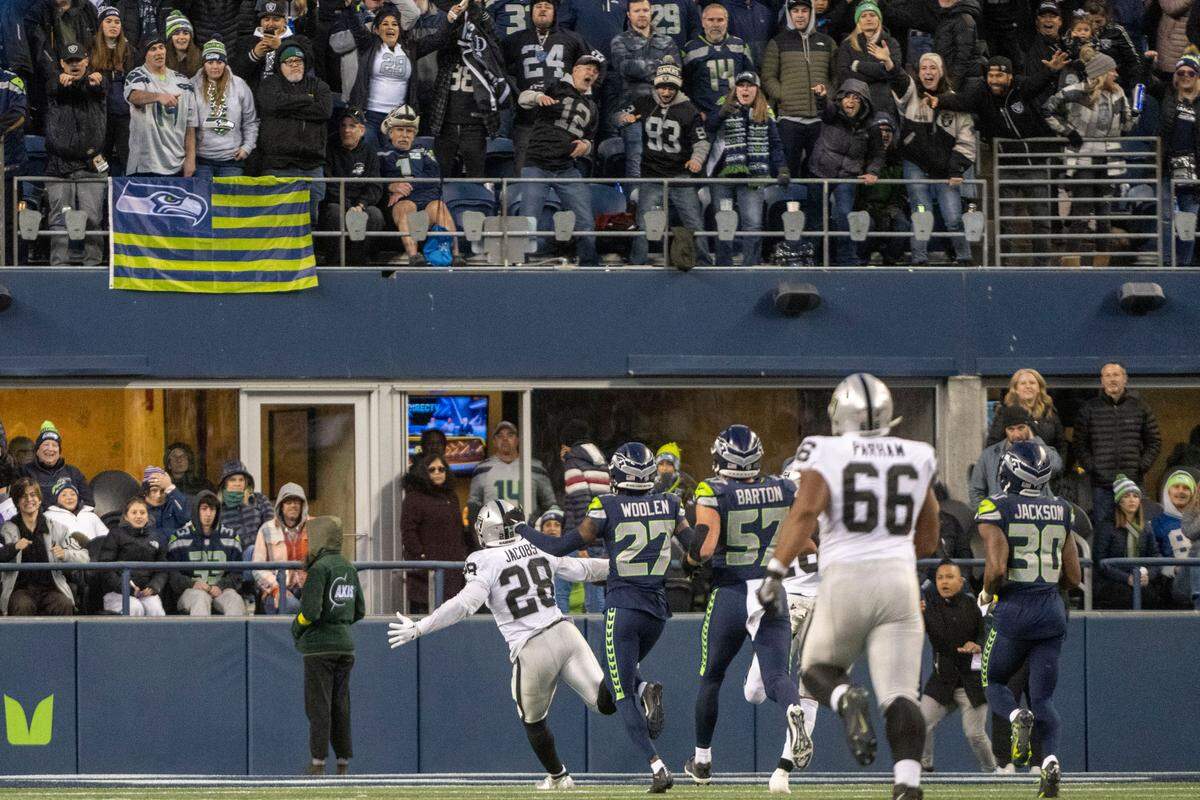
As you may have noticed and heard, the Seahawks were 30th in the NFL in rushing defense in 2022. They spent much of last season on pace to allow 170 yards on the ground per game. That would have been the most in team history. The Seahawks finished surrendering over 150. Not exactly something to be proud of.
Now?
“We are making more of an emphasis on the run game,” Nwsou, the team’s sack leader last season, said, “and everybody is buying into the culture and the scheme.”
Asked what’s different now than during last fall into winter, when Seattle spent most of last season allowing the most rushing yards in team history, Nwosu said: “An emphasis on everybody buying in.”
So far, so good.
Yet so inconclusive, obviously.
One week into camp following Wednesday’s players off day, the defensive front has been stressing the importance of their biggest problem from 2022: “run fits.” That is, the assigned defender being in his assigned gap at the assigned time.
Too often last season, linemen got blocked out of their gap. Or, worse, they went to the wrong one. Opposing blockers were free through the rush lane to get onto the “second level” to block the Seahawks who are paid to make tackles for short running gains, the linebackers. They were often in wrong places, too.
Wagner missed coach Pete Carroll’s transition last year from his half-century-old 4-3 scheme to the 3-4 Seattle played for the first time under Carroll in 2022. The Seahawks cut Wagner in the spring of 2022 to save $16 million in salary-cap space. He watched while playing for the rival Los Angeles Rams, and noticed studying game film of his new-old Seahawks defense he signed back onto this spring, what Seattle’s problems were with run fits.
So many Seahawks coaches and defensive players talked about “fits” last season they started sounding like shoe salesmen at Nordstrom.
But what does “run fits” actually mean?
Defining Seattle’s run-fit problem
Wagner explained it this week. He said the biggest issue for the run defense last year was opposing offenses confused the Seahawks’ front seven before the snap. That caused the defense to go to the wrong places. Offensive linemen had no one to block at the point of attack. Running backs had yards of space before another, unassigned Seahawk — often a defensive back who was aligned 8-10 yards off the ball at the snap — showed up.
That, specifically, is what Hurtt, Wagner, Carroll and the defense are stressing the most this summer: Adjusting to pre-snap motion; adjusting each defender’s run-gap responsibilities accordingly, on the fly.
“Let’s say you have an A or B gap (a defender being assigned the offensive guard-center or guard-tackle gap). They are not just going to line up and come right at you,” Wagner said of offenses. “They’re going to move a guy. They’re going to motion a guy (before the snap). And all of those motions change a gap.
“So, you have to know what your gap is after that, and just having an understanding.”
Wagner explained how offenses in today’s NFL use pre-snap motion of tight ends and wide receivers to change the defense’s alignment and responsibilities for run defense.
“Sometimes they’ll motion and put the nickel (defensive back) into the fit, and now the nickel has the run gap. Or they’ll move the tight end and make the outside guy (linebacker or cornerback) have to fold back in,” Wagner said.
“There are different ways that the offense does to mess with your run fits.
“So just being mindful of that, being able to communicate that with everybody and just be on the same page, I think that’s the biggest emphasis.”
Jarran Reed’s importance
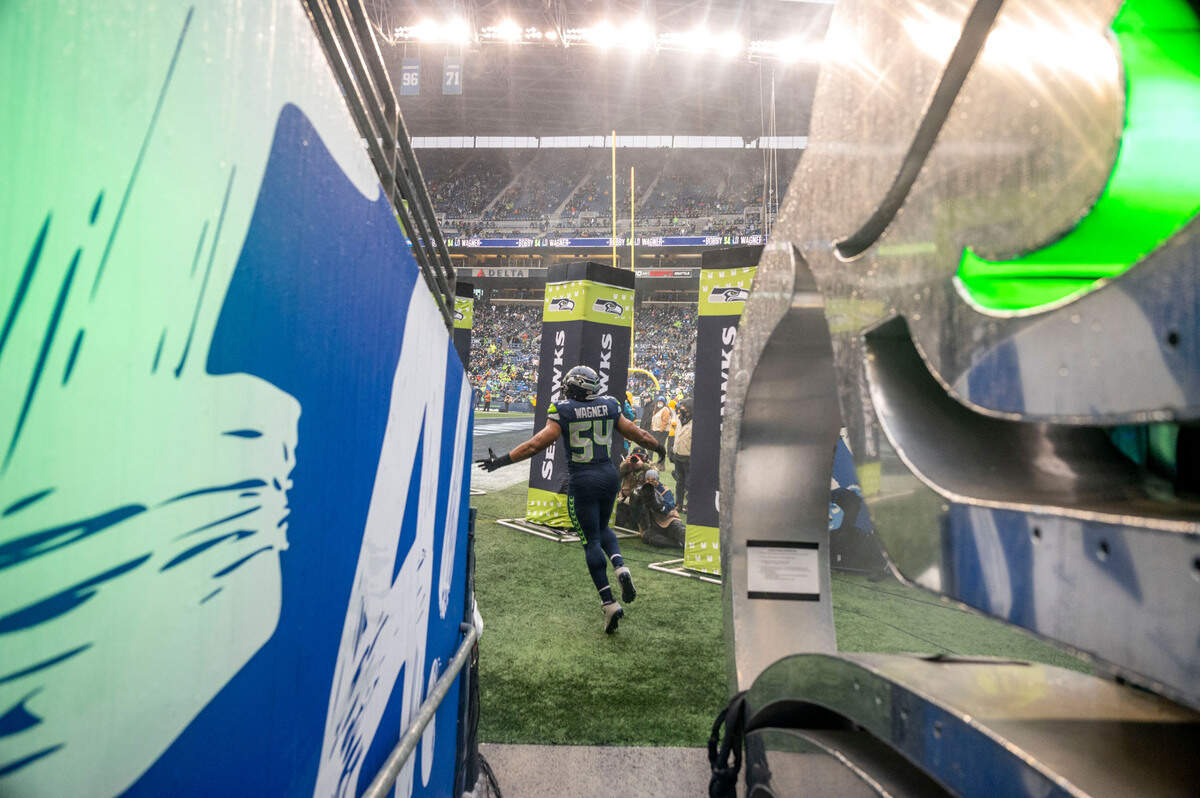
Wagner and Reed are the literal centerpieces of Carroll’s remake of Seattle’s run defense.
The Seahawks signed Reed, their second-round draft pick from 2016, back this spring; he played for Kansas City and Green Bay the last two seasons. Carroll and Hurtt have moved Reed from the 4-3 tackle he was more outside toward the offensive guard and tackle to a 3-4 nose tackle, directly over or shaded to the side of the center.
Reed was a 70%-plus snap-count guy on Carroll’s 4-3 defense in each Seahawks season from 2018-20. Can he, at 6 feet 3 and 306 pounds, play that much in the more physically demanding nose-tackle spot with 330-plus pound offensive linemen often double-teaming him to try to move him out of running lanes? The only healthy options behind him at nose tackle are rookie Cameron Young and also-unproven Myles Adams.
“Jarran Reed is a really well-equipped nose tackle, now,” Carroll said, anticipating the skeptics on that. “He’s played those spots for years, in and out. He did all of that in college, moving around, had that flexibility.
“We kind of made the commitment: Let’s go that way.
“I think he’s going to play to be one of the best nose tackles in football.
“I don’t see how you can deny that. He’s just too good of a player, really smart, really savvy, makes the calls.”
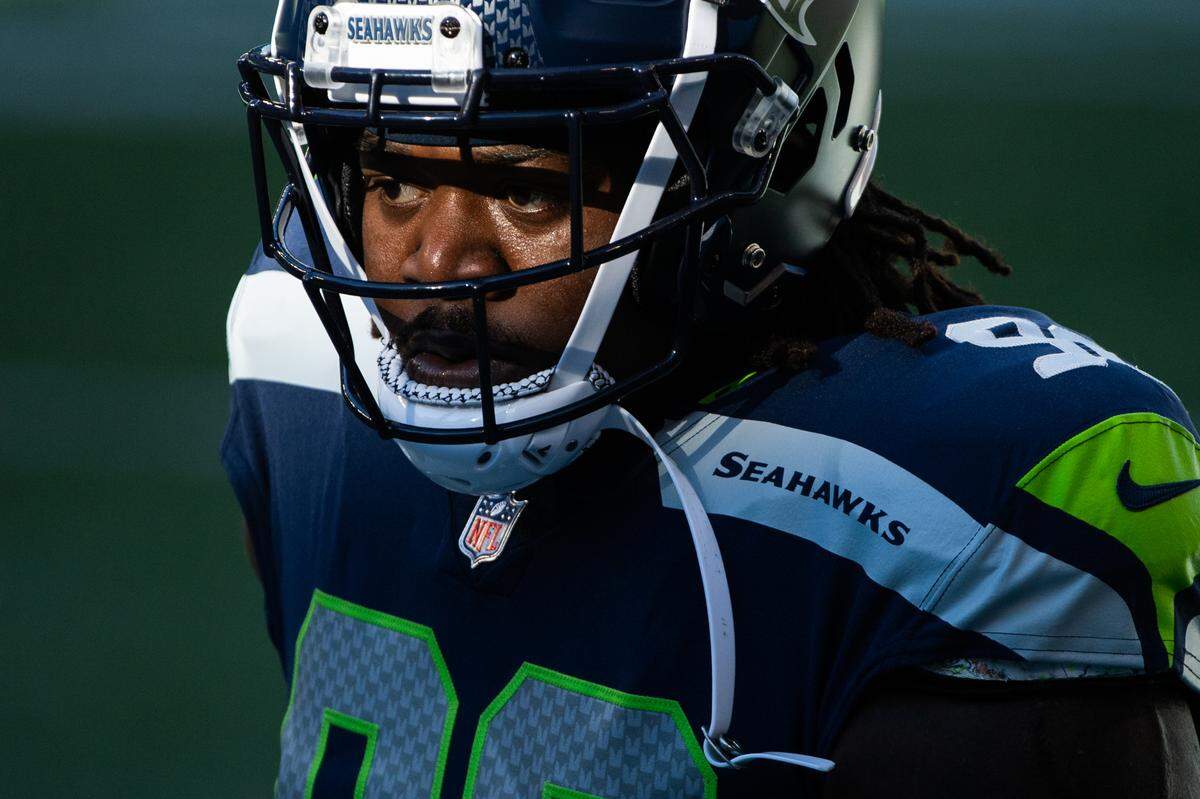
So far, one week into training camp after Wednesday’s players day off, the defense has been effective in running lanes during scrimmages. Jones, the Seahawks’ rare $51 million free-agent investment at defensive end from Denver this offseason, has “just been living in the backfield” so far. So have Nwosu and Reed.
“Counting on that to continue,” Hurtt said.
They’ve given up to $124.5 million in new contracts to Jones, Nwosu, Reed (two years, $9 million) and Wagner (one year, $5.5 million) for that to continue.
People notice Jones’ sack numbers his last three seasons with the Broncos (6 1/2, 5 1/2 and 6 1/2). They correlate Nwosu’s career-high 9 1/2 sacks last season to the new three-year contract he signed last week, worth up to $59 million with a hefty $32 million guaranteed.
But the Seahawks haven’t invested up to $110 million on Jones and Nwosu for them to only rush the passer.
Jones was regarded as one of the NFL 2023 free-agent class’ best: a young run-stopping and pass-rushing defensive linemen who plays with his hand on the ground.
Stand-up outside linebackers Nwosu, Darrell Taylor (who also had 9 1/2 sacks last season with a late-year surge) and second-year outside linebacker Boye Mafe must be more dedicated to stopping the run.
Last season, Nwosu and Taylor often simply ran themselves out of run fits off each edge and put the defensive front out of whack charging straight up field with single-mindedness of pressing quarterbacks. That was regardless of the down and distance.
By midseason, the coaches largely benched Taylor. They replaced him with the rookie Mafe on run downs. Taylor became a situational, one-dimensional pass rusher — and a good one.
That must change. He, they, must be run defenders, too.
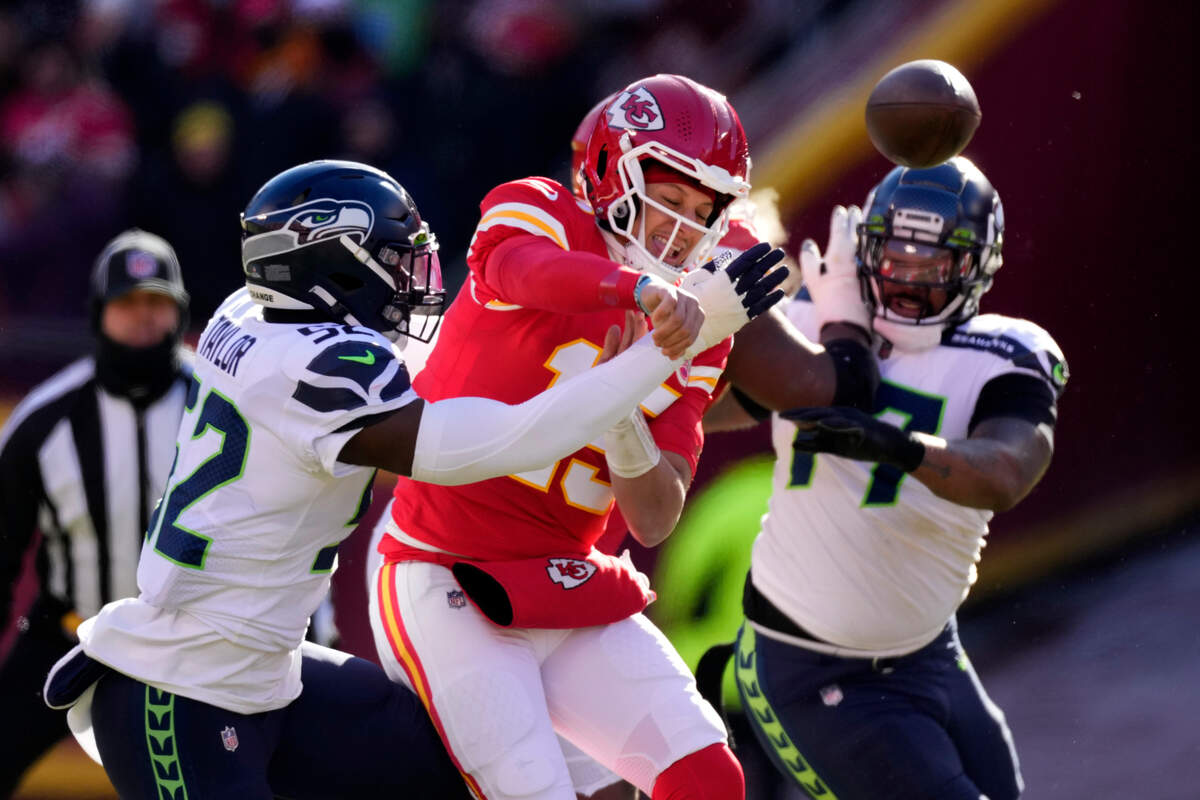
Seattle’s outside linebackers are de facto ends in the 3-4, as the last outside defenders on the edge of the interior offensive line. Hurtt says they need to be more disciplined to play the run more effectively and consistently.
“You’ve got to earn the right to rush the passer, you know. That’s the biggest thing,” the defensive coordinator promoted last year from D-line coach said. “Having situational awareness. There’s offensive formations and things of that nature when you know the run is coming, and we have to heighten our awareness for it.
“For our young players to do that, it’s discipline. For our veteran guys, it’s recognizing, because if you do that and you’re more consistent with stopping the run and committed to it, now you’ve earned more rights to go rush the passer. That’s the big thing.”
Seven months after Seattle’s 2022 season ended with the wild-card playoff loss at San Francisco, Hurtt is still shaking his head at this: The Seahawks finished in the top ten in the NFL in sacks (45), but...
“Last year we finished tied seventh for sacks last year — and we couldn’t stop the run to save our life,” he said. “So I imagine you get more opportunities to (pass) rush by defending the run game better. That’s the part nobody ever talks about.
“They act like we got three sacks on the season when we finished tied for seventh, but, you know, nobody ever thinks Seattle can play.”
That’s because last season the Seahawks couldn’t stop the run, and the 49ers ran them out of the three games Seattle lost to San Francisco.
If these Seahawks back up their talk so far this summer with improved rushing defense this fall, they can challenge the 49ers’ quest to repeat as NFC West champions.
If all this Seahawks talk about run defense is just that, talk, the rugged Niners are likely to steamroll Seattle to another division title.
“We’re making a point from day one,” Nwosu said. “That’s the emphasis on the whole defense, is not letting anybody run the ball.”
This story was originally published August 3, 2023 at 5:01 AM.