Ways for Ryan Grubb to help Geno Smith, Seahawks’ offense? More runs? More play-action?
Ryan Grubb said it last week.
“Certainly want to keep getting better at it,” the Seahawks offensive coordinator said.
Grubb said it last month.
“I think the part you have to be the most critical of is, when you’re not playing from behind and you’re playing in normal downs, you’re just playing ball: Are you trying to run the ball enough?”
Are they?
Grubb said it in early October, after lead rusher Kenneth Walker got just five carries in Seattle’s galling, home loss to the still-two-win New York Giants.’
“I’ll own that,” Grubb said after week five this season. “Got to get the ball to Ken more.”
Heck, Grubb said it the month the Seahawks and rookie head coach Mike Macdonald hired him to be Seattle’s new offensive coordinator and play caller.
“I think that when you have an established run game, it makes calling those other plays, the auxiliary plays off of it a lot easier, honestly,” Grubb said Feb. 15 after Macdonald hired him away from Kalen DeBoer’s staff moving from the University of Washington to Alabama.
“It’s when you don’t have the presence of a run game that things can get really tricky.”
Things are really tricky right now for the Seahawks.
Three games remain in the season and in their quest to win the NFC West. The lack of a running game, including Grubb just not calling running plays, continues to be a primary problem for Seattle.
Last weekend against Green Bay, Grubb called just 11 carries by his running backs in 53 offensive plays. That’s not counting three white-flag runs by rookie fourth-stringer George Holani to expire the final seconds of the Seahawks’ 30-13 loss.
A Packers defense that was among the lowest in the NFL in pressure rates coming in didn’t have to regard the run. Green Bay sacked Seahawks quarterbacks seven times and hit them 12 times.
The loss booted the Seahawks (8-6) from first place in the division. They now trail the Los Angeles Rams (8-6) on a tiebreaker.
Minnesota Vikings’ challenge
The 12-2 Minnesota Vikings are coming to Lumen Field on Sunday.
Minnesota has the league’s second-best run defense. The Vikings also have a blitzing, attacking scheme that leads the NFL in sacks and is in the top four in interceptions.
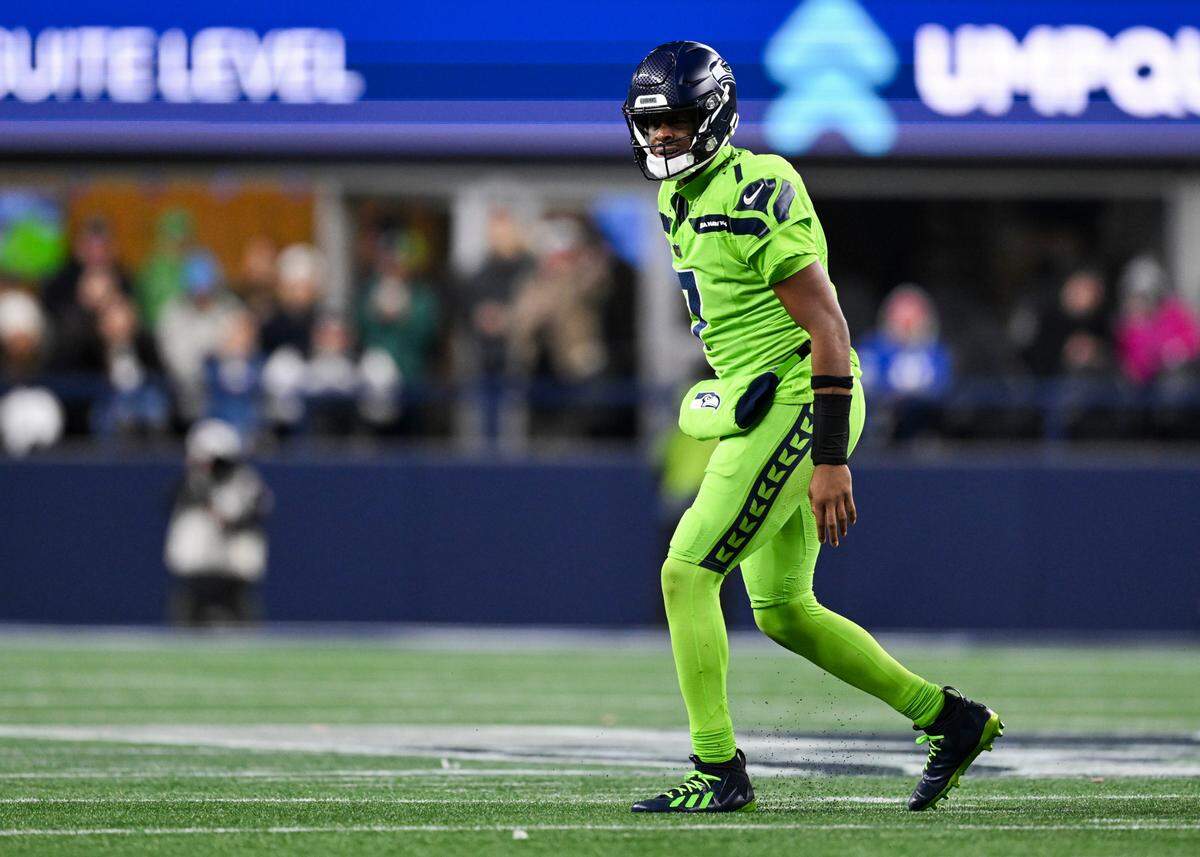
On top of that, Seahawks quarterback Geno Smith is battered. It appears he is going to play Sunday through a knee injury that forced him out of the loss to the Packers with 5 minutes left in the third quarter.
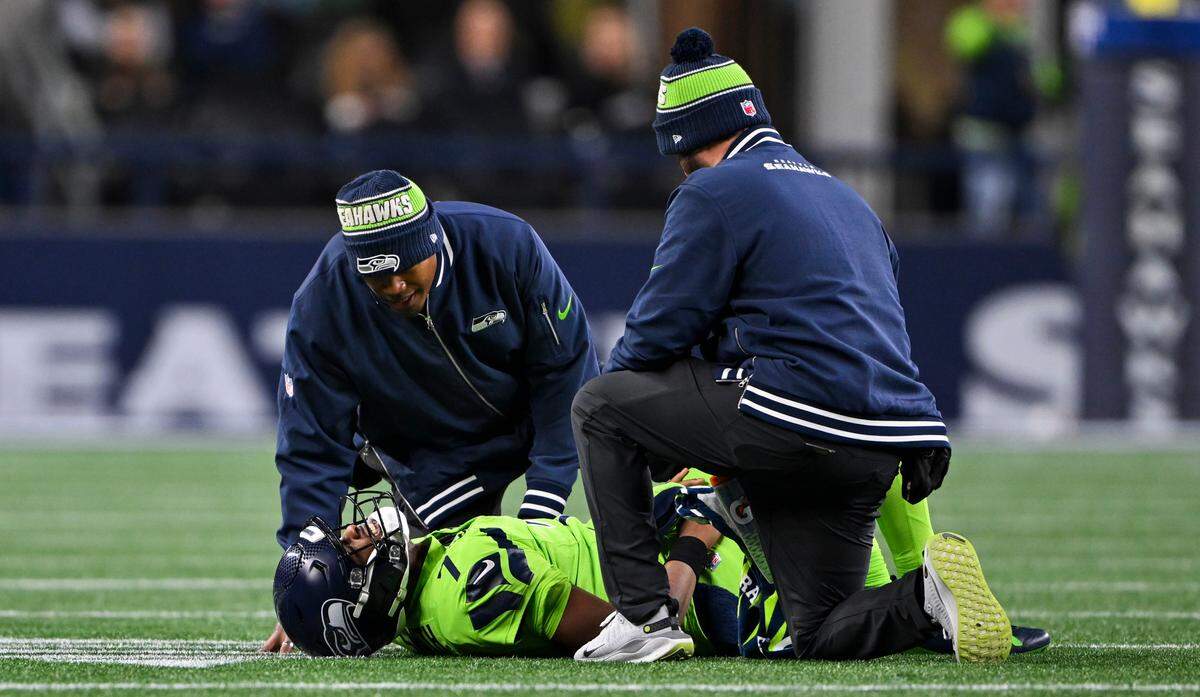
Smith limped back to the sideline from tests on the knee in the locker room and watched backup Sam Howell struggle mightily, also without a running game to help him or Seattle’s suspect offensive line.
This week, the coaches are saying the same things they’ve been saying for 10 months.
It’s the same thing former coach Pete Carroll said just about every week for years before this one.
“We wanted to run it more going into the (Packers) game, for sure,” Macdonald said Monday. “We didn’t get as many runs in as we thought, partially because of circumstance. But there were some opportunities in the game that we both (he and Grubb) felt like runs could have been better utilized.
“We’re going to learn from those things. But we’re on the same page on how we’re calling games and all that.
“But absolutely, we need to get our run game going.”
It’s become a need as constant around Seattle as the sun.
The Seahawks are 29th in the NFL rushing attempts this season, with 319. That’s 22.7 times per game. The league average for an offense this season is 27 rushes per game. Seattle is 25th in rushing yards per attempt (4.1).
Against Green Bay, the Seahawks had Smith throwing on six of the first eight offensive snaps. By then the Packers led the game 14-0, and it was basically over.
Even more head-scratching: After Howell had to enter the game because of Smith’s injury with 5 minutes left in the third quarter, Grubb had Howell dropping back to throw on each of his first 12 plays. No acclimation period for the backup who had played one snap all season.
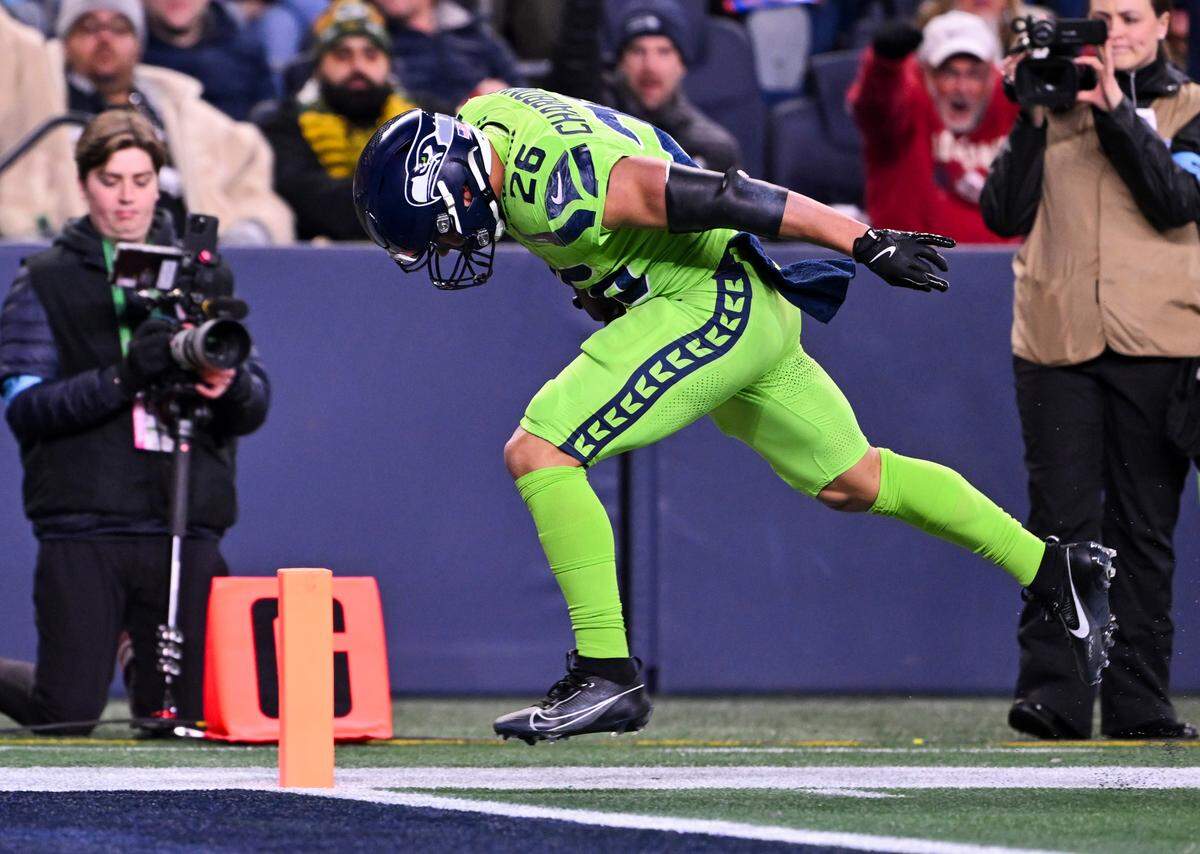
The Seahawks ran the ball just once in the first 17 plays Howell was in the game. That one time was Zach Charbonnet’s touchdown run of 24 yards. It cut Green Bay’s lead to 23-13 with 11-1/2 minutes left.
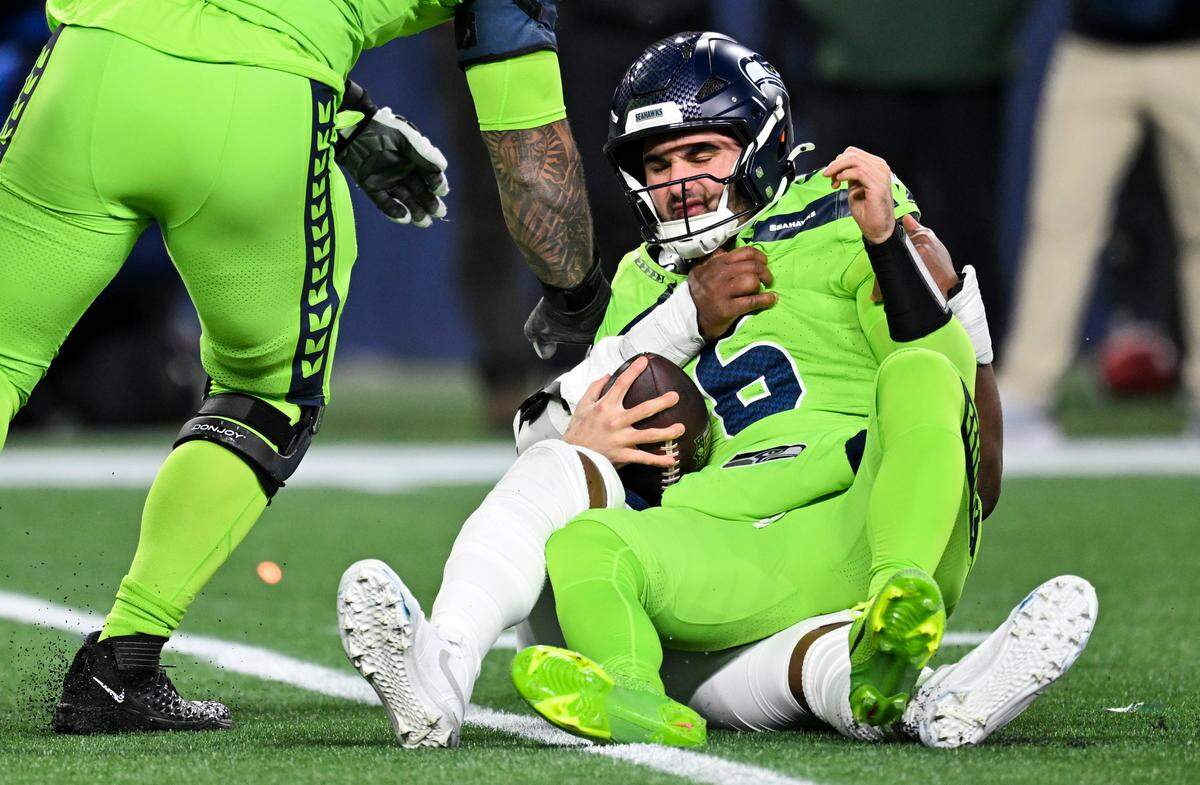
Howell finished 5 for 14 passing for 24 yards, with four sacks. His ugly on top of ugly was an interception he threw directly to Packers linebacker Edgerrin Cooper into the teeth of deeper zone coverage down the middle of the field.
Howell, 4-13 with a league-leading 21 interceptions last season as the Commanders starter, said multiple times after the game Sunday night: “I have to be better.”
Macdonald said he and Grubb put Howell in a tough situation, but they had to pass because the team was behind 20-6 late in the third quarter.
“I was hoping he’d play better, frankly,” Macdonald said of the QB Seattle traded with Washington for this spring. “Just get us back in the game and move the ball a bit more.
“But, he was put in a tough spot where they know that we’re throwing, and we know we’re throwing. So, they were rockin’ and rollin’, doing their stuff.”
A factor favoring more running this week for Seattle: Walker might be returning from injury. The No. 1 running back has missed the last two games with a calf injury. Macdonald said Walker had a good workout Monday.
“Feels good. So hopefully we’ll see him out there on Wednesday,” Macdonald said.
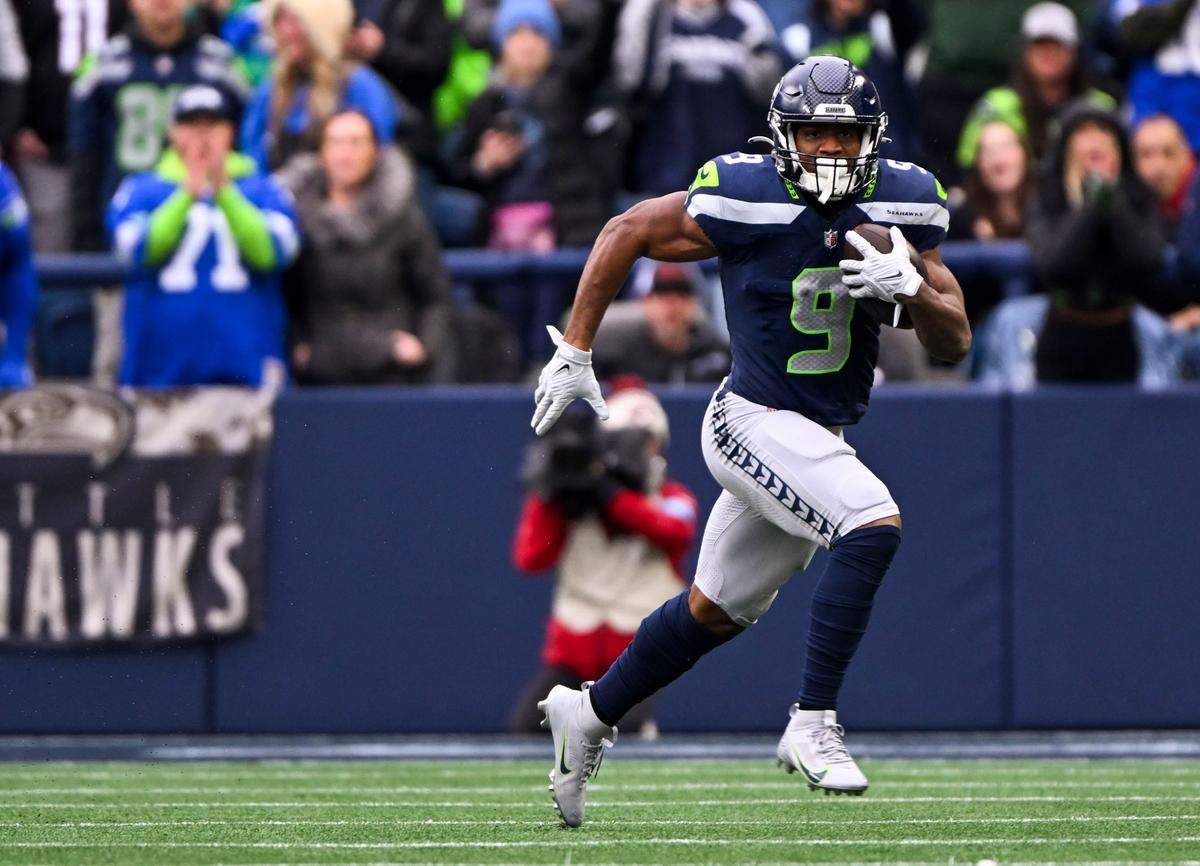
More play-action passing?
A running game would, in theory, help Smith combat and stay upright against the constant blitzing Vikings defensive coordinator Brian Flores sends at quarterbacks.
So would more play-action passes.
That would involve Grubb putting Smith in fewer shotgun formations. It would mean having him under center more. It would mean more fake hand-offs to backs, on what start out looking like running plays.
Smith in the top four in the NFL in passing attempts and third in passing yards. He’s only 20th in play-action pass attempts. Only 10% of his 3,623 total passing yards have come off play-action throws. Just two of his 14 touchdown passes have come off play action. Smith is averaging 7.5 yards per all pass attempts and 6.9 yards per play-action pass try.
Shotgun, with the running back often next to if not in front of the quarterback before the snap, takes away the most convincing run fakes for play-action passing.
Against Green Bay, Grubb had the Seahawks in shotgun formation 47 times out of 53 total plays. It didn’t matter Smith got hurt and Howell entered. They still went shotgun. They still mostly threw the ball.
Last month, Grubb assessed his heavy use of shotgun and whether to perhaps change it.
“This offense, we’re going to play in the gun and be able to throw the football out of that and have runs that we can effectively execute,” the offensive coordinator said. “But ... anything that shows a tendency you have to evaluate.”
Thing is, Smith might need to stay in shotgun to keep from getting obliterated behind Seattle’s porous offensive line.
Shotgun formations, 5 to 7 yards behind the line, give Smith the vision and space to see opposing pass rushers and throw the ball before they get to him. Under center for direct snaps, for Smith to run a play-action pass he must turn away from those charging, often not-blocked defenders to fake the hand-off.
Asked if there is merit to the idea shotgun makes it easier for opposing pass rushers to pin their ears back and go after the quarterback, Grubb said: “I think anytime you’re in shotgun, that would be a fair statement. I think anybody would sense that there’s a possibility or a stronger possibility of you throwing the football.
“I think creating balance in what the defense is seeing both under center and gun (shotgun) is obviously something that can help.”
Macdonald is a student of the analytics approach to football and play calling, on offense and defense. There is data that says an offense doesn’t need an effective running game to have an effective play-action game.
Grubb also knows analytics. He’s also a former offensive line coach. He has said you must run the ball well, to force the defense to honor that part of the offense and to slow down the pass rushers, for a play-action pass game to be most effective.
What does Macdonald believe about running or not running the ball effectively as a must to set up play-action passes?
“I stand on both sides of the argument,” the 37-year-old head coach said. “I think it’s more based on the sets and the protections and the situations that dictate what defenses can do in some of those situations.
“We have a good play-action pass game. Probably should see more of it, frankly.
“To a certain extent, the effectiveness of your run game affects play-action game, especially if you get it really going. But those are good plays.”
This story was originally published December 17, 2024 at 6:04 PM.