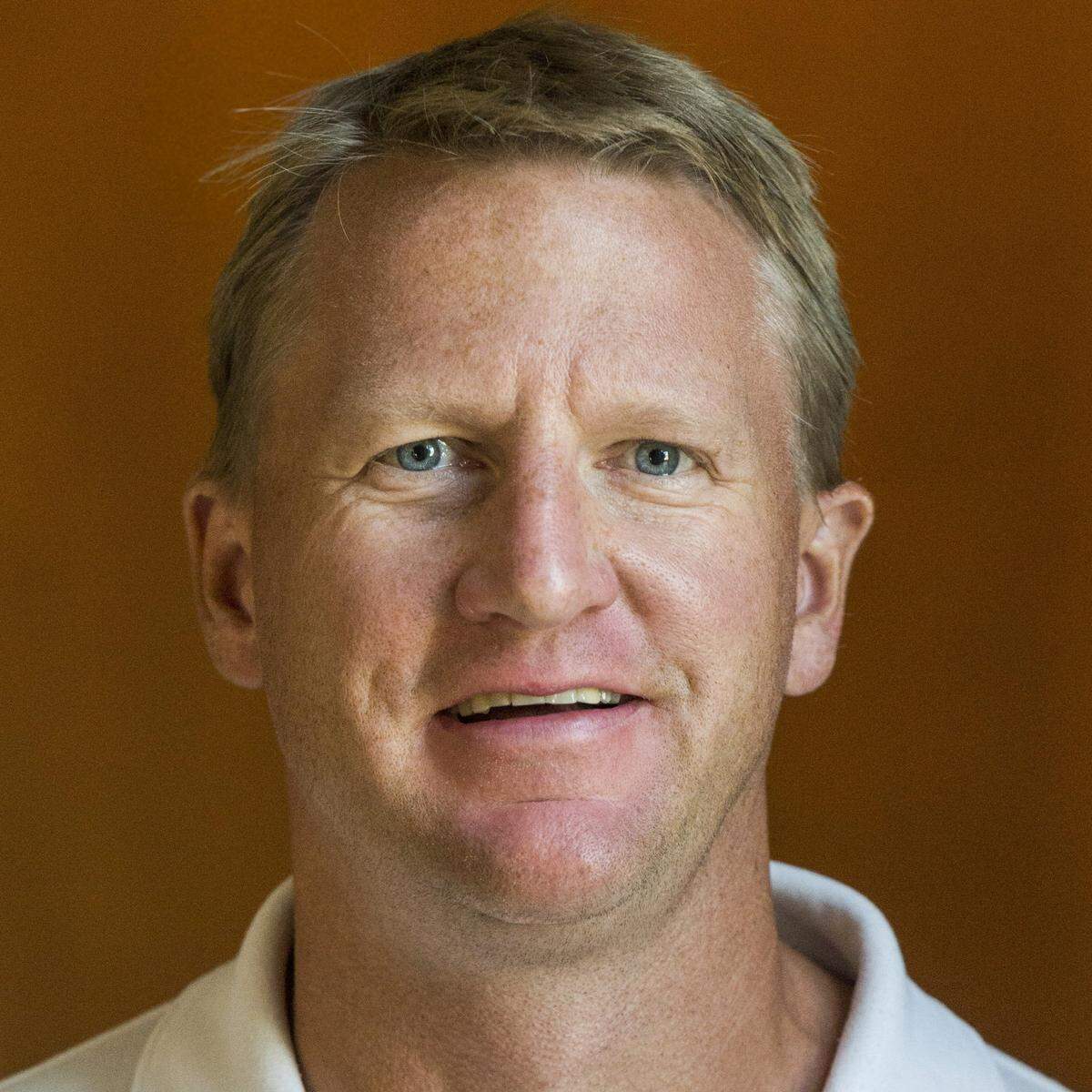
Passing of a legend: Seahawks Hall of Fame safety Kenny Easley dies at age 66
Kenny Easley, the Seahawks legend who as a thumping safety was the 1984 NFL Defensive Player of the Year and a three-time All-Pro immortalized by enshrinement in the Pro Football Hall of Fame, died Friday night.
The Seahawks and the Hall of Fame announced Easley’s passing at the age of 66 Saturday morning. He is survived by his wife Gail Easley and their three children: son Kendrick Easley plus daughters Gabrielle Manhertz and Giordanna Easley.
“Rest in peace to a true legend, Kenny Easley,” the Seahawks posted on their social-media accounts.
‘’Simply one of the best to ever do it,” fellow Hall of Fame safety Ronnie Lott posted on his X/Twitter account Saturday afternoon.
Easley often said the same of Lott, the San Francisco 49ers legend who entered the NFL the same year Easley did.
Easley was the strongest of strong safeties eliminated opponents with smashing hits from 1981-87 for Seattle, until a kidney ailment led to acrimony and an abrupt, premature end to the five-time Pro Bowl selection’s career at age 29. He eventually had a kidney transplant.
In 2017, six months after he had triple-bypass surgery, Easley became the fourth player who spent his entire career with the Seahawks to be voted into the Hall of Fame. He joined Steve Largent, Cortez Kennedy and Walter Jones.
“I will never get this feeling out of my heart,” Easley said in 2017 upon learning of his induction into the Hall of Fame in Houston at that February’s Super Bowl. “I’m enormously grateful for this opportunity. To be reconsidered after 20 years, I’m glad it happened now, because I feel that if it had happened in 1997, I wouldn’t be as grateful as I am right now at age 58 for this to happen. So that means a great deal that it happened to me now.”
Kenny Easley into the Hall of Fame
Easley was inducted into the Pro Football Hall of Fame in Canton, Ohio, on August 5, 2017. It was 20 years after his first nomination. The Hall of Fame’s senior committee chose Easley though he was never a finalist in the 20 years he was eligible to be as modern player, from 1993-2012. “Kenny Easley would have been a dominant safety in any era,” Hall of Fame president and CEO Jim Porter said Saturday in a statement. “When he was enshrined in 2017, he took his rightful place in the Pro Football Hall of Fame and embraced his football immortality. Kenny possessed excellent ball skills, but make no mistake: His biggest strengths were his fearlessness and his intensity. If you had the ball as an opposing offensive player, he was going to hit you hard — and you were going to feel it for a while.”
Easley began his induction speech from the stage at the Hall of Fame in Canton eight years ago by quoting Phillippians 4:6 from the Bible: “Be anxious for nothing. But in everything, by prayer and petition, with thanksgiving, let your requests be known to God.”
“The Hall of Fame was brought onto Kenny Easley like a pair of shoulder pads,” he said that evening in Canton.
“Hall of Famer number 306 is indeed grateful to be among your ranks tonight.”
Easley recognized Seahawks fans.
“To the greatest football fans in the history of the NFL that occupied the old Kingdome back in the ‘70s and the ‘80, and now at Century Link Field — they call themselves ‘The 12s’ — I say, thank you.
“You guys made, and still make, pro football really fun.”
Kenny Easley’s roots
Born Jan. 15, 1959, in Chesapeake, Virginia, Kenneth Mason Easley Jr. starred at that city’s Oscar F. Smith High School, in its graduating class of 1977. He was an all-state and prep All-American quarterback. Easley was the first Virginia high school player to rush for 1,000 plus pass for 1,000 yards in a season. Forty years later he had his high school coach Tommy Rhodes introduce him for his Hall of Fame induction in Canton.
Easley credited Coach Rhodes for instilling in him the belief if he worked hard enough he had the talent to play football at any college he wanted. Word was more than 300 schools recruited Easley.
He chose UCLA. He was first-team All-Pac-10 as a freshman. He became a three-time consensus All-American and the first player in the Pac-10 to be named all-conference four consecutive years. He was in the top 10 in balloting for the Heisman Trophy in 1980. Easley finished his Bruins career with a school-record 19 interceptions and 324 tackles, plus 45 punt returns at more than 10 yards per return. UCLA retired his number 5.
Easley was inducted into the National Football Foundation Hall of Fame and the UCLA Athletic Hall of Fame in 1991. In 2020, Easley was named one of the 150 greatest players in college football’s 150-year history.
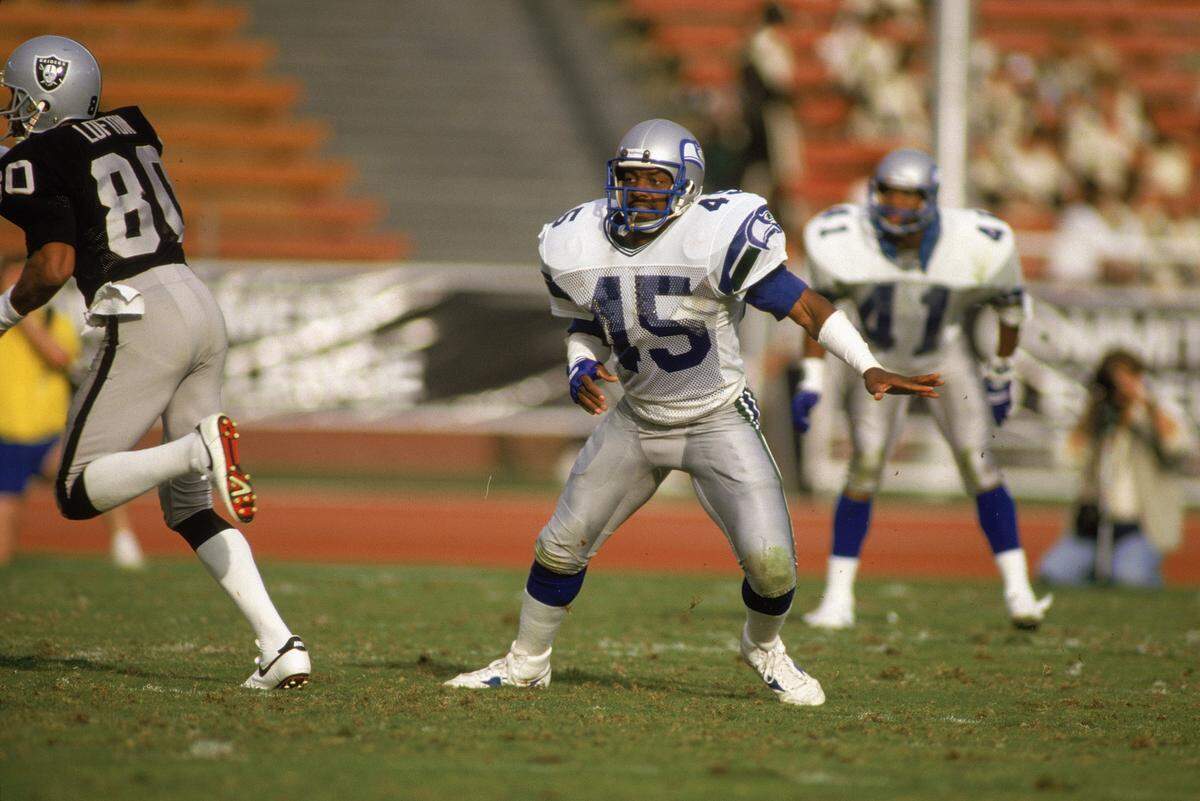
The Seahawks and general manager John Thompson, in his final full year as the franchise’s first GM, selected Easley with the fourth pick of the 1981 draft. He became Seattle’s famed number 45. His shoulder pads were as large as his famous, thudding hits on ball carriers.
He was on the Hall of Fame’s NFL all-decade team for the 1980s.
Yet he became, in his later word, “estranged” from the Seahawks and the sport.
He sued the team for causing his kidney disease. Doctors eventually attributed his disease to the overuse of ibuprofen. The suit was ultimately settled. Easley received his kidney transplant.
He said he didn’t watch a football game for 15 years after he finished playing following the 1987 season.
Easley’s rift with the Seahawks ended in 2002, after owner Paul Allen intervened and basically brought him back in with the team. Allen ensured Easley joined the team’s “Ring of Honor” that year with Largent, Jim Zorn, Dave Brown, broadcaster Pete Gross, Curt Warner, Jacob Green, Dave Krieg, coach Chuck Knox, plus Hall of Famers Cortez Kennedy and Walter Jones.
A team statement Saturday said: “As a man of faith, Kenny will forever be remembered as a beloved member of the Seahawks family and his legacy will live on as inspiration to fans around the world. We extend our sincere condolences to his wife, Gail, and children Kendrick, Gabrielle and Giordanna.”
This story was originally published November 15, 2025 at 12:54 PM.