
Tacoma losing 50+ jobs, restaurants, concert venue, arts and education hub as ALMA closes
Open since 2018, ALMA, the multipurpose arts and community center near downtown Tacoma that also operated two restaurants and, with dozens of partners, hosted events, concerts and educational programs, will close permanently at the end of October. The phased shutdown, announced to the public Aug. 25, is underway, and at the end of it, 48 people will have lost their jobs in addition to a couple dozen regularly contracted workers in security and production.
Executive director Lisa Fruichantie said she was informed on Aug. 15. Staff learned a week later, on Aug. 23.
Although it was run much like a nonprofit, ALMA was a local example of a growing legion of mission-driven, for-profit companies.
Wend Collective, a “social impact fund” with an estimated annual revenue around $15 million run by James Walton, a relative of the founding Walmart family, was the primary benefactor behind ALMA, funding the salaries of its leadership team and programming efforts. The foundation, a private entity that supports an undefined number of organizations across the country, also owns the property of 1322 Fawcett Ave., complicating the ramifications of the sudden closure.
Exactly why Wend Collective is pulling the plug has not been divulged.
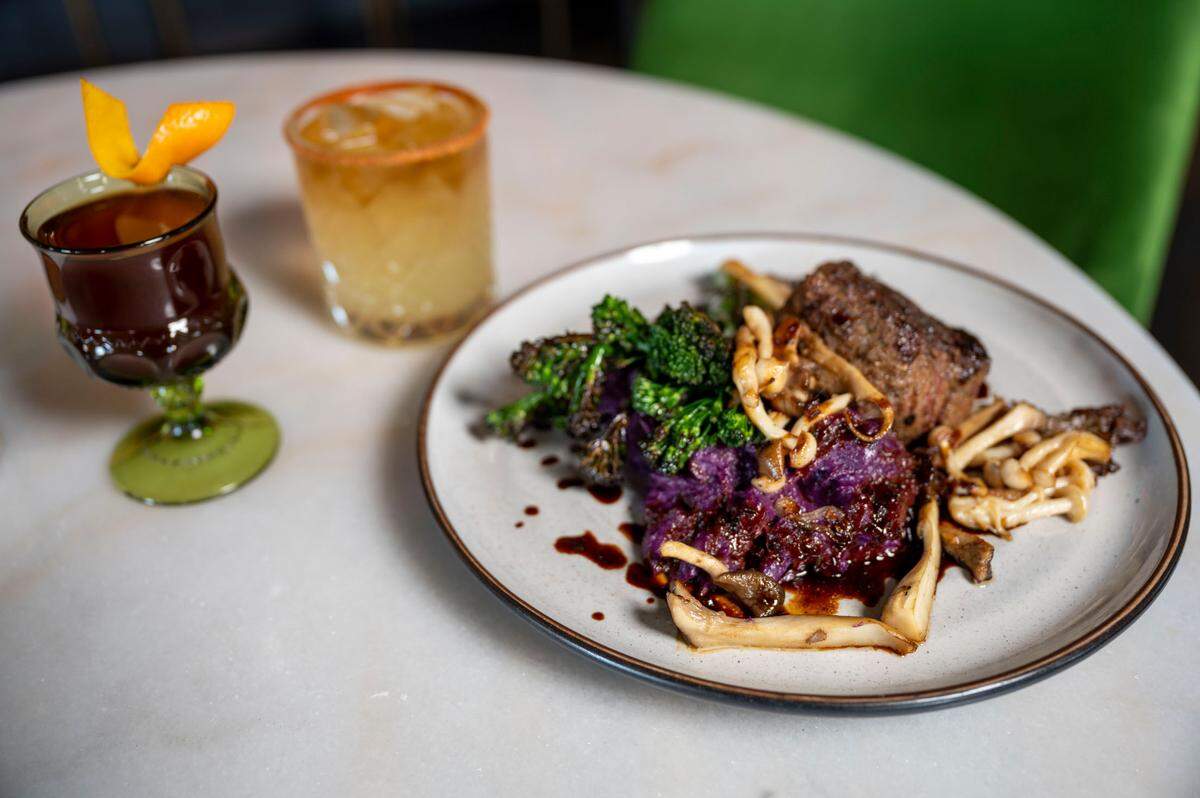
The Lounge, the cocktail bar on the ground floor that, in 2022, shifted its food menu to one inspired by indigenous ingredients like bison and boar, has shuttered. The outdoor restaurant known as ALMA Patio and the connected Cafe will serve breakfast, lunch and coffee through Oct. 1.
Previously scheduled shows at both the 500-seat Venue and more intimate Rooftop, as well as a number of private events, will conclude on Saturday, Oct. 28.
Pressed for details on the decision to cut funding, Masharika Maddison, a resource council strategist at Wend Collective, referred The News Tribune to the statement posted to ALMA’s website.
Opened under the name Alma Mater in 2018, the Tacoma project “began as an experiment with the intention of making great art accessible and a venue for great artists because we believed culture is critical to building successful communities,” the statement reads. “It’s been an honor to be your neighbor, to serve our customers, and to partner with others in the community to make us all better. Together, we’ve experienced hundreds of shows, thousands of meals, and countless hours with friends over coffee or a drink.”
The News Tribune reached out to multiple current and former employees for this story, but none would speak on the record due to contracts that deterred them from talking to media.
Fruichantie and the leaders of organizations that used the space over its five years in Tacoma said the messaging diminished ALMA’s less visible impact.
CONNECTING ARTISTS
What’s more is the unexpected loss of accessible space for ALMA’s partners — 150 of them, according to Fruichantie, who served as executive director from 2020 until Aug. 29. Before joining the leadership team, she worked as a special events and community liaison for the organization, and prior to that managed several events as a test run in 2016, before the building’s multi-million-dollar renovation.
“I made 200 phone calls in three days,” she said, in an effort to ensure that everyone relying on ALMA for their next event knew it was over.
Joshua Okrent, who created the all-ages Punk Rock Flea Market in 2006, was one of many on the other end of that line. In late August, he and a band of mostly volunteers were gearing up for their Labor Day weekend event. The fourth installment at ALMA (and second this year) would happen, he was told, but then they needed to find a new home.
“It’s so obvious that there’s this vibrant art scene in Tacoma,” Okrent said in a phone call with The News Tribune, noting that more than 5,000 people attended the May market and nearly 10,000 in September — numbers they weren’t expecting. “It was massive, and it was only growing.”
He and the ALMA team worked together to close off Fawcett Avenue for a stage. Hundreds of people came just to see the bands. Vendors sell everything from sneakers to vinyl, custom art to food.
“What was obvious is that there was a desire — there really needed to be an event space in Tacoma to do these kinds of large, alternative events, and ALMA had a vision,” he said. “They killed it for us. They helped with PR, security, expenses. They just made it work.”
The space itself had “a level of polish” that was unusual for the Punk Rock Flea Market, which typically takes over old warehouses and vacant storefronts in the Seattle area, but ALMA’s staff was of the same ilk, “DIY folks that are like, ‘Let’s put on a show,’” said Okrent, adding that they paid for the rental but appreciated the “great terms.”
Paige Pettibon, co-creator of the Native Art Market, said her event was made possible by the flexibility ALMA provided, as upstart artists often struggle finding avenues to show their work and cover vendor fees. The first one took place in the relatively small lobby but grew to the concert hall.
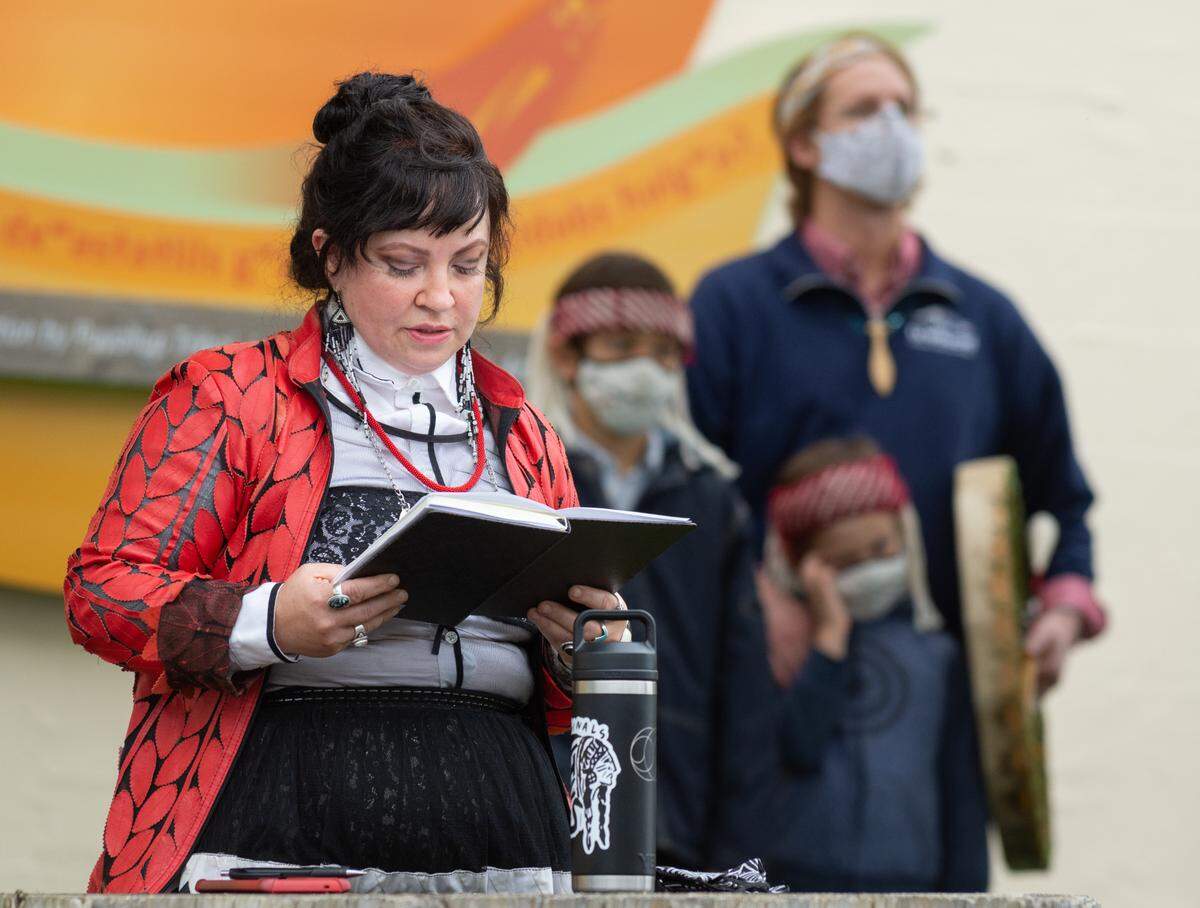
“I remember when I was first starting out how broke I was,” said the lifelong Tacoman, who was commissioned to create the mural for ALMA’s land acknowledgement in 2021. “It’s stressful. You don’t know if you’re going to break even … ALMA was able to give us the opportunity to have our own economy — vendors got to keep all their money.”
A holiday Native Art Market was scheduled for December. Pettibon and co-planner Amanda Chavira are now searching for another option.
AN EDUCATIONAL RESOURCE
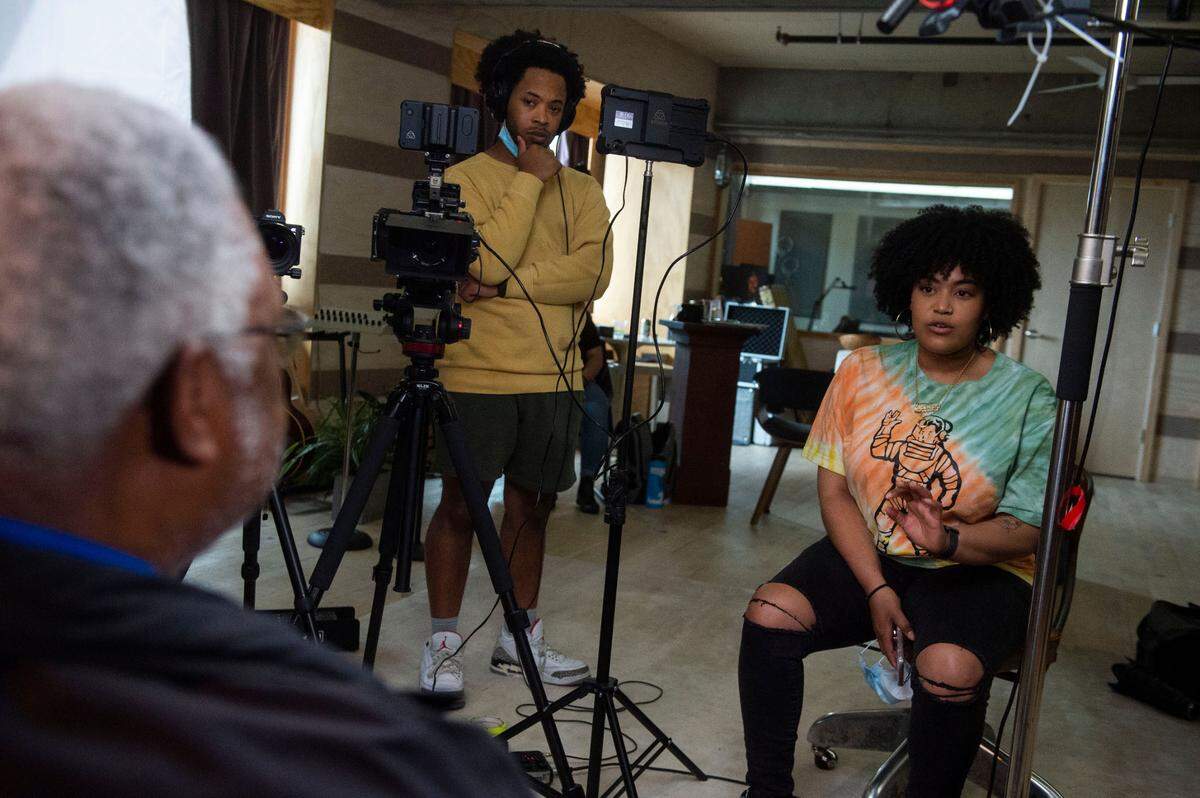
More behind the scenes, local entities ranging from Tacoma Public Schools to Tacoma Farmers Market had access to amenities within ALMA like classroom space, a recording studio and a commissary kitchen.
Through Elements of Education, Tacoma’s three partner schools — School of the Arts, Science and Math Institute and School of Industrial Design, Engineering and Art — partnered with ALMA for several years.
Co-director Zach Varnell said students performed and interned there, working with staff in sound, lighting and production. The schools occasionally rented space for staff parties and family meetings, including one that happened in May. This fall, a SOTA adjunct instructor was slated to use the recording studio for a class, which they negotiated to continue through winter break.
“We were sad to hear that they were transitioning out of having a public space,” Varnell told The News Tribune in a phone call, nodding also to its convenient downtown location. “We’d love to see it stay in the community and continue to offer a place for families to meet, and for kids to have access to live music and music programming, and to build skills around music production.”
Other groups, including The Bridge Music Project, a Thurston County nonprofit that engages youth in self-expression, and Tempo, which provided studio space to local artists for live performances, will also lose an important outlet.
“It’s become not just a resource but a treasure,” said Fruichantie. “I feel really proud of all the work that we did.”
ALMA furloughed much of its staff at the onset of the pandemic. Some employees stayed on to support programs like HelpKitchen, a free, no-questions-asked meal program and a partnership to cook for residents of the nearby Beacon Youth Shelter.
Around that time, Fruichantie took over as executive director for Jason Heminger, who co-founded Alma Mater with Rachel Ervin and Aaron Spiro, both well-traveled in Tacoma’s creative scene. In 2022, it was rebranded as ALMA, an effort to unify the various subsets of the organization and refocus its mission.
ALMA’S CLOSING WAS SUDDEN
The unceremonious end for the 22,000 square feet of restaurant, entertainment and educational space as well as a sizable courtyard — all restored from the building’s mid-century roots as the Carpenters Union — felt unexpected to many of those involved and who had visited for one reason or another over its five-and-a-half years in Tacoma.
Wend recently approved the hiring of an executive assistant, who started just 60 days prior to the announcement, a turn of events that “shows me that one else saw this coming,” said Fruichantie.
A 65-word statement appeared on ALMA’s social media pages around 7 p.m. on Friday, Aug. 25.
“ALMA began as an experiment to help build community through culture and it has done just that. It’s been an honor to be a neighbor, serve our customers, and to partner with others in the community,” it read in part. “Details about the wind down will be available on our website.”
Commenting on the Instagram and Facebook posts was turned off.
According to its own definition, provided to The News Tribune, ALMA — at least in its new incarnation — considered itself “a new kind of business for a new economy” that would “use the economic muscle and privilege of a for-profit business to support local food justice, social justice, and advocacy efforts.”
Fruichantie regretted the swiftness with which Wend, her employer, had cut the cord.
“The foundation that I worked for has made a strategic shift and ALMA would no longer be funded as a result of that decision,” she said, adding that the lack of cash meant her role at Wend was no longer needed. “Without that funding support and due to the ownership of the building, ALMA cannot function.”
The Tacoma project was not alone in Wend’s “strategic shift,” she said.
CAN ALMA, OR WHAT IT STOOD FOR, BE SAVED?
The plan was, theoretically, for ALMA to shed its reliance on Wend’s pocketbook, said Fruichantie. According to her, April was its best month ever, and the food and beverage side of things was self-sustaining.
As a renter, noted Okrent, Wend was like a ghost.
“They were just this haunt of a bank account in the background somewhere,” he said. “But they did intentionally go about creating a community, whatever motives they may have had in the background. Be you a benefactor, a parent or a partner, you have some responsibility there. They’re screwing people over.”
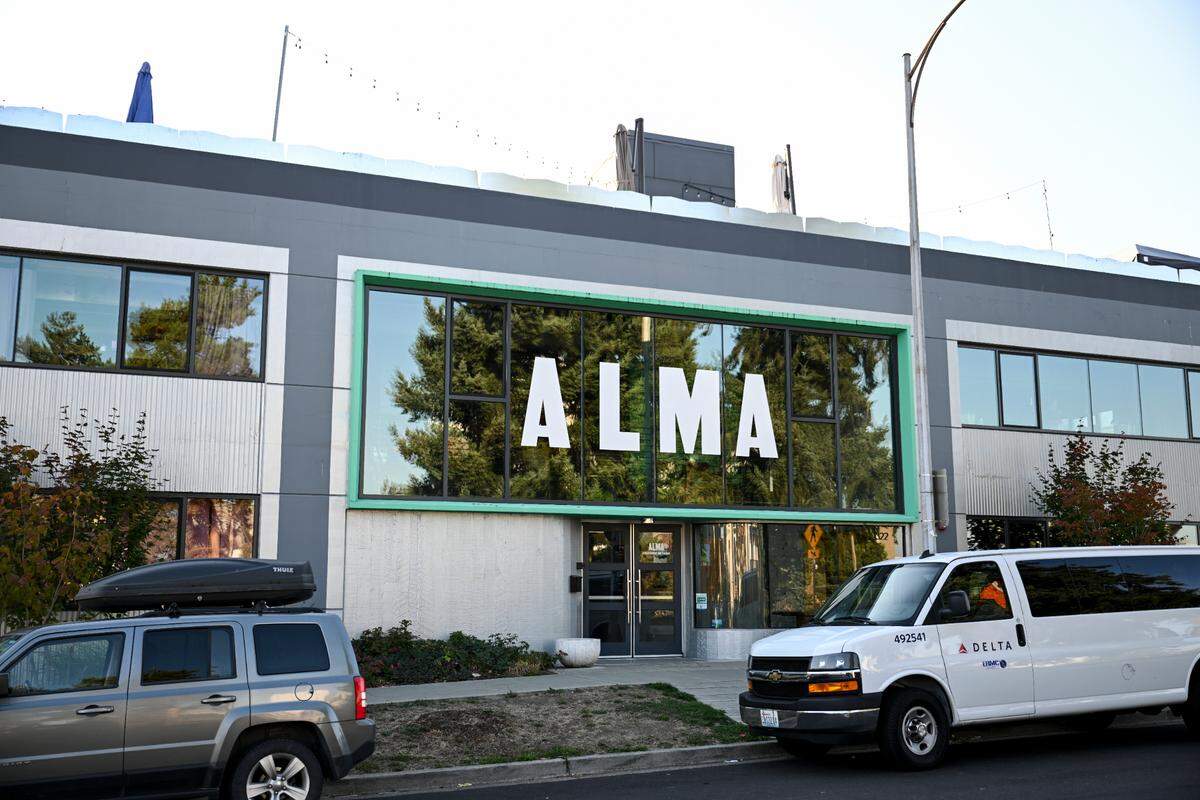
The question remains: What will happen to the building, designed for a specific purpose, and property at 1322 Fawcett Ave., around which thousands of new apartment units, a freshly paved street and a bike lane have gone up since 2018?
Fruichantie said she believes the “intent is to keep it in the community,” but it’s unclear exactly what that means. The building — valued at $3.28 million by the county assessor — is not currently for sale.
An ideal scenario, in Fruichantie’s eyes, would involve a local investor, the city, the school district or some combination of the above that is willing to allow some of what ALMA provided to live on: namely, space for “youth, urban native and BIPOC communities” to work, gather and share their art, as well as a place for education and new business development.
For Pettibon and her peers, spaces like ALMA are few and far between.
“It’s a shame,” she said. “In Tacoma, we talk a lot about wanting to have an arts scene, but there’s always something that holds it back from growing, and I don’t know what that is. I know a lot of it is money! There was a lot of potential for it to grow.”
ALMA TACOMA
▪ 1322 Fawcett Ave., Tacoma, almatacoma.com
▪ ALMA Cafe and Patio: Wednesday-Sunday, 9 a.m.-4 p.m., closing after service Oct. 1
▪ ALMA Venue: Shows run through Oct. 28; check calendar for details and tickets
This story was originally published September 25, 2023 at 5:00 AM.