Deer eyeing your garden? Here are 10 plants they don’t like to eat
Spring officially begins Sunday and brings with it blooming gardens and flowers, but some visitors see blooms and new growth as food.
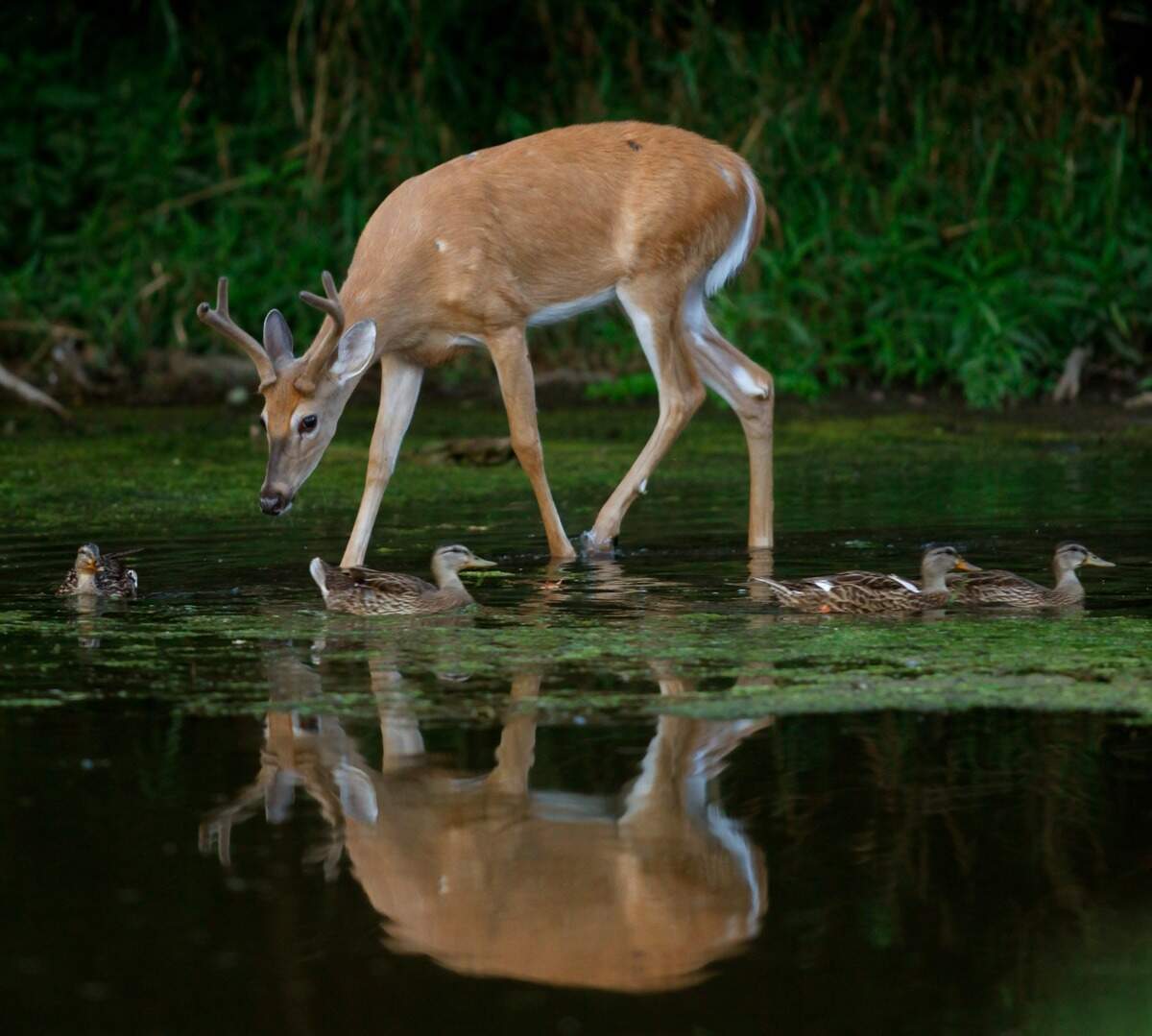
According to the King County Native Plant Guide, the only deer-proof plants are those deer can’t reach, or have yet to find. Deer are grazers and love to snack on new plants and typically munch on clovers and perennials.
The Washington Department of Fish and Wildlife suggests fencing around your favorite, most prized plants as the best way to deter the uninvited dinner guests, as “when deer browsing is moderate to severe, or a landowner isn’t willing to tolerate even a limited amount of damage, fencing to exclude deer is the only option,” the department’s website states.
The King County Native Plant Guide also suggests a few plants that are less preferred by deer.
Here are 10 plants to plant in your garden this spring that deer are less likely to eat:
Mock orange
Mock oranges are deciduous shrubs that bloom white flowers. The plant is known for its fragrance and being able to grow in hot or cold, or moist and dry climates.
Bald hip roses
Bald hip roses are deciduous shrubs that bloom pink flowers and small red fruits or hips. These plants can handle a wide range of climates, and have prickles on them, deterring animals such as deer.
Woodland or wild strawberry
Woodland and wild strawberries are both perennial ground-cover plants, only growing about a foot tall at most and blooming white flowers and strawberry fruits. They both require dry to moist climates and partial shade. Deer tend to find these when they’re blooming so that might be the time to fence the plants.
Tall or low Oregon grape
Both tall and low Oregon grape plants are both evergreen shrubs but vary in height and leaflets. Tall Oregon grapes are typically eight feet tall, as low Oregon grapes are three feet tall. Both plants bloom bright yellow flowers and purple fruits.
Pacific wax myrtle
Pacific wax myrtle plants are evergreen shrubs and are native to the southwest Washington coast. The shrub can grow up to about 15 feet and has small fruits birds commonly eat.
Sword fern
Sword ferns are evergreen ground-cover plants and are well known in the Pacific Northwest. The plants can adapt to moist or dry shaded climates and are typically walked over and forgotten by deer.
Devil’s club
Devil’s clubs are deciduous shrubs and are covered in thorns, deterring deer and other wildlife. The plant blooms with large leaves, white flowers and red berries in clusters. The plant does best in a moist to dry climate and with a mix of sun and shade.
Black gooseberry
Black gooseberry plants are deciduous shrubs known for their fruits, although this berry variety is better for wildlife to eat. The plant has thorns to deter some animals, but has flowers that attract hummingbirds. Black gooseberry plants grow best when near water, but can also survive in dry conditions with shade.
Red-flowering currant
Red-flowering currants are also deciduous shrubs and bloom cascading red flowers in the spring. The plant attracts hummingbirds and grows up to six feet tall in rocky soil and sunny locations.
Juneberry
Juneberry plants are also known as serviceberries and are deciduous shrubs. The plant is well known for its beauty year-round, as spring brings white flowers, summer brings berries and fall brings golden leaves. The plant grows up to 20 feet tall and is easy to grow in most climates in the Pacific Northwest.
More info
For a longer list of trees, shrubs, perennials, annuals, ground-covers and vines, Sunnyside Nursery, a Washington plant nursery, has compiled a list of deer-resistant plants for the Pacific Northwest.
Sunnyside Nursery is located at 3915 Sunnyside Blvd., Marysville, and is open 9 a.m.-5 p.m. Monday-Saturday and 10 a.m. to 5 p.m. Sunday.