
Tips for adding color to your spring garden with blooming shrubs
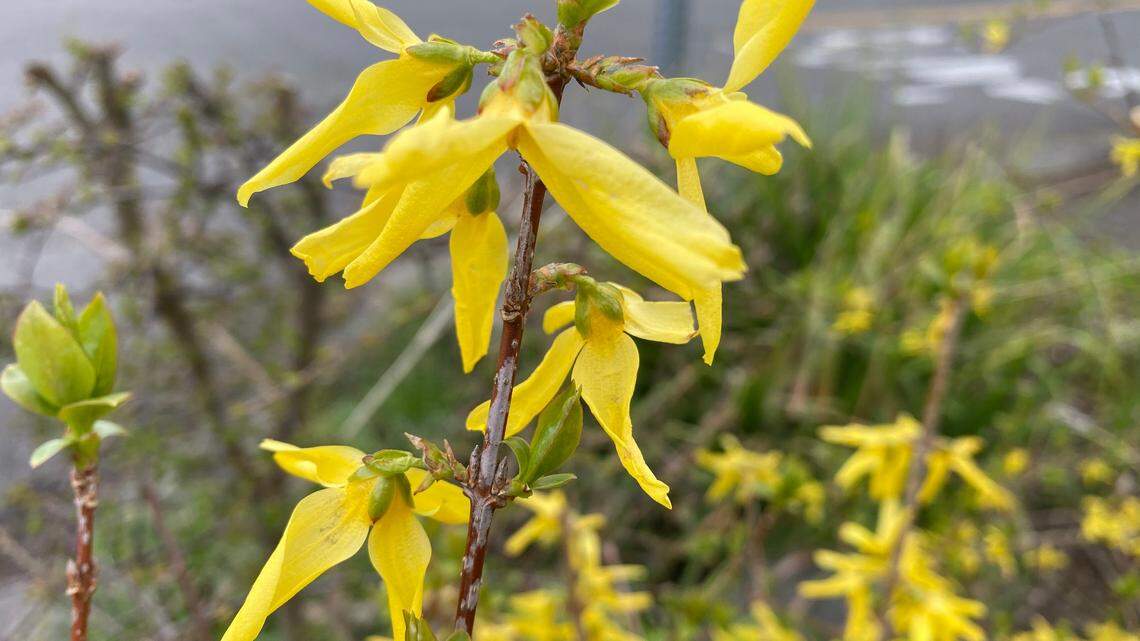
The end of March is the time to celebrate spring flowering shrubs.
Western Washington is known for our rhododendrons and azaleas, but there are forsythia, quince, viburnum and a host of other flowering and often fragrant shrubs.
If you think you don’t have room to add another shrub to your landscape, look at it with some judgmental glasses. Most mature landscapes have a few overgrown shrubs that once removed allow more light and space into the garden. Consider taking out the evergreen and ever-boring junipers, yews or overgrown rhododendrons and replacing them with a new and improved hydrangea, a dwarf lilac or a fragrant daphne. This is a great time of year to add new shrubs to the garden.
Q. Are there rhododendrons that do not grow so huge? I do like the flowers in the spring and I want shrubs that stay green all winter, but please tell me there are dwarf rhododendrons. — C.D., Email
A. There are dwarf rhododendrons. The easy answer is to visit the nursery now, head to the rhododendron section and look for varieties with small leaves. Compact rhododendrons include Ginny Gee, the Yak varieties and those with the small gray leaves called Impeditum with names like Blue Diamond and Sapphire.
Keep in mind that rhododendrons, like all shrubs, keep growing, so over time even the most compact varieties can be expected to grow to 4 feet to 5 feet tall and as wide.
Q. We have mostly shade in our backyard with some very tall evergreen trees. I think they are cedars. Are there some smaller trees we can add that don’t need a lot of sun? Something with color would be nice. — T.R., Bonney Lake
A. If you are looking for compatible companions for our native cedar and fir trees, center your sights on the many types of Japanese maples. This shade-tolerant tree comes in varieties with golden foliage and red leaves, and the Coral bark maple adds winter color with brilliant orange bark.
Trees that will bloom with at least half a day of sun include katsura tree, sourwood, dogwood and Stewartia.
Q. I think some of my plants are dead from the winter freeze. My hardy fuchsia is all brown with no signs of life. Some perennials also have not shown signs of new growth. When will I know for sure what is alive? — P., Email
A. Patience. Hardy fuchsias damaged by the cold may not sprout new growth until June. Some shrubs such as Rose of Sharon won’t grow leaves until late May and perennials that hate the cold may hide underground until all danger of frost is passed.
But no use worrying over a plant that gives up and fails to return. Every dead plant is not only a composting opportunity but also an empty spot for a new plant. The more plants you try to grow, the more you know about what grows best in your garden.
Marianne Binetti has a degree in horticulture from Washington State University and is the author of several books. Reach her at binettigarden.com.
This story was originally published March 26, 2022 at 5:00 AM with the headline "Tips for adding color to your spring garden with blooming shrubs."