
Let’s give thanks for a Western Washington climate that will grow so many types of plants
The third week of November is the time for gardeners to take stock of all that we have to be thankful for here in Western Washington.
Let us give thanks for our mild summers and winters that allow us to grow so many different types of plants.
Only Great Britain rivals the variety of plant material in our home gardens. Here are just a few of the plants that we may take for granted, but are considered difficult to grow in most of the world:
Japanese maples
The sun is too hot, the air is too humid or the winters are too cold in many parts of the world for these graceful trees with their small leaves and variety of colors. Local nurseries stock the grafted Japanese maples that only grow out, not up so we can grow Japanese maples in containers or small spaces.
There are Japanese maples with coral bark, peeling bark and dark bark. Japanese maples with golden leaves, green leaves and deep red leaves. When the leaves drop in the autumn, you don’t even have to run out and rake them off the grass. They dry up and blow away. Such a well-behaved tree — every garden should have one.
Heucheras
These colorful-foliage perennials are related to our native coral bells and not only thrive in our climate but, unlike in Ireland and England, they are not destroyed by insects that live in our native soil.
Heucheras are mostly evergreen and slug resistant, but the nicest part is how easy they are to divide and multiply. After a year, as the stems grow longer, simply snap off the stem at ground level, remove the old lower leaves and poke the now bare stem into the ground. Not only will you have a new plant from the cutting, but the old roots left in the ground will resprout fresh foliage as well.
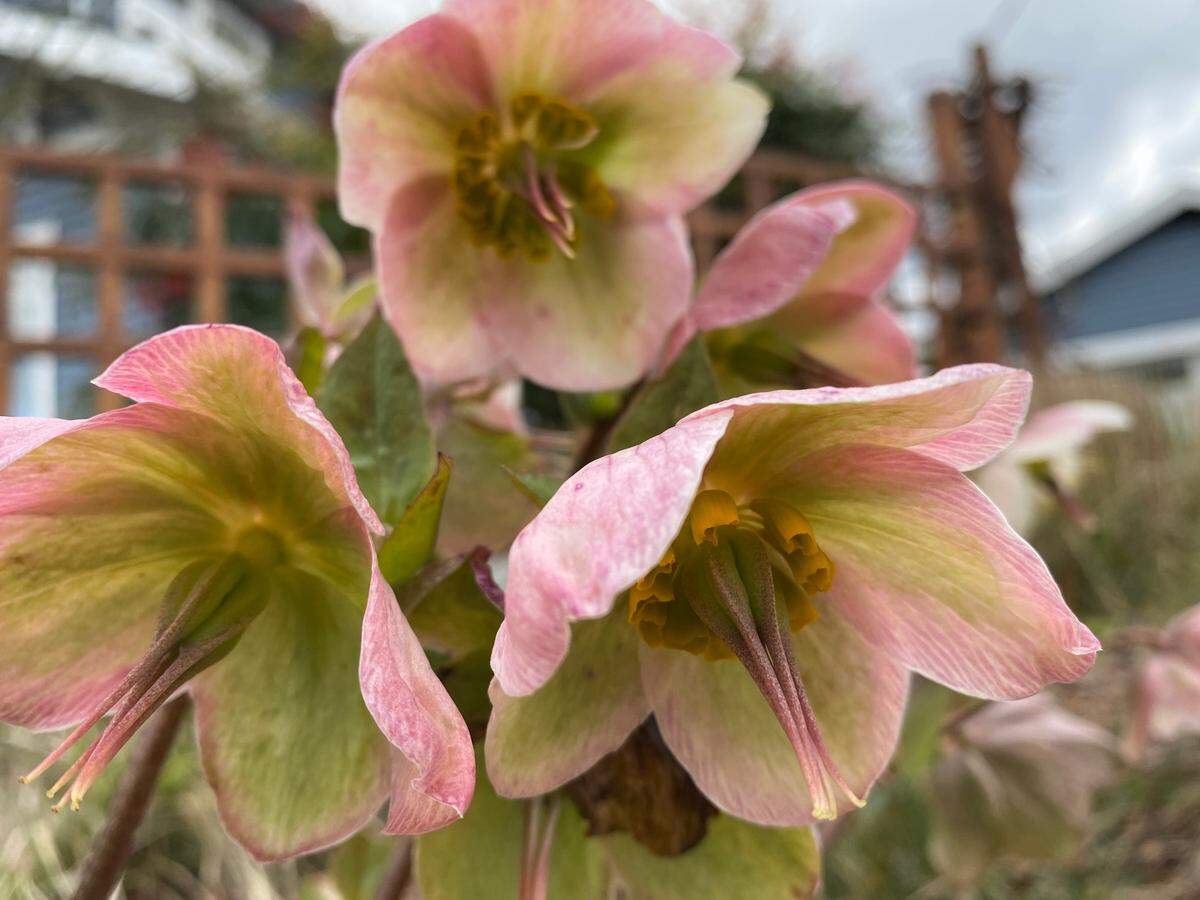
Hellebores
A beautiful collection of hellebores called “The Gold Collection” are grown right here in Western Washington so we get to buy these winter-blooming perennials for a fraction of the price that the rest of the world pays for them. New hellebore varieties with double, rose-like blooms, yellow blooms, flowers that point upward rather than downward and even gray-blue silver flowers can be found at local nurseries.
Hellebores are deer-, slug- and drought-resistant and bloom in the shade and part shade. Just don’t try to divide them up or move them around. Hellebores like to stay in one spot and their thick flesh roots are brittle and hate to be disturbed.
Marianne Binetti has a degree in horticulture from Washington State University and is the author of several books. Reach her at binettigarden.com.
This story was originally published November 18, 2023 at 5:00 AM with the headline "Let’s give thanks for a Western Washington climate that will grow so many types of plants."