We asked homeless folks in Tacoma what can be done to end crisis. Here’s what they said
READ MORE
Homelessness crisis in Tacoma
Four years after the city of Tacoma declared a public health emergency related to homelessness, it is still a reality for a growing number of people in Tacoma. What is being done and what can be done?
Expand All
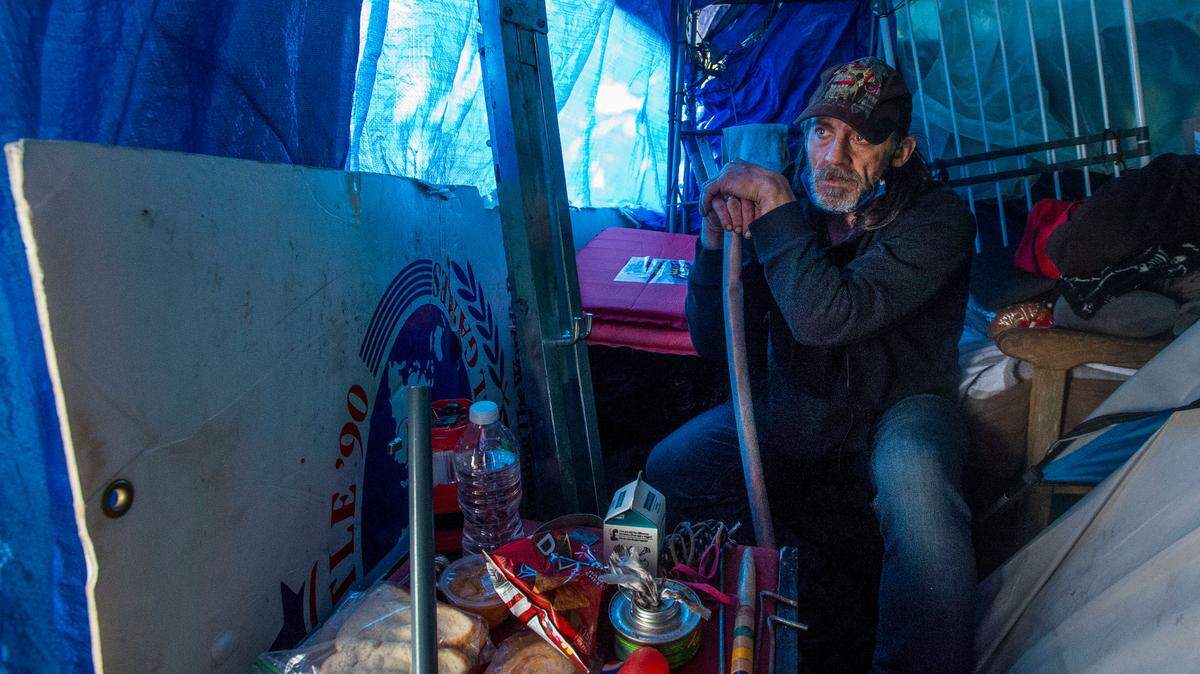

Dylan Heatherly doesn’t remember seeing so many tents on the streets of Tacoma in 2017.
At the time, he didn’t pay much attention to the issue of homelessness.
“To be honest with you, I didn’t realize the homeless problem was as large and widespread as it was — as it is,” Heatherly told The News Tribune one blustery May day as he stood among tents at 8th and Yakima.
It wasn’t until Heatherly became homeless himself in 2019, following what he called a family feud that left him out of the house he was staying in, that he became aware of the extent of the issue.
Heatherly, 32, is staying at the 8th and Yakima encampment, which has been the subject of complaints by some Tacoma residents and a known site in need of services.
The encampment is also a glaring reminder of the fact that the city of Tacoma is still grappling with a homelessness crisis, despite declaring a public emergency in 2017 and spending millions of dollars on a three-phase approach to address the issue.
The number of people without homes in Tacoma has increased from 6,664 people in 2017 to 10,858 in 2020, according to data from the Pierce County Homeless Management Information System (HMIS). The HMIS counts everyone that touched the system, whether they experienced homelessness for one day or one year.
Pierce County’s annual Point in Time Count, which counts the number of people experiencing homelessness on one day in January, recorded 1,321 people experiencing homelessness in Pierce County in 2017, with 313 people saying their last residence was in Tacoma. In 2020, the count recorded 1,897 people, with 544 people as having their last residence in Tacoma.
As the city works to establish more shelter and housing options, those who navigate Tacoma’s homelessness systems say there are positives and negatives, but generally agree there needs to be more help.
‘You’re never going to starve’
Parker Wilson, 29, found himself learning the shelter system after becoming homeless in 2019. Wilson started doing heroin in college and dropped out after about a year after the drug took over his life, financially and otherwise.
“The first thing was learning the shelter system and where to get food, the food banks ... Tacoma, it’s a good city for that — there’s lots of things available, so you’re never going to starve,” Wilson said.
Wilson said he had to learn where the safe places are to sleep outside if he didn’t manage to find a place at a shelter. Right now Wilson is staying at the Nativity House and just started working at Valeo Vocation through the HIRE program.
“Now it’s just a matter of getting my ID and my Social Security card and everything else in place and slowly building my life back,” he said.
Wilson said he thinks there should be more of an effort to connect people to housing and shelter.
“I’ve only seen that a handful of times when they actually do go out and offer housing to the homeless people. Yes, it’s available if you have, you know, access to the internet — which a lot of people don’t have access,” he said.
Heatherly said he hasn’t spoken to city outreach himself but said basic necessities are important, including places to shower and store his belongings, which he said is one of his biggest barriers to getting a job.
“I can’t even think about going and getting your job right now, because if I leave my camp for any extended period of time, I can basically expect my things to be gone,” he said.
John Simond, who lives out of his van in Tacoma, echoed the need for places to shower, use the restroom and store items. Simond found himself homeless in 2017 after being forced out of his Lakewood apartment.
“I found a note on my door. Basically, it was a note requesting me to leave the premises so the manager can remodel the building,” Simond said.
Simond, who said he is on the autism spectrum and was paying for his apartment in part with Social Security Disability Insurance, said he panicked when he was kicked out but was able to contact his case managers and get connected to services.
Simond said he loves staying in his van and wants to continue to live in it.
“Not everybody wants an apartment,” he said.
Simond said that there are too many rules at the Tacoma shelters — for example, there’s a curfew, and a lot of people want to go outside to smoke at night and can’t.
“Some of us homeless people have pets, because we’re so lonely and we want companionship,” Simond said. “So we pick up a dog, a cat, what have you — and a lot of places you can’t have pets, or there’s a $450, $500 deposit for it.”
When asked what they think of a low-barrier shelter site, Heatherly and Wilson said they think many people would take up the offer. Typically, “low-barrier” shelters provide people a bed despite sobriety, criminal backgrounds or lack of identification.
But there will still be people who won’t go, Wilson said.
“Even then, there’s gonna be a small fraction that will still, you know — it’s so against their core that they’ll never be okay with it,” he said.
Tacoma is still searching for a potential low-barrier shelter location. The city considered a property a 69th and Proctor in south Tacoma, but recently decided to move a tiny home village there instead.
Ashley Hatley was able to successfully navigate the system in Tacoma and eventually found housing, but it wasn’t easy, she said.
Hatley left her home to escape a domestic violence situation last year and spent months bouncing from couch to couch with her 10-year-old daughter. She eventually called 211, a number that connects callers to health and human services in their community at no cost. She said the line was constantly busy.
She kept trying and eventually got through to someone, who connected her with Catholic Community Services, and was enrolled in its diversion program.
“If it wasn’t for CCS, I would have never went to therapy with my daughter, we would have never gotten the help we needed for PTSD. We would have never had the confidence or the idea to relocate, she said.
Hatley now lives in New Jersey with her husband and daughter. Tacoma is a “black hole” in her past, she said, and she doesn’t plan to go back. But she does hope there can be an easier way to connect people with the resources that helped her.
“I didn’t know about CCS. I didn’t know about the Korean Women’s Foundation. I didn’t know about the YWCA women’s shelter,” Hatley said. “I grew up in Tacoma my entire life, and I didn’t know some of these places even existed.
“If I would have known that they existed while I was living on my family’s couches, I would have called them so much faster.”
A ‘reactive’ response
Advocates and service providers say that in the past four years, there have been positive changes to address homelessness in Tacoma.
“More people were served last year, and then this year, there’s more shelter beds now than there were two years ago,” said Gerrit Nyland, a member of the Tacoma-Pierce County Coalition to End Homelessness. “And that helps benefit people.”
At the same time, the response has been largely reactionary, rather than proactive, he said.
“Tacoma doesn’t seem to solve the problem how I would, which is to understand the full scope, the size of the homeless population, the flow into it, the flow out of it, assess what the actual needs are, and then attempt to get the resources to meet those needs,” Nyland said. “The emergency wasn’t homelessness in Tacoma. The emergency could better be described as, you know, very unsafe encampments that needed a response.”
Nyland said he feels the city needs answers to specific questions if it wants to tackle the problem, including a more clear answer to how many people are homeless in Tacoma, how many shelter beds are needed, how many Rapid Rehousing interventions (placing people into housing as soon as possible) are needed, and how many permanent supportive housing beds are needed.
“I keep comparing it to our 911 response system: How does the city know how many paramedics to have? And how many fire trucks to have and where to put the fire stations? They don’t just guess. They do detailed analysis of the number of calls and how far away you have to be,” Nyland said.
Colin DeForrest was the city of Tacoma’s homeless services manager in 2017, when the emergency declaration was made. He now works as an independent homeless services consultant in the area.
“Now, I think reflecting four years later, we’re still in an emergency declaration as a city,” said DeForrest in an interview in April. “And it’s kind of not surprising that we’re sitting out on Yakima Avenue with a stack of tents around the block, very similar to what it looked like in 2017, when we made the declaration.”
DeForrest said what he sees as worsening conditions can’t be pinned entirely on the city.
“This is something across our region, across the country. Nearly every city is challenged with the same problem — an increasing number of individuals experiencing homelessness, increasing visible street homelessness, and basically just not having a place for this population of visible homelessness to go,” he said.
DeForrest added that one of the things that needs to happen now is the creation of “safe sites for all,” or a wide array of types of shelter, especially low-barrier, low-costs options, like safe parking and sanctioned encampments.
“I’m very optimistic. But I’m kind of through here with the words and the mottos and the slogans — let’s just see some action,” DeForrest said. “It’s real simple. It starts with parcels, with property, with places to either put tiny houses, places to put tents, places to put other types of shelter alternatives.”
One thing that brings advocates hope is the newly-formed Pierce County Ad Hoc Committee to End Homelessness, a 10-member committee created by the county to put together a short-term plan to end street homelessness by Nov 1. and a long-term “comprehensive” plan to address policy and funding. Those plans are currently in the works.
Advocates and city leaders have long urged a county-wide response to homelessness. The new committee includes representatives from Tacoma, Puyallup and Lakewood.
The city of Tacoma is also embarking on a five-year strategy that staff say moves beyond a reaction to street homelessness. The new plan builds off the city’s existing work but will take a closer look at racial disparities in homelessness, amplify community partnerships and its Affordable Housing Action Strategy, and identify the needs of specific populations struggling to find housing.
The details are still in the works, with plans to conduct outreach with residents, people experiencing homelessness and advocates in the coming months.
The five-year plan will align with Pierce County’s work to end homelessness, which the city is participating in, staff say.
Working with multiple municipalities is going to help, said Kevin Glackin-Coley, director of special projects for the Tacoma-Pierce County Homeless Coalition.
“The solutions that you need on the Key Peninsula are different than the solutions you need in Tacoma — or at least the scale of them is,” he said.
Maureen Howard started working with people experiencing homelessness and advocating for them in 1982. Howard is now one of the leaders of the homeless coalition. In that time, leadership to address homelessness and the willingness to spend money on the problem has improved. Lack of funding and ignorance, she said, are no longer excises for not taking action.
“We know we’ll have more money than we’ve ever had. We know more than we ever knew,” Howard said. “We have providers who are willing to work together. We have a City Council and a County Council who want solutions — and God knows we’ve got a community that is desperate for solutions.”
This story was originally published June 11, 2021 at 5:10 AM.