Two warehouse projects proposed for Tacoma area face challenges: trees and neighbors
A Chicago-based industrial park developer with an office in Bellevue is touting two future warehouse/distribution projects in the Tacoma area.
Bridge Industrial, which recently has been gobbling up land in the South Sound region, earlier this month announced the purchase of properties for Bridge Point Tacoma 125, near the Interstate 5-state Route 512 interchange, and Bridge Point Tacoma 210, a few miles east.
The industrial sites aim to start construction in the second quarter of 2022, for completion early 2023, pending permits.
Bridge Point 210 needs to provide additional documents before an environmental determination can be made, according to a media representative for Pierce County Planning & Public Works.
Bridge Point 125 received initial hearing examiner approval in October, following a September public hearing. The applicant has yet to submit building permits for the project, according to the planning media representative.
In a statement announcing the acquisitions, Justin Carlucci, Partner for Bridge’s Northwest Region, said, “These two developments enable us to cater to a variety of tenant space needs, regardless of size. Not only are we bringing updated, modern industrial product to market in this supply-constrained area, but we’re also creating distribution hubs in close proximity to both the end consumer and a huge labor force.”
The planned sites are about three miles apart.
One has not received much public interest as it makes its way through permitting and a tree-preservation process. The other has faced criticism from residents of a long-established neighborhood next door.
Bridge Point Tacoma 125
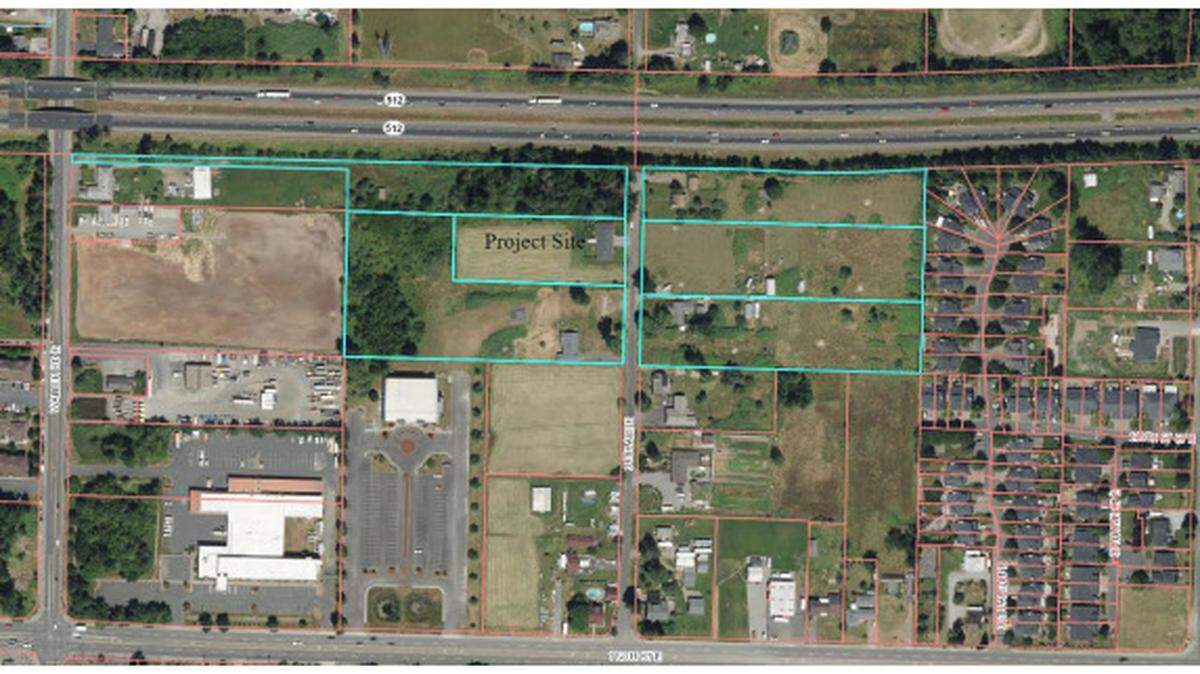
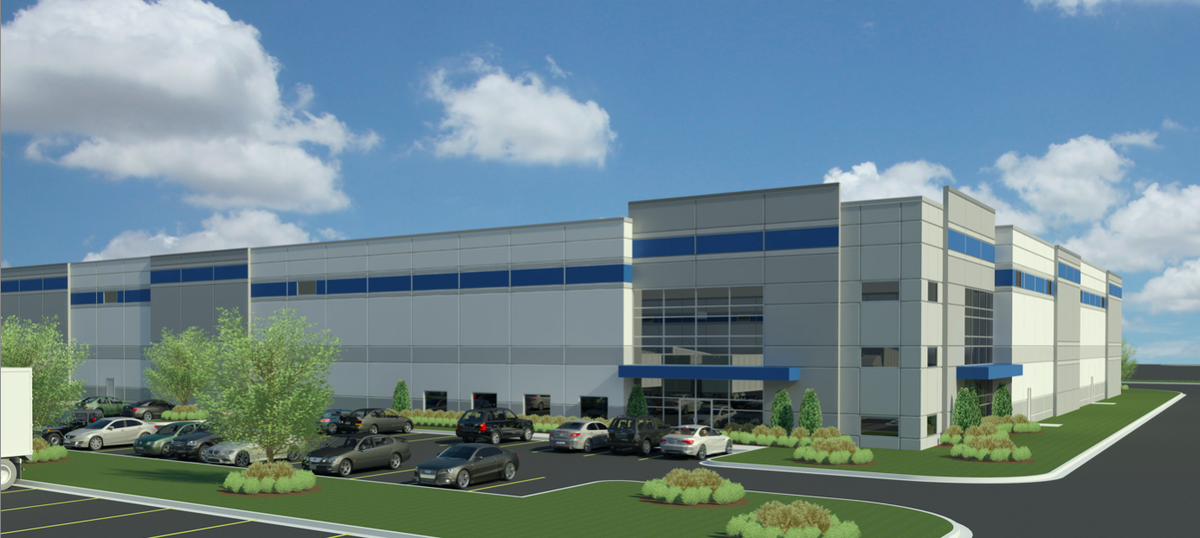
Bridge Point Tacoma 125, 10002 Steele St. S., is planned as a 116,321-square-foot industrial warehouse with “32-foot clear ceiling heights, 20 dock-high doors, and nine parking stalls for trailers,” according to its announcement Dec. 3.
The land was sold by Steele St Land LLC of Tacoma, led by Rose Stanek-Norbe, to Bridge Point Tacoma 125 LLC, for $5.46 million, county records show.
The now-vacant 7.09-acre site is bordered by the Alta apartments, Silver Ridge Village, a storage facility and a single-family residence.
In the hearing examiner’s October decision approving the site plan and rezone of the site, it noted a specific tenant was not known at that time.
The decision also noted that the “applicant’s proposed landscaping will mitigate the proposed use from the neighboring properties and bring a visual amenity to the area.”
Oregon white oak trees on the site, which come under protected status locally and in the state, also came under a preservation requirement.
The decision calls for the development of Oregon white oak preservation areas, after plans showed keeping all of the native significant trees would be impossible as the property is primarily populated with the white oaks and about 34 Douglas firs.
According to the hearing examiner’s report: “The developer purchased two parcels on the other side of Steele Street to mitigate for the Oregon white oaks that need to be removed to make the project feasible.”
The project’s tree review “concluded the proposed site plan will not accommodate retention of the majority of the trees onsite and that compensatory Oregon White Oak habitat will therefore be provided off-site, immediately east, opposite Steele Street South,” the report noted.
Pierce County code requires development proposals to retain a minimum of 30 percent of significant trees on site. A review identified 222 significant trees, requiring 67 significant trees to be retained.
Under Pierce County’s employment center land use designation, 34 tree units in this project would be required to be retained or planted, as explained in project documents.
A project consultant memo noted the project site “is required to provide a minimum of 34 tree units or 67 significant trees. Per Pierce County planning staff, tree retention may be met through the minimum number of tree units required. As such, the project should retain 34 significant tree units.”
The development team proposed 25 tree units, retaining 18.5 significant tree units (seven significant trees) and 6.5 non-significant tree units (four non-significant trees) and 81 additional tree units “through supplemental planting. ... The proposal is providing 203% more tree units than the required 34 tree units.”
The decision, noting the project’s time line so far, mentions that a review meeting scheduled by the Parkland-Spanaway-Midland Advisory Commission in February 2021 failed to draw a quorum, so the proposal was not presented then.
It added that no members of the public logged in to the meeting.
Bridge’s second project, though, is on the radar of neighbors.
Bridge Point Tacoma 210
The Bridge Point Tacoma 210 site, 10917 34th Ave. E., next to state Route 512, comprises multiple parcels acquired from four different sellers and is just west of the Crestview Village neighborhood.
Bridge Point Tacoma 210 is planned as a more-than 200,000-square-foot development, with 36-foot clear ceiling heights as well as 50 dock-high doors and 33 trailer parking stalls, according to the developer’s announcement.
In its revised master application filed with the county Dec. 7, the applicant wrote: “We are requesting a Conditional Use Permit to allow Level 4 Intermediate Manufacturing. ... Warehousing Level 3 is permitted outright. Future tenant uses of this building may also include intermediate manufacturing.”
According to a county slide deck outlining the project, intermediate manufacturing “refers to uses that involve intermediate processing of semi-processed material into a consumer good and to uses that involve the assembly of semi-processed and/or intermediate processed products into a consumer good.”
The 13.4-acre collection of land was purchased for a total of just over $4 million, according to county records filed online.
Some residents have pushed back against the project as recorded in emails to the county planning department, which are on file along with the permit documents online, following the project’s review by the Mid County Advisory Commission in September.
“This is no place to build a loud business with constant noisy traffic coming and going all during the day and/or night,” wrote one Crestview Village resident. “This neighborhood has been here since 1993. Crestview is my home, and has been for over 20 years, along with others who have lived here even longer than I have. People bought in to this neighborhood due its quiet, well-kept environment.“
“Will there be noise control rules in place to ensure this is not impacting us during quiet hours, and how will this be monitored?” asked another resident.
Others worried about air quality and loss of privacy.
“As it is planned, the semi trucks will be backing into parking spots right next to my back yard, filling my yard with exhaust and incessant beeping at all hours of the day,” wrote one resident. “With my asthma and my children playing in the yard, this completely ends our backyard BBQs, our lazy Sundays reading in the hammocks, sunbathing without worrying who is watching, and birdwatching all the birds who now visit the birdfeeders and live in the birdhouses my kids have made over the years.”
The permit applicant noted that the “proposed project is a building shell with no secured tenant,” at this point, but with plans for future tenant improvements with office spaces.
Bridge, in response to critics of the project, told The News Tribune in an emailed statement this week:
“We would like to assure residents that the project is in full compliance with the State Environmental Policy Act (SEPA), which requires us to actively quantify and mitigate any and all environmental impacts it may have.”
The developer noted a noise study had been completed, “which shows that daytime noise levels from the site are within allowable code limits — regardless, we already have plans to install a sound barrier wall to ensure that the noise level is contained. The updated design that will include this sound wall is expected to be included in our next filing to the county.”
Bridge added, “This planned sound wall along the eastern property line will also shield surrounding residents from any vehicle light pollution. Additionally, part of the building design process includes a photometric study to ensure that lighting from the building and overall site will not disturb neighboring properties.”
Bridge told The News Tribune it had performed a full traffic-impact analysis, submitted along with its SEPA application.
“The county has determined that the payment of traffic impact fees and the construction of road improvements along 34th Avenue will fully mitigate the project’s traffic impacts,” Bridge said.
“We encourage residents to reach out directly with any additional questions so that we can help alleviate any further concerns around the impact of this project.”
In the Mid County Advisory Commission presentation in September, the final slide notes that after the developer submits a tree conservation plan and landscape plan, along with architectural and site plans, once those pass review “the proposal can be consistent with the applicable land use codes and regulations and that staff will be recommending approval of the proposal, subject to conditions.”
Other projects
The latest transactions follow the September purchase of nearly 20 vacant parcels in the South Burlington Way area from BNSF Railway Co. of Fort Worth for $158.3 million, for the development of 2.5 million square-foot Bridge Point Tacoma 2MM.
That transaction was one of the top land sales of the year in Pierce County, according to county records.
While a pre-application was filed in February with the city of Tacoma on the redevelopment, the city awaits a land use resubmittal, according to the city’s online permit site.
Bridge has acquired land for over 7 million square feet of Class A industrial buildings throughout the Northwest since opening its Seattle-area office in 2018. In addition to Bridge Point Tacoma 2MM, it recently acquired 17.5 acres for its SeaTac 300 development.
In March it acquired property near the new Amazon delivery station in Lakewood, to be developed as Bridge Point Lakewood 90, in a joint venture partnership with Pacific Coast Capital Partners (PCCP LLC) of Los Angeles.
In December, Bridge purchased 117 acres in Milton to develop as Bridge Point I-5 Seattle.
In December 2019 it acquired the former Supervalu site in Auburn, for Bridge Point Auburn 200.