City of Tacoma announces permitting decision for controversial mega-warehouse project
This story has been updated with additional comment.
A Tacoma mega-warehouse project that has repeatedly attracted opposition from neighbors and environmentalists has received conditional approval.
The permit decision, announced in a news release and on the city’s project website Friday, involves Bridge Industrial’s critical areas development permit for modification of onsite wetlands and stream. The decision includes a State Environmental Policy Act (SEPA) determination.
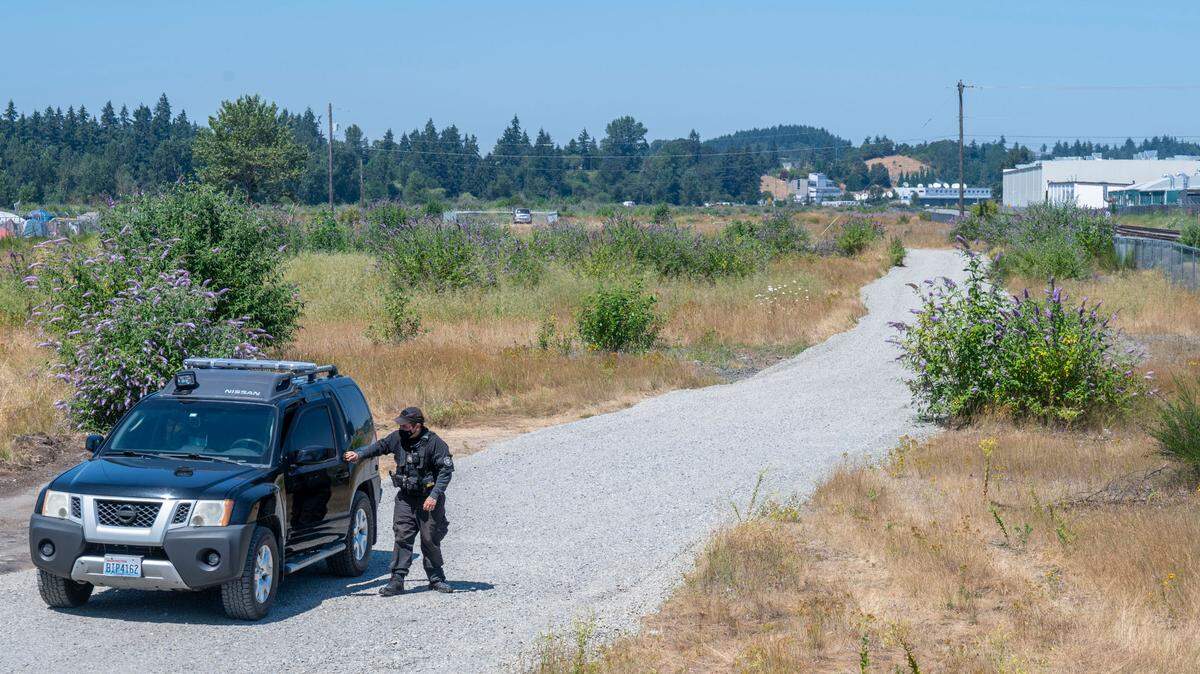
Bridge is set to redevelop the approximately 150-acre property, 5024 S. Madison St., with a multi-building warehouse-distribution site, including about 2.5 million square feet of buildings.
In September 2021, Bellevue-based Bridge Point Tacoma LLC, representing Chicago-based Bridge Industrial, purchased the nearly 20 vacant parcels in the South Burlington Way area from BNSF Railway Co. of Fort Worth for $158.3 million.
The purchase followed a pre-application developers filed with the city in February 2021.
Since that time, neighbors and environmental groups have spoke out repeatedly against the project in public meetings and at City Council forums. Critics, drawing from Tacoma-Pierce County Health Department reports, contend the site is a challenged area for residents’ health when it comes to pollution, and the large addition of impervious surfaces could further threaten local water supplies.
The property is in the South Tacoma Manufacturing/Industrial Overlay District and the South Tacoma Groundwater Protection District.
Land Use permitting decisions are made by the director of Planning and Development Services. “The decision is not made by the City Council or the Planning Commission,” the city noted Friday.
The city said the project’s Critical Areas Development Permit has been “approved with conditions.”
“This means the project, as it has been revised over the last several months, has been reviewed for compliance with the Tacoma Municipal Code for critical areas and, if built with certain conditions, the development may be approved,” according to Friday’s announcement.
Such a permit is required “because the development proposes to impact portions of the stream buffer on the site, while restoring the remaining critical area and creating additional new wetland area,” according to the city.
Those conditions include:
▪ Completion of restoration, enlargement and enhancement of wetlands and stream.
▪ Protection of Garry Oak trees on site and providing plantings to compensate for the one being removed.
▪ Preservation, enhancement of steep slope and areas with trees on site’s western portion.
▪ Recording these protections permanently on the property’s title.
▪ Providing monitoring of all plantings until they are well established.
The project also received a “Mitigated Determination of Nonsignificance” in its SEPA environmental determination.
“This means the review of the entire project, as revised and with the additional studies that have been reviewed, is not likely to have a significant adverse impact on the elements of the environment that are reviewed under SEPA,” the city said.
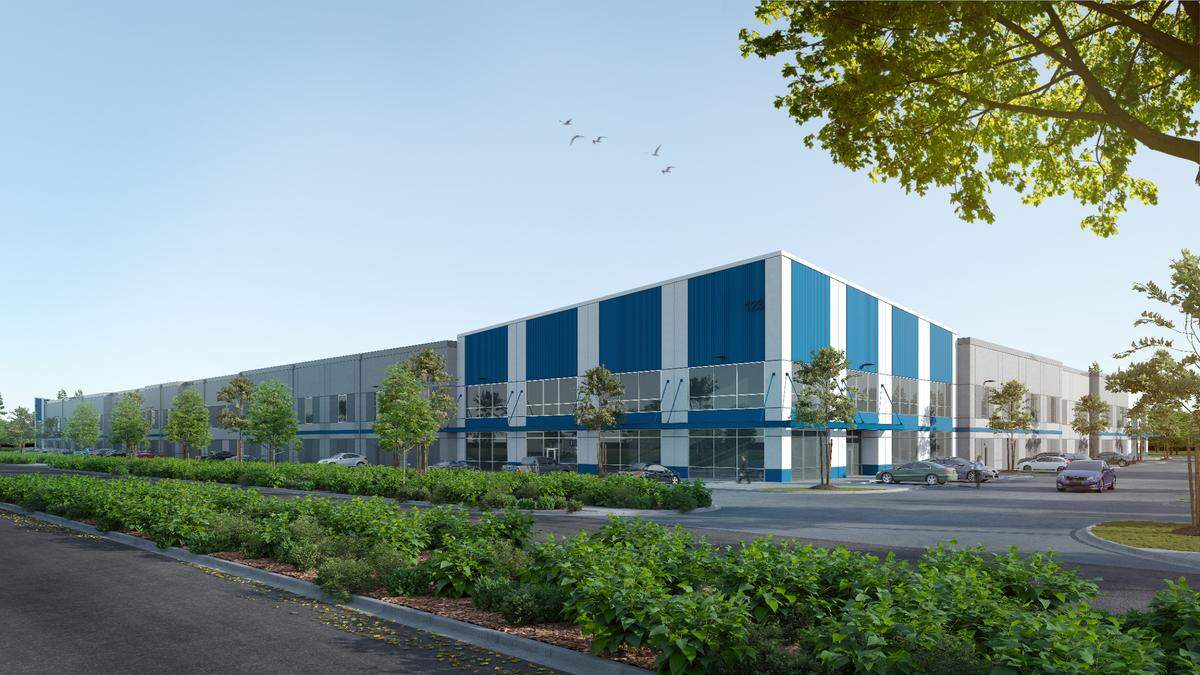
The project still must meet conditions to mitigate environmental impacts, the city added. Those include clean-fuel construction equipment and no-idling rules on the site, 30% tree canopy coverage on development portion, “with payment in lieu of plantings for a portion of the tree provision.”
The project also must monitor traffic during the build-out, “with caps on trip generation,” the city added.
Plans also call for a new north access road for trucks to reach South 35th Street, as well as “intersection improvements at 35th and Union, and improvements to South Madison Street.”
A public bicycle and pedestrian path along the north-south road also is now part of the project, along with pedestrian improvements (sidewalk connections, rail crossing, bicycle lanes) “on several streets and at several intersections,” according to the city’s announcement.
The Critical Area Permit can be appealed and filed with the City of Tacoma Hearing Examiner, along with the SEPA determination “in conjunction with an appeal on the Critical area permit,” the city stated, with a deadline of 5 p.m. May 5.
Michelle Mood, who has publicly opposed the project, told The News Tribune via email that she and her husband were “quite concerned” about the decision made by Director of Planning and Development Services Peter Huffman.
“Skimming the documentation shared today, we can find no mention at all of the health equity concerns clearly prominent in comment letters by the EPA, Department of Ecology, Department of Health, and Tacoma-Pierce County Health Department,” she wrote, “all of which strongly recommended an intensive health impact assessment of this proposed construction.”
”Those of us who live in Oakland-Madrona area already suffer from the poor air quality,” she noted.
Heidi Stephens, who serves on the South Tacoma Neighborhood Council, also has spoken out against the project at City Council meetings. Responding to a request for comment, she told The News Tribune on Friday via email, “We are reviewing the decision and considering our legal options.”
The city noted in its news release, “The Bridge BNSF Warehouse Project is legally ‘vested’ in the current regulations via complete land use permits, and future moratoria or land use ordinance changes will not affect it.”
Mayor Victoria Woodards, attending a mayor’s conference in Washington, D.C. on Friday, responded to The News Tribune’s request for comment via email.
She said, in part, “I am aware that the proposed project has generated strong opposition from many in our community. While I understand and empathize with these concerns, as your mayor, I do not have the legal authority to stop this project. There are certain legal processes that must be followed, and this project has met all the legal requirements necessary for it to move forward.”
She added, “Although this City Council did not establish the zoning and land use regulations in this area, we enacted a moratorium within the South Tacoma Groundwater Protection District to consider changes to the zoning and land use regulations.”
She also says she is “supporting a future review of the City’s policies around zoning and the impacts of development to ensure that we thoroughly address the concerns that have been expressed by our community around this project.”
A request for comment from Bridge Industrial’s Seattle-area office was not returned by Friday afternoon.
The News Tribune’s Liz Moomey contributed to this report.
This story was originally published April 21, 2023 at 10:30 AM.