This part of unincorporated Pierce County is big enough to be a city. Should it be?
Talk about changing the boundaries and authority of unincorporated Pierce County isn’t new.
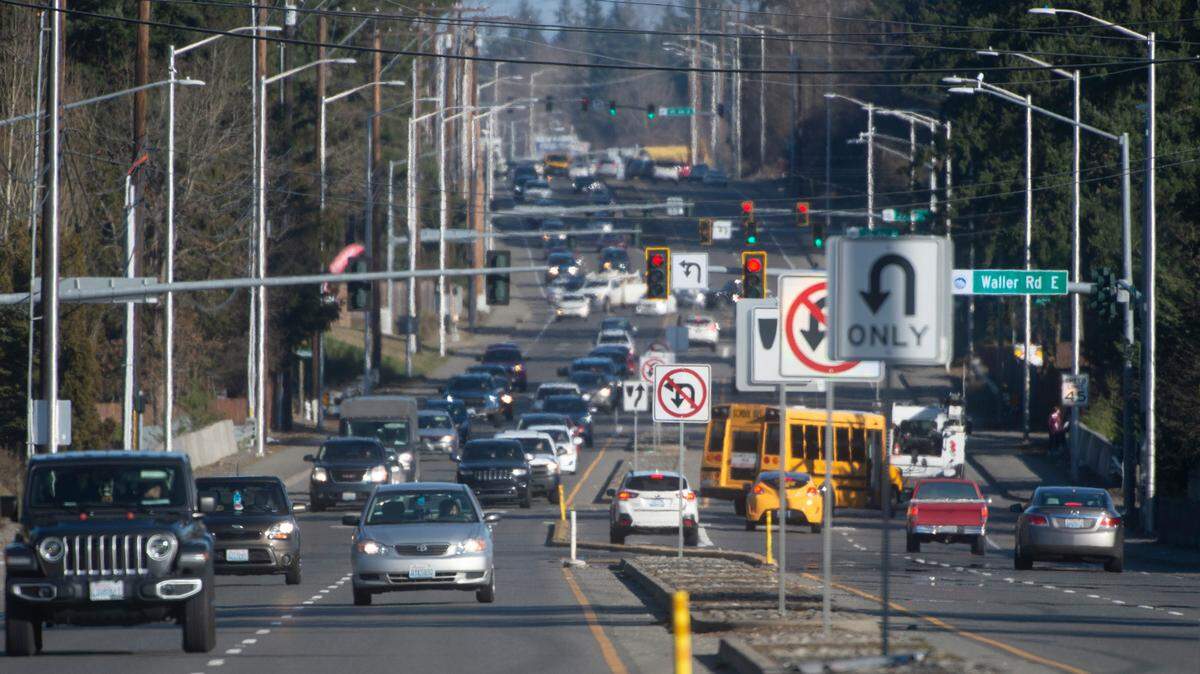
With unincorporated Pierce County seeing a more population growth, and by county estimates needing 21% more housing by 2044, some advocates believe areas of Fredrickson, Midland, North Clover Creek, Collins, Parkland, Spanaway, Summit-Waller and Summit View could benefit from becoming their own city, or being annexed into a city like Tacoma.
Doing so might be expensive, but State Rep. Melanie Morgan, D-Parkland, said unincorporated Pierce County desperately needs resources and attention she believes it isn’t getting from county government.
Pierce County Council member Jani Hitchen, who serves the areas of Spanaway and Parkland, among others, said there are benefits to communities becoming cities, but ultimately that choice is up to the community.
A recent study from the Washington State Department of Commerce reviewed the idea and community interest of incorporating after Morgan proposed $200,000 for the study to be included in the state’s biennial budget.
The study sought to answer this question: If this area of unincorporated Pierce County was a fully operating city, would its revenue be enough to cover the expenses needed to meet or exceed existing levels of service? As of 2022, the study area totaled 20,164 acres and was home to 127,690 people, about the size of Kent.
After considering trends related to population, housing and employment, as well as land use, zoning, homelessness, behavioral health and crime data, the study found the estimated general fund of a new city would fall several million dollars short of revenue each year.
From 2025 through 2030, analysts concluded, the study area’s general fund would be short about $4 million to $5 million a year. In that same time frame, the study area’s transportation capital fund would likely be running a deficit of $1 million and $1.5 million a year, according to the study.
Morgan, who lives in Spanaway, said the deficits don’t change her perspective that unincorporated Pierce County should be incorporated. Morgan said grant funding could fill deficit gaps.
“I’ve been here for over 30 years, and I raised my children in this community, and we are always lacking services,” she said. “There are no resources here. And that’s an issue.”
Public transportation lags behind in these areas, and some places still don’t have sidewalks, she said. Other places are food deserts, with no grocery stores within walking distance, Morgan said.
“The reality is that this is a fast-growing part of the county. This area used to be rural. There were farmlands here. We have no more farmland — those were sold off,” she said. “But now we’ve urbanized. The community cannot handle the amount of growth that has happened.”
In a survey of 500 residents for the study, about 38% said they were “very unsatisfied” or “unsatisfied” with the overall level of public services provided where they live, compared to 30% of respondents who reported they were “satisfied” or “very satisfied.”
Overall, public safety, roads and transportation, and schools and education were among the most common priorities selected by residents.
In an open-ended survey question that asked respondents if they had anything else to add to inform the study, almost a third of participants said they opposed incorporation. Roughly 45% of those respondents did not provide a reason for their opposition, and about 34% who opposed incorporation expressed concerns about increases in taxes and government control, according to the study.
How would incorporation work?
Under state law, voters must approve any decision to incorporate or annex previously unincorporated territory. To initiate an incorporation process, a resident of the community would have to file a notice with the county and garner signatures from at least 10% of registered voters in the community, according to the study.
There is currently an informational study underway to examine the fiscal impact of South Hill operating as a stand-alone city or being annexed into Puyallup. The final report will be published in December.
Angie Silva, the long-range planning manager at Pierce County, said there are no current filings of incorporation or annexation in front of the Pierce County Boundary Review Board at this time.
If some of unincorporated Pierce County were incorporated into a city, the city would take on the responsibility for building and planning, streets and sidewalks, public safety and police, municipal courts, parks and recreation, community and economic development, public works and city legislative authority, according to the study.
Existing service providers would continue to provide fire and EMS services, all utility services, schools, public transit and libraries, the study said.
General fund revenues would likely fund all city functions outside of capital projects. The general fund would be made up of 37% property taxes, 32% sales-and-use taxes and 13% utility taxes, according to the study.
The largest expenditures from the study analysis are public safety and police, public works and community and economic development, which total about 85% of general fund expenditures.
“State law and countywide planning policies encourage unincorporated areas located within Urban Growth Boundaries to consider incorporation or annexation,” according to the study.
‘That representation is kind of lost’
Morgan said she doesn’t know if the Pierce County Council can handle the services needed to accommodate that population boom and the homelessness crisis.
“We’re growing, we’re growing, we’re growing, but we’re not doing anything to address the growth,” she said. “There are good, hard-working families that live east and west off of Pacific [Avenue] … and they deserve resources to live a life that is meaningful and productive. And right now, we’re struggling.”
Hitchen said she’s not aware of an active group pursuing annexation or incorporation. As a council member, Hitchen said, she tries her best to be a voice for all of her constituents, but said the county doesn’t have the same authority or ability as a city to tax or access revenue streams that provide the resources needed in that area.
“Cities are given, under state law, more authority to tax specific things,” Hitchen said. “One of the main ones that cities really depend on, because it’s very stable, are utility taxes. And unincorporated counties cannot do those.”
Hitchen said Pierce County has a finite amount of resources they have to balance county-wide. Establishing a new city from scratch “is incredibly time-consuming and expensive” and would likely require additional million dollar subsidies from the state as well, she said.
“Our hands are tied as far as what we’re allowed to gather revenue from,” Hitchen said. “And that’s concerning for us when we start looking at our budget, when we know we have a city-like density that deserves city-like services and we don’t have city-like revenue.”
The July study examines turning Fredrickson, Midland, North Clover Creek-Collins, Parkland, Spanaway, Summit-Waller and Summit View into a single city, something Hitchen said may be “a huge lift” as well.
To make that a reality, residents from those areas would have to have joint vision for a future city, she said, which might be difficult as each area has its own personality and ideas.
Hitchen said the county has been doing work to create more mixed-use housing density around public transit in the Parkland-Spanaway area and engage community to “see how we can make this a healthier place for people to live.”
Ultimately however, without city status, government representation suffers in those areas, Hitchen said.
“When you’re talking about representation, that’s one of the reasons that cities exist — as that first level of government. You go to the city, and the city advocates the voice for the needs to the county and the state,” she said. “And right now I get to, you know, stand on my corner and go, ‘Here’s what Parkland needs, here’s what we need to do in Spanaway.’ But I’ve also got to help other communities, so that representation is kind of lost.”
Silva said the county is addressing population changes and county growth on a variety of fronts, as required by their comprehensive plan and regional growth targets.
The Pierce County Housing Action Strategy, adopted last November by the Pierce County Council, has strategies in place to increase the rate of housing production and encourage a greater range of housing options, especially for low-income households.
A 20-year Pierce County Comprehensive Plan, which must be completed by the end of 2024, is addressing growth in the unincorporated areas of Pierce County. Residents are encouraged to share input and ask questions online.
This story was originally published August 14, 2023 at 5:00 AM.