Pierce County needs more than 110K new housing units by 2044. Where will they come from?
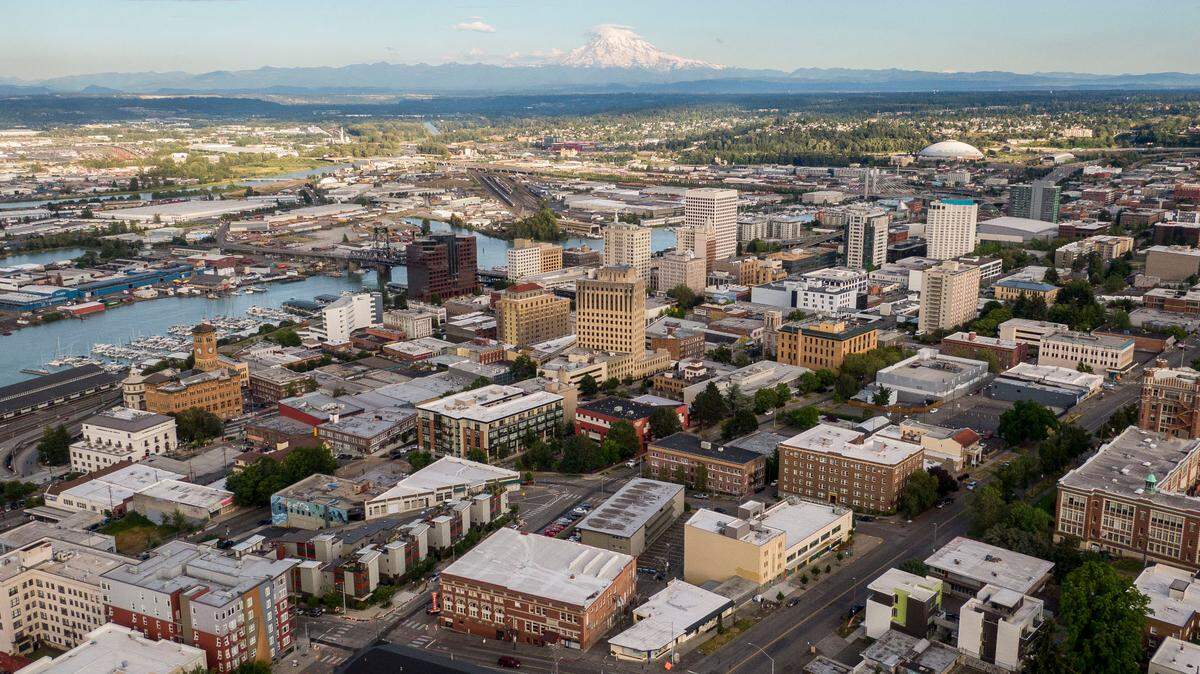
There are more people living in Pierce County than there are houses to keep them. That problem is expected to worsen in the next two decades.
To keep up with Pierce County’s population growth, the state Department of Commerce estimates developers need to build 111,511 new units of housing by 2044, a 31% increase from the estimated supply of housing in 2020, according to county growth targets.
There is an acute need for affordable housing for moderate, low, very low and extremely low-income households, as well as emergency housing, emergency shelters and permanent supportive housing. According to the Pierce County Housing Action Strategy, last updated in September 2022, about a third of all households in Pierce County are cost-burdened, meaning they spend over 30% of their income on housing (over 100,000 people in total).
To meet the needs of the lowest income residents, the county needs to produce more than 2,300 units on average every year at or below 50% of the area median income through 2044. Pierce County’s AMI was $72,240 for one person as of June 15.
The areas that are growing the fastest in Pierce County are:
Tacoma, which is expected to need 46% more housing by 2044
Sumner, which is expected to need 44% more housing by 2044
Puyallup, which is expected to need 41% more housing by 2044
University Place, which is expected to need 39% more housing by 2044
Bonney Lake, which is expected to need 37% more housing by 2044
Lakewood, which is expected to need 35% more housing by 2044
The Growth Management Act requires the county, and cities and towns within it, to plan for projected city, economic, housing, transportation and environmental needs based on expected population growth.
Local community development leaders said they’re planning for the projected growth but face unique challenges. Supporting alternatives to single-family housing, like duplexes, triplexes, townhomes, apartments and accessory dwelling units, as well as reducing development costs and strengthening affordable housing incentives would help area cities meet their goals, development directors said.
Those moves are also helping developers, who are hurting from high interest rates and need funds to offset affordable housing costs, said Seattle-based affordable housing developer Ben Maritz.
Without stable and affordable housing, tackling displacement and homelessness becomes more challenging and harms the quality of life and connectivity of the community, said chief strategy officer for the city of Tacoma, Jacques Colon. As Pierce County continues to expand, so does its needs, he said.
Land issues, displacement in Tacoma challenge expansion
There are many factors driving the city of Tacoma’s population growth. Among them: Tacoma’s a desirable place to live, with a plethora of natural amenities, culture, arts and educational opportunities, which is especially attractive to young people, Colon said.
Not only is Tacoma seeing a migration of people from King County and Seattle, it is also a destination for people moving to the West Coast and the Northwest in general, he said. Last month, the Today show ranked Tacoma as one of the top places to live in the United States.
One of the big issues facing Tacoma right now is limited land, Colon said. Unlike other fast-growing cities in the area that can expand out, that’s not the case in T-town, he said.
“Here in Tacoma, we’re pretty much built out land-wise, so a lot of our growth has to happen in other ways,” Colon said. “We’re an older city. Tacoma has a long, rich history, and the benefits of that culturally and in terms of the flavor of the city are great. But the downside is that we have a lot of older housing stock. That also means that a lot of the housing was built during a time when population growth wasn’t as big of a concern, and family structures weren’t as diverse as they are now.”
Colon said Tacoma is home to a large number of single-family homes, and as a result the city’s zoning solidified that as the predominant style of residential housing back in the 1950s. Racist housing policies, like redlining or racially discriminatory housing covenants, also contributed to segregation and impacted growth patterns in Tacoma, he said.
Grappling with the city’s growth and variety of housing needs, while maintaining the character of its neighborhoods and stopping displacement, is a big part of the city’s Home In Tacoma Project, he said.
“We can’t grow out, so we have to grow up,” Colon said.
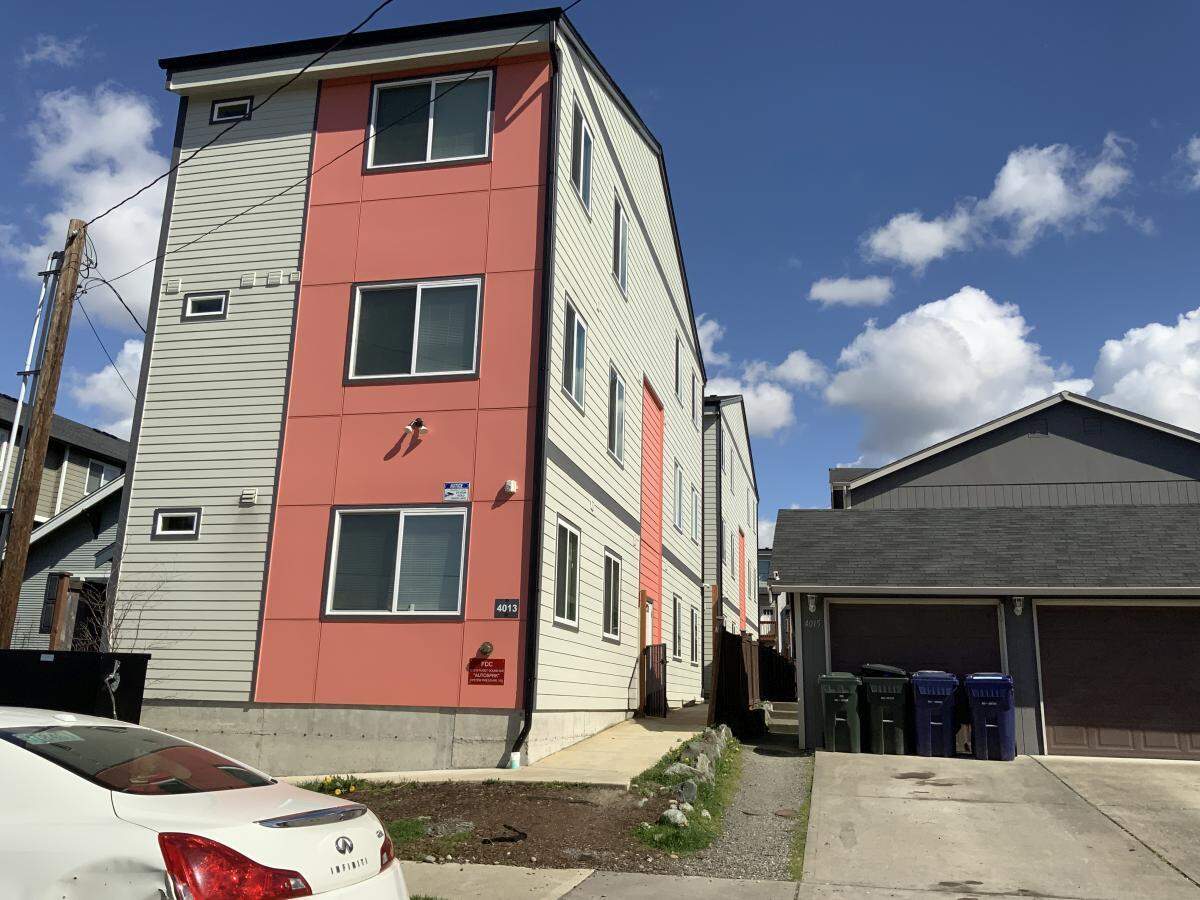
Two ways to do that are by developing more multi-family housing and creating “gentle density residential infill” that maintains the character of a neighborhood while adding more units into existing structures, he said.
Residential infill refers to any type of housing between a single family home and larger multi-family units, like duplexes, triplexes, townhomes or courtyard apartments, Colon said. He prefers the term “gentle density,” “because when people hear ‘density’ in neighborhoods, some of the typical fears that we hear are that the neighborhood is going to completely change with large skyscrapers and huge seven story apartment buildings” when that really isn’t the case.
The idea is that residents wouldn’t necessarily notice significant changes in the housing types of their neighborhood, Colon said. There are many reasons to modify a traditional single-family lot, he said. Some people might want to maximize units to rent to someone else, or to accommodate a child or aging parent.
“By the city creating the conditions for these additional units to be built in thoughtful ways that still maintain character in neighborhoods, we’re trying to accomplish the best of both worlds,” he said. “One of the things that makes Tacoma so desirable to move to is that diversity is one of our strengths … so when we talk about creating gentle density, it is also to take neighborhoods that have traditionally been more segregated and to find opportunities to create additional units and different price points.”
Between 2019-2022 there were 4,094 units of housing built and 3,342 additional units permitted to be built in the next couple of years, Colon said.
About 1,000 were designated affordable housing units, said Ted Richardson, the city’s strategic initiatives coordinator. The goal is to build 6,000 affordable housing units by the end of 2028, he said.
“So that would indicate we’re a little behind track,” Richardson said. “However, we have another 1,000 scheduled to come on line in the next couple of years, so that production level is going up and we’re optimistic that we’ll hit that goal.”
Colon said the city is trying to eliminate barriers for developers because “what we’re hearing from developers [is] that every step of the process is a barrier” in terms of land acquisition, permitting, labor, and construction materials and costs.
A recently passed 0.1% sales-and-use tax to fund housing and related services will allow for direct funding to produce more affordable units as well as support programs designed to help residents get rental assistance and be connected to other resources, Colon said.
“When we think about quality of life and being able to enjoy all of those things that make Tacoma great, having stable housing is really that foundational first step to being able to achieve that,” he said. “When you think about the struggles that so many people face every day: financial struggles, mental and behavioral health struggles – without housing stability, it becomes so much more difficult and more expensive to really stabilize people in those other ways. So having stable housing is really crucial.”
Maritz is founder of a Seattle-based privately funded affordable housing developer called Great Expectations LLC, which owns or manages about 800 apartments in the Seattle, Tacoma and Portland area. Two apartment buildings are planned or under construction in Tacoma along Pacific Avenue and South 25th Street. One, Cornus House, is expected to open in November 2024 with 200 market-rate affordable housing apartments (focused on residents making between 80%-100% of the area median income) and Arbutus House will have 300 apartment units by 2025. Maritz said they’re looking for a funding partner to make Arbutus House more affordable.
Maritz said the biggest issue affecting both market-rate and affordable housing developers in the Northwest today is high interest rates that make it more difficult to borrow the money needed to build.
“Real estate development is extremely capital-intensive,” he said. “Unfortunately now, we have this double effect where we’ve been under-building for a long time, and now we really need more housing. And now we’re getting hit with this interest-rate cycle at the worst possible time. You see a lot of projects that don’t have their financing secured already have recently totally stopped.”
Martiz said Tacoma is making it easier for developers to build in the city by changing single-family zoning laws to allow for more apartment development, reducing parking requirements for new apartment buildings and changing the appeal process for environmental reviews. There’s also a lot of excitement in the development world around “missing middle” housing, that comes with a change in single-family zoning to allow duplexes and fourplexes, he said.
“[Tacoma is] very easy to work with. They’re very supportive, they’re helpful, they’re proactive. Developers really like that because it makes their project more predictable, as opposed to in Seattle,” he said.
Talk about adding more restrictions on landlords with Tacoma for All’s ballot initiative would likely dampen development in Tacoma, he said, as developers would probably choose elsewhere to build.
Although government funding, like the Low-Income Housing Tax Credit program, helps offset the costs of affordable housing development, there are still gaps in funding for many projects, which remains a big barrier for developers, Martiz said. Private investors also want the highest possible returns on their investment before moving on to the next deal, which makes affordable housing development less appealing, he said.
“If you’re charging below market rent, you’re not going to be able to give good returns to private investors unless you have really, really low costs,” Martiz said. “You’re not really going to be able to find scaleable capital solutions that are going to get money in the hands of renters when they could raise the rent. That’s why public funds are so important.”
Unincorporated Pierce County sees growth, too
More urban areas of unincorporated Pierce County like Parkland, Spanaway and portions of Midland and South Hill are expected to see much of unincorporated Pierce County’s growth, said Angie Silva, the long-range planning manager at Pierce County.
As of April 1, unincorporated Pierce County is estimated to have about 446,150 residents, in comparison to 500,150 residents who live in incorporated Pierce County, according to state data. Unincorporated Pierce County is expected to need 21% more housing to accommodate growth by 2044, according to county growth targets.
Part of the county’s growth strategy is examining land supply and capacity, as well as zoning densities when accommodating future growth, Silva said.
By 2044 urban areas within the Mid-County, Parkland-Spanaway-Midland and South Hill are expected to see 39,000 new residents. All other urban areas of unincorporated Pierce County outside that geography will see about 32,000 new residents, and rural unincorporated Pierce County is expected to see about 8,000 new residents, according to Pierce County growth targets.
Although there’s been talk of incorporating or annexing parts of Fredrickson, Midland, North Clover Creek, Collins, Parkland, Spanaway, Summit-Waller and Summit View, no group is actively pursuing that, despite some benefits that come with city governance.
Silva said an unincorporated status means those areas have to rely on the county for funding because they don’t have their own means to tax like a city does, which is a challenge, especially as unincorporated Pierce County sees increasing needs for transportation, parks and other city-like amenities.
Taking care of Sumner’s seniors
Sumner is home to about 10,800 people and is a regional manufacturing and industrial center that employs about 90% of Sumner’s total employment base of 19,000, said Ryan Windish, Sumner’s director of community and economic development. He said Sumner offers a more affordable and small-town quality of life option to Seattle, which attracts commuters.
The city has been encouraging greater housing density near transit hubs, like commuter rail stations in town, as well as near the Gordon Family YMCA and the East Sumner neighborhood, Windish said.
To keep up with population growth, Sumner will need about 2,000 new housing units by 2044. Windish said almost half of those units are already in the pipeline for development.
“We’re gonna see a real bump in our housing and population over the next few years. But this has all been a part of the plan for a long time,” he said. “We have some large multifamily developments – one under construction, three in the permit process.”
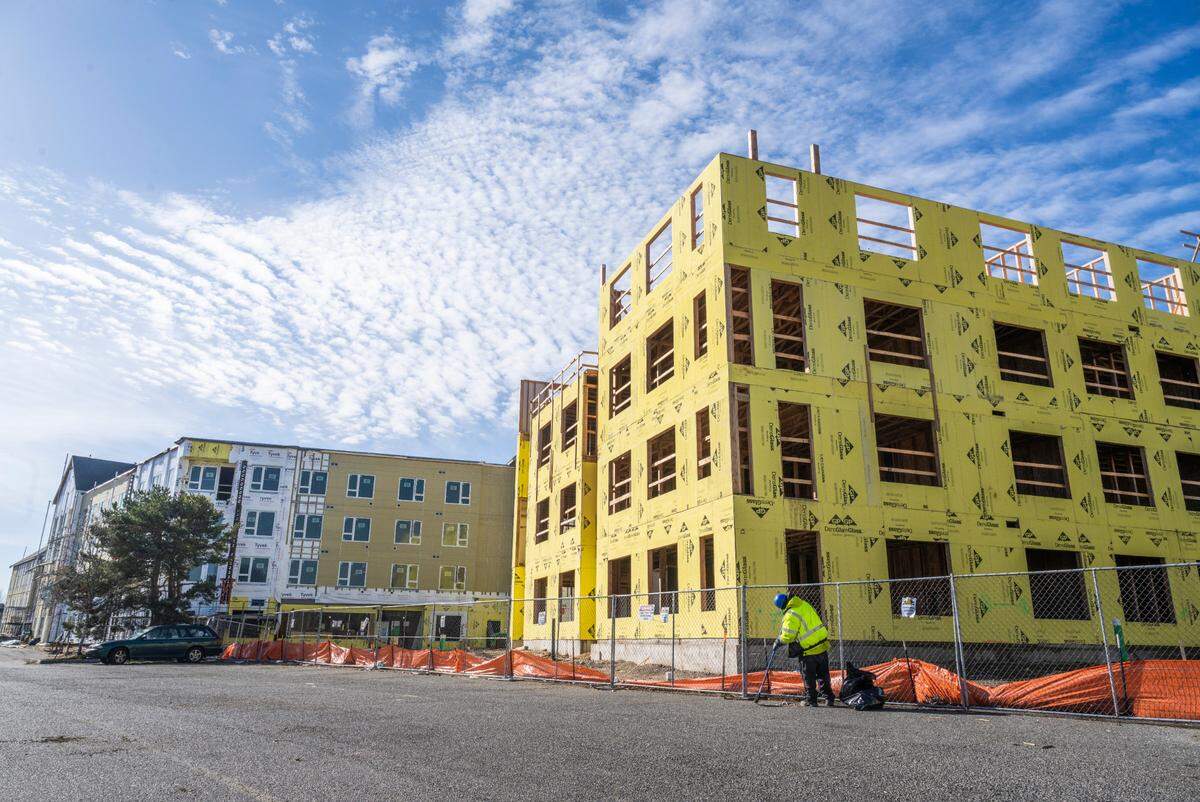
Under construction are a 166-unit apartment building to be built next spring on 16009 60th Street E, with 33 units affordable to low and moderate income households for the next 12 years. On 15743 Elm Street will be 36 townhouses available for purchase next spring, Windish said.
In the permitting stage are three apartment buildings with 105 units, 180 units and 128 units respectively, he said.
A big priority for the Sumner City Council is senior housing, Windish said. Last year the council changed housing regulations to allow more density on a lot that offers at least 20% of the units made affordable to seniors.
Windish said development and construction costs are high, so the city tries to provide tax incentives or waive fees to encourage more affordable housing to be built. Encouraging more accessory dwelling units, as well as multifamily dwellings and middle housing like duplexes, triplexes and fourplexes, is another way to do that, he said.
Windish said people are drawn to the small-town feel and employment opportunities offered in Sumner.
“In general, the U.S. population is aging, and Sumner is no different. For seniors that have the ability to, maybe they’ve lived in town their entire life or a good portion of it, and now [want to] live out their days in Sumner and not have to move, that’s partly why it’s a priority for our council,” Windish said. “Anecdotally, I think we’re seeing younger families moving in. People love the downtown of Sumner and city events and things, it just feels like we’re getting the next generation, which is exciting.”
Puyallup struggles with affordability, infrastructure upgrades
Puyallup is also a city seeing some growth as Seattle residents look for less expensive places to live, said Eric Johnson, the Puyallup public affairs officer.
Puyallup has the zoning and housing capacity to meet population growth, but it’s not affordable for the needs of residents, said Puyallup senior planner Kendall Wals. The city’s growth is also coming with a cost: a desperate need to upgrade the city’s sewer, water and stormwater infrastructure to accommodate more people.
Johnson said the city is early in the process of updating its Comprehensive Plan, which is expected to be complete in December 2024. A community kick-off meeting will be held Sept. 13 at Pierce College from 6 p.m. to 8 p.m.
“I think our challenge is more so providing enough housing types for our community. It’s going to be kind of what we need to tackle as part of our comp. plan update,” Wals said. “Because just looking at the sheer numbers, we have land capacity and the zoning to do it, but it really isn’t going to accommodate the community and be financially viable.”
Wals said the Puyallup City Council’s Housing Action Plan will look at rezoning areas to facilitate higher density and more diverse housing styles, particularly near transit areas. The city is also providing some tax incentives to developers to build downtown, which in turn will provide revenue for the city, Johnson said.
Wals said Puyallup is also looking into expanding “missing middle” housing opportunities to provide more affordable options like duplexes, triplexes, town homes and cottage homes for residents in lower income brackets.
Accommodating growth will require critical infrastructure upgrades and maintenance as well. Johnson said some areas of Puyallup are still on septic systems.
“This past year, our city council passed a utility rate increase, which over the course of the next 10 years, that’s going to fund 92 infrastructure projects,” he said. “A lot of the infrastructure downtown was built back in the ‘50s. Puyallup was a very different community back then, and now it’s become much more urbanized. So we need to upgrade the size of those pipes essentially, so that we can get that capacity to not only meet our current needs, but future needs.”
This story was originally published August 16, 2023 at 5:15 AM.