Pierce County and the opioid crisis: What data tells us about fentanyl’s local stranglehold
READ MORE
Tracking the Fentanyl Trade
As fentanyl devastates communities across the United States, Americans are fighting the epidemic on multiple fronts. This is the war against America’s deadliest drug.
Expand All
Opioid-related overdoses are the most common cause of accidental death in Pierce County, taking more lives than traffic or firearm fatalities and inflicting younger people at faster rates across Washington, according to the local health department.
The overdoses have starkly risen in recent years throughout the county, along with related medical calls and emergency room visits, offering signs of how deeply a crisis roiling the nation has struck home.
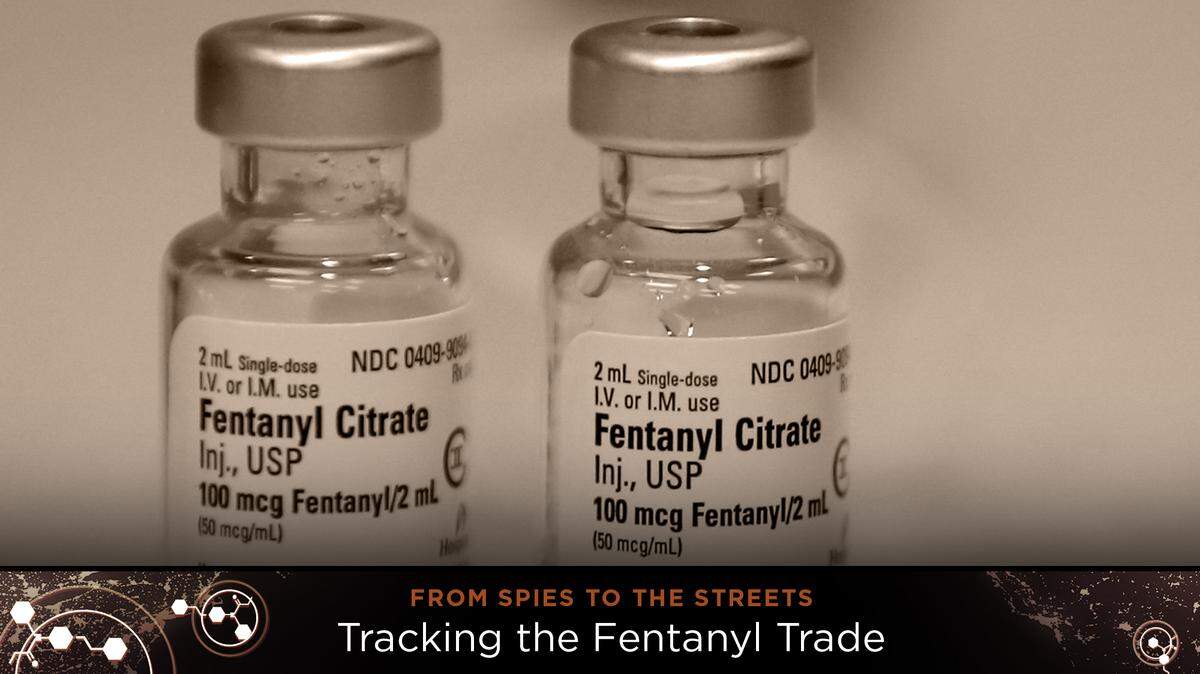
Fentanyl, a fast-acting synthetic opioid prescribed to treat severe pain, has become a particular problem. It’s up to 100 times more potent than morphine, according to the Centers for Disease Control and Prevention.
Chelsea Amato, coordinator for the Tacoma-Pierce County Opioid Task Force, said in an interview that the illicitly made version of fentanyl sold on the street or online — and typically laced with other drugs often unknown to the user — is stronger than heroin and easier and cheaper to manufacture. Its effects also last for a shorter period than heroin, meaning it’s used more frequently.
“It’s kind of the difference between espresso and regular coffee,” she said.
As the illegal drug trade adapted to federal drug criminalization, unregulated fentanyl essentially replaced heroin, driving former users to the synthetic drug, according to Amato. For users of illicit opioids since roughly 2016, “this is all they know — fentanyl,” she said.
Thirty-nine people died from fentanyl-only poisoning in the county during the third quarter of last year, according to the most recent available state data, which is among opioid and drug-related data being tracked by the Tacoma-Pierce County Health Department. While that figure is down from 68 recorded in the third quarter a year earlier, quarterly figures prior to 2020 largely had not risen above single digits.
In fact, the most fentanyl-only poisonings recorded in a quarter between 2017 and 2020 was 13 during the fourth quarter of 2019, the data shows. In 10 other quarters between that three-year period, the figure only rose into double digits on two other occasions (10).
“Poisoning” is a rephrasing of the oft-used and synonymous term “overdose,” placing onus on the drug.
“In this case, the drug is the product that is used in the wrong way, by the wrong person, or in the wrong amount,” according to the Washington State Department of Health.
It’s worth noting that overdose deaths from stimulants, including such as methamphetamine and cocaine, have also risen in the county over the past few years, although overall numbers are lower than opioid-related cases.
The number of emergency medical service calls for possible opioid overdoses in the county nearly quadrupled between January 2020 and May, according to state data. Opioid-related emergency room visits also increased during that time, from fewer than 27 of 10,000 during the first quarter of 2020 to more than 39 in the second quarter of this year, data kept by the National Syndromic Surveillance Program shows.
“An emotional reaction is that it’s incredibly alarming,” Amato said. “It says to me that more intervention is necessary. This is a crisis.”
The crisis is sometimes laid out in full view on the streets, colliding with another one that officials have also struggled to contain.
An issue for a vulnerable population
More than one-third of recent deaths of people believed to be experiencing homelessness were attributed to the fentanyl-related toxic use of drugs, according to a Pierce County Human Services analysis of Medical Examiner’s Office data.
The county’s Select Committee on Homelessness publicly reviewed a memo Wednesday, Aug. 23, from Human Services that provided the details: Between January 2022 and July, there were 158 individuals who died in the county without a known address. Ninety-six were listed in the county’s Homeless Management Information System, which logs those who have sought assistance finding housing at some point.
Of those 96 decedents tracked by the county, 35 — or 36% — died due to fentanyl-related toxic use of drugs, according to the county memo.
“It’s a shocking number,” Rob Huff, spokesman for the Tacoma Pierce County Coalition to End Homelessness, said in an interview. “And when it comes to the issue of homelessness and substance use, the challenge is always kind of a chicken and egg question: Whether somebody was using substances when something happened to them and they became homeless or, when they became homeless, did they start using substances?”
Huff said he has heard both narratives and while it’s too difficult to jump to any conclusion, one thing was for certain: “This number’s too high.”
Washington state in the ‘epicenter’
Across Washington, overdose deaths are growing most quickly among people 18 to 24 years old.
From March 2022 to March this year, reported overall drug overdose deaths in the state increased by more than 25% — the largest increase among all states, according to Washington Sen. Maria Cantwell’s office, citing data from the CDC.
Her office also cited findings from researchers at University of Washington who found that fentanyl in 2022 was involved in 90% of opioid overdoses in the state and nearly two-thirds of all overdose deaths.
During a visit to Port Angeles on Aug. 17 for a fentanyl roundtable — one of several such meetings that Cantwell has hosted around the state this year — she said that law enforcement had seized 1.6 million fentanyl-laced pills statewide thus far this year, roughly 100,000 more already than during all of last year.
“In general, we think that I-5 corridor has put our state in the epicenter of increases in the amount of fentanyl being trafficked and we want to do everything we can to stop that,” she said, according to video from the roundtable.
The FEND Off Fentanyl Act, which is working its way through the Legislature, would target cartels, money laundering and other resources behind distribution of the synthetic opioid, she said. Hearing that large volumes of fentanyl apparently get moved by luggage in airports, lawmakers in Washington D.C. are looking at providing more authority to the Transportation Security Administration to combat trafficking, she added.
One mechanism used in disrupting the fentanyl trade — a surveillance tool from the 9/11 era known as FISA Section 702 that enables authorities to monitor and collect foreign communications if used on U.S. systems — is up for renewal this year in Congress, but has been criticized by both Democrats and Republicans.
Local efforts
A Tacoma man was sentenced in July to more than five years in prison related to his 2022 federal arrest for selling counterfeit oxycodone pills containing fentanyl out of a crime-stricken motel on South Hosmer Street. The case stemmed from a joint operation between the Tacoma Police Department and Bureau of Alcohol, Tobacco, Firearms and Explosives.
Jason Chudy, spokesman for ATF’s Seattle Field Division, said that while the vast majority of the agency’s investigations are related to firearms, “in many, many cases, drugs are involved in that.”
“Fentanyl is obviously a big, big concern,” he said, adding that investigators will wear respirators and gloves if they know they are going to be dealing with the synthetic opioid. “The problem with fentanyl is fentanyl could be in anything.”
Six out of 10 fentanyl-laced fake prescription pills analyzed last year by the U.S. Drug Enforcement Administration contained a potentially lethal dose of the opioid, according to the DEA, which has said that most fentanyl trafficked throughout the nation is primarily the responsibility of two Mexican cartels, using chemicals largely from China.
Washington state has gone after pharmaceutical opioid distributors and manufacturers for helping to fuel the opioid epidemic, including reaching a $518 million settlement last year with three major distributors — money that will aid work to address the crisis locally.
Meanwhile, there’s currently a two-week campaign in Pierce County to connect with the community about opioid abuse and offer space to heal from the fallout of the deadly crisis, leading up to International Overdose Awareness Day on Aug. 31.
Events this year include a panel focused on reversing the stigma often associated with addiction and a memorial to remember the lives of those lost, according to Amato. The campaign was planned by the local opioid task force, a partnership between Pierce County, Tacoma and health organizations including Amato’s employer — the health department.
“Our communities are really traumatized by this. We are losing people and sometimes it’s a culture of, ‘OK, let’s just move on,’ and there’s not really the space to do any of the healing around overdose,” Amato said. “These deaths are just not numbers. They represent our loved ones.”
The task force is focused on prevention, education, access to treatment and reducing the stigma of drug use — the latter which Amato called one of the biggest challenges to addressing the crisis as it prevents communities from talking about substance use and individuals from seeking treatment.
The health department maintains staff who work specifically with homeless service providers and perform outreach. One of the goals, Amato said, is ensuring that shelters and providers have access to Naloxone, which is medication that can quickly reverse an opioid overdose and is perhaps best known by its name-brand nasal spray, Narcan.
The medicine shouldn’t be viewed controversially, according to Amato, but carried by everyone, just as they might keep a first-aid kit or EpiPen.
At four health department-sponsored events this year, officials gave out 840 total kits of Narcan, she said. Although the department doesn’t traditionally perform large-scale distribution of the medicine, it seeks to connect groups that want it — including schools — to the state and other sources where they can get it. The Tacoma Needle Exchange has set up three Narcan vending machines in the county, she added.
Funding to combat the opioid crisis is always a concern, according to Amato, and while illicit fentanyl is cheap, Naloxone is expensive. Ultimately, fighting the crisis is going to require more compassion and rehabilitation and less stigma and criminalization, she said.
“As public health workers, that’s always going to be our motive,” she said. “These are not faceless, nameless people. These are people who were loved, cared about and their lives were really meaningful. We need to really approach it that way, with compassion and radical love.”
Amato said that anyone interested in joining the opioid task force can contact her at camato@tpchd.org.
This story was originally published August 29, 2023 at 6:00 AM.