Tacoma apartment-building boom may be slowing rising rents, but prices remain high
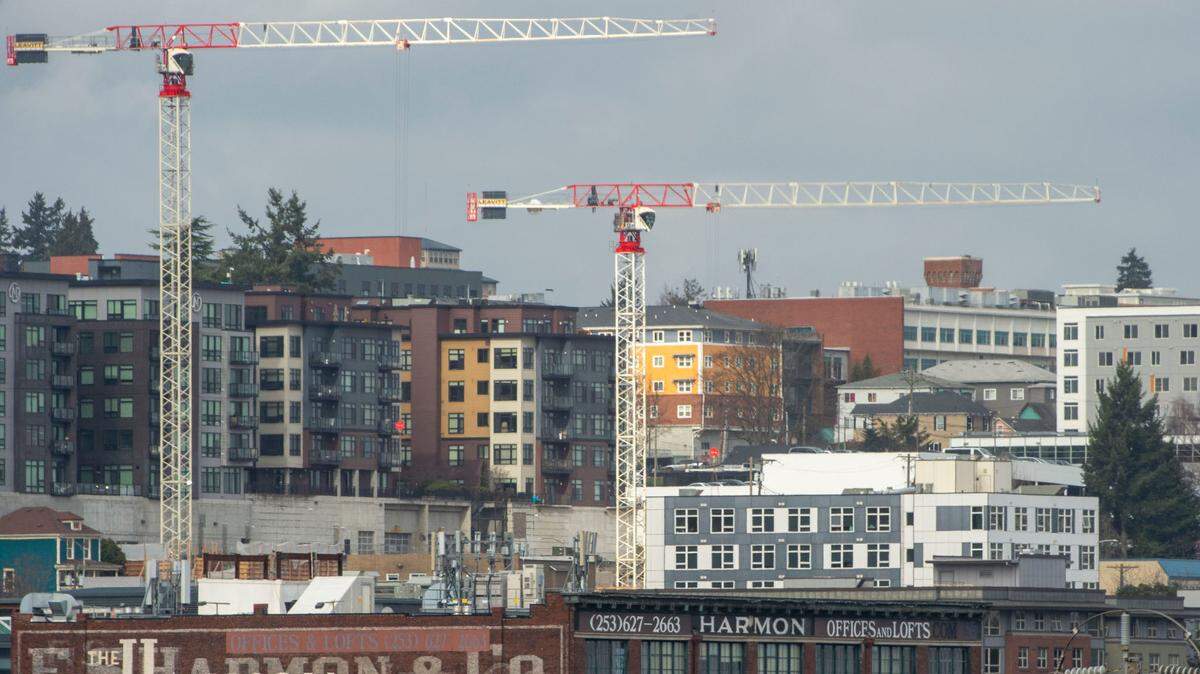
New reports for July-August show Tacoma’s rent increase slowing a bit, with one report showing an earlier than usual seasonal slowdown.
Rent Cafe’s July update showed Tacoma’s average rent at $1,654, with the average size at 823 square feet. That rate, according to its online chart, appears nearly static since November.
The report showed 49 percent of rents in the city averaging between $1,501-$2,000, with just 3 percent at the lowest range, averaging $701-$1,000.
The rental data agency’s next update is in November.
Rent.com, in an Aug. 31 update, showed one-bedroom units at an average of $1,547 and with the biggest year over year decline at 20 percent. Average rent for a two-bedroom unit was at $1,877, down 19 percent year over year, and average studios at $1,420, down 4 percent from the same period last year.
Meanwhile, Apartment List’s latest report showed August Tacoma rents down 4.9 percent over the same period last year, with an overall median rent in the city at $1,487, roughly the same as last month.
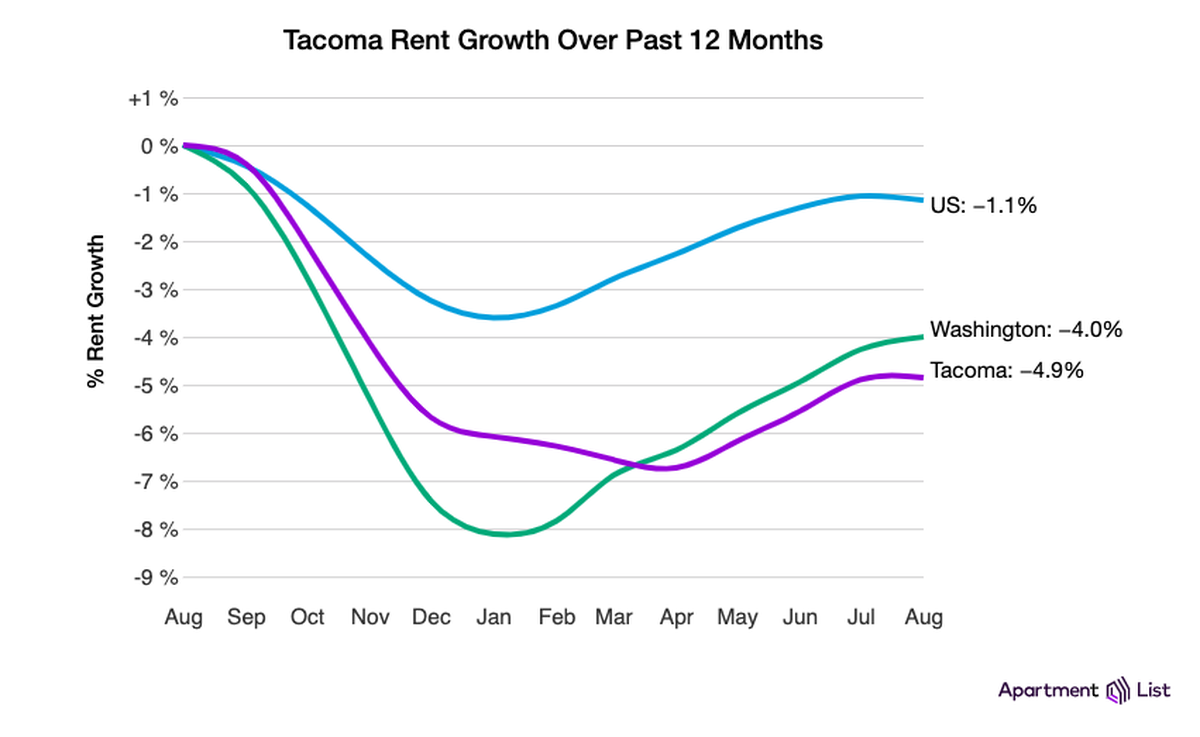
In comparison, January to August 2022 showed rents increasing 5.2%.
The report said that in Tacoma “the median rent currently stands at $1,184 for a 1-bedroom apartment and $1,511 for a 2-bedroom.” Tacoma’s rents are 17% lower than the Seattle metro-wide median, according to the report.
Lakewood had the lowest median rent in that broader metro region, with a median rent of $1,373.
Apartment List’s senior research associate Rob Warnock told The News Tribune on Friday that while rents typically show a seasonal decline nationwide in the fall, this one came about a month ahead of schedule.
“At the national level, just this past month, we saw rent growth turn negative for the first time this year, like what always happens usually in September,” he said.
Categorizing Tacoma as a secondary city within a larger metro (Seattle), Warnock noted that secondary cities “over the past couple years have seen the wildest swings, and the rental market has been very unstable.”
“The data is showing for 2023., it’s been very moderated. Year over year, rent prices in Tacoma are down about 5%. But since January, the line hasn’t really moved,” he said. “Not a lot of significant increases.”
He shared data comparing August rates going back to 2018, with rates only declining in 2020 and this year.
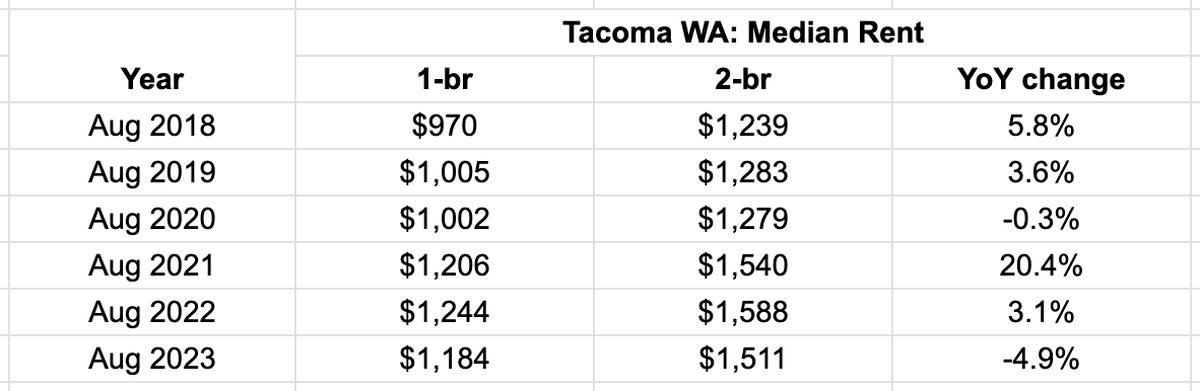
The figures showed the peak rise for August was in 2021, when rents in the city rose 20.4 percent from the previous August.
New apartments are improving the balance of supply-demand, he added.
“At least at the Seattle metro level, which Tacoma is a part of ... tends to have pretty good history of permitting, and building new apartments, relative to say, the San Francisco Bay Area, LA, Boston, D.C., those kinds of those markets,” he said.
In early 2022, there were an estimated 3,100 units set to go into construction in Tacoma, to be completed within three years.
Some slowdown has taken place with two prominent apartment projects stalled.
Tacoma Trax, 415 E. 25th St. next to the Tacoma Dome Station, has run into financing challenges and faces a potential trustee sale. In Tacoma Town Center’s case, bordered by South 21st to South 23rd streets from Jefferson to Tacoma avenues, a legal fight over the architect’s fees continues.
A third project, luxury apartments previously planned near the Stadium District by Harbor Custom Development, will not move forward, a company representative told The News Tribune in July.
“I think the financial environment is slowing things down a little bit,” Warnock noted. “I know that investment in multifamily has slowed down as interest rates have risen, but relative to the single-family market, it’s still looking pretty good.”
While 2020 figures were affected by economic and development challenges in the pandemic’s first year, more apartments in the market now are starting to affect overall rates, with an estimated vacancy level of around 6 percent now closer to pre-pandemic levels.
“I would say right now, the vacancy environment is looking similar to how it did before, which is definitely moderating things,” he said, with the caveat that the moderation still isn’t doing much in terms of affordability.
“The decline that we’re seeing today is not undoing the rent increases that took place in 2021,” he said. “They’re not at the same scale. We’re still in an environment where rents are much higher today than they were before the pandemic.”
“Prices are coming down now, the vacancy rate is improving. But there’s still work to be done, I think, when it comes to managing affordability because of what has happened over the past couple of years.”