Thousands of new apartments are on the way in Tacoma. Will they help bring down rents?
READ MORE
Inside Tacoma’s apartment boom
Thousands of units are in development around the city, but will it help bring down sky-high rent. This series explores the factors at play.
Expand All
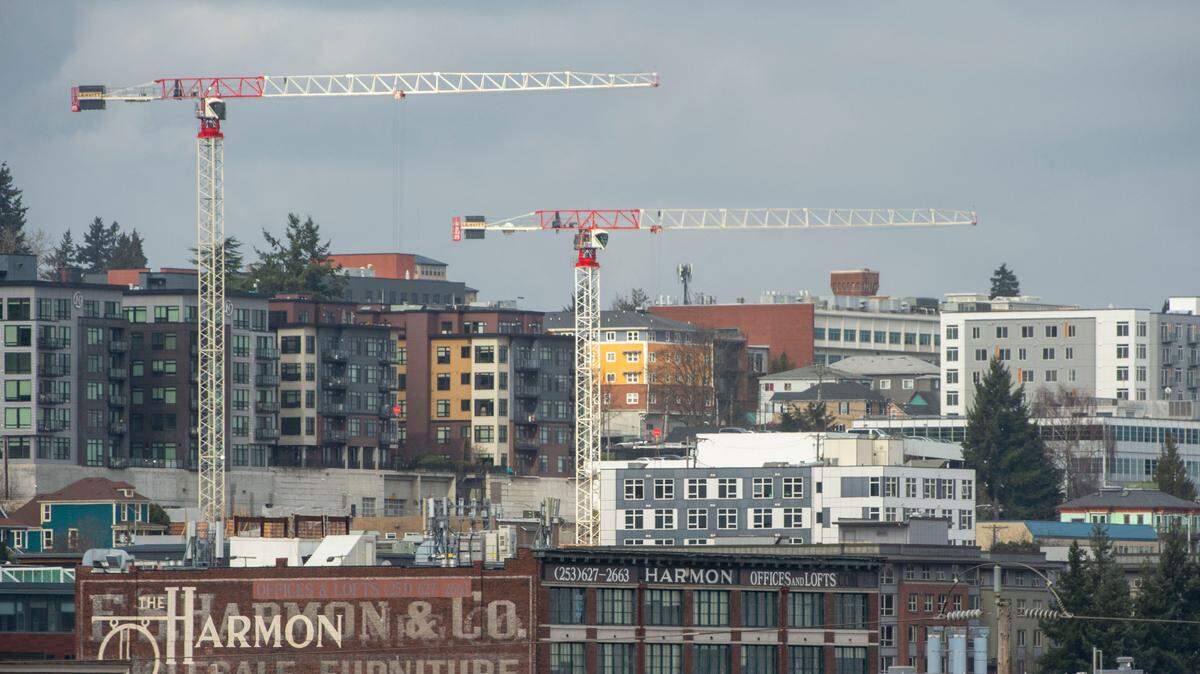
Thousands of new apartments are on the way in Tacoma. Will they help bring down rents?
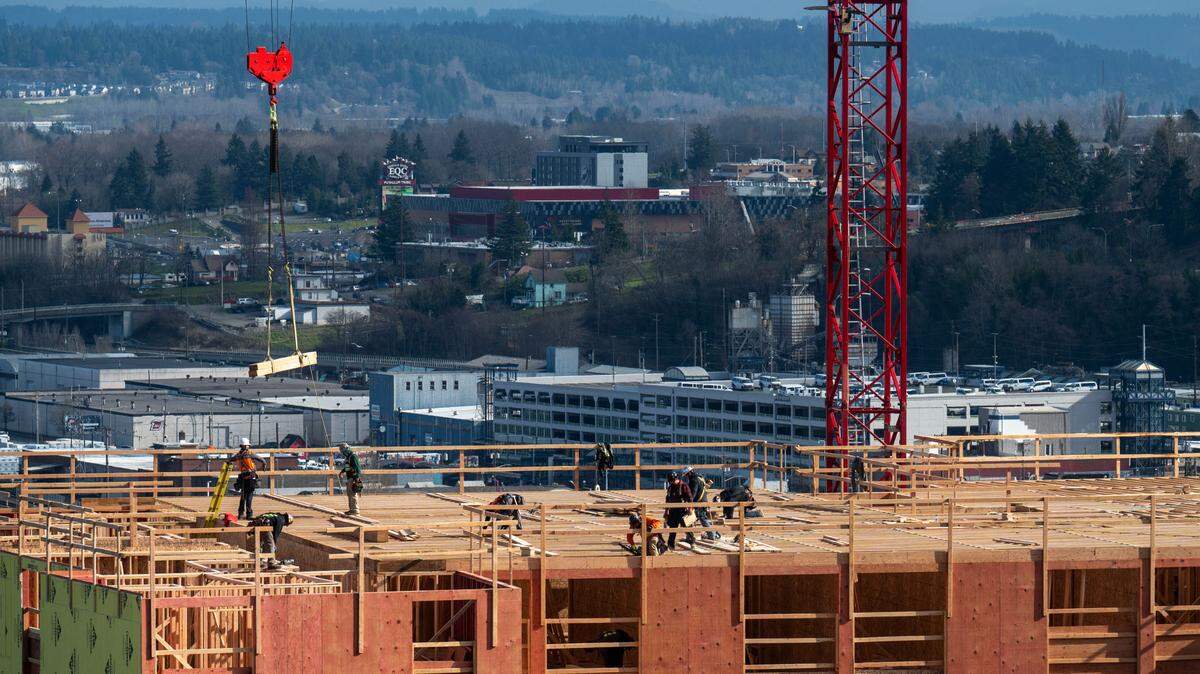
Here are list, maps of multifamily housing under construction or recently completed in Tacoma
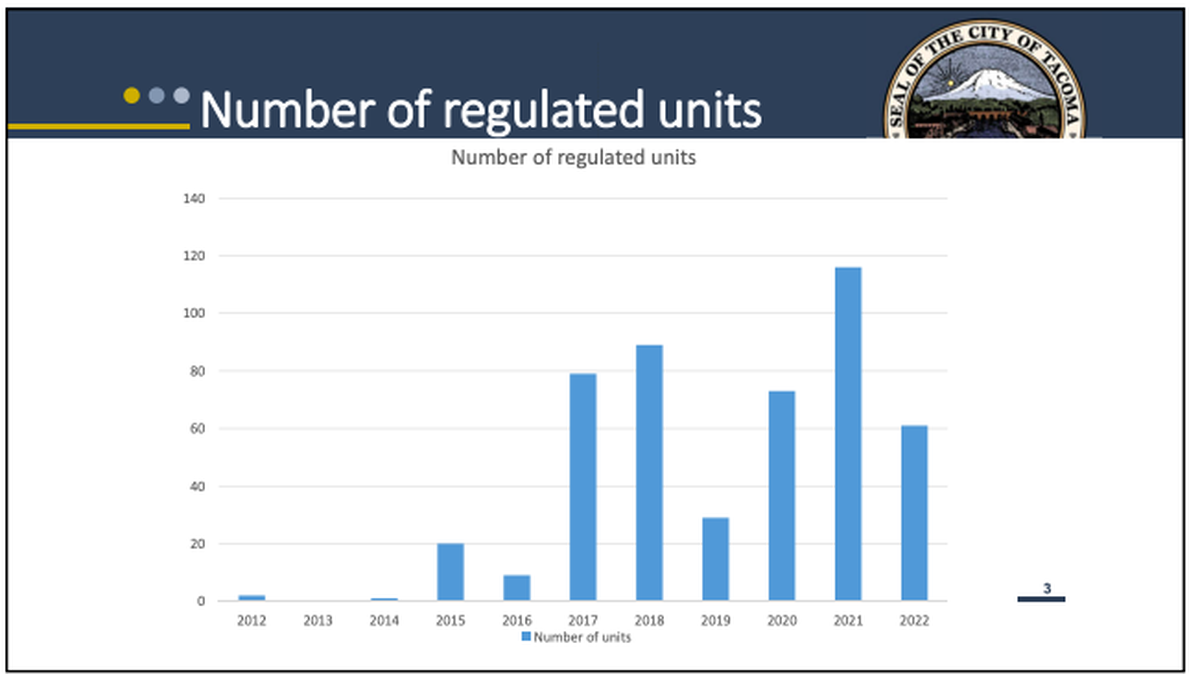
Tacoma changed tax breaks for apartment developers. How will they help affordability?
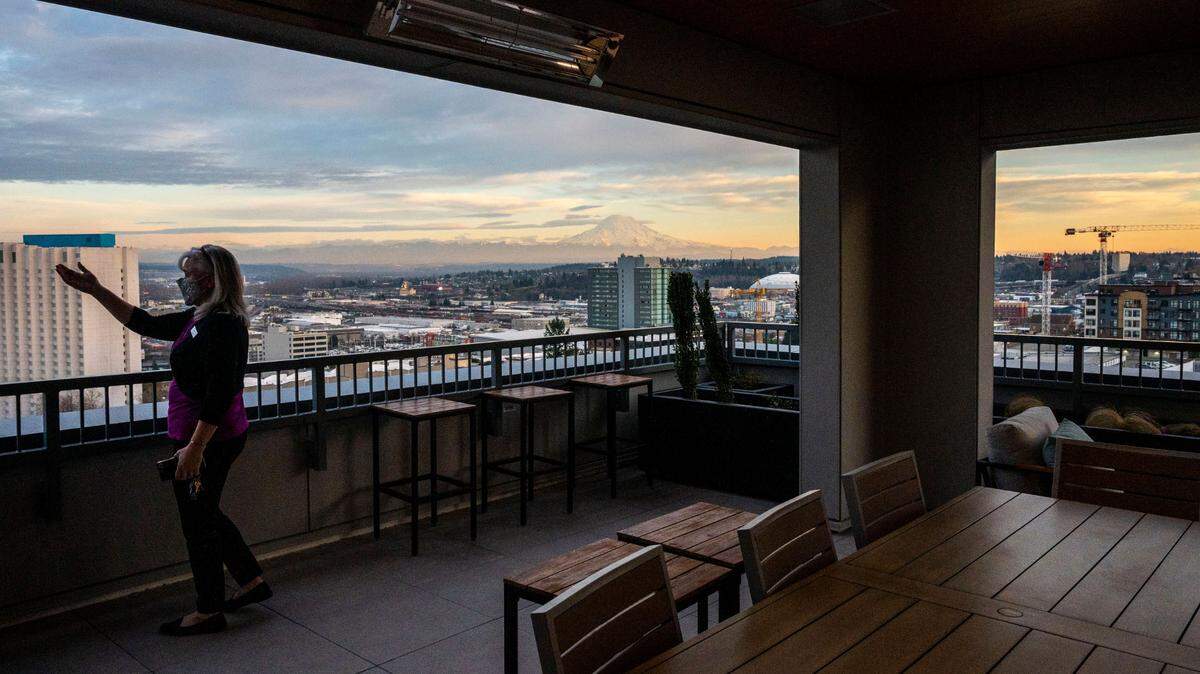
It’s not always easy to build apartments in Tacoma, despite heavy demand. Here’s why
It’s not your imagination. There’s a lot of building happening in Tacoma now, specifically multifamily units.
Elly Walkowiak, assistant director for the city’s Community and Economic Development Department, put a number to the building boom during the Tacoma-Pierce County Chamber’s recent Horizons Economic Forecast.
“Right now in the pipeline, we have 3,100 units that are going to be under construction and completed in three years. And that’s amazing,” Walkowiak said.
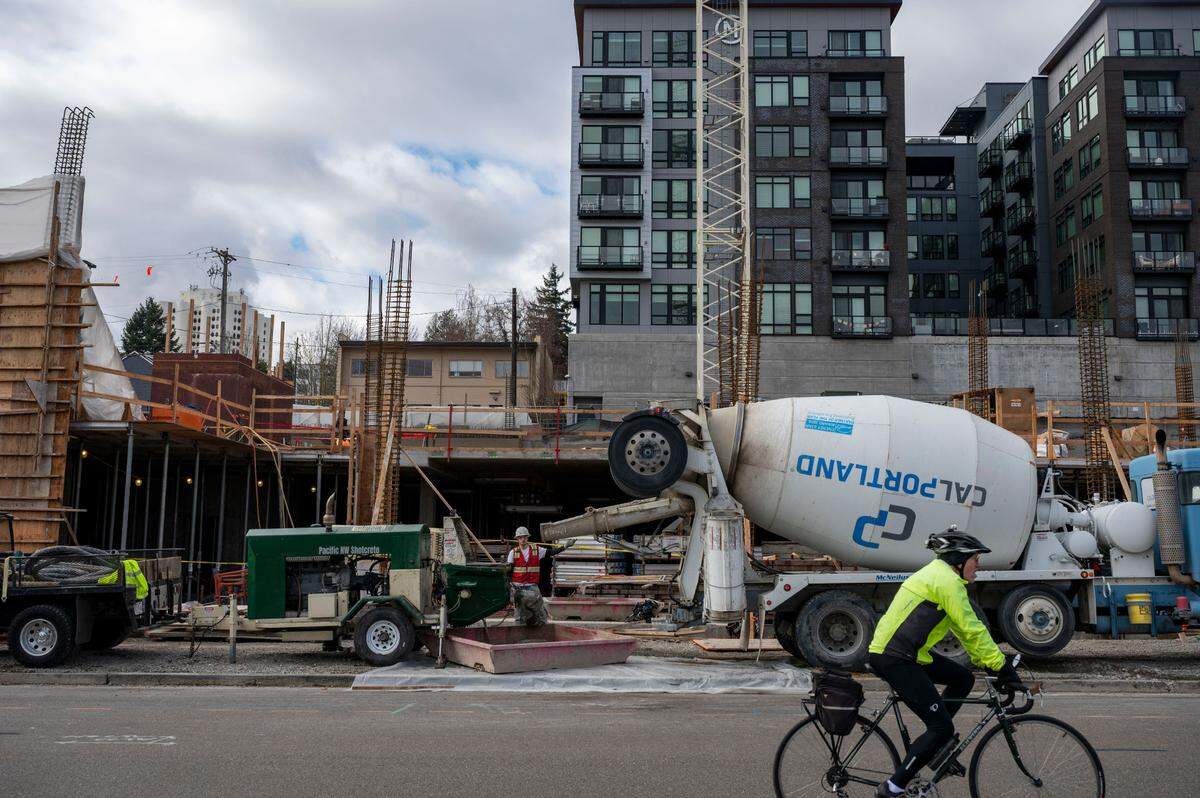
The city’s incentive programs for developers have helped Tacoma’s landscape grow vertically with new apartments. About 30 projects are now in some phase of construction or just completed.
But it all remains a drop in the bucket for a city growing at a fair clip even during the pandemic years — by Census estimates, 8,000 new residents between 2019 and 2021.
Whether rents will improve is debatable as the struggle for affordability persists amid the rush of building permits.
Jon Leckie, researcher with Rent.com, put the situation into context.
“Assuming the 3,100 units are spread evenly over the three years, adding 1,033 units to the 2019 housing supply would increase the total units by 1.14 percent. The average annual increase over the five years preceding 2019 was 0.9 percent,” based on Census data, he said.
HOW WE GOT HERE
Tacoma is basically where the rest of the country is in terms of playing catch-up with housing supply. How did everyone get so far behind?
An analysis published in September for Sightline Institute, an independent, nonprofit research and communications center, considered the same issue. It noted several factors, including exclusionary zoning focused on single-family housing, buyers forced to rent, high-earning remote workers who can live anywhere moving to cheaper areas, and millennials entering the housing market.
Those, among other things, have created the perfect storm of a housing-market in crisis.
“The pattern is clear,” wrote Dan Bertolet, director of housing and urbanism for Sightline, in the article published in September. “... rent increased more slowly in expensive cities as demand shifted to lower-cost cities and sent their rents skyward.
“The squeeze caused by local restrictions on homebuilding in places like Bellevue and Issaquah is spilling over to put the squeeze on places like Tacoma and Richland.”
Tacoma has seen a vacancy crunch in a market that tightened in the pandemic.
Chris Salviati is the senior economist with ApartmentList.com, a listing site that also provides monthly analyses of rents nationwide.
“We’ve definitely been seeing a tight market in Tacoma during the pandemic,” he told The News Tribune. “Pre-pandemic, a vacancy rate of around 5 percent was typical in Tacoma, but for much of last year, we were seeing rates below 3 percent.”
He added that the market was easing slightly, with the vacancy rate now at 3.9 percent.
Walkowiak referenced the city’s growth during her Chamber appearance, noting Tacoma’s population in 2019 was about 213,000.
“We are now at 221,000,” she said. “Eight thousand people growing in two years’ time during the pandemic ... is astounding.”
For now, she said: “The city is trying to figure a way to enhance (missing middle housing). For some it’ll be a win. For some it’ll be more challenging, but the idea is how can you use infrastructure much more effectively, and provide the services that people need?”
“Missing middle” housing that can accommodate a broader range of incomes through accessory dwelling units, cottages, duplexes and smaller multifamily units, for example, has been the focus of the city’s Home in Tacoma program, which is designed to spur a variety of development city-wide.
FINDING A BALANCE
Tacoma’s rental rates are a mixed picture. Some rents are coming down, but they remain high overall.
According to Leckie: “Year over year, for the last quarter of 2021, rents for one-bedrooms in Tacoma were down nearly 2 percent. For two bedrooms, it was closer to a 2.5 percent decrease. Over that same time period, nearly 85 percent of cities we analyzed saw rent increases in one-bedrooms, and just over 78 percent of cities saw increases in two-bedrooms.”
He added, “Given the general state of the rental market and the steep increase in rents experienced by other cities, Tacoma appears to be on the better end of that trend from a renter’s perspective.”
According to Apartment List’s February rent report, median rents in Tacoma were at $1,238 for a one-bedroom apartment and $1,625 for a two-bedroom.
In Tacoma, 2022 started with a 1.1 percent rent decrease in January, compared to a 0.2 percent increase nationally.
“This month-over-month rent decrease ranks No. 6 among the nation’s 100 largest cities,” the data site said in an email accompanying its report.
Salviati, speaking with The News Tribune, noted that over the past year, rents in Tacoma were up 14.6 percent, “which in any normal year that would be really kind of staggering rent growth.”
However, that’s trailing the national average, which he said is close to 18 percent. Still, rents have increased in the Tacoma area.
“If we look throughout the broader Seattle metro region, Tacoma is actually one of the cities in that region that’s seeing the fastest rate growth since the start of the pandemic,” Salviati said. “If we look kind of further over the course of the pandemic as a whole compared with March 2020, rents in Tacoma are up by nearly 19 percent.”
Emily Hamilton is co-author of a new set of policy briefs published in January for the American Enterprise Institute Housing Center, which reviews mortgage and housing market trends and issues regular reports.
The January report offered both critiques of single-family zoning and recommendations for increasing housing nationwide through what it termed “light-touch density.”
“LTD reforms have proved to be politically feasible in at least some cases, and they’ve earned policymakers accolades for reforming the exclusionary and racist history of single-family zoning,” the authors wrote.
Hamilton is a research fellow and director of the Urbanity Project with the Mercatus Center at George Mason University in Fairfax, Virginia, and has followed the trajectory of zoning changes on a national scale.
Based on population, Hamilton noted, Tacoma’s touted 3,100 units in development over three years worked out to be about four units per 1,000 people.
“That is, I believe, a similar pace of construction as what we’re seeing across the country as a whole. Which is, frankly a rate of construction that’s causing a lot of housing affordability problems in many parts of the country,” Hamilton said.
She noted Tacoma’s pace “might be a rate that would be fine in a place with relatively stable demand for housing … just a place where outdated housing can be replaced and adult children who are moving out on their own can get housing.
“But in a place where demand for housing is increasing quickly, that rate of construction likely won’t be enough to prevent house prices from increasing,” Hamilton said. “I can’t tell you a rate of housing stock growth that would be enough to prevent prices from increasing in Tacoma, but based on the region’s recent experience, I’d say it would need to be higher than the region’s recent rate of housing stock growth.”
Salviati said it’s tough to reach those people in most need.
“Adding new supply generally will dampen rent growth for market-rate housing, but it’s certainly not going to bring rates down to the extent that it becomes affordable for folks who are really struggling …,” he said. “I do think that those folks at the low end of the income distribution, they’re going to need more than, you know, just kind of adding new market-rate housing and hoping that that trickles down to lower rates.”
He noted, “I think that for families who are really struggling, we need broader access to direct rental assistance. For instance, only about one-in-four families who qualify for Section 8 housing vouchers actually receive assistance.”
Hamilton took a different view. The light-touch density report argued that market-rate development did bring churn to the market, freeing up other housing as people moved into the market-rate.
“Should Tacoma not permit more housing to be built, that may not stop people from Seattle from deciding to move there anyway,” she said. “And that would just lead to a situation where higher-income people are able to outbid lower-income people for the housing that’s already there.”
HOME IN TACOMA PHASE 2
The city, well aware of housing demand, has been trying to attack the problem on multiple fronts, to varying degrees of success.
Tacoma’s Affordable Housing Action Strategy, presented in September 2018, laid out the challenges and specific actions to help boost housing: create new housing; preserve existing, affordable homes; establish broader anti-displacement measures; and remove barriers to housing.
The city now is taking on Phase 2 of Home in Tacoma, which is part of AHAS. It would allow more types of housing to be built in residential neighborhoods. The citywide project replaces single-family zoning with low-scale and midscale residential designations, and its first phase was approved in December.
The second phase is expected to take 18 months, if not longer, with extensive community engagement.
In the meantime, the city has made progress on a few fronts.
Megan Snow, media representative for the city, told The News Tribune in response to questions, “While we have steadily increased our housing unit production and preservation since the start of the AHAS, we have also invested in opportunities for accelerated growth in the coming years.”
Between 2019–2021, the city completed 40 single-family rehab projects, “while our partners at Rebuilding Together Sound completed 107 minor home repair projects,” Snow wrote.
She noted the successful passage of Home in Tacoma Phase 1, which “changed the City’s housing growth strategy to promote development of low-scale and mid-scale housing across the city’s neighborhoods.”
Snow added the city had “successfully launched” requests for proposals for affordable housing on two locations previously used by Tacoma Public Utilities.
Between 2020–2024, the city is projected to nearly match the production of affordable housing in the 10 years prior, she wrote.
In that same time frame, affordable units developed through the city’s multifamily property-tax exemption program are projected to quadruple, she added.
The city has for years offered an eight-year MFTE for developers, meant to incentivize market-rate unit creation, and a 12-year version, which sets aside 20 percent of units in each project at a rent-restricted, or “affordable,” rate.
PERMITTING STREAMLINED
The city’s permits department also has worked to streamline the process, starting in 2016 with the launch of its online permitting portal, in an effort to quicken the pace of development.
Virtual over-the-counter meetings with permit seekers started with the pandemic, and that feature is likely to stay.
The department also is testing a virtual chat feature “so that if they prefer to engage us in a text format, that we can communicate with them that way and hopefully provide them more immediate services,” said Philip Kao, manager of the city’s Permit Resource Center.
“Our role and responsibility has really grown where we are acting as a project coordinator throughout the life of a project,” added Noah Yacker, permit lead with applications services in the city’s Planning & Development Services. “Giving customers and developers one point of contact throughout a project, and, you know, kind of with the hope that we can reduce overall review time.”
Priority reviews to help shepherd certain projects started in April 2021, he noted, focused on affordable and sustainable development.
“There’s a lot more focus on affordable and sustainable development,” Yacker said. “So within my group, we have a role that focuses just on that. We offer priority review, for affordable and or sustainable development, so a little bit more attention to those projects, to help them be successful.”
Salviati said getting the balance right will always be challenging.
“Every market is a little bit different and there’s always very specific dynamics that play out,” he told The News Tribune.
“So it’s hard to sort of point to a one-size-fits-all, build this X number of units per population, and then rents will start to decline.”
This story was originally published February 22, 2022 at 5:00 AM.